REVIEW · KETCHIKAN
Wildlife Viewing, Sightseeing and Whale Watching Quest
Book on Viator →Operated by Eagle One Enterprises, LLC · Bookable on Viator
Rainy Ketchikan and whale hopes—here’s what you get.
This 2.5-hour wildlife-and-whale cruise treats you to a smaller, less-crowded boat experience and a warm, comfortable ride with indoor and outdoor seating, blankets, and hot drinks. I also like that the crew targets current whale activity around the Tongass Narrows, so you’re not just cruising and hoping. The main consideration: whale sightings aren’t guaranteed, because this is Alaska water and animals decide the schedule.
You start at the centrally located Ketchikan Visitors Bureau, check in, and then settle in while the captain and crew work the best sighting spots. Along the way, you’ll get live narration tying together Ketchikan’s setting, the rainforest coast, and the wildlife you’re actually seeing (eagles, seals, seabirds, and more). If you’re the kind of traveler who hates being chilled, plan for wind and mist anyway—layers help—though the boat is set up for it.
In This Review
- Key things to know before you go
- Getting to the start: the easy part, the not-so-easy part
- What you’re paying for: $178 worth of boat time and wildlife odds
- The boat experience: comfort first, camera second, animals always
- Indoor and outdoor seating (and why you’ll use both)
- How you stay ready for fast wildlife
- The route: Thomas Basin to Tongass Narrows to the eagle-and-seal stops
- Stop 1: The downtown launch at 131 Front St
- Stop 2: Thomas Basin harbor scenes
- Revillagigedo Island and the Tongass rainforest coast
- The Tongass National Forest waterways: wildlife where it matters
- Stop 3: Metlakatla Island bald-eagle nest + Walden Rocks seals
- Weather and clothing: how to stay happy in the mist
- Live narration: how it improves your wildlife spotting
- Seating strategy: where to stand when the water gets interesting
- Who this tour suits best
- The biggest drawback: whale sightings are a gamble
- So, should you book it?
Key things to know before you go
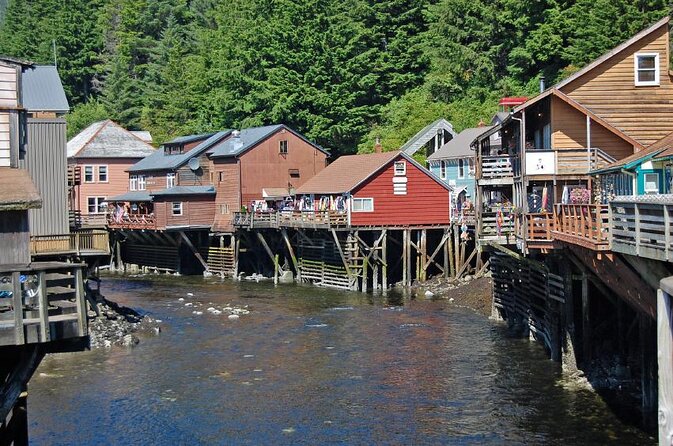
- Small-boat vibe in a max group of 66 means less jostling and an easier time spotting activity.
- Hot drinks, snacks, blankets, and binoculars keep you comfortable and ready for fast wildlife moments.
- Crew-led whale locating focuses on going where whales have been sighted rather than wandering randomly.
- Indoor + outdoor seating helps you enjoy the ride even when Ketchikan delivers rain.
- Peak-season eagle action may include an up-close stop at Metlakatla and a bald-eagle feeding moment.
- Short tour length with a local-sightseeing bonus leaves time after you get back downtown.
Getting to the start: the easy part, the not-so-easy part
Your tour meets at the Ketchikan Visitors Bureau at 131 Front St, right by the downtown waterfront. Plan to check in 30 minutes early—this is one of those tours where being prompt helps you relax once you’re on board.
If your cruise ship docks at downtown Berths 1–4, you’re generally in good shape. From Berth 2, it’s about a one-minute walk from your gangway. From Berths 1, 3, or 4, it’s an easy walk—roughly 5 to 12 minutes depending on pace.
If you’re docking at Ward Cove, you’ll need the cruise line shuttle to get downtown. That ride is about 20–30 minutes, and you should plan for at least one hour before your tour to account for timing and getting off the ship stress-free. In Ketchikan, a little buffer goes a long way.
You can also read our reviews of more tours and experiences in Ketchikan.

What you’re paying for: $178 worth of boat time and wildlife odds
At $178 per person, you’re not buying a “guaranteed whales” ticket. You’re paying for a very specific value mix:
- A purpose-built wildlife search in local waters (Tongass Narrows and nearby zones)
- A smaller vessel feel compared with big crowd tours
- Comfort extras that matter in Alaska—indoor seating, blankets, hot drinks, and snacks
- Live narration that helps you connect what you see with how the coast works
If you’re on a cruise day and want maximum meaning from a short window, this kind of tour can be a strong use of time. You get a couple hours on the water plus a return to downtown that still leaves room for independent exploring.
If your budget is tight and you’re okay with rain and potentially fewer sightings, you might consider lower-cost options. But if you care about comfort and crews who work hard to find whales where they’ve been spotted, this is the category you’re paying for.
The boat experience: comfort first, camera second, animals always
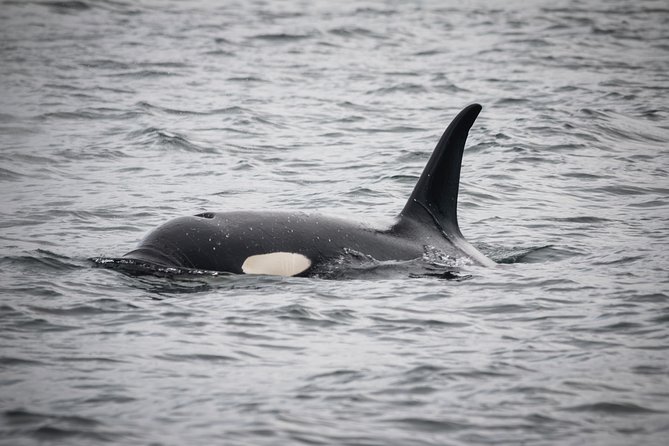
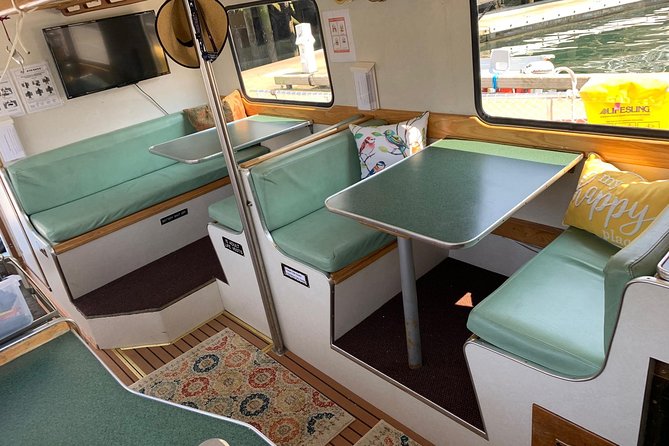
This tour runs on a smaller boat with a max of 66 travelers, which makes a difference. You’re not packed in a floating stadium. You can move between indoor and outdoor spaces without feeling like you’re fighting elbows and wind.
Indoor and outdoor seating (and why you’ll use both)
You’ll have both inside seating and outside deck space. When it’s clear, you’ll want the deck. When the weather turns—common in Ketchikan—you’ll appreciate getting out of the wind without giving up the experience.
They also provide blankets and binoculars, plus hot drinks and snacks throughout. That sounds like standard cruise-boat stuff until you’re standing outside in cold mist waiting for a whale cue. Then it becomes the reason you stay focused instead of rushing back inside.
How you stay ready for fast wildlife
Ketchikan wildlife can appear and vanish quickly. The crew helps you do the “ready” part by watching for signs on the water and calling attention to what you might look for. Many wildlife moments happen right after those cues, so if you’re serious about photos, keep your camera accessible and your attention on the waterline—not just the horizon.
The route: Thomas Basin to Tongass Narrows to the eagle-and-seal stops
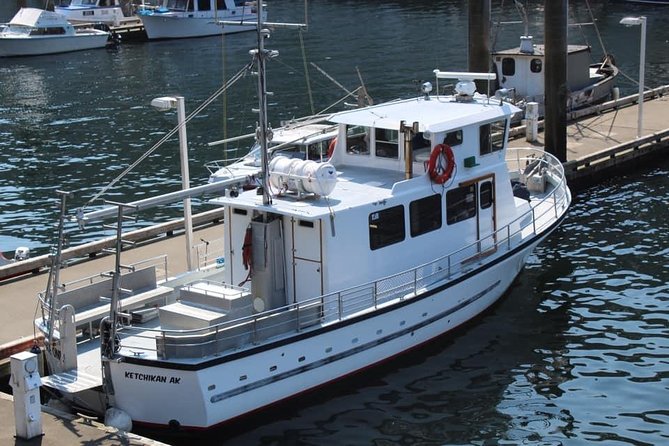
This is built as a loop back to the same meeting point, starting downtown and returning a little over two hours later. Exact timing can shift based on water conditions and where wildlife is active, but the flow is consistent: depart, search, make a few wildlife-focused stops, then head back.
Stop 1: The downtown launch at 131 Front St
Check in at the Ketchikan Visitors Bureau, then board. This is a good moment to take a quick inventory: jacket layers zipped, gloves handy, and binoculars if you want them up immediately. Once you cast off, the crew starts looking for what’s working that day.
Stop 2: Thomas Basin harbor scenes
You’ll get your first taste of Ketchikan’s working waterfront at Thomas Basin. This is a lively harbor where fishing boats and local skiffs share the water. It’s not just scenic filler—it’s an atmospheric warm-up that places you right inside the local coastline rhythm before you head into broader open waterways.
Revillagigedo Island and the Tongass rainforest coast
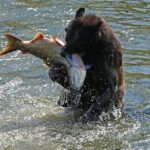
Cruising along the shores of Revillagigedo Island puts you in the heart of Ketchikan’s story. The area is tied to salmon culture, and you’ll hear about why this region earns its nickname as the salmon capital. If salmon season is underway, you may notice fish jumping from the water—locals call them jumpers. It’s one of those nature behaviors that looks simple until you understand what’s going on.
Here’s a fact that explains a lot about the vibe: Ketchikan averages over 140 inches of rain per year, earning the Rain Capital label. That mist is part of the visuals you’ll see—soft light, misty coastlines, and a rainforest edge that looks like it’s painted in layers of green and gray.
The Tongass National Forest waterways: wildlife where it matters
Once you’re moving through the protected coast, you’re in the world of the Tongass National Forest, the largest temperate rainforest on Earth. You’ll typically have chances to spot:
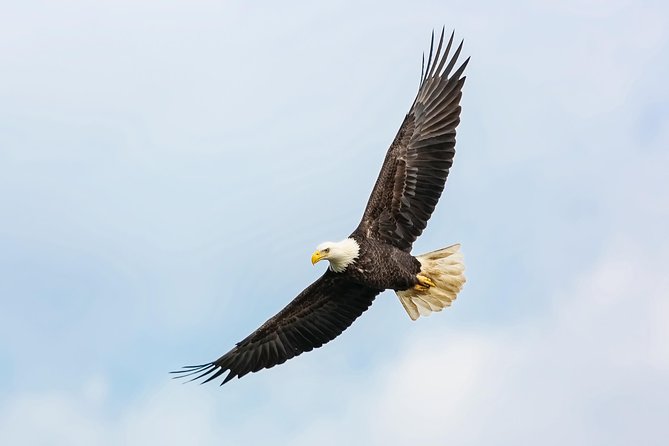
- Bald eagles perched along treetops or soaring overhead
- Harbor seals near rocky outcrops
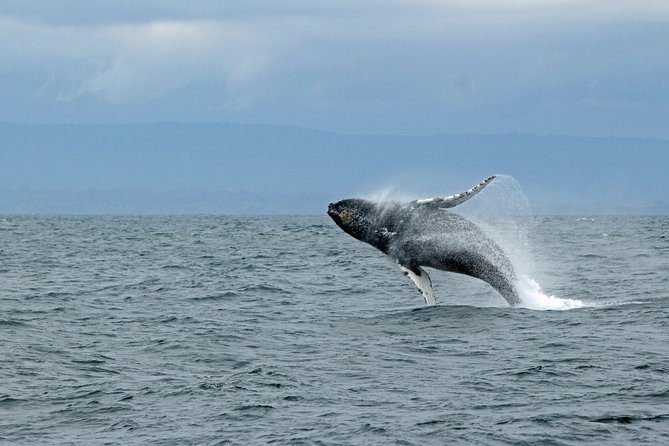
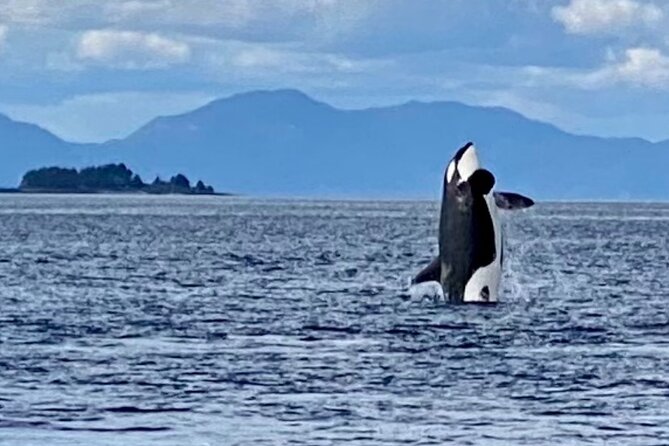
- Humpback whales and possibly orcas if conditions line up
- Seabirds overhead and shoreline activity that can change fast
Wildlife sightings are never guaranteed, but the point of this tour is that the crew tries to put you in front of the action. On calmer water days, spotting and scanning can feel easier. On windier days, you’ll rely more on indoor warmth while still keeping your eyes peeled from the deck when conditions allow.
Stop 3: Metlakatla Island bald-eagle nest + Walden Rocks seals
If your schedule lines up with peak season activity, you may include a stop at Metlakatla Island, where there’s an active bald eagle nest area. In that season window, the crew may pause here for an eagle-feeding moment. It’s exactly the kind of “only in Alaska” scene that makes whale watching feel connected to the whole ecosystem, not just one species.
After that, you may head to Walden Rocks, a popular resting spot for spotted harbor seals. When the tide is low, seals haul out onto the rocks, sometimes resting while watching the boat drift nearby. The tour generally spends a short window here so you can take photos and soak in what you’re seeing without rushing.
Weather and clothing: how to stay happy in the mist
Ketchikan’s rain is real. You’ll have both indoor and outdoor options, but you’ll still want to experience the deck at least part of the time.
I strongly suggest layering with a rain jacket you can move in, plus warm socks or boots if you have them. Even with blankets onboard, you don’t want wet clothes cooling you down before you find your ideal viewing spot. If you tend to get cold, bring a hat you can keep on and glasses you can wipe fast.
And yes, it’s also worth watching how locals behave—rain is part of the scenery, not a disruption. The crews are used to guests wearing rain gear and enjoying it.
Live narration: how it improves your wildlife spotting
You’ll hear live narration covering Ketchikan’s setting, culture, and wildlife as you go. That matters because it turns random sightings into something you can recognize on the water.
When you understand what you’re seeing—feeding behavior, shoreline habitats, and why certain animals show up where they do—you spot more. Even if wildlife is quiet one stretch, narration helps you stay engaged rather than passively waiting.
Seating strategy: where to stand when the water gets interesting
A practical way to enjoy this tour without feeling stuck:
- Start with indoor warmth if the weather is cold, then go outside when the crew signals strong sighting potential.
- If you’re chasing whales, keep your attention on the water surface and don’t hesitate to move to where you have clear lines of sight.
- Use binoculars when you’re scanning—especially for eagles and shoreline seals—so you’re not trying to identify everything with the naked eye.
Because the boat isn’t huge, you can usually find a workable view without turning the whole ride into a “hold your spot” competition.
Who this tour suits best
This is a great match if you want:
- A short, high-impact outing during limited time in port
- Comfort on the water with snacks, hot drinks, and blankets
- A crew that actively works to find whales and not just follow a fixed loop
- A mix of whales plus eagles and seals, so the trip still feels like a success even when whales are harder to pin down
It’s also good for families because the ride stays moving and there are indoor options if weather gets rough. And since service animals are allowed, it can be a considerate choice for those traveling with them.
The biggest drawback: whale sightings are a gamble
Let’s be honest: Alaska whale watching is a chance game. There are days when you see multiple feeding whales, and days when you see fewer animals than you hoped for.
That said, this tour’s structure helps you feel the crew is doing more than hoping. You’ll still enjoy scenery, eagles, seals, and rainforest coast views even on a lower wildlife day—but if whales are your single mission, you’ll want to manage expectations.
So, should you book it?
If you have a limited port day and you want the best odds with comfort built in, I think this is a smart booking. The combination of smaller-boat feel, hot drinks/snacks, indoor warmth, binocular support, and crew efforts to reach active sightings makes it a high-value choice for Ketchikan.
You might skip or consider another option if you’re strictly trying to minimize cost or you’re extremely sensitive to the idea that whales might not show. In wildlife country, the best plan is the one that keeps you comfortable while you wait for nature to make its move.
If you want the full Ketchikan “waterfront-to-wildlife” experience—eagles overhead, seals on rocks, whales if the day cooperates—this is the kind of outing that fits the bill.