REVIEW · PHILADELPHIA
2.5 Hour Philadelphia History Tour with Washington War Tent Show
Book on Viator →Operated by WeVenture · Bookable on Viator
Philadelphia history, step by step.
This small-group tour strings together the most important sites in Old City, then adds a modern hit of context with Washington’s War Tent at the Museum of the American Revolution. I like that you get a tight route through Independence National Historical Park plus the small details that make the era feel real. I also like the built-in value: a discounted ticket to the museum right after the walking portion. One thing to consider: several stops are outside or have admission not included, so you should plan your expectations if you’re hoping for lots of indoor time.
With a max group size of 12, the tour stays conversational and easy to ask questions. I’m a fan of how the guide handles myths (hello Liberty Bell), and still keeps the story moving from the Founding era into daily life in the city. You’ll also walk some of the oldest streets in America, which turns the “history lesson” into something you can actually see and picture.
The only possible drawback is pacing versus indoor priorities: it’s about 2 hours 30 minutes on foot, with multiple major landmarks viewed on the outside. If you want a slow museum day plus plenty of building entry, you’ll probably use this as your “get oriented fast” tour, not your only stop.
In This Review
- Key points before you go
- A fast way to understand why Philadelphia mattered
- Starting at The Signer’s Garden (and setting the tone)
- Independence National Historical Park: the government core
- Independence Hall from the outside
- Congress Hall and Old City Hall
- Liberty Bell Center myths, clarified
- Carpenters’ Hall: the first Continental Congress connection
- Museum of the American Revolution: Washington’s War Tent presentation
- Elfreth’s Alley: old street, real scale
- Betsy Ross House, Franklin’s Grave, and the President’s House area
- What makes the tour feel personal: the guide and the pacing
- Pace and logistics: how far you’ll walk and what to wear
- Price and value: what you get for $45
- Who this tour suits best (and who might want a different plan)
- Should you book this Philadelphia history tour?
- FAQ
- How long is the Philadelphia History Tour?
- What is the price per person?
- What’s included in the tour ticket?
- Are tickets included for Independence Hall and other major sites?
- Do we go inside the Liberty Bell venue?
- Where does the tour start and end?
- Is there a refund if I cancel?
Key points before you go
- Small-group feel (up to 12) helps you keep up and ask questions.
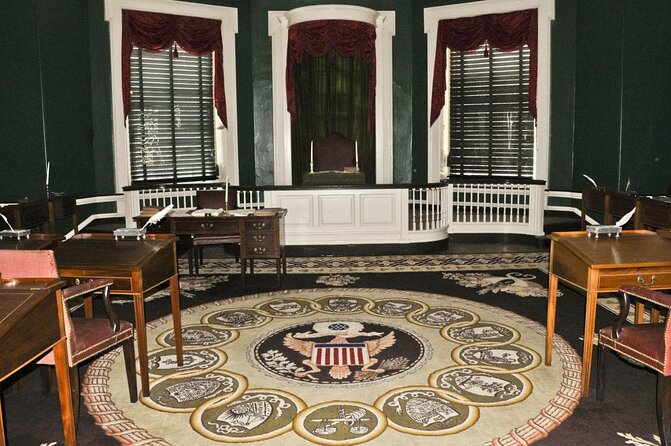
- Independence Hall area focus gives you a clear picture of early U.S. government in one walk.
- Washington’s War Tent presentation adds dramatic, tangible context at a newer museum.
- Elfreth’s Alley delivers old-street charm with early-1700s architecture.
- Discounted museum entry after the tour is a smart add-on for people who want more time inside.
- Mobile ticket + English-led setup is simple and easy to manage.
A fast way to understand why Philadelphia mattered
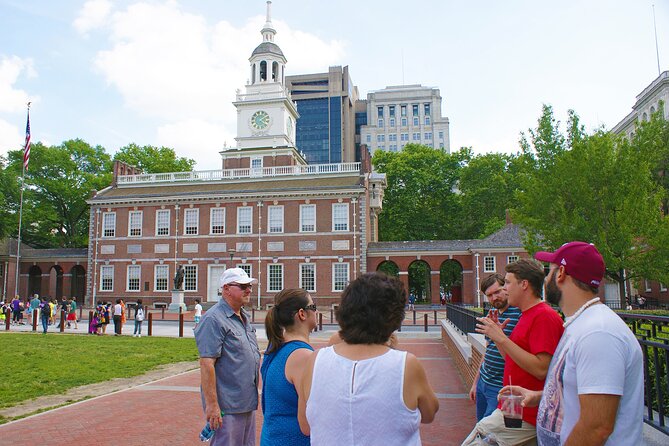
Philadelphia can feel like a blur of names: Franklin, Washington, the Declaration, the Constitution, Liberty Bell, flags, Congress. This tour earns its keep by putting those names into a route you can walk and a story you can follow. You get a practical sense of where power sat, how the Revolution played out, and how the city lived with the ideals it helped create.
Best of all, you’re not just looking at plaques. You’re hearing how these places connect—why Independence Hall still matters, why Carpenters’ Hall is more than a pretty building, and how the Revolution shaped everyday civic life.
You can also read our reviews of more tours and experiences in Philadelphia.



Starting at The Signer’s Garden (and setting the tone)
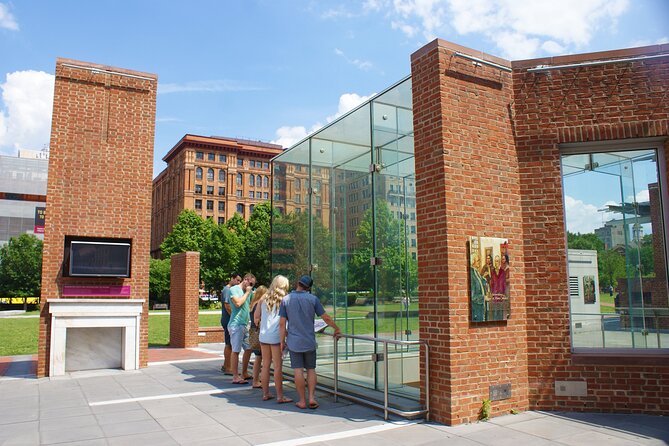
The tour begins at The Signer’s Garden, at the statue of The Signer on Chestnut Street. It’s a good opening because it shifts your brain from dates and documents to people and values. The statue represents the signers of both the Declaration of Independence and the U.S. Constitution, so the guide can frame what you’ll see as a chain of political decisions, not just Revolutionary-era drama.
If you’re arriving in Old City and want an easy kickoff point, this is one. And if you’re the type who likes history that has a human face, this start is a warm one.
Independence National Historical Park: the government core
Next you move into Independence National Historical Park, where the guide links together the big names you’ve seen on textbooks and money. Expect stops and stories around Independence Hall, Congress Hall, and Old City Hall.
Here’s what makes this section work: instead of treating each building like a standalone attraction, the guide explains their roles in the development of modern-day Philadelphia, the United States, and global democracy. That’s the key. You’ll leave with a clearer sense of the system—who met where, what decisions happened in these rooms, and why the location mattered.
Independence Hall from the outside
At Independence Hall, you don’t go inside on this tour (admission isn’t included), but you do see it in a way that still sticks. The route encircles the building so you can get your bearings, then the guide talks about the philosophies, trials, and triumphs tied to the Founders who worked here.
This is ideal if you’re short on time. If you do want to go inside later, you’ll at least know what you’re looking for.
Congress Hall and Old City Hall
From there you hit Congress Hall and Old City Hall. These are also outside viewing stops with stories included, and that’s actually a strength. The guide explains why these structures matter as part of the same civic “engine,” so you don’t just memorize names—you connect them.
If you’re visiting for the first time, this is a great way to map the area quickly before you choose what to return to.






Liberty Bell Center myths, clarified
Then you get to Liberty Bell Center. Here the tour focuses on history and myth-busting. You’ll hear how Liberty Bell became an inspiration across different movements—abolitionists, suffragettes, and the civil rights movement—rather than only as a single famous crack in a single moment.
One practical note: admission isn’t included for the Liberty Bell venue. So you should treat this stop as a learning moment, not as your inside-the-bell ticket.
If you like factual stories that correct the oversimplified stuff, this is one of the more satisfying parts.
Carpenters’ Hall: the first Continental Congress connection
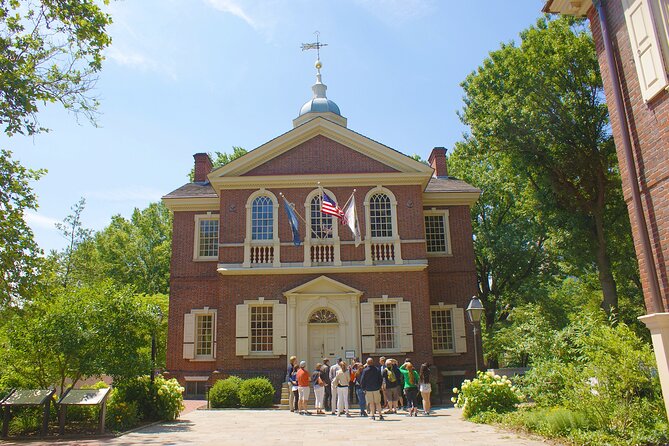
At Carpenters’ Hall, the guide adds another layer to the Revolution story. You’ll admire the building from the outside while learning why it matters: it’s tied to the founding of the Commonwealth of Pennsylvania, and it also holds importance because the first Continental Congress was held there.
This stop works especially well if you’ve ever wondered why the early U.S. didn’t begin as one single building. It helps you understand the Revolution as a shifting network of meetings and institutions.
Museum of the American Revolution: Washington’s War Tent presentation
Now the tour pivots from Old City streets to a newer museum experience with serious payoff: the Museum of the American Revolution. You’ll go inside for a presentation featuring George Washington’s War Tent, which was present during many critical moments of the Revolutionary War.
This is the part that turns the walking tour from “statue and story” into something more visual and emotional. A tent changes the tone. It’s not a monument; it’s the space where leadership decisions happened while life was uncertain.
After the tour, you get a discounted ticket to see more of the museum at a time that works for you. That matters because you’re not trapped on a fixed schedule. You can return later if you want to linger over artifacts and exhibits without rushing.
Elfreth’s Alley: old street, real scale
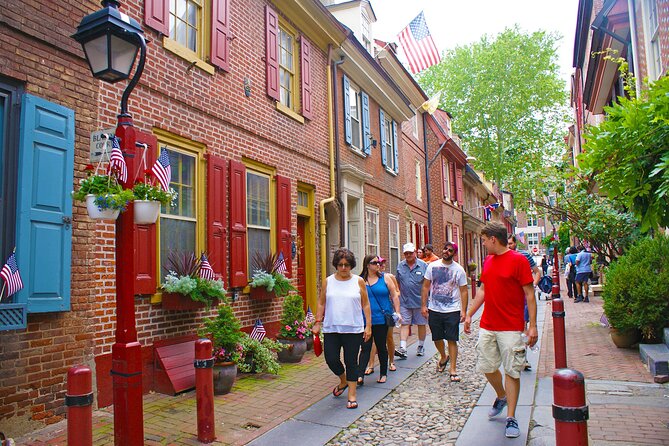
When the tour shifts back outside, you walk to Elfreth’s Alley, described as the oldest continuously occupied residential street in the United States, with architecture dating back to the early 1700s. This is where the tour slows down in a good way—not by stopping the story, but by giving you a chance to look closely at scale.
Narrow homes, distinctive brickwork, and the simple fact of continuity make it feel like history didn’t just happen here—it kept going. If you’re a photo person, this is also a better bet than trying to squeeze in shots at the busiest landmark entrances.
Betsy Ross House, Franklin’s Grave, and the President’s House area
After Elfreth’s Alley, the tour keeps weaving through Revolutionary-era Philadelphia, mostly via pass-by or exterior stops:
- Betsy Ross House: you’ll pass by and learn about the flag-sewing stories, including the myths tied to the famous name.
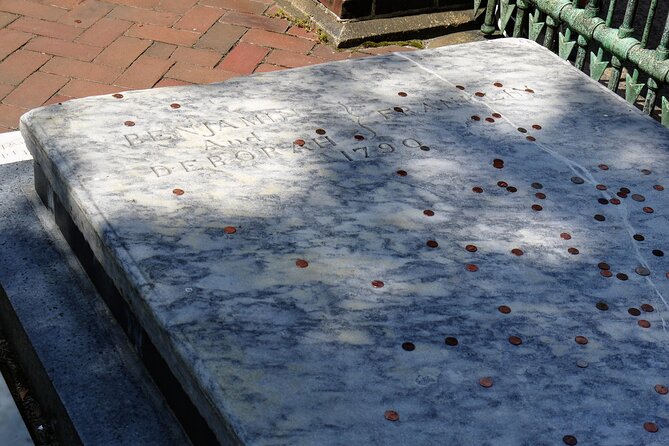
- Benjamin Franklin’s Grave: you walk past Franklin’s burial site while moving along Arch Street. It’s a short stop, but it lands because Franklin is more than a silhouette—he’s a symbol of how ideas spread in the city.
- The President’s House: nearby, you learn about where George Washington and John Adams lived as Presidents, and you also hear about enslaved people who lived at the site. The tour notes it’s an active archaeological location, which is a rare thing to hear in a downtown setting.
These sections can feel like a “bonus loop” after the big anchors, but that’s exactly what you want if you’re trying to get a full sense of the city. You’ll come away with a more grounded picture of how government and daily life overlapped.
What makes the tour feel personal: the guide and the pacing
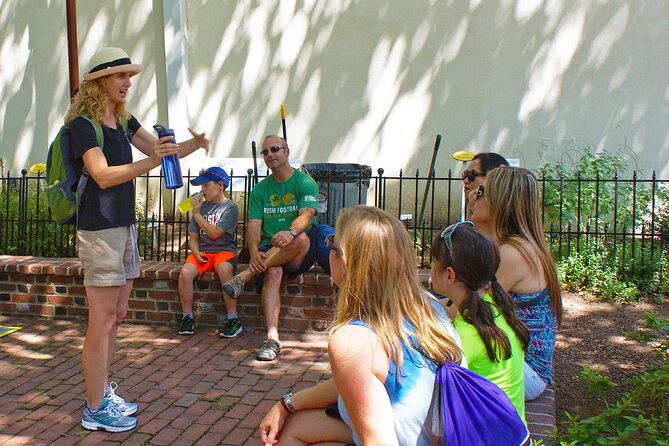
This tour is built for small-group attention: up to 12 travelers, led in English, and offered as a walking tour with about 2 hours 30 minutes total time.
A good guide is everything in a city like Philadelphia. The included route is concentrated, so the story has to be clear and energetic to keep it from turning into memorizing names. The guide also responds to what your group cares about, and several guides have been singled out for being animated and fun.
I especially like the way some guides handle disruptions. If certain buildings can’t be entered on a given day, the tour still works because the route and stories keep momentum. One guide even recommended options to see and eat nearby, which is a nice bonus when you’re trying to plan your afternoon.
Pace and logistics: how far you’ll walk and what to wear
You’re doing a lot in a short time. Expect steady walking through Old City and toward the museum stop, with brief time windows at each major point. The total time is about 2.5 hours, but that doesn’t include any extra time you might spend stopping for photos afterward.
Wear comfortable shoes. This is not the type of walking where you want to test brand-new boots. And if you’re sensitive to standing and walking around crowds, you’ll appreciate going early in the day.
Also, the tour is near public transportation, so you can link it easily with other plans without needing a car.
Price and value: what you get for $45
At $45 per person, you’re paying for more than walking. Your ticket includes:
- a local guide
- a guided overview of Revolutionary landmarks in Old City
- the Washington’s War Tent presentation inside the Museum of the American Revolution
- a discounted museum ticket after the tour
- a donation to a local historic non-profit
That combo is where the value shows. Many history tours stop at street corners and photos. Here, you get an indoor presentation with a specific artifact or reconstruction focus (the War Tent), and you’re given a path to expand afterward at a lower cost.
If you were already planning to visit the Museum of the American Revolution, this price becomes even more sensible. You effectively “buy” an orientation and a compelling museum intro in one go.
Who this tour suits best (and who might want a different plan)
This tour is a strong choice if:
- it’s your first time in Philadelphia and you want the founding-era highlights in one morning or afternoon
- you like walking tours that explain more than they point
- you want a museum experience but don’t want to spend your whole day doing tickets and route research
It may be less ideal if:
- you’re mainly shopping for long indoor time at each building, since several major sites on the route are outside stops with admission not included
- you’re expecting a slow, stand-still museum day (the whole point here is compact storytelling)
For most people visiting for a few days, this is a smart “start here” experience. You’ll learn enough to choose what to revisit and what to skip.
Should you book this Philadelphia history tour?
If you want the fast, high-impact version of Revolutionary Philadelphia, I’d book it. The route gives you the Independence Hall government cluster, the myth-corrections you didn’t realize you needed, and the War Tent presentation that makes the story feel physical. The small-group size and short, clear stops make it easy to stay engaged.
If you’re the type who likes to wander on your own after a structured start, you’ll especially like the museum discount after the tour. Just come with comfortable shoes and the mindset that the best photos and extra building entry happen before or after, not during every stop.
FAQ
How long is the Philadelphia History Tour?
It runs about 2 hours 30 minutes (approximately).
What is the price per person?
The price is $45.00 per person.
What’s included in the tour ticket?
You get a knowledgeable local expert guide, the walking tour of the Revolutionary landmarks, a presentation featuring George Washington’s War Tent at the Museum of the American Revolution, a discounted ticket for the museum after the tour, and a donation to a local historic non-profit.
Are tickets included for Independence Hall and other major sites?
Independence National Historical Park sites like Independence Hall, Congress Hall, and Old City Hall are listed as not included for admission. Liberty Bell Center is also not listed as included. The War Tent presentation at the Museum of the American Revolution is included.
Do we go inside the Liberty Bell venue?
Admission for Liberty Bell Center is not included, so plan on seeing it as part of the tour without guaranteed inside entry.
Where does the tour start and end?
It starts at Signer’s Garden, 434-498 Chestnut St, Philadelphia, PA 19106, and it ends in Old City, Philadelphia, PA.
Is there a refund if I cancel?
Yes. Free cancellation is available, and you must cancel at least 24 hours before the experience start time for a full refund. Canceling within 24 hours is not refundable.