REVIEW · PHILADELPHIA
The Constitutional Walking Tour of Philadelphia
Book on Viator →Operated by The Constitutional Guided Walking Tour · Bookable on Viator
America starts on these Philly sidewalks.
This Constitutional Walking Tour of Philadelphia turns Independence National Historical Park into a simple story you can follow—20+ stops in about 1.25 miles—so you see how the nation’s founding ideas took shape in real places. I like that it’s guided orientation at a pace you can handle, with an energetic guide who makes the founding era feel human. The main catch is that it’s an outdoor tour only, so you’re viewing many famous spots from the outside.
What I really enjoy is how quickly you move through the concepts: Declaration ideas, Constitution debates, early finance, and even the religious and community spaces that helped shape public life. I also like the small-group feel (maximum 40), and the fact that it runs rain or shine, so you can plan it without babysitting the forecast.
In This Review
- Key points to know before you go
- Starting outside the National Constitution Center
- Price and logistics: what $30 gets you (and what it doesn’t)
- What you should expect: outside views, inside time later
- The walk itself: 20+ stops that connect the founding story
- Stop 1: National Constitution Center
- Stop 2: The President’s House
- Stop 3: Declaration House (Graff House)
- Stop 4: Liberty Bell Center
- Stop 5: Independence Hall
- Stop 6: Congress Hall
- Stop 7: Old City Hall
- Stop 8: The Signer
- Stop 9: American Philosophical Society Museum
- Stop 10: Library Hall
- Stop 11: Second Bank of the United States
- Stop 12: Carpenters’ Hall
- Stop 13: New Hall Military Museum
- Stop 14: First Bank of the United States
- Stop 15: Franklin Court
- Stop 16: Christ Church
- Stop 17: Betsy Ross House
- Stop 18: Arch Street Meeting House
- Stop 19: Christ Church Burial Ground
- The guide matters: what the best tours feel like
- Practical tips so you enjoy the walk instead of just surviving it
- Who this tour fits best
- Should you book the Constitutional Walking Tour of Philadelphia?
- FAQ
- How long is the Constitutional Walking Tour of Philadelphia?
- Where does the tour start?
- Does the tour include admission to historic sites?
- Will I be able to go into places like Liberty Bell or Independence Hall during the tour?
- Does the tour operate in bad weather?
- What language is the tour offered in?
- How big is the group?
- What time should I arrive before the tour starts?
Key points to know before you go
- Outdoor-only viewing: most stops are best treated as photo-and-context stops, not sit-and-stare museum time
- 20+ historic sites in 75 minutes: a fast route that helps you choose what to revisit later
- Max 40 people: smaller groups keep the guide’s explanations clearer
- Big-name landmarks, outside the lines: you’ll see Liberty Bell and Independence Hall area landmarks without waiting for timed-entry screens
- Rain or shine schedule: dress for weather because you’ll be outside the whole time
- Guides with strong Q and A moments: names like PJ, Will, Abby, Avi, Connor, Viv, and Michael show up often in the best experiences
Starting outside the National Constitution Center
Your tour starts at the National Constitution Center, 525 Arch St. Check in about 15 minutes early and look for the meeting spot directly outside the main entrance by the three large stone benches.
The staff keeps it organized, and once everyone’s together, the guide sets the tone fast: what you’re about to see, and how it all connects. It’s a smart way to begin because Philadelphia’s historic district can feel like a lot of buildings unless someone gives you a map in words.
You can also read our reviews of more tours and experiences in Philadelphia.

Price and logistics: what $30 gets you (and what it doesn’t)
At $30 per person for about 75 minutes, this is good value if you’re trying to get oriented fast. You’re paying for the guide’s explanations and the route design that hits key sites in a short walk, not for paid attraction entry fees.
Two practical notes matter:
- Admission isn’t included, so plan for separate tickets if you want to go inside major sites.
- It’s a walking tour, and most stops are brief, so bring comfortable shoes and expect a brisk pace.
Also, you’ll use a mobile ticket, and the tour is offered in English. It’s built for most people who can walk on city sidewalks for about 1.25 miles, with plenty of stopping points along the way.
What you should expect: outside views, inside time later
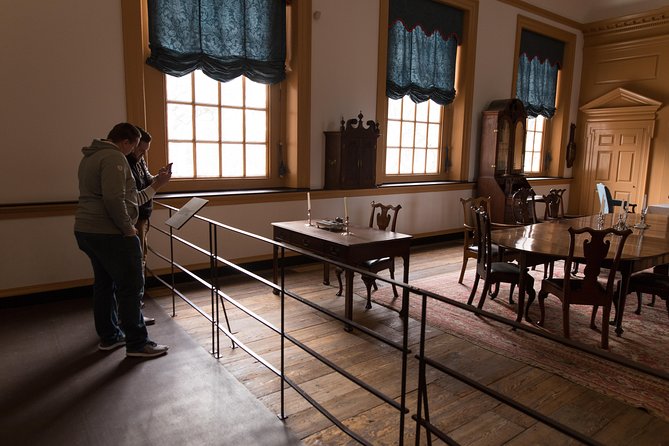
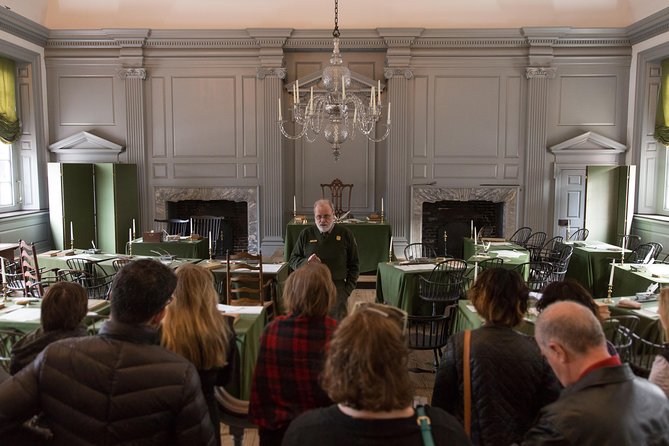
This is where some people get disappointed if they expect museum-style access. The tour is outdoor and focuses on seeing buildings, monuments, and surrounding areas with context from your guide. You won’t count on entering most sites during the 75 minutes.
That said, you still get real value. Seeing the Liberty Bell and Independence Hall area from the outside helps you place what you later read or watch inside. And if you do want interior time, you’ll be able to go back to the specific places that sparked your interest.
There’s one reason this works well for tight schedules: Independence Hall requires timed tickets arranged in advance, and security lines can take up time. The same idea applies to the Liberty Bell experience, where waiting can be part of the reality. This tour keeps you moving so you don’t spend your limited vacation hours stuck in queues.
The walk itself: 20+ stops that connect the founding story
The route is designed like a timeline you can walk through. You’ll spend only a couple minutes at many stops, so the guide keeps the focus tight: what happened there, who was involved, and why the place matters.
Stop 1: National Constitution Center
You start with the center because it sets the big picture: the Constitution isn’t just a document; it’s a living set of ideas. Expect a short intro and an orientation moment before you move into the neighborhood.
Nice payoff: you get the framework early, so the later stops make more sense.






Stop 2: The President’s House
This open-air stop marks the predecessor to the White House. It’s where George Washington and John Adams lived while Philadelphia served as the capital from 1790 to 1800.
It’s a reminder that the founding era wasn’t only parchment—it was rooms, routines, and political pressure in everyday spaces.
Stop 3: Declaration House (Graff House)
Here you’re at the site associated with Thomas Jefferson writing the Declaration of Independence. That connection matters because it turns a famous sentence into a location-based story.
You won’t be lingering, but the guide’s framing helps you remember what the Declaration was trying to do beyond slogans.
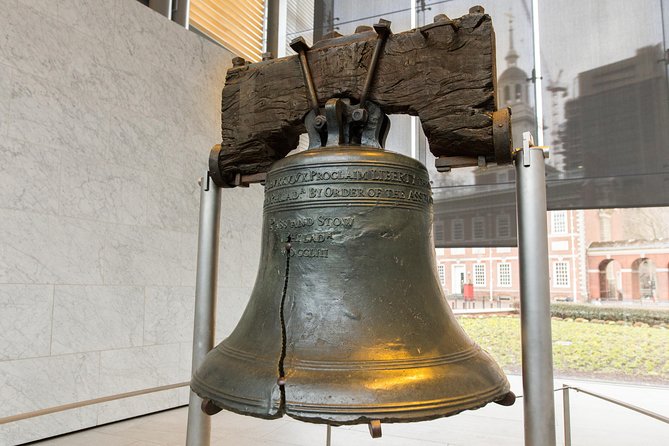
Stop 4: Liberty Bell Center
This is the quintessential icon of American freedom, and you’ll see the area tied to it. On this tour, think of it as a landmark moment and context-building stop, not an inside visit.
If you want to get closer later, this is the moment that tells you where to prioritize your time.
Stop 5: Independence Hall
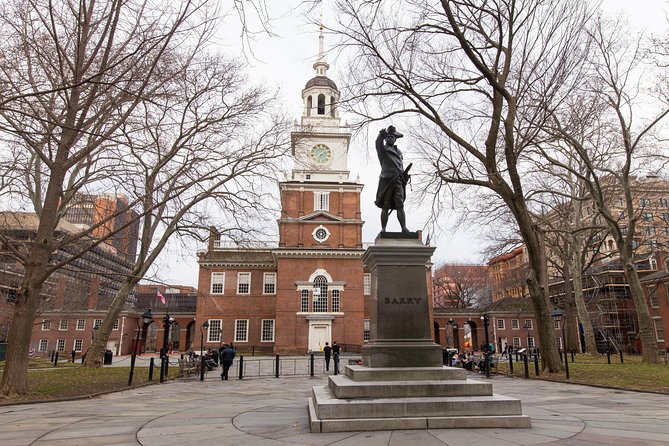
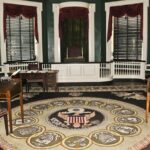
Independence Hall is the birthplace of America, built in 1732 as the Pennsylvania State House. Even without entering on this walk, standing in the orbit of the building helps you grasp why the location was so powerful.
Consideration: you’ll be viewing from outside, so treat this as the chapter opener, not the full museum reading.
Stop 6: Congress Hall
Congress Hall served as the United States Capitol, hosting the United States Congress from 1790 to 1800. It’s the stop where the “we declared” energy shifts into “we built a government” reality.
The guide’s explanation here helps you connect early federal power to Philadelphia’s role as the political engine of its time.
Stop 7: Old City Hall
This site is linked to the home of the U.S. Supreme Court. In a short stop, you’re basically being shown the early justice footprint—where government decisions were being shaped.
It’s a quick moment, but it adds depth to the Constitution story beyond voting and debate.
Stop 8: The Signer
You’ll see the statue called The Signer, inspired by George Clymer. It’s one of those pauses where art and identity meet public memory.
If you like seeing how people choose to remember history, this stop gives you something extra.
Stop 9: American Philosophical Society Museum
This stop points to the oldest scholarly society in the U.S. It’s a helpful reminder that nation-building wasn’t only political—it was also scientific and intellectual.
Even in a brief segment, it widens your understanding of what the founders valued.
Stop 10: Library Hall
Library Hall connects to the nation’s first public library and the former Library of Congress. That’s an important clue about how Americans thought information should work.
You’re not just seeing government buildings—you’re seeing the infrastructure of learning.
Stop 11: Second Bank of the United States
The Second Bank of the United States is one of the stop points for early finance and major Constitutional-era debates. Even if your interest is politics, money is part of the plot here.
Think of this as the “how did the new nation pay for itself” moment.
Stop 12: Carpenters’ Hall
Carpenters’ Hall is described as the birthplace of American identity. This is one of the stops where the guide’s storytelling can make the surrounding architecture feel like a participant in history.
It’s a quick stop, but it’s also a meaningful one for people who like the cultural side of the founding story.
Stop 13: New Hall Military Museum
This stop is about interpreting the role of the military in early U.S. history. It keeps the tour balanced because the founding isn’t only speeches and documents—it also involved security and conflict realities.
If your mind tends to connect everything back to practical power, you’ll appreciate this segment.
Stop 14: First Bank of the United States
The First Bank sparked the first great Constitutional debate. It’s a strong “pause and think” stop because it shows how the Constitution was tested in real life, not just recited.
For me, this is one of the best examples of why a walking tour like this is worth it: it turns abstract debates into specific places.
Stop 15: Franklin Court
Franklin Court is tied to Ben Franklin’s home and the only Colonial-themed Post Office. That’s a great switch from government and finance into everyday systems that move ideas.
If you’re a Franklin fan, this stop feels like a friendly wink.
Stop 16: Christ Church
Christ Church is an active parish since 1695 and is often called the Nation’s Church. This is where the tour connects religious life to public history.
It’s a short stop, but it adds a layer that many “just government” tours skip.
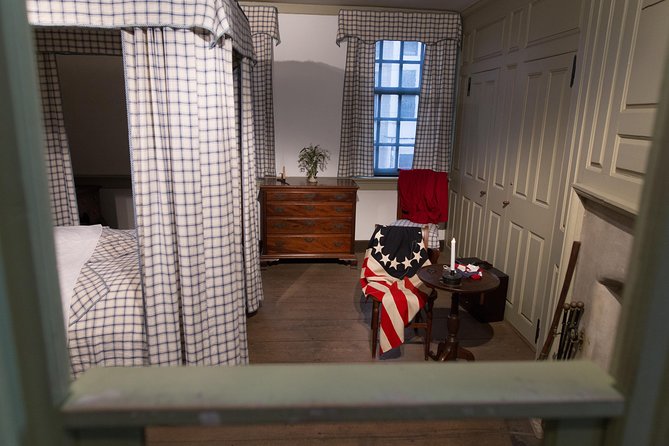
Stop 17: Betsy Ross House
This is where Betsy Ross sewed the first Stars and Stripes. Even if you already know the story, the location-focused stop makes it feel more grounded.
For families and history buffs, this is usually a crowd-pleaser moment—easy to remember and fun to picture.
Stop 18: Arch Street Meeting House
You’ll see the Arch Street Meeting House, home to the Society of Friends. This stop gives you perspective on how different communities shaped public life and civic beliefs.
It’s one of those stops that makes Philadelphia feel plural, not only political.
Stop 19: Christ Church Burial Ground
The final stop points to Benjamin Franklin’s final resting place, plus other founding figures nearby. It’s a thoughtful way to end because it reminds you that the people behind the documents were also bodies, families, and legacies.
It lands with a quiet tone, even though the tour is brisk.
The guide matters: what the best tours feel like
A lot of the best experiences on this route come down to the guide’s pacing and how comfortable they are with questions. In the experiences shared with me through guide names like PJ, John, Will, Abby, Avi, Connor, Viv, and Michael, the repeated theme is clear: people feel they get context, not just facts.
In practice, that means you can ask, How do these buildings connect? and the guide can connect the dots on the spot. And because stops are short, a strong guide knows how to keep your attention without turning it into a lecture marathon.
One real caution: street noise can get in the way. Wind and traffic sometimes compete with the explanation, so stand where the guide is speaking and avoid drifting away during the tight stop moments.
Practical tips so you enjoy the walk instead of just surviving it
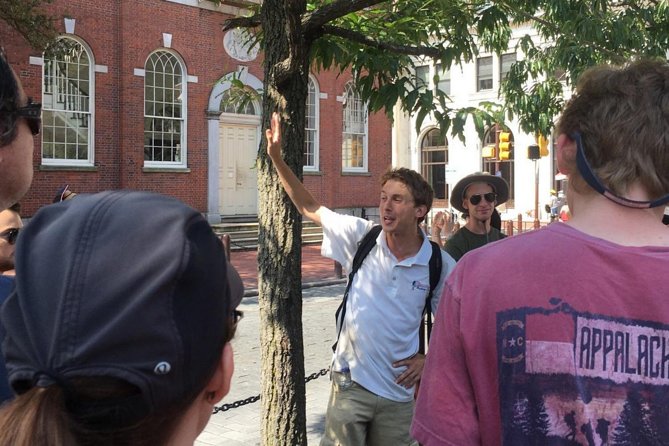
This tour is only about 75 minutes, but you’ll feel it in your legs because it’s a steady walk with quick pauses. I’d treat it like a smart city stroll, not a casual park walk.
Here’s how to set yourself up:
- Wear walking shoes with a little grip.
- Bring water, especially on warmer days.
- Dress for weather since the tour runs rain or shine.
- On sunny days, a hat helps.
- If you’re arriving early, use the time to get your bearings at the meeting spot so you don’t stress during check-in.
Also, plan to do the inside visits you care about later. This tour is designed to help you pick priorities, not to replace the on-site tickets and security lines.
Who this tour fits best
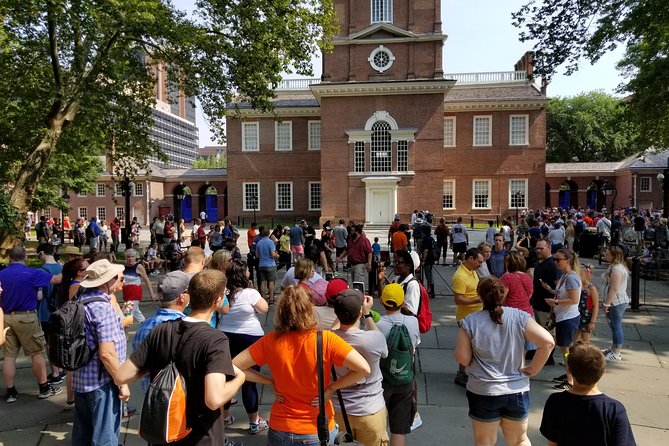
This is a great choice if you want the founding-era storyline in one efficient loop. I’d steer you toward it if:
- It’s your first time in Philadelphia and you want orientation fast
- You like short explanations tied to places you can revisit later
- You’re traveling with kids (the quick stop format can work well for younger history fans)
- You prefer walking over bouncing between taxis and waiting rooms
If you’re the type who wants to spend a full morning inside major sites like Independence Hall and the Liberty Bell experience, you’ll probably still enjoy the walk—but you’ll want to pair it with separate museum or ticketed time after.
Should you book the Constitutional Walking Tour of Philadelphia?
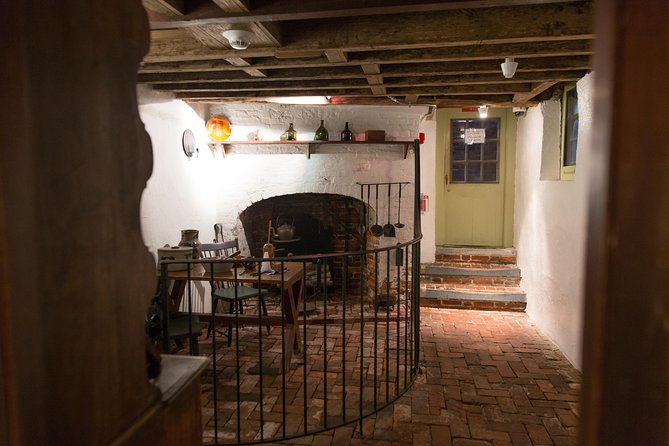
Yes, you should book it if you want a structured way to understand why Independence Hall and the Liberty Bell area matter, without losing your whole day to lines. The $30 price feels fair because you’re buying a guided route through a tight cluster of landmark stops, plus a story that makes later visits click.
Skip it (or at least adjust expectations) if your main goal is interior access during the tour. This one is about seeing the places from the outside, learning the context, and then going back for the sites that pull you in.
If you do book, show up ready to walk, ask questions, and treat the 75 minutes as your best starting point in Philadelphia’s constitutional neighborhood.
FAQ
How long is the Constitutional Walking Tour of Philadelphia?
It runs about 1 hour 15 minutes (approximately 75 minutes).
Where does the tour start?
The meeting point is outside the main entrance of the National Constitution Center, 525 Arch St, Philadelphia, PA 19106, by three large stone benches.
Does the tour include admission to historic sites?
No. Admission tickets for the historic sites are not included, so you’ll need to plan separate visits if you want to go inside.
Will I be able to go into places like Liberty Bell or Independence Hall during the tour?
This tour is designed as an outdoor walk with stops outside the sites, so you should not count on going inside during the 75-minute route.
Does the tour operate in bad weather?
Yes. The tour operates rain or shine.
What language is the tour offered in?
The tour is offered in English.
How big is the group?
The tour has a maximum of 40 travelers.
What time should I arrive before the tour starts?
Check in about 15 minutes before the tour begins.