REVIEW · BIG ISLAND OF HAWAII
Big Island GOAT Experience: Mauna Kea Summit, Sunset & Stars
Book on Viator →Operated by Hawaii Island Holidays · Bookable on Viator
Mauna Kea at night feels like a different planet. This small-group sunset-and-stars trip gets you up to the summit by 4×4 van, then layers in real astronomy tools plus Hawaiian stories about why this place matters. I especially love the included warmth setup (jacket and gloves) and the way the guide uses a laser pointer and telescope time to help you actually find what you’re looking at.
One possible drawback is the cold. Even with the provided layers, you’re at high altitude where wind and low temperatures can bite fast, and the stargazing portion depends on weather.
In This Review
- Key highlights to know before you go
- Why Mauna Kea’s sunset-and-stars tour hits so hard
- Price and value: what $289 really buys you
- Getting picked up: Hilo, Waikoloa, or Kona plus the long climb
- The Halepōhaku stop: Poli’ahu and the Onizuka Center layer
- The summit hour at Mauna Kea: warmth, laser pointers, and telescope time
- What you can spot in the sky, and why moon and clouds change everything
- How to dress so you don’t cut the magic short
- Photos and the little comforts that matter at 13,000+ feet
- Who this tour fits best (and who should reconsider)
- Should you book the Big Island GOAT Mauna Kea Summit Sunset and Stars tour?
- FAQ
- Where is pickup available for this Mauna Kea sunset and stargazing tour?
- What should I wear for the summit?
- Will we get to use a telescope during the tour?
- How high does this experience go, and is it strenuous?
- Who isn’t allowed to join?
- Is food included, and are there restrooms?
- What happens if the tour is canceled due to weather?
Key highlights to know before you go
- Small-group feel (max 14 people): easier conversations and less waiting around than big bus tours.
- 4×4 summit access: you skip the driving and focus on the sky once you’re up there.
- Warm gear + hot drink timing: you’re suited up right when the temperature usually drops the most.
- Guide-led sky spotting: a laser pointer and a professional Celestron telescope help you see more than random dots.
- Halepōhaku cultural stop: Poli’ahu, kapu, and astronomy culture meet in one evening.
- Free professional night photo: a DSLR shot from the experience means you don’t have to gamble on camera settings.
Why Mauna Kea’s sunset-and-stars tour hits so hard
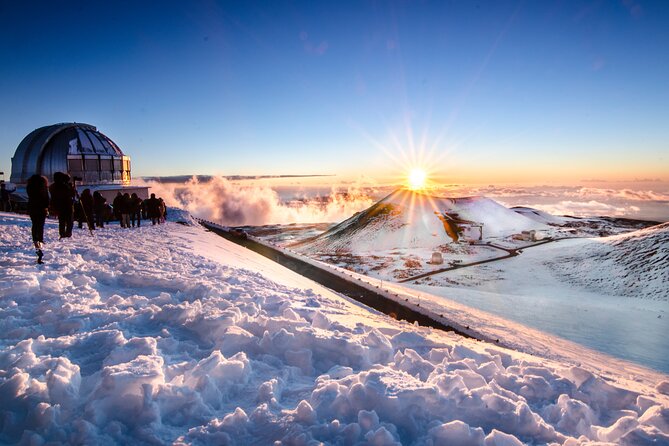
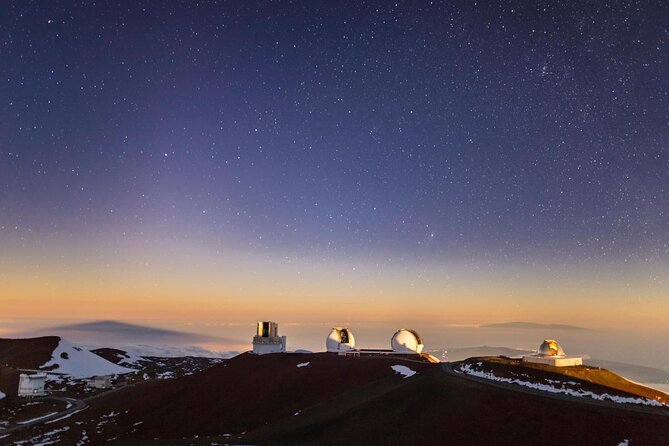
You’re not just watching a sunset. You’re starting near sea level, then climbing to a height where the air gets thin and the sky gets sharp. That altitude shift is the whole point: it changes how the horizon glows at dusk and how many stars you can pull out once it’s dark.
What makes this style of tour click is the pacing. You get a summit sunset period, then you shift into stargazing with hands-on help from your guide. The result is that you’re not stuck asking, Now what am I supposed to see?
And unlike a pure science tour, you also get the cultural context. Stops are designed to remind you this is a sacred place in Hawaiian tradition, even though it’s also where many research telescopes operate today.
You can also read our reviews of more tours and experiences in Big Island of Hawaii.
Price and value: what $289 really buys you
At $289 per person, this isn’t a casual add-on. You’re paying for the whole package that keeps the evening from turning into logistics and guesswork.
Here’s what your money covers:
- Round-trip 4×4 van transportation from select pickup points (Hilo, Waikoloa Village, or Kailua-Kona).
- Jackets and gloves for summit cold.
- Snacks and a hot beverage during the climb and at the mountain.
- An experienced guide who talks story and sky.
- A professional Celestron telescope for star viewing, weather permitting.
- A free night photo taken with a professional camera.
If you try to do this independently, you’ll spend time solving the transportation piece, plus you still need warm layers, timing, and someone to point out what matters in the sky. This tour buys you time and confidence—especially if it’s your first trip to Mauna Kea.
Getting picked up: Hilo, Waikoloa, or Kona plus the long climb
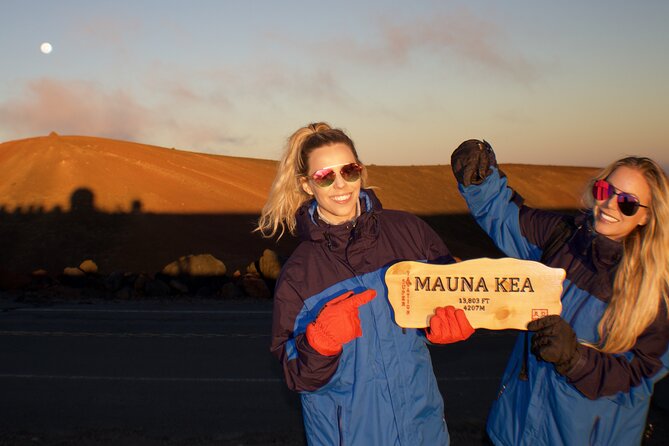
Your evening starts with pickup from one of three areas: Hilo, Waikoloa Village, or Kailua-Kona. You ride in a comfortable 4×4 van, and the group is limited to 14 people, which helps keep the drive from feeling like a cattle call.
Expect a full-day time commitment. The experience runs about 7 to 8 hours, so plan on using the day only for this. The upside is that the long ride gives the guide time to set context—volcano basics on the way up, and then how to think about what you’ll see once you’re above the clouds.
Also, treat altitude as real. The summit area sits around 13,796 ft (4,205 m), while the visitor area is about 9,200 ft (2,800 m). The tour says you should have moderate physical fitness, because there’s a significant altitude change. Even short periods outside can feel intense if you run cold or get breathless.
The Halepōhaku stop: Poli’ahu and the Onizuka Center layer
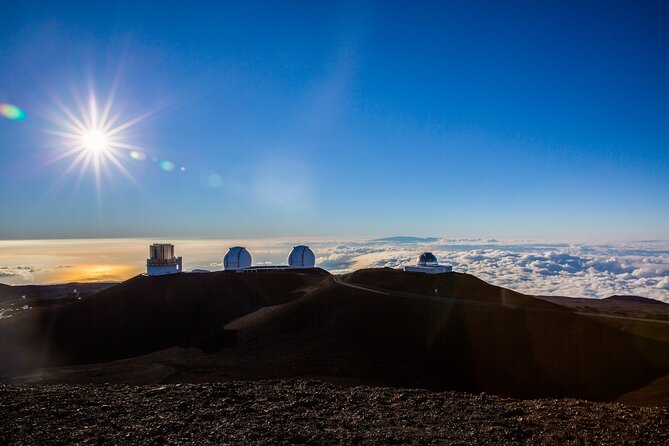
Before you’re fully focused on astronomy, you stop at Halepōhaku – Onizuka Center for International Astronomy, for about 30 minutes. This part matters because it reframes Mauna Kea as more than an observatory hill.
Here’s what you’re taught during this time:
- Poli’ahu is part of Hawaiian tradition tied to the mountain.
- Other deities connected to Mauna Kea include Lilinoe and Waiau.
- In ancient times, the summit was under kapu (forbidden) rules, limited to the highest chiefs and priests.
- Queen Emma is noted as the last royal visitor who made the long trek in 1881 to see the summit and rejuvenate at Lake Waiau.
You also learn how modern astronomy fits into the same place. Today, Mauna Kea is home to 13 international observatories, yet it remains sacred in Hawaiian culture. That mix—science and tradition side by side—makes the telescope hour feel less like a random activity and more like something you’re participating in thoughtfully.
The summit hour at Mauna Kea: warmth, laser pointers, and telescope time
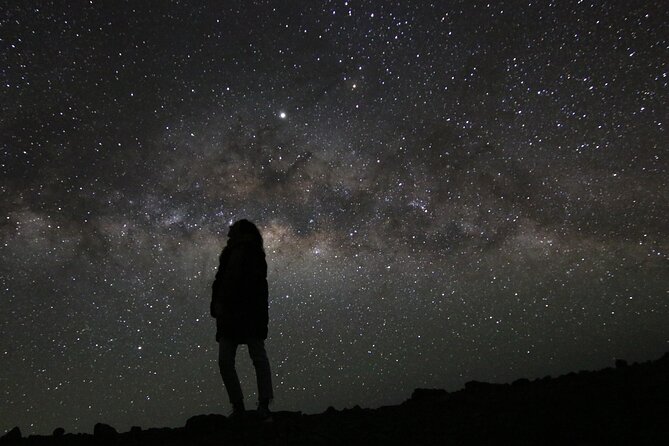
The main event is the summit stop, where you’re there for about 4 hours. You’ll ride up by vehicle, then get suited up with a provided jacket and gloves, plus warm drinks and snacks to keep you functional once it gets cold.
This is also where the tour’s approach to stargazing shows its value. Your guide doesn’t just say, Look up. They use a laser pointer to help you locate specific targets, and they bring out a professional Celestron telescope so you can view objects up close.
A key detail: telescope time is weather dependent. On a clear night, you’ll likely be stunned by how much you can see with the naked eye, and then the telescope adds a second layer. On cloudy nights, the stargazing portion can be limited, even if the sunset is still beautiful. That’s not a tour “failure.” It’s just how astronomy works at altitude.
One more practical note: you’ll be outside for stretches. Some people describe the cold as intense even with layers, including issues like one-size-fits-all gear or not-warm-enough gloves. So treat the provided jacket and gloves as helpful backup, not your only plan.
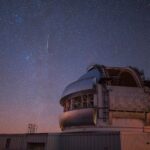
What you can spot in the sky, and why moon and clouds change everything
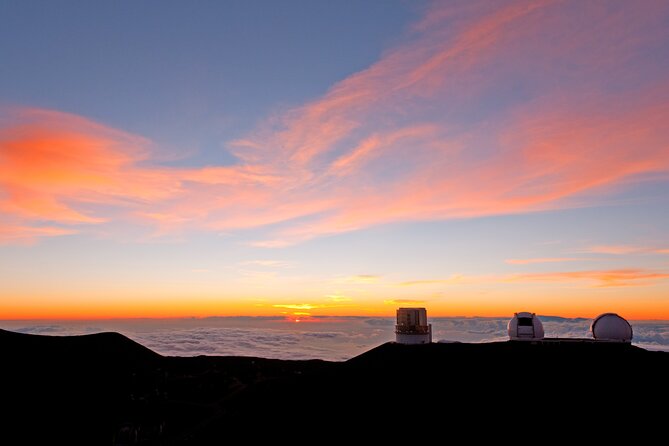
On Mauna Kea, the stars you see aren’t just “more stars.” The sky feels crisp and layered. The guides are also set up to help you orient fast, so you’re not guessing your way through constellations.
If conditions cooperate, you may see:
- A dense star field that’s hard to believe until you’re standing under it
- Constellations and planets pointed out by the guide
- Bright targets through the Celestron telescope (like galaxies and nebulae)
You might also catch moving objects. One of the fun surprises reported is spotting things like satellites such as ISS and Starlink on clear nights. Don’t treat that as guaranteed, but it’s a good example of what makes guided sky time better than a solo wander.
Moonlight is another reality check. A brighter moon can make some stars harder to see, and your experience will shift with the sky you get. The tour can’t control the moon or the clouds, so if stargazing is your top priority, go in with flexible expectations and trust the guide to make the best of what’s visible that night.
How to dress so you don’t cut the magic short
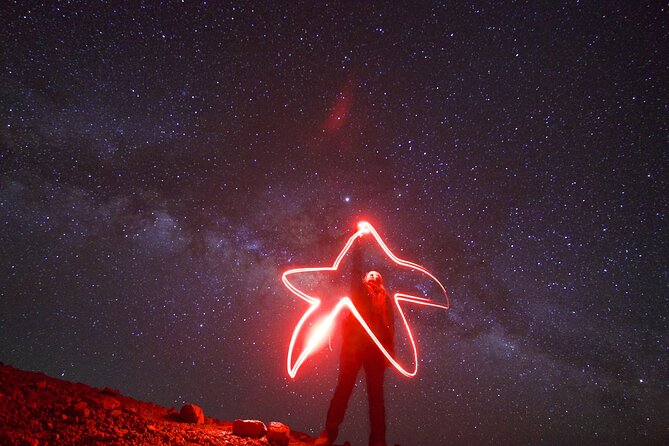
Cold is the big swing factor here. Even with the included jacket and gloves, you should dress for wind and freezing air at elevation.
My best advice is to plan a system:
- Layers you can add and remove
- Warm socks (feet chill faster than you expect)
- A hat or beanie
- Gloves you already know fit (even if you’ll also use the provided ones)
- If you tend to get cold, consider hand warmers or toe warmers
Some people found the provided gloves weren’t enough on their own, and they were still freezing even after using the loaner jacket and layers. That doesn’t mean you’ll have the same experience, but it does mean you’ll feel better if you arrive prepared.
Also, think about how you’ll handle walking and standing outside at height. Moderate fitness is enough for most people, but you should avoid this tour if you have limits that make altitude or cold hard for you.
Photos and the little comforts that matter at 13,000+ feet
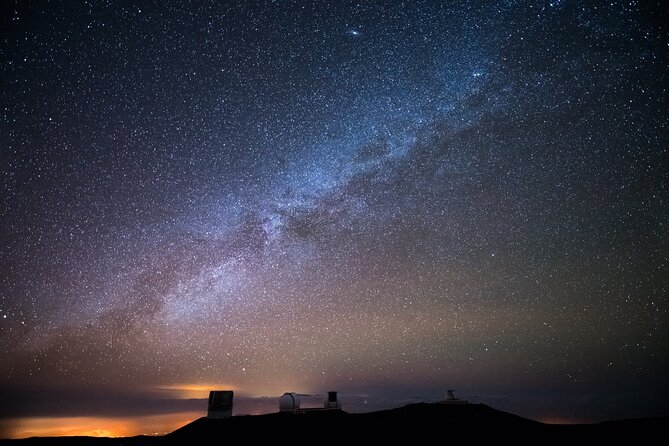
One standout inclusion is a free night photo taken using a professional camera. That’s a big deal because you’re dealing with darkness, wind, and cold fingers. You’ll spend less time fighting settings and more time actually looking up.
You’ll also get snacks and a hot beverage. It’s not a full meal, but it helps you stay steady during the climb and during the periods outside. If you want dinner, plan on bringing your own packed food. The tour notes that dinner isn’t included and there’s no food purchase available when you arrive.
Finally, the guide’s role isn’t only astronomy. The best evenings run smoothly because the guide keeps everyone comfortable and informed. Some guides are especially strong at making you feel safe and cared for while you’re at altitude and standing in the wind.
Who this tour fits best (and who should reconsider)
This is a great match for you if:
- You want guided stargazing with tools and a laser pointer, not just a viewpoint
- You care about both astronomy and Hawaiian cultural context
- You’re okay with a long day and lots of outside time
- You prefer small-group energy (max 14 people)
It’s a tougher match if you:
- Are under 13 (not allowed)
- Are pregnant (not allowed)
- Have heart problems or other serious medical conditions (not allowed)
- Struggle with altitude or cold despite layers
Even if you’re generally healthy, altitude can affect people differently. This is one of those tours where you should be honest with yourself about how you respond to height and temperature, not just how you handle hikes on a nice beach day.
Should you book the Big Island GOAT Mauna Kea Summit Sunset and Stars tour?
If your goal is a high-impact Mauna Kea night without driving yourself, I think this is a solid choice. The value comes from the full “experience bundle”: 4×4 transit, warm gear, snacks and hot drinks, a guide to point things out, telescope viewing weather permitting, and a professional night photo.
Book it if:
- You want the best chance at seeing more than random stars
- You like guided context (culture plus science)
- You’re ready to dress for real cold and stand outside
Skip it or rethink if:
- You’re not comfortable with altitude changes
- Cold temperatures would be a deal-breaker even with layers
- You’d be upset if clouds limit stargazing (because the telescope and sky viewing are weather dependent)
If you pick the right date and show up dressed for freezing wind, this is the kind of night you’ll remember long after you’re back on the beach.
FAQ
Where is pickup available for this Mauna Kea sunset and stargazing tour?
Pickup is available from select locations in Hilo, Waikoloa Village, and Kailua-Kona. You’ll need to select the correct pickup option during booking.
What should I wear for the summit?
You should dress for very cold conditions. The tour provides jackets and gloves, but you’ll still want warm layers under them.
Will we get to use a telescope during the tour?
You may get to use a professional Celestron telescope to view the night sky. The tour notes that this telescope viewing is weather permitting, and the observatories themselves are operated by different organizations.
How high does this experience go, and is it strenuous?
The visitor area is at about 9,200 ft (2,800 m), and the summit reaches about 13,796 ft (4,205 m). The tour is described as requiring moderate physical fitness, mainly because of the significant altitude change.
Who isn’t allowed to join?
The tour states that it’s not allowed for travelers under 13, pregnant travelers, and travelers with heart problems or other serious medical conditions.
Is food included, and are there restrooms?
Snacks and a hot beverage are included, but dinner is not included. Restrooms are available at the Mauna Kea Visitors Center, and there are also portable restrooms near the summit.
What happens if the tour is canceled due to weather?
This experience requires good weather. If it’s canceled due to poor weather, you’ll be offered a different date or a full refund.