REVIEW · BIG ISLAND OF HAWAII
Big Island: Mauna Kea Summit Tour with Free Night Star Photo
Book on Viator →Operated by Hawaiian Eyes Tour · Bookable on Viator
Mauna Kea feels unreal after dark. This tour gets you up to the summit with a guide, then into the night sky using a telescope and a laser pointer, all with small-group comfort (max 12). I especially like the included winter gear and the free DSLR photos the guides take while you’re bundled up for sunset and stars.
One thing to plan for: it’s cold and weather-dependent. Even with the best night-sky planning, visibility for sunset or stargazing isn’t 100% guaranteed, and you may get time adjustments if altitude or conditions require it.
In This Review
- Key points before you go
- Mauna Kea summit night: what you’re really paying for
- Pickup setup and the long drive you should expect
- Stop at Onizuka: acclimatize first, then go higher
- Dinner and what you’ll actually eat
- The 4×4 van to the summit: sunrise is optional, sunset is the goal
- Sunset at 13,800 feet: why the cold is part of the magic
- Stargazing at Onizuka: refractor telescope and laser pointer teaching
- The photo bonus during stargazing
- Group size and guide style: why small matters on a summit night
- Price and value: is $280 a good deal?
- Who this tour fits best (and who should skip it)
- Weather reality: how to get the best night-sky odds
- Should you book this Mauna Kea summit tour?
- FAQ
- Where do I get picked up?
- Is the summit tour in a 4×4 vehicle?
- What food and drinks are included?
- What winter gear is provided?
- Is stargazing guaranteed?
- Who can’t join the tour?
Key points before you go
- Warm summit gear is included: snow parkas, ski pants, and gloves, plus hot drinks and a light meal.
- Free DSLR photo package: the guide takes group sunset and star-gazing photos with you, weather and moon phase permitting.
- A real acclimatization stop at Onizuka (about 9,000 ft / 2,800m) before the summit.
- Up-close astronomy time at night using a refractor telescope and a laser pointer to guide what to look for.
- Multiple pickup options in Kona, Waikoloa, and Waimea, with a small-group van ride.
Mauna Kea summit night: what you’re really paying for
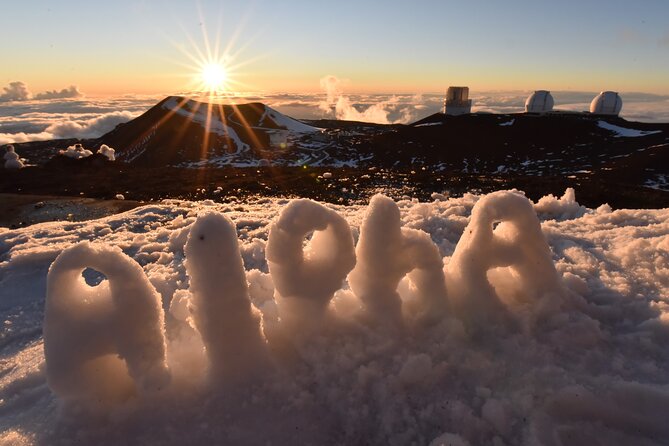
This is an 8-hour, small-group Mauna Kea summit experience priced at $280 per person. At first glance, that number can feel steep—until you add up what matters on Mauna Kea: approved summit access, a 4×4 vehicle for the steep route, altitude pacing, and an actual guided night-sky session (not just a drive-by photo stop).
You’re also paying for comfort that’s easy to underestimate. The summit is seriously cold even if the coast feels warm, so having snow parkas, ski pants, and gloves included changes the whole experience. You’re more likely to stay out long enough to enjoy the sky instead of rushing back down.
And the free photo part is more than a nice extra. The guides shoot your group at sunset and again during stargazing, and you receive the DSLR images for free when conditions allow. If you’ve ever tried to take your own star photos and failed because you were shaking with cold, you’ll appreciate this setup.
You can also read our reviews of more tours and experiences in Big Island of Hawaii.
Pickup setup and the long drive you should expect
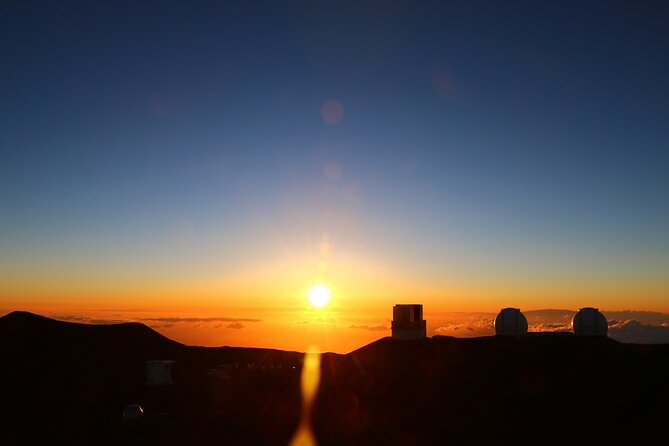
Your night starts with an easy meet-up—either at Target or Queens’ Marketplace, depending on where your lodging sits. You’ll have a choice of three pickup points: Target in Kona, Queens’ Marketplace in Waikoloa, or Gilbert Kahele Recreation Park in Waimea. Pickup times vary by season, so you’ll want to watch the timing updates after confirmation.
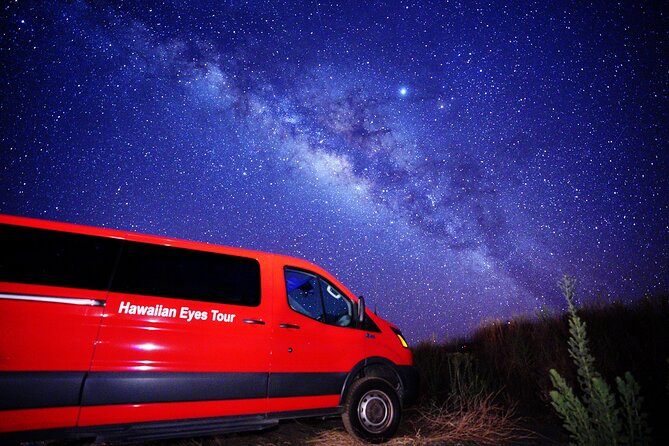
From there, you’ll ride in a 4×4 passenger van up toward the summit. The roads are bumpy (part of the deal here), so the ride is part sightseeing and part patience. One review experience that matches what you should plan for: the drive is long and you’ll likely feel the time both ways, even though the ride itself is handled safely.
Practical tip: dress for the van ride too. Even before you reach high altitude, you can feel wind and temperature shifts once you head upward.
Stop at Onizuka: acclimatize first, then go higher
Before you ever get anywhere near the summit, you stop at the Onizuka Astronomy Complex Visitor Information Station at about 2,800m / 9,000 ft. This is not just a break. It’s built around acclimatization and getting everyone into the right clothing.
At Onizuka, you’ll do three key things:
1) Change into the winter gear (parkas, ski pants, gloves).
2) Eat a light pre-summit meal while you adjust.
3) Use the gift shop if you want souvenirs (no food or drink sales here).
That acclimatization stop matters because altitude can hit fast, and Mauna Kea is no joke. The tour also notes that if someone has altitude sickness or other conditions, time spent at the summit and the stargazing location may change. That’s why the pace here is cautious rather than rushed.
Dinner and what you’ll actually eat
Dinner is a BLT or a vegan sandwich. You’re asked to specify your choice by the day before the tour; if you don’t, it’s automatically a BLT. You’ll also get hot drinks, which is handy after you layer up and before you start climbing into colder air.
This is a small meal, not a full dinner feast. That’s the right move for a high-altitude day: you don’t want a heavy stomach while your body is busy adjusting.
The 4×4 van to the summit: sunrise is optional, sunset is the goal
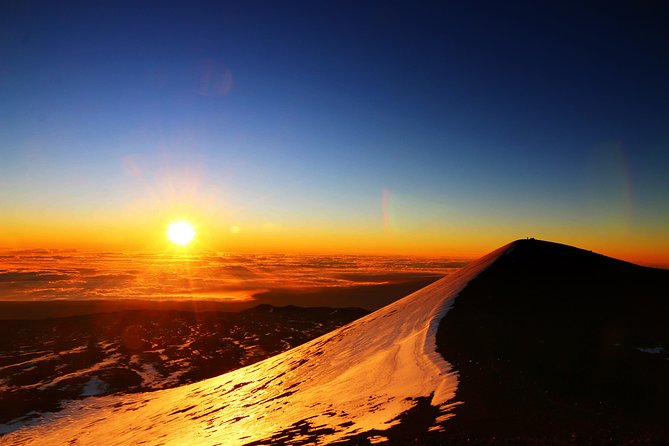
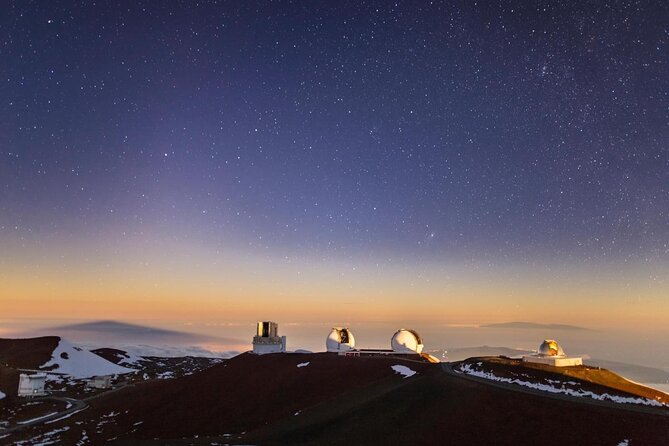
The summit part of the tour is focused on sunset, not a full-day hike. You travel to the Mauna Kea summit area at around 13,796–13,803 ft (about 4,205m).
Once you arrive, you’ll see the observatory area from the top and wait for sunset. The experience is timed so you’re there with enough daylight to soak in the view and then watch the sky change as darkness falls.
Here’s where the free photos come in. Guides take DSLR photos of you at sunset as well as during stargazing afterward. You’ll probably be asked to pose, but it’s quick and fun—especially if you like the idea of getting real photos without playing photographer while you’re shivering.
One more reality check: rangers can close roads depending on conditions. The tour is set up to handle changes, and your guide will keep you informed if access or timing shifts.

Sunset at 13,800 feet: why the cold is part of the magic
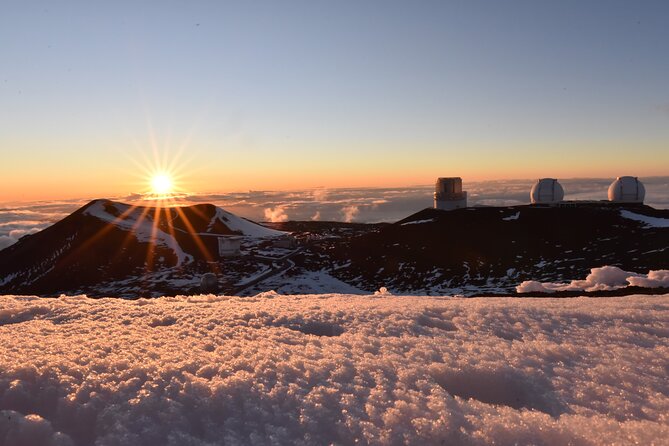
Seeing the sun sink from this altitude feels almost unfair. You’re above a lot of cloud cover potential, and the change in light happens quickly once the summit is fully in its evening pattern. Even when clouds blur things, the experience still lands because you’re at the highest point in Hawaii with the observatories nearby.
But yes—this is the drawback most people feel. It’s freezing. Even if you’re from a cooler climate back home, the Mauna Kea summit air is different. The provided gear helps a lot, yet you still feel the cold wind once darkness hits.
That’s why the tour’s approach makes sense: it gives you the layers before you get to the summit and gives you hot drinks at the right time. You get to enjoy the moment instead of spending it trying to survive.
Stargazing at Onizuka: refractor telescope and laser pointer teaching
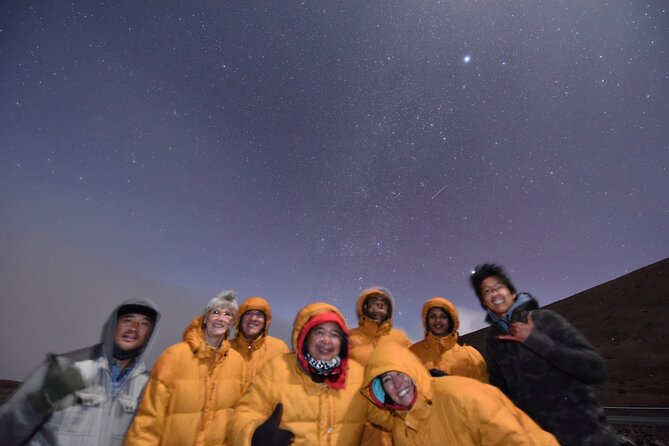
After sunset, you head back down to the Onizuka Astronomy Complex for stargazing. The stargazing session is about 45 minutes. The guides use a refractor telescope and a laser pointer to show you what to look at in the night sky.
What you get out of this part depends on conditions. The tour notes that the stargazing location may vary based on weather, and moon phase affects visibility. That’s normal here. Stars are bright when the sky is clear and dark, and planning still works even if conditions are only decent.
The guide explains stars, constellations, and planets during the viewing. If you want a guided way to learn the sky, this is better than just staring up on your own. You’ll know what you’re looking at instead of guessing and feeling like you missed the whole point.
The photo bonus during stargazing
You also get an astro photo taken with you included in the session (again, weather and moon phase permitting). This is one of those “worth it” elements because it removes the stress of trying to frame yourself near the telescope while everything is cold and moving.
Group size and guide style: why small matters on a summit night
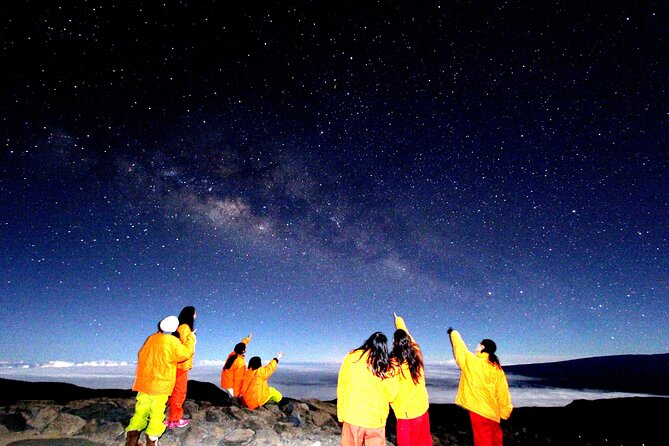
This tour caps at 12 travelers, which changes the vibe. On Mauna Kea, time and temperature are both tight. A small group means less waiting, faster photo turnaround, and more chances for your guide to manage questions.
Guides are also a major part of the experience. In the experiences I gathered, guides like Wes, Chris, and James came up repeatedly. They’re described as prompt, friendly, and serious about safety—especially with altitude tips and adapting when roads close. You don’t just get a “ride up.” You get someone watching the schedule, the skies, and the comfort level of the group.
If you’re the type who likes clear instructions—where to stand, when to change layers, when to use the bathroom breaks—this structure usually works well.
Price and value: is $280 a good deal?
$280 for about 8 hours can sound like a lot, until you price out the moving parts:
- summit admission access
- 4×4 transport to the summit
- warm gear (parkas, ski pants, gloves)
- hot drinks and a light meal
- guided astronomy using a telescope and laser pointer
- a free DSLR photo package
For many people, the included gear is the value anchor. If you had to rent or buy summit-ready clothing, the cost would jump quickly. Add in the guided stargazing time and you’re not just paying to get “somewhere.” You’re paying to understand the sky and come away with photos that don’t depend on your camera skills.
One more value angle: the tour is popular and is often booked about 25 days in advance. That’s a sign you should reserve early, especially if you have tight Big Island timing.
Who this tour fits best (and who should skip it)
This is not an easy casual evening stroll. It’s a moderate physical effort day because you’re going to very high elevation and standing outside in cold wind conditions.
It can work well for:
- couples and solo travelers who want one “do it right” night on Mauna Kea
- people who want guidance for stargazing rather than figuring out the sky alone
- anyone who values included gear and photos, not just transportation
It may not be a good match if you:
- are under 16 or older than 75 (not allowed)
- weigh more than 300 lb (not recommended)
- have respiratory problems such as asthma
- struggle with altitude even with a cautious pace
If you’re on the fence, think about your tolerance for cold and your comfort with altitude. The tour does adjust timing when needed, but you still need your body to handle the plan.
Weather reality: how to get the best night-sky odds
Mauna Kea weather is famously changeable. This tour is still worth booking because it includes the structure to respond—but don’t assume you’ll always get the exact sky you hope for.
The tour explicitly notes that sunset or stargazing are not 100% guaranteed due to bad weather, and moon phase changes what you can see clearly. If you can, give yourself flexibility on your Big Island schedule. Booking earlier in your trip is a smart move so you have options if conditions aren’t cooperating.
Should you book this Mauna Kea summit tour?
I’d book it if you want a classic Mauna Kea night with the practical comforts handled: warm gear, hot drinks, a light meal at acclimatization height, a summit sunset experience, and a guided telescope session with photos included. The small-group size makes the whole thing feel more personal and controlled, which matters when the temperature drops and the sky gets the spotlight.
Skip it if you’re not comfortable with cold wind or if altitude is a major concern for you. Also, if you’re hoping for guaranteed clear skies no matter what, you’re setting yourself up for disappointment anywhere on Mauna Kea.
FAQ
Where do I get picked up?
You can be picked up at one of three locations: Target in Kona, Queens’ Marketplace in Waikoloa, or Gilbert Kahele Recreation Park in Waimea. Pickup timing varies by season, and you’ll receive details about pickup time and location after confirmation.
Is the summit tour in a 4×4 vehicle?
Yes. The tour includes a 4×4 passenger van that takes you up to the summit area.
What food and drinks are included?
You’ll have a light meal at the Onizuka stop, and dinner is BLT or a vegan sandwich. Hot drinks are included, and you should specify the sandwich type by the day before the tour (otherwise it defaults to BLT).
What winter gear is provided?
The tour includes snow parkas, ski pants, and gloves so you can stay warm at altitude.
Is stargazing guaranteed?
No. Bad weather can affect both sunset and stargazing, and moon phase impacts visibility. The stargazing location may also vary depending on conditions.
Who can’t join the tour?
The tour notes that participants must be at least 16 years old and no older than 75. It also states it’s not recommended for people with respiratory problems such as asthma and not recommended for weight more than 300 lb.