REVIEW · NEW YORK CITY
Central Park Pedicab Guided Tours
Book on Viator →Operated by NYC Park Tours™ | Central Park Tours · Bookable on Viator
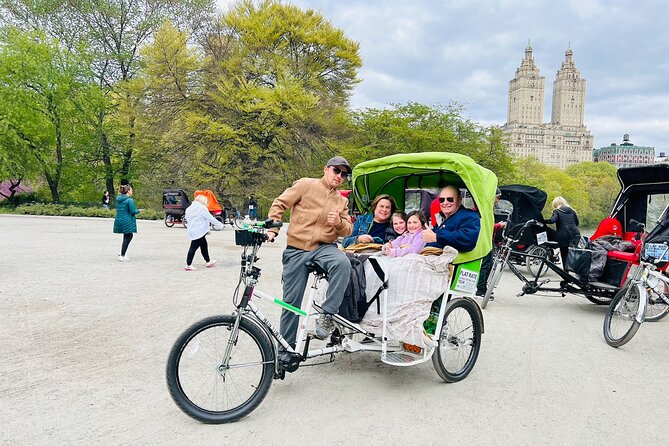
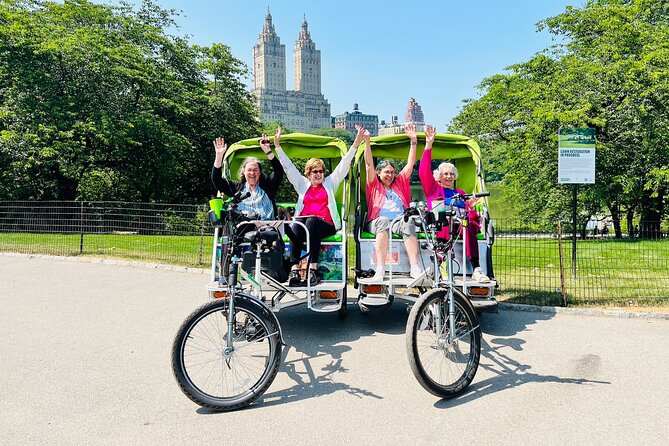
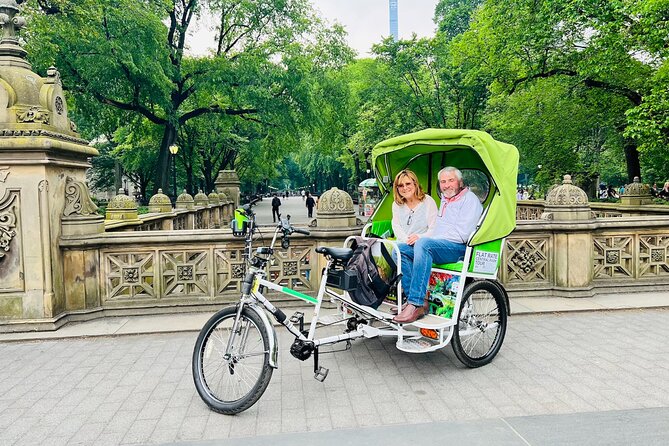
Central Park can be a lot. A pedicab tour turns it into an easy, guided loop. You get a bicycle-powered cab ride that covers huge ground fast, plus stops at the sights people come for, including Bethesda Fountain, Strawberry Fields, and the bridges that show up on screens.
Two things I really like: the private feel (it’s just your group) and the way guides work in lots of quick photo moments without turning it into a sprint. Another plus is the warm blanket included for cold weather, which makes a big difference when your plans run into winter.
One consideration: the tour depends on weather, and if you’re sensitive to strong accents, you’ll want to ask your guide to slow down if needed.
In This Review
- Key Things That Make This Pedicab Tour Worth It
- A Quick Way to Get Your Bearings in 843 Acres
- Price and Value: Why $38 Can Make Sense
- How the Pedicab Ride Works: Pace, Stops, and Practical Timing
- The First Hour: Central Park Hits You Can Actually Use
- Wollman Rink, Gapstow Bridge, Pond Edges, and the Zoo Zone
- Bethesda Fountain and Terrace: The Park’s Most Famous Stage
- Bridges, Monuments, and the Dakota-to-Strawberry Fields Connection
- The Met Museum Edge, the Reservoir, and Belvedere Castle Views
- Warm Weather, Cold Weather, and What You Should Bring
- Who This Pedicab Tour Fits Best
- Should You Book This Central Park Pedicab Tour?
- FAQ
- How much does the Central Park pedicab guided tour cost?
- How long is the tour?
- Is the tour private or shared?
- What language is the tour offered in?
- Where do we meet for the tour?
- Is admission included for the sights we stop at?
- What should I expect in cold weather?
- Are tips or hotel pickup included?
Key Things That Make This Pedicab Tour Worth It
- Private ride for your party so you can go at your pace and ask questions
- Warm blanket in cold weather, plus taxes and fees included
- Movie-location style stops paired with real park history and practical sight-ordering
- Photo help built in, not an afterthought
- A smart coverage plan for first-timers who want iconic sights without walking for hours
- Longer options exist, adding big-name landmarks like the Met area and Belvedere Castle
A Quick Way to Get Your Bearings in 843 Acres
Central Park is 843 acres of paths, drives, ponds, bridges, and little worlds. If you try to do it all on foot, you’ll spend half your day crossing from one “must-see” to the next. A pedicab fixes that. You’re seated and your guide handles the route, so you can focus on seeing.
This tour is also efficient in a very practical way. Central Park has natural “dividers” (lake edges, drives, elevation changes, crowds near the popular areas). Instead of fighting the park, you ride the lines that connect major zones.
And because it’s a bicycle-powered cab, it’s a low-friction, eco-friendly way to tour. You’re not hauling a stroller across hills. You’re not squeezing through thick lanes of foot traffic just to reach the next view.
You can also read our reviews of more tours and experiences in New York City.



Price and Value: Why $38 Can Make Sense
At $38 per person, the math can be surprisingly reasonable, especially for first-time visitors. You’re not just paying for transportation. You’re paying for a guide who knows how to sequence stops so you don’t waste time backtracking.
What helps the value: the tour includes a warm blanket in cold weather, and it also includes all taxes and fees. That matters in New York, where “cheap tickets” can become less cheap once you add extras.
It’s also private, meaning you’re paying for attention. In a park this big, having someone explain what you’re looking at makes the time feel fuller, not just “we went past it.”
One caution on value: the longer you choose, the more you get. The tour is offered in 1 to 3 hours, and it looks designed as a short highlights loop or an extended route adding bigger landmarks. If you’re tight on time, you can keep it short and still come away with the core hits.
How the Pedicab Ride Works: Pace, Stops, and Practical Timing
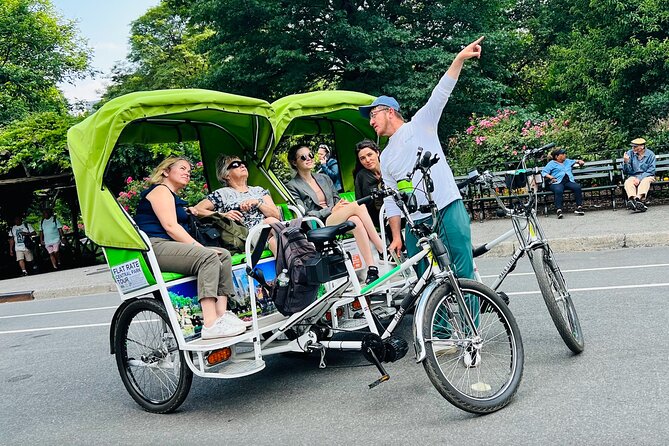
You meet at 1411 6th Ave, New York, NY 10019, near public transportation, and the tour ends back at that starting point. It’s set up like a guided loop, so you aren’t trying to solve navigation on your own while also watching for traffic patterns and crowded pedestrian areas.
The ride is structured around a series of short photo stops and quick look-and-learn moments. Many of the sights are external viewpoints in the park, so you typically won’t feel like you’re waiting in long entry lines. Where admission comes into play, the tour indicates what’s covered and what isn’t.
You’ll also get photo help. In the experience of people who’ve done it, the guides tend to pause at the right angles and step in to help capture pictures. In a place like Central Park, that can be the difference between “we took one decent shot” and “we actually got the iconic postcard view.”
The First Hour: Central Park Hits You Can Actually Use
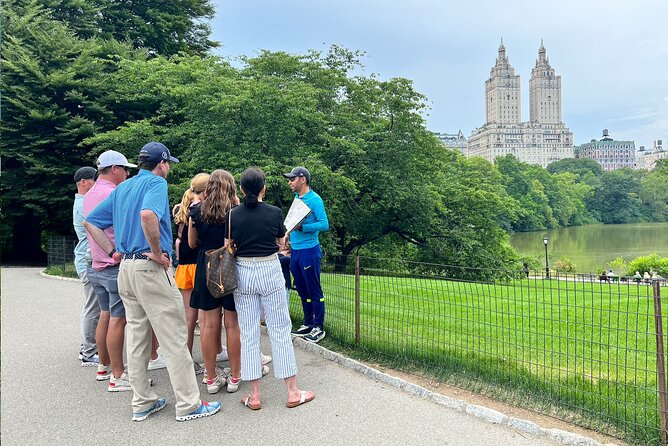
The main start is a classic Central Park whirlwind: famous attractions and recognizable landmarks, all clustered in a way that helps you build a mental map.
Here’s what you can expect in the early loop:
- Victorian Garden area, including the amusement pieces and ice-skating vibe in winter
- Chess and checkers house, a classic park play space framed by an octagonal structure and game tables
- The oldest carousel in the city, a major “wait, is that the famous one?” moment
- Dairy house from the Great Depression—small details like this add texture beyond the big-name scenery
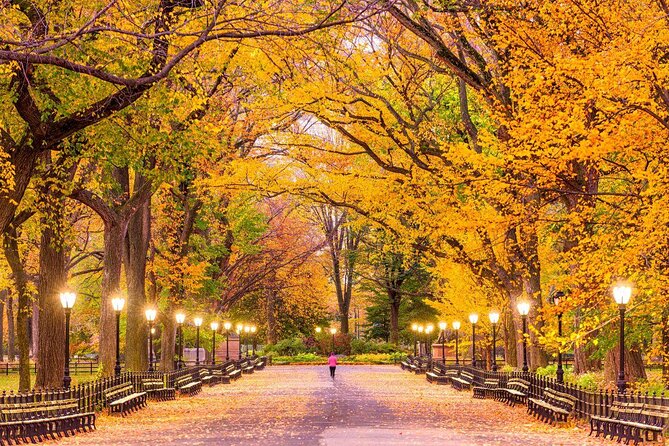
- Central Park Mall, lined with American elm trees and designed as a long formal promenade
- Balto statue, the Siberian husky memorial that locals and pop-culture fans both recognize
- Upper East Side history and filming locations, including show references tied to parts of the park edge
- SummerStage, known for outdoor performances and the way it sits above the Concert Ground
- Conservatory Water and Model Boat Pond areas, with the little-world feel of miniature sailboats and yachts
- Bethesda Fountain and Bethesda Terrace, which is where the park stops feeling like “a park” and starts feeling like a movie set
- Bow Bridge and Turtle Lake / Boathouse zone, with postcard angles and that classic Central Park water scene
- Strawberry Fields and the Dakota area, turning a park walk into a Beatles pilgrimage moment for many visitors
- Sheep Meadow, the wide open lawn that makes Central Park feel like it’s breathing
- Playground areas, including what’s often described as the park’s largest playground experience
Even if you don’t memorize all the names, the order matters. You see landmarks in the way the park is meant to be experienced, so later when you walk on your own, you can orient yourself fast.
Wollman Rink, Gapstow Bridge, Pond Edges, and the Zoo Zone
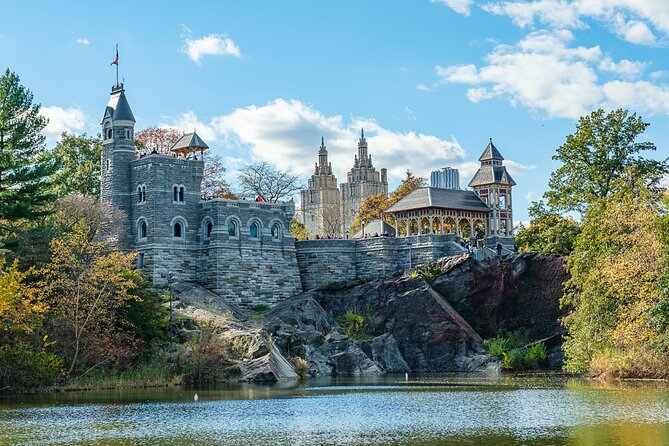
After the initial core, the route keeps feeding the places that people recognize instantly, especially from film and TV.
A few standout stops in this section:
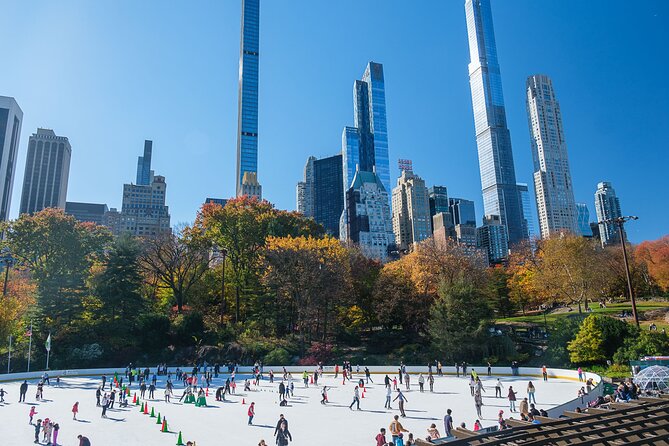
- Wollman Rink: a public ice rink in the southern part of Central Park. It’s seasonal (late October through early April), so in winter it’s a big visual anchor.
- Gapstow Bridge: a rustic stone bridge wrapped in vines that blends into the surroundings. It’s also a popular photography spot because it gives you layered views across the water.
- The Pond area: a carefully designed lake feature meant to create changing scenery as you move through the space.
- Central Park Zoo: a 6.5-acre zoo at the southeast corner, part of a larger Wildlife Conservation Society system.
This part of the tour is useful because it shows you the park’s “different faces.” You get water and bridges, then you pivot to a compact, well-known attraction zone. It breaks up the feeling that you’re only doing one type of sightseeing.
If you’re traveling with kids, this is often where their excitement kicks in: skating season sights, bridges that feel storybook, and then an animal area.





Bethesda Fountain and Terrace: The Park’s Most Famous Stage
This is the “slow down” section, even if the total tour timeline stays brisk.
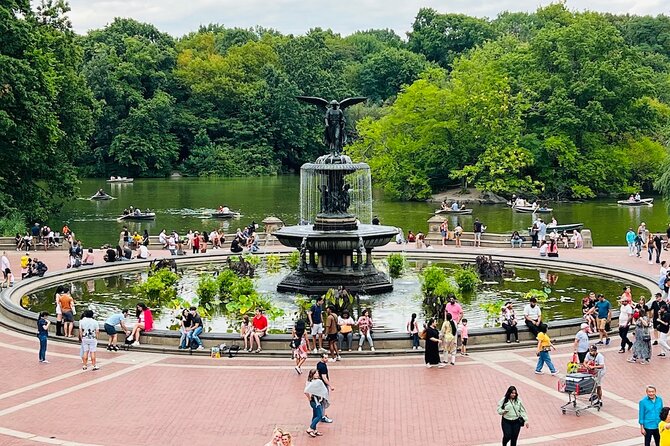
Bethesda Fountain is the centerpiece you hear about before you arrive. The fountain includes the iconic central sculpture and the famous angel statue concept tied to the story of healing at Bethesda. It’s also notable for being one of the first major city-funded public statues in the original design.
Next comes Bethesda Terrace, where the arcade and tile work turn a simple stop into something more architectural. People love this area because it looks like it belongs in a grand European city—yet it’s inside Central Park. You also have that movie-film quality: broad views, dramatic angles, and a feeling that you’re standing on a set.
Then you’ll often get nearby fountain details like Cherry Hill too, a smaller but historically important fountain plaza just west of Bethesda.
Practical tip: if you want your best photos, this is where you should take your time. The pedicab makes it easy to arrive. The terrace and fountain give you the best “no luck needed” angles compared to many other park spots.
Bridges, Monuments, and the Dakota-to-Strawberry Fields Connection
After the fountain zone, the ride keeps moving through Central Park’s symbolic spots.
You may stop at:
- Bow Bridge, designed by Calvert Vaux and Jacob Wrey Mould, a long-running Central Park icon. It also has a history of renovations and closures, so timing can affect what you see up close.
- Monuments on the Mall area, including pieces connected to notable figures (for example, the Daniel Webster monument is a big one people look for when they realize it’s there).
- Strawberry Fields, the 2.5-acre memorial to John Lennon, named after Strawberry Fields Forever.
- The Dakota area, the famous building tied to Lennon’s life and the building’s status as a long-term home for artists and other notable residents.
This is one of the most satisfying parts of the tour because you get the emotional geography of Central Park. It’s not just nature scenes. It’s also memory, pop culture, and public art layered into one walkable-feeling space.
Even if you’re not a Beatles devotee, you’ll still appreciate the way the memorial area is designed. It’s calm, reflective, and visually distinct from the rest of the park.
The Met Museum Edge, the Reservoir, and Belvedere Castle Views
In longer versions of the tour, you can extend farther into the Central Park edges that most people only half-see on their own.
These are the kinds of stops you’ll run into:
- Alice in Wonderland statue: a playful sculpture area tied to a larger water zone and children’s-story energy.
- The Obelisk (Cleopatra’s Needle): standing between the Great Lawn and the Met Museum, it’s the oldest outdoor monument in New York City.
- The Metropolitan Museum of Art area: you’ll get the park-to-museum relationship, but admission is not included.
- Jacqueline Kennedy Onassis Reservoir: a large man-made water body with curving design meant to harmonize with the park.
- Belvedere Castle: a folly with exhibit rooms and an observation deck, plus the official Central Park weather station.
This section is valuable because it shows you the park’s “institutional” side. Central Park is often sold as trees and lakes. But here you see how it borders major New York landmarks and how those museum-and-castle edges shape the skyline views.
If you love architecture or you’re the type who wants to know what you’re actually looking at, this is the part that feels most complete.
Warm Weather, Cold Weather, and What You Should Bring
The tour is set up for normal Central Park seasons, but it requires good weather. If the day is too rough, you’ll be offered a different date or a refund.
The big winter help is that you’re provided a warm blanket during cold weather. In the real-world experience of recent riders, that blanket often becomes the difference between “I’m freezing” and “I can enjoy this.”
Still, bring the basics:
- A coat you can move in (you might be stopped for photos)
- Gloves if you’re even a little sensitive to cold
- Layers if you run hot and cold quickly
- A phone with enough battery for lots of bridge-and-fountain pictures
Also consider noise and conversation. A pedicab is open-air in most cases, so wind can make it harder to hear if you’re far away. If you notice you can’t catch what the guide is saying, just lean in and ask for a quick repeat.
Who This Pedicab Tour Fits Best
This works especially well for:
- First-time Central Park visitors who want the famous landmarks in an order that makes sense
- Families who don’t want to spend the day hiking between scattered spots
- Couples who want iconic photo angles without walking themselves into exhaustion
- Any group that values guidance, especially when you’re tired after city sightseeing
- People who may need the ride to be slower or paused for comfort, since the experience includes attention to how guests manage their own pace
It’s offered in English, and it’s listed as something most travelers can participate in. It also requires at least two travelers for the tour to run (with an exception on Tuesday).
If your group is small or you’re solo, this matters. Check the day you plan to go.
Should You Book This Central Park Pedicab Tour?
If you want a high-impact Central Park day with minimal hassle, I’d book it. The price is fair for a private guided ride, and the “warm blanket plus photo help plus structured stops” combo removes a lot of the friction that can ruin a sightseeing day.
Skip it only if you’re the type who wants total freedom and don’t care about hearing what you’re looking at. And if you’re traveling on a day where weather might be questionable, plan to keep your schedule flexible.
For most people, this tour hits the sweet spot: you get the park’s biggest icons, you learn enough to explore later, and you don’t spend the day marching.
FAQ
How much does the Central Park pedicab guided tour cost?
It costs $38.00 per person.
How long is the tour?
The duration is approximately 1 to 3 hours.
Is the tour private or shared?
This is a private tour/activity. Only your group will participate.
What language is the tour offered in?
The tour is offered in English.
Where do we meet for the tour?
Meet at 1411 6th Ave, New York, NY 10019, USA. The tour ends back at the meeting point.
Is admission included for the sights we stop at?
The tour information notes that most stops are free or included in specific ways, and it also states that Metropolitan Museum of Art admission is not included.
What should I expect in cold weather?
A warm blanket is included during cold weather.
Are tips or hotel pickup included?
Gratuities or tips are not included, and hotel pickup/drop-off is not included.