REVIEW · MONUMENT VALLEY
Monument Valley Backcountry Tour
Book on Viator →Operated by Monument Valley Tribal Tours · Bookable on Viator
Monument Valley feels bigger with a guide. This Navajo-led backcountry tour adds culture to the famous views, with photo stops and moments you don’t get on a drive-through. I especially love how the Navajo guide connects the land to daily life, and I also like the built-in variety: viewpoints plus a live performance at the rock formations.
Only heads-up: the ride is bumpy and can get dusty, so it’s not the easiest “relax and coast” outing. If you’re short or need extra help stepping on and off the vehicle, plan for that before you go.
In This Review
- Key things that make this tour worth your time
- Why Navajo-guided backcountry access beats drive-through sightseeing
- Price and what you’ll pay on top of the ticket
- Getting picked up at The View Hotel (and how KOA changes things)
- The ride reality: open air, bumpy roads, and how to stay comfortable
- Stop-by-stop: what you’ll see and what each moment adds
- Monument Valley Navajo Tribal Park and the West & East Mitten View
- John Ford’s Point viewpoint
- Navajo Hogan visit (and the rug weaving demo question)
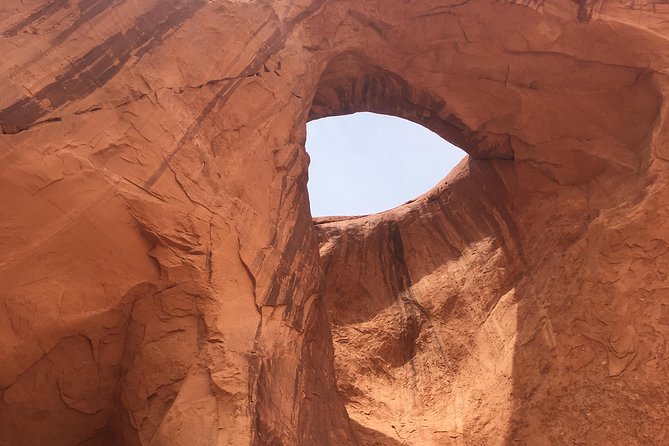
- Big Hogan Arch, Moccasin Arch, and the live performance
- Sun’s Eye and Anasazi petroglyphs/ruins
- Totem Pole Monument
- North Window or Artist’s Point
- Cultural moments that make the tour feel more than scenic
- Packing checklist for dust, wind, and a 2.5-hour outdoor schedule
- Should you book this Monument Valley backcountry tour?
- FAQ
- How long is the Monument Valley Backcountry Tour?
- What’s the price per person?
- Is Tribal Park admission included?
- Does the tour include rug weaving or a rug weaving demonstration?
- Where does the tour pick up?
- Is there pickup for KOA guests?
- How many people are on the tour?
- What language is the tour offered in?
- What happens if the weather is bad?
- Does the tour end where it starts?
Key things that make this tour worth your time
- Small-group backcountry access with a max of 12 travelers
- Certified Navajo guide who shares stories tied to the places you visit
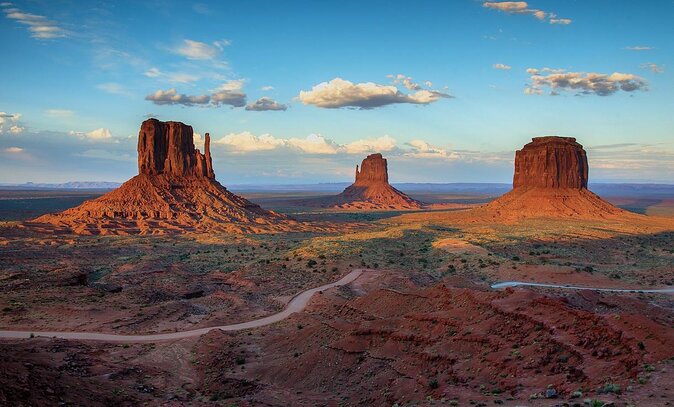
- Iconic stops like West & East Mitten View and Totem Pole Monument, plus lesser-seen areas
- Live performance scheduled around the rock formations at Big Hogan Arch and Moccasin Arch
- Hogan visit included, with the rug weaving demo listed as part of an extended backcountry option
- Pickup from The View Hotel and a same-location drop-off to keep logistics simple
Why Navajo-guided backcountry access beats drive-through sightseeing
Monument Valley is easy to look at and harder to truly understand—mostly because the best parts aren’t just “pretty rocks.” This tour is built to give you context while you’re still seeing the same big names: Mitten views, window viewpoints, and the towering monuments that make postcards feel too small.
A major plus is that you’re not trying to figure out where to go or how long each pullout takes. You’re in a small group, and your Navajo guide sets the pace with stop-by-stop storytelling that makes the terrain feel purposeful. That matters because Monument Valley can look like a repeating pattern until someone helps you read it.
Also, this isn’t only about viewpoints. You get cultural moments woven into the route: a hogan stop and a live performance tied to the sites. That balance is what makes the tour feel more complete than a “grab photos and leave” afternoon.
You can also read our reviews of more tours and experiences in Monument Valley.
Price and what you’ll pay on top of the ticket
The tour price is $75.00 per person, and that covers the core experience: a certified Navajo guide plus round-trip pickup/drop-off at the meeting point. The big thing to know is that the Tribal Park admission fee is not included.
Plan on the Monument Valley Navajo Tribal Park fee of $8.00 per person on top of your $75 ticket. If you want the full rug experience, pay attention to the other add-on note too: the hogan visit and Navajo rug weaving demonstration are listed as part of an extended backcountry tour, not included in this standard pricing.
Here’s how I’d frame the value for your decision: you’re paying for three practical upgrades at once—a guide, off-your-own-vehicle access, and planned cultural stops. If you were just going to drive yourself and hit the easy scenic points, you’d miss the “why” behind what you’re seeing, plus the parts that aren’t set up for casual cars.
Getting picked up at The View Hotel (and how KOA changes things)
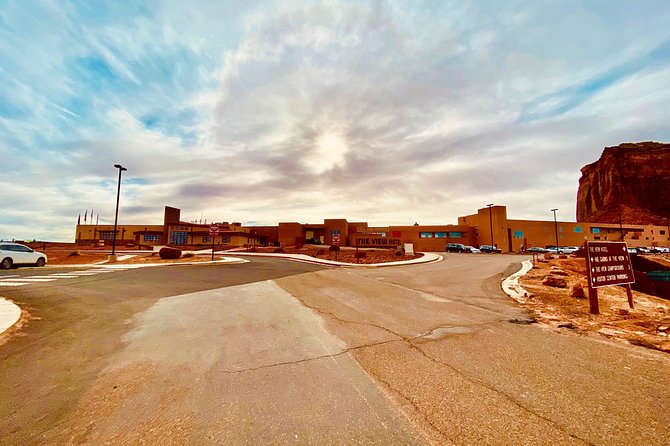
Your start is The View Hotel, Indian Route 42, Oljato-Monument Valley. Pickup happens at the lobby area—outside in front of the lobby, down the stairs. The tour also ends back at the same meeting point, so you’re not juggling rides or figuring out a second meeting location.
If you’re staying at KOA, pickup is only for KOA overnight guests, and you must call for the departure time. That’s worth noting if you’re the type who wants your day scheduled down to the minute. The tour operator is flexible, but KOA guests need that extra step.
One more small planning note: the tour uses a mobile ticket, and you should receive confirmation at booking. That’s a good setup if you like minimal paperwork and fewer “where do I stand?” moments.
The ride reality: open air, bumpy roads, and how to stay comfortable
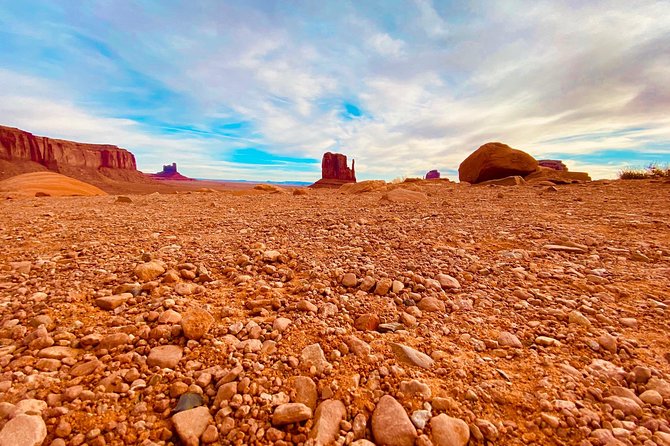
This is a backcountry route, not a city bus tour. Many people find it exciting, but it’s also physical.
Expect a covered open-air vehicle style ride (you’ll feel wind and movement more than you would in a closed van). Seatbelts are mentioned in the experience, but the larger issue is what comes with being outside: dust and temperature swings.
Two practical tricks that pay off:
- Bring something to shield your face from dust—many people pack a bandana.
- Dress in layers. One day can be warm, the next can be cold and windy, especially in winter.
There’s also a real-world comfort detail to watch: at least one guest reported that the step up into the vehicle can be high and the vehicle may not include a step stool. If you’re short, traveling with mobility limitations, or worried about stairs/ladder steps, consider reaching out before you book so you know what to expect.
Stop-by-stop: what you’ll see and what each moment adds
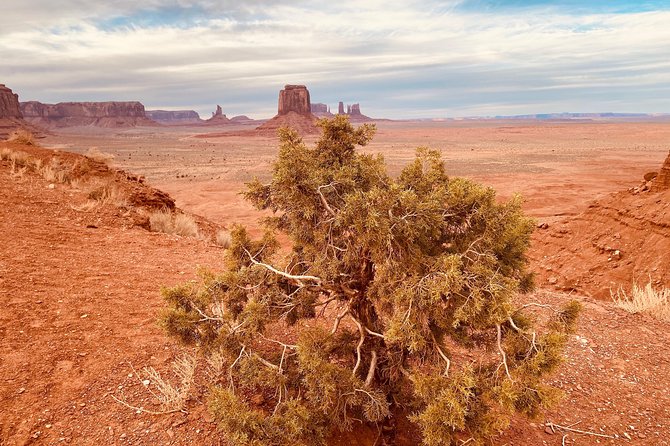
This tour is built around a sequence of viewpoint stops plus cultural stops. The exact look of the route can vary slightly based on conditions, but the names of the stops give you a clear idea of what you’ll experience.

Monument Valley Navajo Tribal Park and the West & East Mitten View
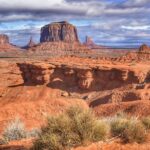
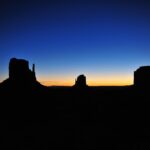
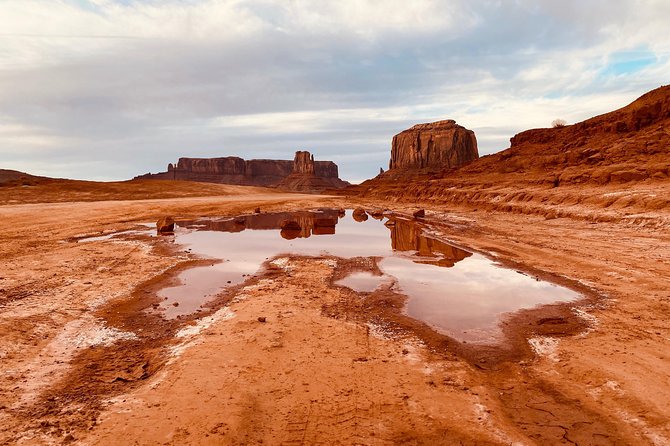
You start at Monument Valley Navajo Tribal Park, then you’ll hit West & East Mitten View. These “mittens” are the iconic rock shapes people travel for, and seeing them from the right angle helps them finally click as more than just silhouettes.
Why this stop matters: it’s your visual grounding. Once you’ve seen the mittens from both sides, it’s easier to connect later viewpoints to the same rock system.
Downside to plan for: it’s a popular place for photos, so bring patience and be ready to move with the group when the guide calls the timing.
John Ford’s Point viewpoint
Next up is John Ford’s Point. This is another big viewpoint name in Monument Valley, and it’s the kind of stop where you’ll likely spend a short, focused chunk of time getting photos and taking in the scale.
If you’re the kind of person who likes to stop just long enough to absorb the view and then move on, you’ll probably enjoy this. If you want long unstructured time at a single spot, keep in mind the tour is scheduled and paced.
Navajo Hogan visit (and the rug weaving demo question)
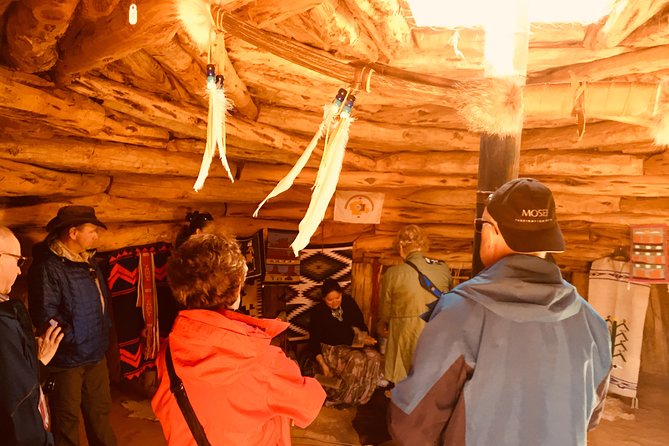
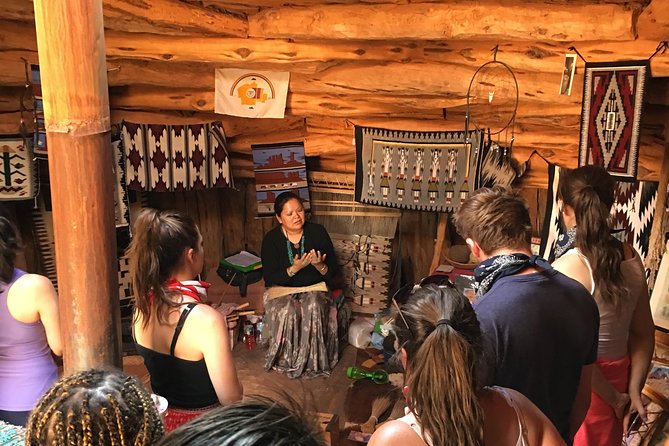
You’ll visit a Navajo Hogan, which is one of the best “culture first” stops on this kind of route. A hogan visit helps you understand the land through how people live and organize daily life, not just through geology.
Now the important planning detail: while the route mentions a Navajo rug weaving demonstration, the pricing info here lists the hogan visit and rug weaving demonstration as something you book through an extended backcountry tour. That means you should double-check which version includes the weaving demo you want.
If your main goal is seeing yarn spinning and the weaving process, I’d treat the standard tour as the hogan-context experience and plan on the extended option for the full demonstration moment.
Big Hogan Arch, Moccasin Arch, and the live performance
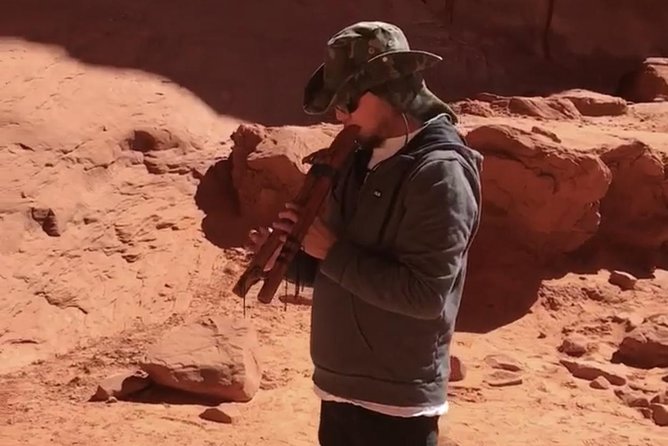
Then comes a highlight pairing: Big Hogan Arch and Moccasin Arch, plus a live performance. This is one of the stops where the tour shifts from “look at this” to “experience this.”
Even if you’re not sure what to expect, the performance component is designed to make the setting feel more alive. It’s also timed so you’re not just sitting through a show. You’re hearing and watching in the same places you’re learning about.
Practical note: wear what you can tolerate for wind, dust, and temperature changes since you’re outside during this portion.
Sun’s Eye and Anasazi petroglyphs/ruins
Next is Sun’s Eye and Anasazi petroglyphs/ruins. Petroglyph and ruin stops are usually the ones that make a tour feel meaningful, because they connect human stories to the same rock surfaces you’ve been photographing.
This is also the stop where listening matters most. Even if you’ve seen pictures before, the scale and placement can be hard to interpret without a guide’s explanation.
Downside: if you’re in a rush to leave each stop quickly, you might miss the interpretive part. Give this one your full attention.
Totem Pole Monument
You’ll pass by or stop for Totem Pole Monument. The name is straightforward, and the shape is exactly why it’s famous. This is another “stand and take it in” moment.
It’s a good break in the middle of the tour when you want something that doesn’t require deep explanation to appreciate. Still, your guide’s framing can add context that turns “cool rock” into “place with meaning.”
North Window or Artist’s Point
Your final big viewpoint is either North Window or Artist’s Point. Which one you get can depend on day conditions and what’s safe/possible in the moment—so don’t assume it’s guaranteed.
If you care about a specific viewpoint, treat this as a “choose-your-light” situation and ask when you book (or right at pickup) which stop is planned that day.
Cultural moments that make the tour feel more than scenic
The most praised part of this tour is how the cultural component shows up in real time, not as a brochure voiceover. You’ll hear storytelling tied to the land, and you may experience singing and flute/drum moments as part of the performance schedule.
Guides may also share small personal touches—like learning how to introduce yourself in Navajo language, or explaining how family roles and community life work. One guide has been described sharing how Navajo society is matriarchal in the way people understand it, and that kind of detail can change how you interpret what you’re seeing.
Also, if you’re thinking about the rug piece: the standard tour includes a hogan visit, but the rug weaving demonstration is called out as part of the extended backcountry tour. If that craft moment is on your must-do list, you’ll be happier if you choose the extended version from the start.
Packing checklist for dust, wind, and a 2.5-hour outdoor schedule
You don’t need to overpack. You do need the basics.
Bring:
- A bandana or face covering for dust
- Layers for wind (especially if you’re going in colder months)
- Sun protection (hat/sunglasses)
- Closed-toe shoes with grip for getting on and off the vehicle
And mentally prep for this truth: you’re on open air vehicle time. If you hate cold wind, you’ll have to manage it with layers. If you hate dust, manage it with something for your face.
Should you book this Monument Valley backcountry tour?
Book it if you want:
- Real cultural context alongside the famous Monument Valley views
- A small-group outing with a certified Navajo guide
- Backcountry access that’s harder to replicate on your own
- Planned moments like a hogan visit and live performance
Skip it (or choose the extended option carefully) if:
- Rug weaving and a full craft demonstration are your top priority, because the weaving demo is listed as extended backcountry
- You need a smooth, low-movement ride. This route is scenic, but it’s also bumpy and dusty
- You’re worried about the step up into the vehicle without extra assistance
One last decision tip: this tour is rated highly (a 4.9 average with 99% recommendation based on provided feedback). That lines up with the core promise here: you’re paying for a guided, culturally framed way to see parts of Monument Valley that you won’t easily manage by yourself.
If that sounds like your kind of day, you’ll likely come away thinking you spent your time well—not just “checked off” a view.
FAQ
How long is the Monument Valley Backcountry Tour?
It runs about 2 hours 30 minutes.
What’s the price per person?
The price is $75.00 per person.
Is Tribal Park admission included?
No. The Monument Valley Navajo Tribal Park fee is listed as $8.00 per person and is not included.
Does the tour include rug weaving or a rug weaving demonstration?
The information provided lists the hogan visit and Navajo rug weaving demonstration as not included, and says you’ll need to book the extended backcountry tour for that activity.
Where does the tour pick up?
Pickup is at The View Hotel lobby, outside in front of the lobby down the stairs.
Is there pickup for KOA guests?
Yes, pickup is for KOA campground guests only, and KOA overnight customers must call for the departure time.
How many people are on the tour?
The tour has a maximum of 12 travelers.
What language is the tour offered in?
The tour is offered in English.
What happens if the weather is bad?
This experience requires good weather. If it’s canceled due to poor weather, you’ll be offered a different date or a full refund.
Does the tour end where it starts?
Yes, the activity ends back at the meeting point.