REVIEW · MONUMENT VALLEY
Monument Valley Group Tour – 3 Hours – Navajo Spirit Tours
Book on Viator →Operated by Navajo Spirit Tours · Bookable on Viator
A place this sacred is best seen with local guidance. This small-group Monument Valley tour uses a Navajo guide to reach parts most visitors never get to see, then adds real context about geology, culture, and the meaning of the sites. You get a tight 3-hour plan that mixes vehicle views with short stops to get close—under arches, in amphitheater-like spots, and at historic petroglyph panels.
What I like most is the restricted access. You still get the classic Monument Valley look, but the best moments are the back-country areas where you can stand up close to natural arches, amphitheaters, and Anasazi petroglyphs. I also love that the guide storytelling is the main event, not a side dish—expect explanations that include spiritual topics, plus traditional Navajo music.
One thing to think about: the ride can be bumpy and the weather can swing. Some tours run open-air in warm seasons, and even in other months you’ll want layers, since cold or wind can change how comfortable the scenic time feels.
In This Review
- Key Highlights Worth Noting
- Monument Valley Access Works Best With a Navajo Guide
- Stop 1 at the Navajo Tribal Park: Buttes, Arches, Amphitheaters, and Petroglyphs
- The 3-Hour Flow: Vehicle Views, Short Walk Time, and Q&A
- Open-Air vs Enclosed Vehicle: Plan for Wind, Cold, and Dust
- Your Guide Makes the Difference: Meet Cowboys, Sean, Will, and More
- Traditional Navajo Music and Spiritual Topics: What to Expect
- Price and Value: How $85 Works With the $8 Tribal Park Fee
- Who Should Book This Tour (and Who Might Feel It Isn’t For Them)
- Should You Book Navajo Spirit Tours’ Monument Valley Group Tour?
- FAQ
- How long is the Navajo Spirit Tours Monument Valley group tour?
- What does it cost?
- Is Monument Valley Tribal Park admission included?
- How many people are on the tour?
- Do you ride in an open-air or enclosed vehicle?
- Where is the meeting point?
- Can I cancel for a full refund?
Key Highlights Worth Noting
- Restricted Monument Valley access that you can’t do on your own
- Anasazi petroglyph and natural arch stops with up-close viewing time
- Small group size (max 12) for more back-and-forth questions
- Open-air vs enclosed vehicle depending on season and availability
- Traditional Navajo music included during the tour
- Multiple guide styles (you may meet Cowboy, Sean, Will, Larson, Gary, Shawn, or Cariah)
Monument Valley Access Works Best With a Navajo Guide
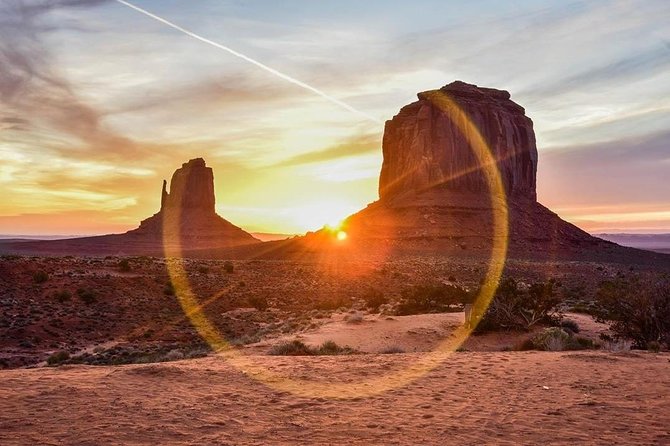
Monument Valley looks famous from the highway, but the real difference here is access. This tour is built around the idea that you’re not just driving past formations—you’re being taken into areas that are otherwise restricted. That matters because the best viewing points are often not the ones you can reach easily from standard driving routes.
What you gain is more than “cool photo spots.” With a local Navajo guide, you get a sense of how these places connect—how rock shapes relate to names, to daily life, to history, and to meaning. The tour also aims to answer questions on the spot, which is where a lot of tours fall flat. Here, you can ask what something is, what it’s called, and why it’s important, then move on without feeling like your curiosity is stuck waiting until the end.
I’d call this the best-fit option if you care about context. If you only want a quick scenic drive, you might feel the 3 hours is too structured. But if you want the “why,” it’s a strong use of time.
You can also read our reviews of more tours and experiences in Monument Valley.
Stop 1 at the Navajo Tribal Park: Buttes, Arches, Amphitheaters, and Petroglyphs
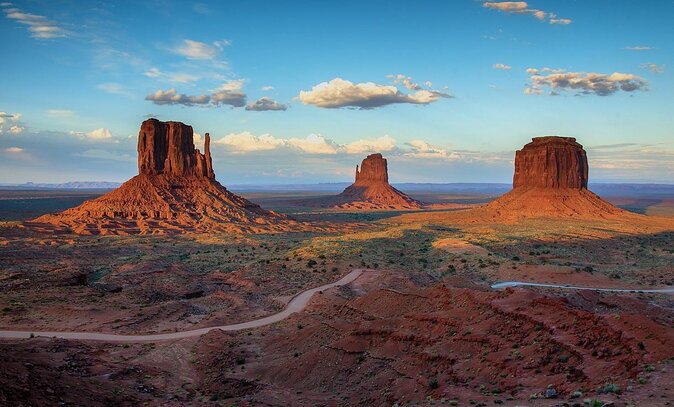
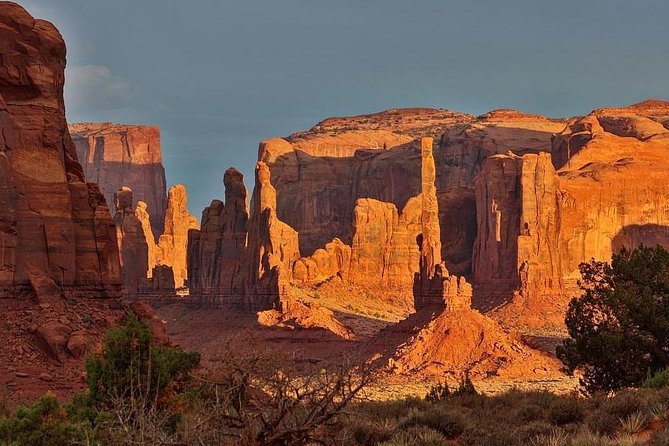
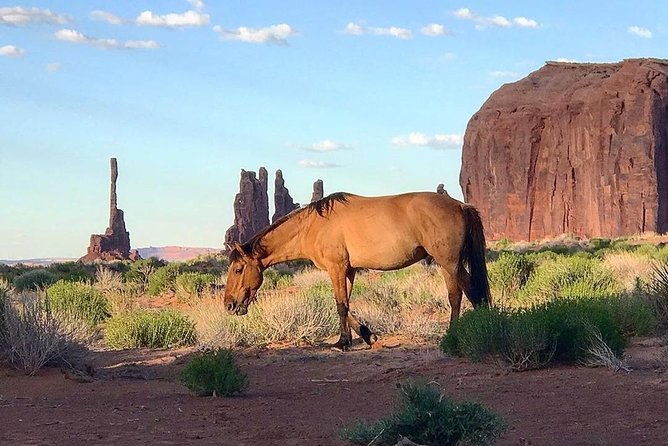
The tour’s main action starts at the Monument Valley Navajo Tribal Park area. You’ll begin with iconic buttes, spires, and mesas—the shapes that made Monument Valley famous. The route is described as covering part of the 17-mile loop drive, so you’ll still get that classic panorama feeling.
Then comes the shift that makes this tour worth it. You move from the more public viewpoints into back-country restricted areas within the tribal park. This is where you get the best “up close” moments:
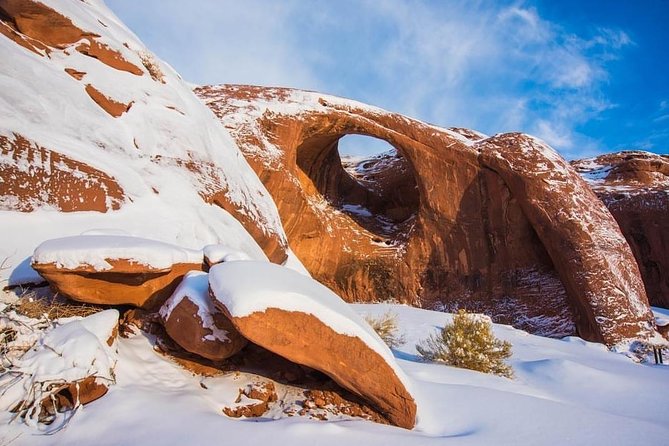
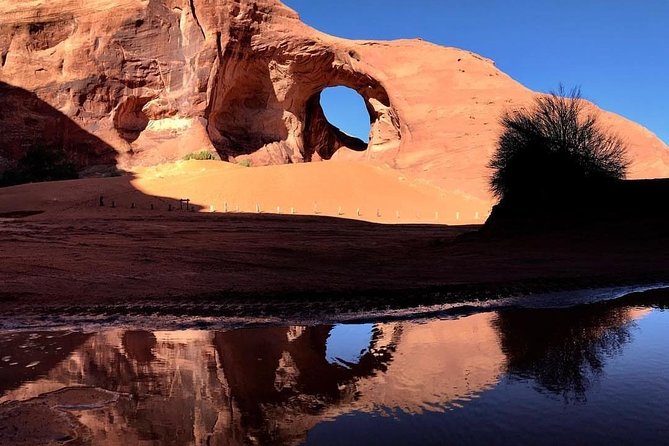
- Natural arches: You’re not just looking at them from far away. The tour focuses on getting you beneath the arch, which changes the perspective completely. Stand under a big opening and you can feel the scale in a way pictures don’t capture.
- Amphitheaters: These spots feel like outdoor rooms. The geometry of the rock shapes how sound carries, and some guides may share music or talk in ways that highlight that effect.
- Anasazi petroglyphs: This is one of the most powerful stops. You’ll get close enough to actually see the carvings and learn about their significance. The petroglyphs are described as being part of the area’s ancient history, and one common point from guides is how old these markings can be.
There’s also a cultural and spiritual layer to the stop explanations. The tour description notes that guides don’t avoid spiritual topics. In plain terms: expect respectful talk that connects place, tradition, and meaning rather than treating the land like a backdrop.
A practical note: petroglyph sites and arch areas can be visually intense. Bring your questions early. If you like photographing, also ask your guide the best angles, because some locations look different from the ground versus from the vehicle.
The 3-Hour Flow: Vehicle Views, Short Walk Time, and Q&A
At about 3 hours, this isn’t a long hike tour. It’s a “see a lot without racing” format, built around a small group and a guide who controls the stops. That’s good if you’re visiting during limited time or you want a tour that still feels like a real experience, not a photo sprint.
You’ll spend time traveling in an open-air or enclosed vehicle (more on that in the next section), then stop for close viewing moments. One theme that comes up in guide performance is how they balance scenic viewing with teaching. You’ll often get an explanation during the driving, followed by a short chance to get out and look again—this repetition helps the land make sense in your head.
You also benefit from the group size. This tour isn’t private and can have up to 12 travelers. That said, the cap still keeps the experience from becoming a cattle-call. If there’s an active questioner on your tour, you’ll probably feel the group loosen up, because the guide time is built for interaction.
Two things to keep in mind:
- Stops are short by design. You can’t expect to linger all afternoon at one spot.
- The ride can feel rough. Several guides and recent experiences point out that it’s not always smooth. If you’re sensitive to jostling, you’ll feel the vehicle more than on a highway bus.
The payoff is that you’re still getting close-up moments at sites you likely can’t access without the guide.
Open-Air vs Enclosed Vehicle: Plan for Wind, Cold, and Dust
Vehicle comfort is one of the biggest variables in Monument Valley. Navajo Spirit Tours mentions that open-air vehicles are used in warm seasons, unless you request an enclosed vehicle. Enclosed options are available only by request and by availability.
So you should dress for “weather surprises.” Even on trips that are generally comfortable, wind and temperature shifts can turn a scenic ride into a cold one quickly. One practical tip repeated in recent experiences is to bring a jacket and layers for chilly conditions. Another tip that matters more than you’d think: consider a mask if wind or dust is kicking up.
If rain hits, expect the guide to handle it. Some recent experiences mention plastic raingear readiness when weather changes. Still, don’t rely on that entirely—bring your own small rain layer if you’re the type who likes to stay dry and focused.
If you have mobility needs or just hate discomfort, this is where contacting the operator for an enclosed vehicle request can help. Just remember availability can be tight.
Your Guide Makes the Difference: Meet Cowboys, Sean, Will, and More
A tour like this lives and dies by the guide. The best part is that the guide isn’t only narrating; they’re interpreting the land. In recent experiences, names you might hear include Cowboy, Sean, Will, Larson, Gary, Shawn, and Cariah. Different guides bring different storytelling styles, but the common thread is respect for the sacredness of the sites and comfort answering questions.
What you can look forward to from many guides:
- Humor mixed into history and place-names
- Explanations that connect rock formations to culture and life
- Strong attention to how sacred areas are approached
- Traditional music during the tour
Some experiences also highlight special moments like guides playing music (flute notes inside rock acoustics came up in more than one recent account) or singing and using a drum as part of the experience. That’s not something you should treat as guaranteed every time, but it’s clearly part of how some guides bring the tour to life.
Also, don’t be shy about asking. If you’ve got a question about geology, the meaning of a formation, or how people connect to the land, this tour is structured to allow answers as you go.

Traditional Navajo Music and Spiritual Topics: What to Expect
This is not a strictly “facts only” experience. The tour description specifically notes that guides don’t shy away from spiritual topics. That can sound intimidating if you’ve only done secular sightseeing, but from the way recent experiences describe the tone, it typically comes across as respectful teaching rather than a forced lecture.
You’ll also receive traditional Navajo music as part of the tour. Some guides may add drum singing or other musical elements, and you might hear music emphasized at acoustics-rich spots.
One more important detail: this isn’t just about listening to stories. It’s about pairing talk with place. When you’re standing near petroglyph panels or under a natural arch, the guide’s explanation helps your brain see the area as something more than scenery.
If you’re unsure how to engage, here’s the easy rule: ask questions, keep an open mind, and follow the guide’s pace. If they set a quiet moment, let it happen.
Price and Value: How $85 Works With the $8 Tribal Park Fee
The listed price is $85 per person for about 3 hours with restricted access included. But there’s one extra line item you should budget for: the admission fee to the Monument Valley Tribal Park is not included and is $8 per person.
So your realistic planning number is $93 per adult, before any optional add-ons like an enclosed vehicle request (which depends on availability). That might sound like a lot until you compare it to the value you get:
- Restricted access areas you can’t reach the same way on your own
- Guided interpretation at high-impact sites (arches, amphitheaters, petroglyphs)
- Traditional music included
- Small-group format that keeps time from feeling wasted
In other words, the price is paying for access and interpretation, not just for driving around. If you’re the type who likes Monument Valley photos but also wants your visit to mean something, this is a reasonable spend.
Also, plan ahead. This tour is commonly booked about 48 days in advance on average, so don’t wait until the last minute if your dates are fixed.
Who Should Book This Tour (and Who Might Feel It Isn’t For Them)
This tour is a great match if:
- You want more than the famous view and you care about meaning
- You like learning from a local Navajo guide and asking questions
- You prefer a small group (up to 12) over a huge bus
- You can handle a rougher ride for a few hours
It’s especially worth it for families, couples, and friends who want one confident plan. Many recent experiences also point out that the tour is worth it even when the timing feels tight—three hours goes fast because the guide keeps it moving without rushing the learning.
You might want to think twice if:
- You’re extremely sensitive to cold, wind, or dust, and you don’t want to dress for it
- You strongly prefer private tours with no other people around
- You want a long, slow exploration where you can linger at one formation for hours
Still, even if you’re not a big museum-style learner, the experience is structured so the scenery does the heavy lifting, while the guide explains what you’re looking at in plain, human terms.
Should You Book Navajo Spirit Tours’ Monument Valley Group Tour?
If your goal is to see Monument Valley’s famous shapes and also reach places most visitors can’t access, I’d book it. The blend of restricted access, close-up site time, and a Navajo guide interpreting the land is the core reason to do this instead of a self-drive alone.
I’d especially recommend it if you’re traveling with limited time. Three hours is long enough to feel like you actually learned something, but short enough to keep your day flexible.
Just go in prepared: bring a jacket, plan for a bumpy ride, and be ready to ask questions. If you do that, you’ll leave with more than photos—you’ll leave with the land explained in a way you can feel.
FAQ
How long is the Navajo Spirit Tours Monument Valley group tour?
The tour runs about 3 hours.
What does it cost?
The price is $85.00 per person.
Is Monument Valley Tribal Park admission included?
No. Admission to the Monument Valley Tribal Park is not included and costs $8.00 per person.
How many people are on the tour?
This is not a private tour. It can have up to 12 travelers.
Do you ride in an open-air or enclosed vehicle?
It depends on the season. Open-air vehicles are used in warm seasons, and enclosed vehicle requests are available by availability only.
Where is the meeting point?
You start at the Navajo Welcome Center in Oljato-Monument Valley, UT 84536, and the activity ends back at the meeting point.
Can I cancel for a full refund?
Yes. You can cancel up to 24 hours in advance for a full refund. If you cancel less than 24 hours before the start time, the amount paid isn’t refunded.