
REVIEW · MONUMENT VALLEY
Sunset Tour of Monument Valley
Book on Viator →Operated by Monument Valley Tribal Tours · Bookable on Viator
Sunset in Monument Valley hits different. This 3-hour Navajo-led sunset tour gets you into the backcountry as the light changes fast, with scenic stops most people don’t reach on their own. You’ll also spend time with Navajo culture through a hogan visit and hands-on style demonstrations and performances, not just viewpoints.
I especially love the way the tour builds in time to actually look and photograph. You get a minimum of 5–10 minutes at each scenic stop, which matters when the sky is doing something dramatic and you don’t want to feel rushed.
One thing to consider: the ride is bumpy and dusty, so dress for discomfort and bring the right gear for sitting outside while the vehicle heads off-road.
In This Review
- Key Things I’d Plan Around
- Sunset Glow: Why This Tour Works Better Than DIY
- The Navajo Guide Factor: More Than Facts, More Than a Script
- The Backcountry Route: What You Get That Others Don’t
- Stop-by-Stop: What Each View Is Really For
- Monument Valley Navajo Tribal Park + Mitten View
- John Ford’s Point + Three Sisters Monument
- Hogan Visit + Navajo Rug Weaving Demonstration
- Moccasin Arch + Big Hogan Arch + Live Performance
- Sun’s Eye + Anasazi Petroglyphs/Ruins
- Totem Pole Monument
- North Window or Artist’s Point
- The Ride: Bumpy, Dusty, and Worth It (If You Prepare)
- How Much It Costs (And Whether It’s Good Value)
- What’s Included, What Isn’t, and Where You Start/End
- Timing, Weather, and the Sunset Reality
- Should You Book This Sunset Tour of Monument Valley?
- FAQ
- How long is the Monument Valley sunset tour?
- What does the tour cost?
- What’s included in the price?
- What are the extra costs?
- Where does the tour start and end?
- Do KOA guests get pick-up?
- Is the tour offered in English?
- How many stops are there, and how long do you spend at each one?
- What should I bring for comfort?
- What happens if weather is bad?
Key Things I’d Plan Around
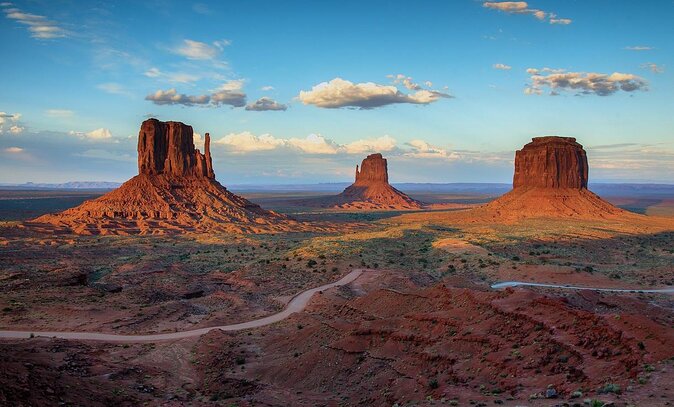
- Sunset timing plus backcountry access for views most roadside stops can’t match
- Navajo guide storytelling, including cultural context tied to specific rock formations
- Photo-focused pacing with 5–10 minutes minimum at each main stop
- Hogan + rug weaving demonstration plus music and live performance moments
- Extra cost for Tribal Park admission (plan for it so the total isn’t a surprise)
Sunset Glow: Why This Tour Works Better Than DIY
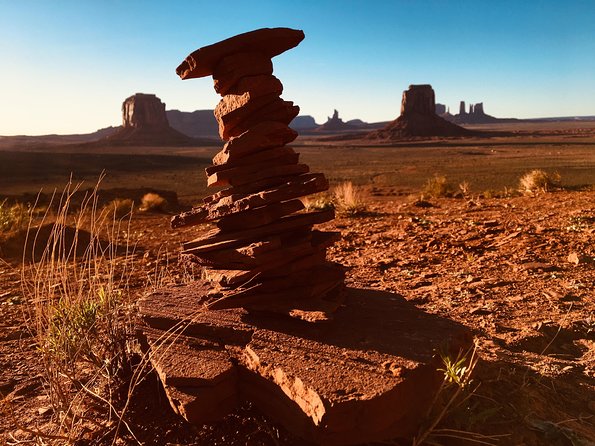
Monument Valley is famous for a reason, but sunset is when it becomes something else. The cliffs shift from flat and dusty-looking to warm and dimensional, and the shadows start doing the storytelling for you. On this tour, you’re not just standing at one overlook and waiting for magic—you’re moving through a sequence of viewpoints so you can catch multiple angles as the sun drops.
The big advantage is that your guide ties the timing to what you’re seeing. When you know the names of places like West & East Mitten View and John Ford’s Point, it’s easier to understand why certain rocks look the way they do at different hours. That’s also where sunset tours earn their keep: the light changes quickly, and you don’t want to be stuck driving yourself with no plan.
You also get the benefit of structure. I like that you have a clear run of stops during a set time window (about 3 hours), instead of guessing when the best light hits and which view faces the sun. If you’re only in the area for a day, that matters.
You can also read our reviews of more tours and experiences in Monument Valley.
The Navajo Guide Factor: More Than Facts, More Than a Script
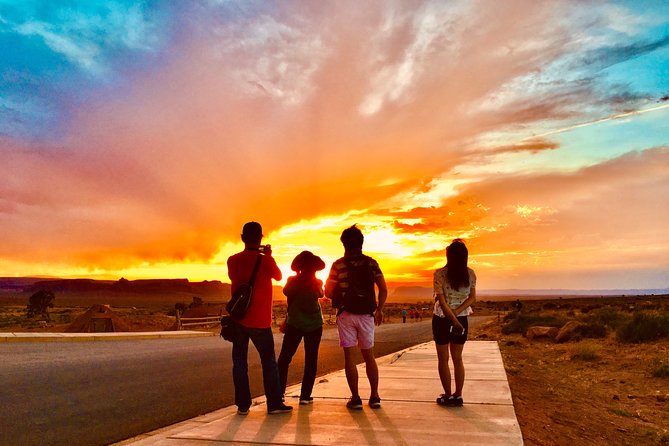
The tour is led by a certified Navajo guide, and the difference is noticeable. This isn’t just a geology lecture. Guides bring in cultural context and personal perspective—often with music added at the right moments. In past departures, guides such as Travis (often called Dark Sky), Larry, and Jameson/Jamieson were highlighted for being both informative and genuinely engaging.
What I like is how this style of guiding makes the places feel connected. For example, you’re not only told what you’re looking at—you’re given cultural meaning that fits what the landscape represents in Navajo life. Even if you’re not a “history person,” that human angle turns the drive into something you remember.
Music is another big part of the experience. Several guide-led moments include flute and hand drum, sometimes paired with blessings or songs timed to canyon acoustics. That’s not a gimmick. In a place like Monument Valley, sound travels in a way that makes it feel like the moment is happening inside the rocks.
The Backcountry Route: What You Get That Others Don’t
The headline promise here is backcountry access—places that are normally off limits. That’s exactly what you want to pay for, because Monument Valley’s main overlooks are available on your own. If you’re thinking, I can do this from the road, you’re right—you can see plenty. But you won’t get the same sequence of tighter angles and harder-to-reach spots.
You’ll start at Monument Valley Navajo Tribal Park, then work through a planned set of scenic stops with enough time to look closely and take photos. The tour pacing also helps you avoid one of the biggest problems with DIY: you can miss the best angles while you’re dealing with parking, traffic flow, and the “where do we go next?” scramble.
Another practical perk: you don’t have to manage the route on a bumpy road system while watching the sky. Your guide handles navigation and timing, and you just focus on the views and the cultural stops.
Stop-by-Stop: What Each View Is Really For
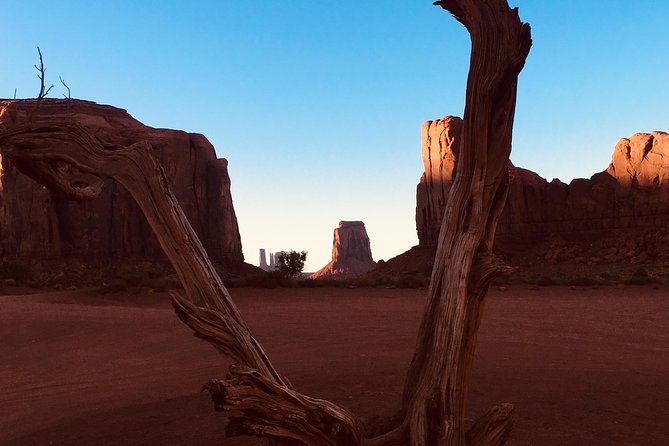
Below is what you should mentally map while you’re on the tour. Each stop gets a minimum of 5–10 minutes for photos and exploring, and your guide uses those minutes to make sure you’re looking at the right thing at the right time.
Monument Valley Navajo Tribal Park + Mitten View
You begin at Monument Valley Navajo Tribal Park, which sets the tone: this is a managed cultural landscape, not just a scenic pull-off. From there, you’ll hit West & East Mitten View. The “mitten” shapes are iconic, and sunset makes them look even more sculpted because shadows trace the ridges. This is a great early stop, because you can compare how the light is changing before you reach the deeper canyon points.
Watch for: the best photos often require you to reposition a few steps away from where the crowd photo stands. Don’t just hold your phone at arm’s length—take a minute to look for the angle your guide points out.
John Ford’s Point + Three Sisters Monument
Next comes John Ford’s Point and Three Sister’s Monument. These are classic Monument Valley silhouettes. The reason this stop matters on a sunset tour is that the ridgelines catch light differently than the valleys do. You’ll likely see a stronger contrast between the rocks and the sky, which makes the “movie set” look feel more real.
Watch for: by now the sun is lower, so keep your camera settings ready. If you wait until you’re standing there, you’ll lose the best moment.
Hogan Visit + Navajo Rug Weaving Demonstration
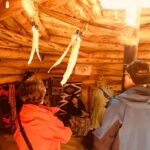
Then you shift from rock shapes to people and tradition. You’ll visit a Navajo hogan and get a Navajo rug weaving demonstration. This is one of the most valuable parts of the itinerary because it slows everything down. You’re not only learning about a place—you’re seeing craft and technique tied to everyday cultural life.
If you’re the type who likes taking photos, bring that energy, but keep it respectful. The point here isn’t to “collect” images. It’s to understand what you’re being shown.
What I’d focus on: the weaving demonstration is usually most interesting when you watch hands and process instead of just trying to capture a pretty shot.
Moccasin Arch + Big Hogan Arch + Live Performance
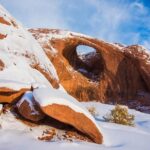
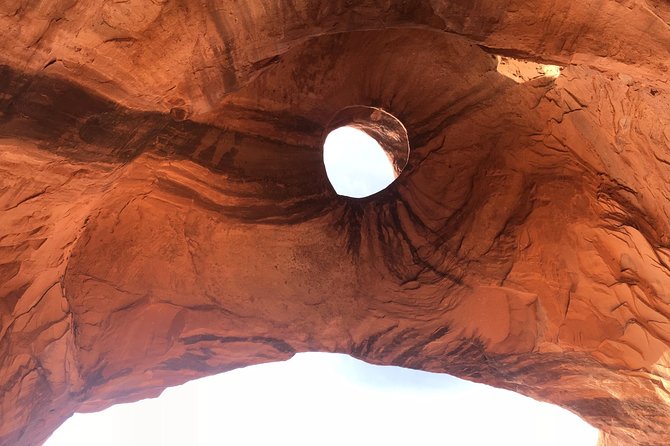
Moccasin Arch and Big Hogan Arch are exactly the kind of formations that look straightforward until you see them from the right angle. In this part of the tour, you’re also more in the backcountry atmosphere—so the setting feels dramatic, even when you’re just standing still.
Then comes a live performance moment. In past outings, guides performed musically at canyon stops (often flute and hand drum), and those short performance windows can be the emotional high point. It’s one of those experiences where your photos matter less than the feeling.
Practical note: keep your ears open. Canyon acoustics can help, but if you’re sitting farther from your guide, it can be harder to hear every detail.
Sun’s Eye + Anasazi Petroglyphs/Ruins
Next: Sun’s Eye and Anasazi petroglyphs/ruins. If you want a deeper connection to the land beyond “pretty rocks,” this stop gives it. Petroglyphs and ruins add a time layer—reminding you that humans have interpreted and lived with this region long before modern roads.
Watch for: these kinds of stops can be visually subtle compared with dramatic silhouettes. Give yourself the full minutes your guide allows so you’re not trying to rush the details.
Totem Pole Monument
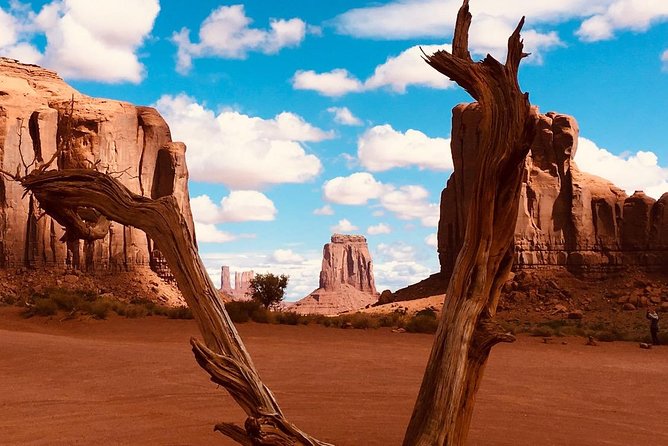
Then you’ll see Totem Pole Monument. This is one of those formations that feels like it’s pointing at the sky. Sunset makes it especially photogenic because the light tends to emphasize vertical lines and edges.
Photo tip: if the light is harsh and your camera struggles, try framing so the rock silhouette is more dominant than the sky. You’ll often get a cleaner result.
North Window or Artist’s Point
Your final major stop is either North Window or Artist’s Point. Both are popular for a reason, and sunset tends to make “window” views look even more cinematic. By this stage of the tour, you’re usually settled into the idea that the whole valley is a changing scene, not a single photo.
This is also a good moment for your last check: do you have water, a head covering if it’s bright, and your camera ready before you reach the best angle?
The Ride: Bumpy, Dusty, and Worth It (If You Prepare)
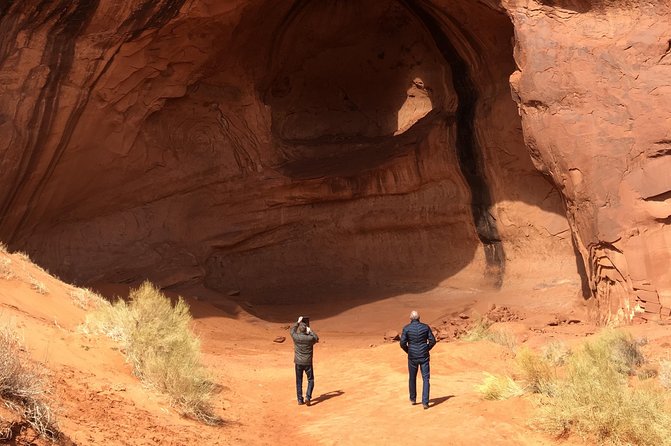
Here’s the truth: this tour uses rougher roads. Multiple visitors call it a bumpy ride, and you’ll be outside at various points. That dust part is real too—some people recommend using a bandana or mask to cut down how much red dust gets in your face.
What you should pack (based on what works in this area):
- Plenty of water (bottled water isn’t included)
- Sun protection: sunglasses and a head cover
- A camera plan: extra battery if you’re out in the cold or wind
- Warm layers if it cools off where you are (at least one visitor noted it can get chilly)
- Something for comfort if you’re sensitive to vibration (a pillow helped one senior traveler)
The vehicle itself may offer some shade between stops, and wind can make the heat feel manageable at times—but you still need to plan for the outdoor parts.
How Much It Costs (And Whether It’s Good Value)
The price is $85 per person for a roughly 3-hour sunset tour. That number is the base tour cost, but two details change the real total.
1) Tribal Park admission is an additional $8 per person.
2) Bottled water isn’t included.
So, in practical terms, you’re looking at about $93+ per person before snacks and the extra extras you might want on the road. Is that worth it? For me, it comes down to what you’re actually buying:
- Backcountry access (the main value)
- A certified Navajo guide who brings specific context
- Cultural moments (hogan + rug weaving plus live performance/music)
- A guided route with photo time built in
If you only want the big roadside views, you can probably see a lot on your own. But if you want the experience to feel like it has meaning—plus you want places you can’t easily reach without paying—this tour is priced in the zone that feels fair for what you get.
What’s Included, What Isn’t, and Where You Start/End
Included in the tour:
- A certified Navajo guide
- Pick-up and drop-off at the View Hotel (meeting outside in front at the guide loading area)
- Drop-off and pick-up at KOA campground for overnight guests only (you must call for the departure time)
Not included:
- Tribal Park admission fee ($8 per person)
- Bottled water
A couple practical notes:
- This tour uses a mobile ticket.
- It’s offered in English.
- The group has a maximum of 45 travelers.
- Service animals are allowed, and it’s listed as most travelers can participate.
Timing, Weather, and the Sunset Reality
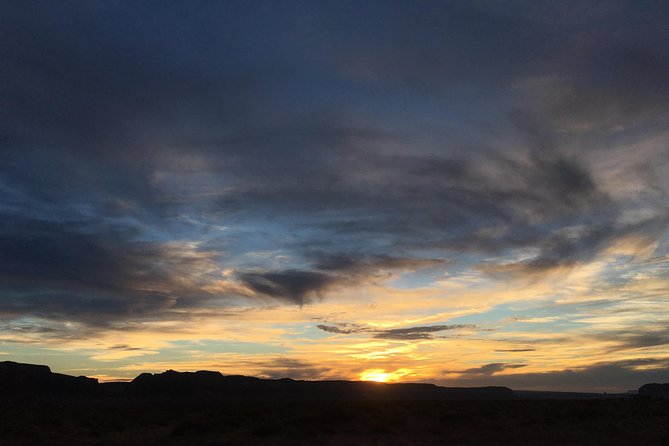
This is a sunset tour, so good weather matters. If conditions aren’t right, you’ll be offered a different date or a full refund. That’s important because it means your “sunset plan” depends on Mother Nature cooperating.
Also, the sun can shift fast at this latitude. That’s another reason guided timing helps. You’re not trying to manage the valley’s light with GPS and hope.
If you’re the type who hates uncertainty, bring backup expectations: even when the weather is perfect, sunset is still a show that changes by the minute.
Should You Book This Sunset Tour of Monument Valley?
Book it if you want Monument Valley to feel like more than a postcard. This tour gives you backcountry access, Navajo-guided context, and cultural moments like a hogan visit and rug weaving demonstration, plus music and live performance chances. You also get built-in photo time, so you’re not fighting a rushed schedule while the sky changes.
Skip it (or at least think twice) if:
- You only care about the most obvious roadside silhouettes and plan to stay flexible on your own.
- You’re sensitive to rough rides and dust and you don’t want to deal with preparation.
My rule of thumb: if you’re coming to Monument Valley for one standout experience, this is one of the best bets because it’s paying for access and meaning, not just driving through scenery.
FAQ
How long is the Monument Valley sunset tour?
It runs for about 3 hours (approx.).
What does the tour cost?
The price is $85.00 per person, plus Tribal Park admission of $8 per person.
What’s included in the price?
You get a certified Navajo guide, pick-up and drop-off at the View Hotel, and KOA pick-up/drop-off for overnight KOA guests.
What are the extra costs?
Tribal Park admission is $8 per person, and bottled water is not included.
Where does the tour start and end?
It starts at the View Hotel (outside in front of the hotel at the guide loading area) and ends back at the same meeting point.
Do KOA guests get pick-up?
KOA pick-up is for KOA customers only, and overnight guests must call for the departure time.
Is the tour offered in English?
Yes, it is offered in English.
How many stops are there, and how long do you spend at each one?
There are multiple scenic stops, with a minimum of 5–10 minutes to explore and take photos at each scenic stop.
What should I bring for comfort?
Bring water (since bottled water isn’t included) and plan for a bumpy ride and time outdoors; a head covering and sunglasses can help with sun and wind.
What happens if weather is bad?
The experience requires good weather. If it’s canceled due to poor weather, you’ll be offered a different date or a full refund.