REVIEW · NEW YORK CITY
NYC: SUMMIT One Vanderbilt Experience Ticket
Book on GetYourGuide →Operated by SUMMIT One Vanderbilt · Bookable on GetYourGuide
New York has a way of pulling you upward, and SUMMIT One Vanderbilt does it with style. You’ll step through floor-to-ceiling mirrors, transparent glass skyboxes, and playful light-and-image rooms while looking out at the city from nearly 1,100 feet above Manhattan. I especially like the 360-degree views that feel different at every turn, and the multi-sensory rooms designed to make you move, look up, and take better photos. One thing to plan for: the day you go can bring long lines and timed-entry pressure, so build extra time for getting up and (especially) getting back down.
A solid chunk of the fun is that you can choose your mood. Air at Night brings an LED light show, vivacious music, and cocktails for purchase, while daytime visits feel more open and bright. You’ll also want to be ready for heights—this isn’t the place to tough it out with a fear of falling, and it’s not suitable if you have vertigo.
In This Review
- Key highlights worth bookmarking
- Grand Central Entry: How Timed Tickets Shape Your Morning (or Night)
- SUMMIT AIR on the 91st: Mirrors That Turn the City Into a Room
- Levitation at 1,070 Feet: Transparent Glass Skyboxes and That Step Forward
- AFFINITY and Photo Rooms: Balloons, Crowd Flow, and Quick Turns
- 93rd-Floor Outdoor Deck: Big Views, and SUMMIT Ascent Isn’t Included
- Air at Night vs Daytime Air: LED Show, Music, and Cocktails for Purchase
- Price and Value: Why $48 Can Feel Like a Bargain or Not
- Timing, Crowds, and Weather: Practical Moves That Save Your Trip
- Who Should Book SUMMIT One Vanderbilt (and Who Might Want to Skip)
- Should You Book SUMMIT One Vanderbilt? My Decision Guide
- FAQ
- How long is the SUMMIT One Vanderbilt experience?
- Where do I enter SUMMIT One Vanderbilt?
- What is included with the ticket?
- Are sunset or specific times included?
- Is SUMMIT Ascent included?
- Is food and drink allowed during the experience?
- Is the experience wheelchair accessible?
- Is SUMMIT suitable if I have vertigo?
- Can I book a day or night experience?
Key highlights worth bookmarking
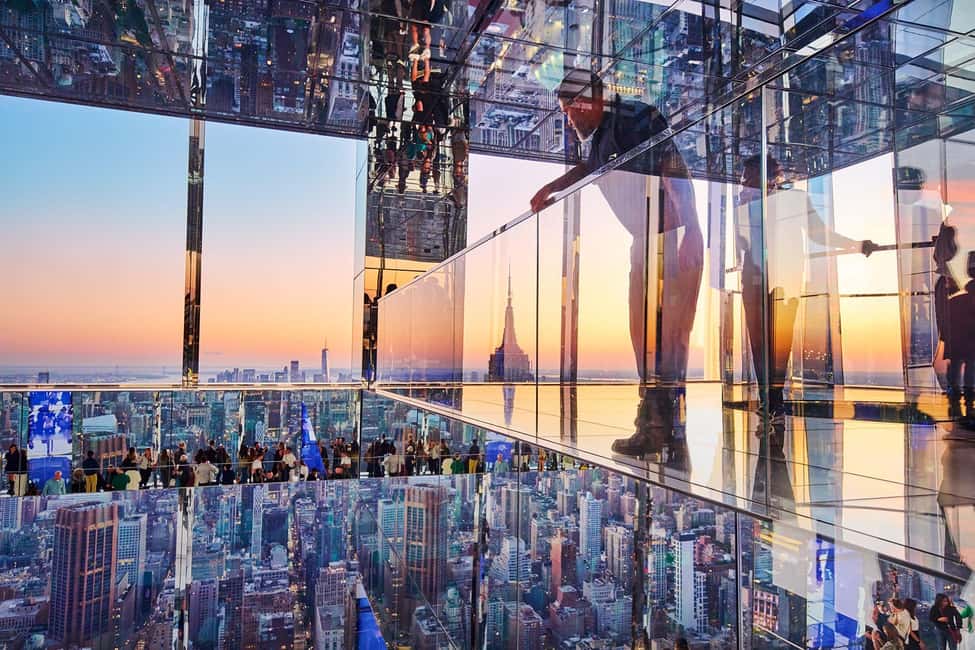
- Kenzo Digital’s SUMMIT AIR: two floors of floor-to-ceiling mirrors that bounce the skyline back at you
- Levitation glass skyboxes: transparent enclosures plus two glass ledges suspended above Madison Avenue
- AFFINITY balloon room: a silver balloon space that’s fun but moves quickly
- Open-air terrace views: outdoor deck access on the 93rd floor for skyline panoramas
- Air at Night: LED light show, music, and cocktails at the 93rd-floor bar
Grand Central Entry: How Timed Tickets Shape Your Morning (or Night)
SUMMIT is reached through the main concourse of Grand Central Terminal. It’s a smart setup because it puts you right in the orbit of one of NYC’s easiest-to-navigate hubs. But the big thing here is that your ticket is timed. That means you can’t just wander in whenever you feel like it.
In real life, timed entry affects your whole schedule. Arrive a bit earlier than you think you need so you’re not sprinting through security and crowd flow. Multiple parts of the visit operate on one-way movement, and the experience is designed so you don’t really backtrack. That’s great for keeping the pace moving, but it also means you should use your time slot to your advantage. If you miss it, rescheduling may cost extra and depend on availability.
The other logistics note that matters: there’s no luggage-friendly vibe. Large bags aren’t allowed, and food and drinks aren’t allowed either. So travel light. If you’re carrying shopping bags or a big daypack, you’ll want a plan before you head into One Vanderbilt.
You can also read our reviews of more tours and experiences in New York City.
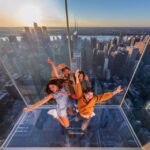
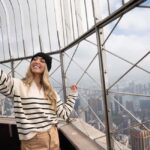

SUMMIT AIR on the 91st: Mirrors That Turn the City Into a Room
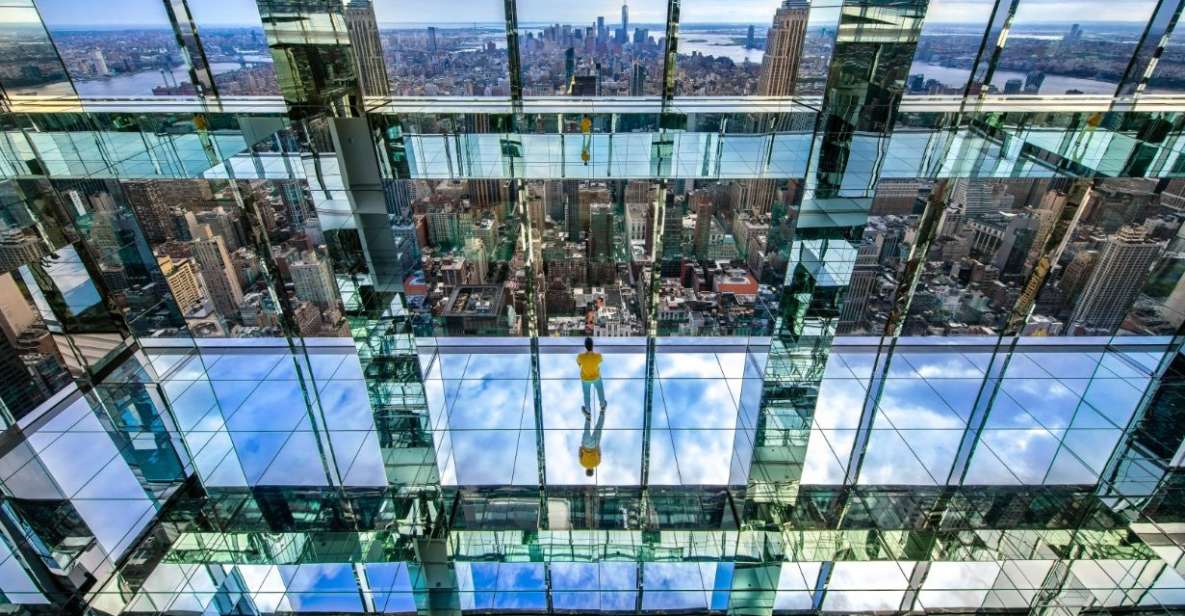
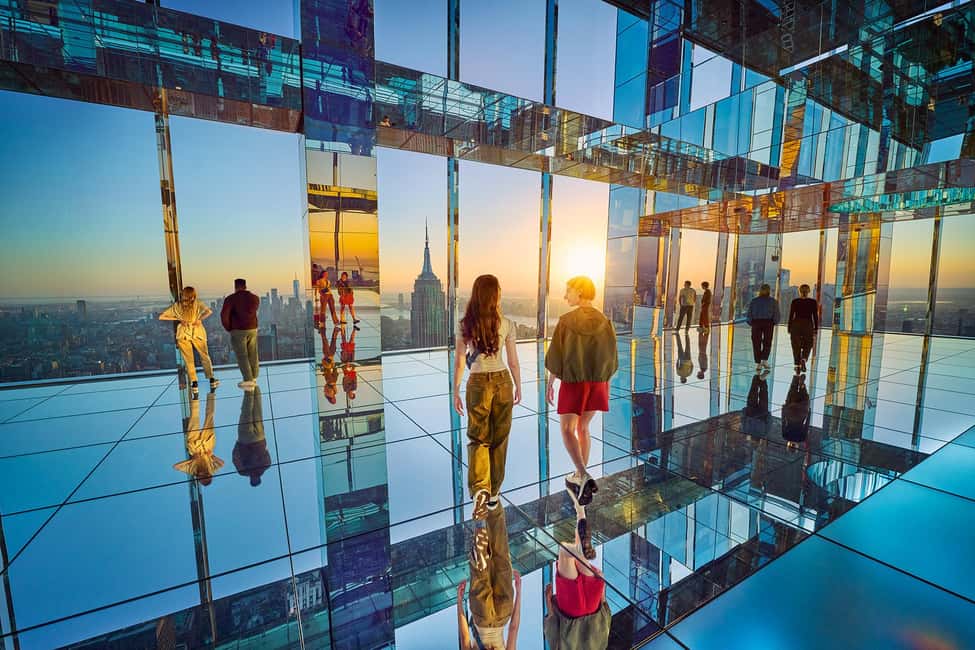
Your experience starts with a sensory elevator ride up to the 91st floor. Then you step into SUMMIT AIR, created by Kenzo Digital. This is the part that most people remember because it’s visually different from a regular observatory.
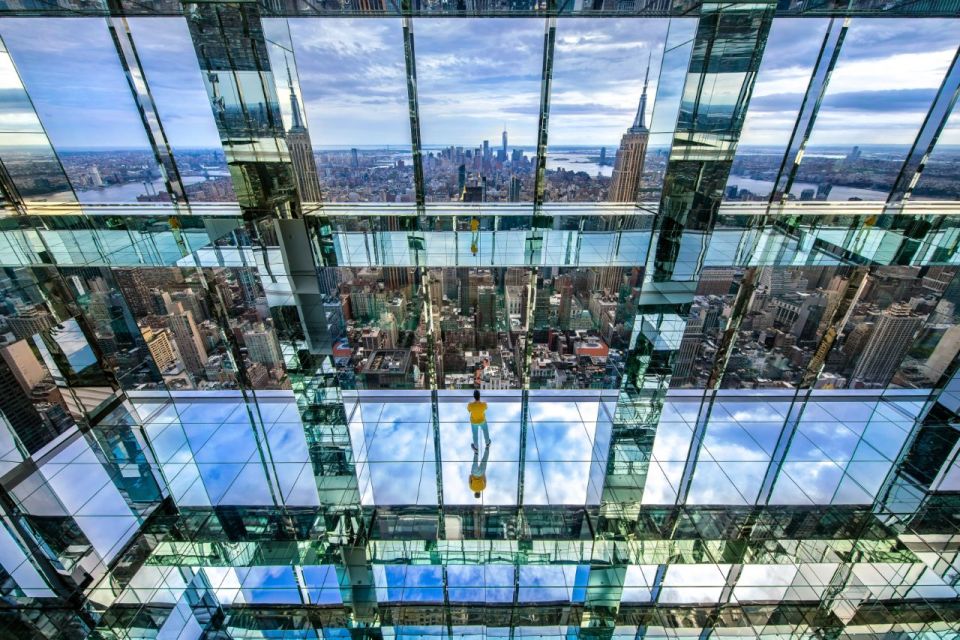
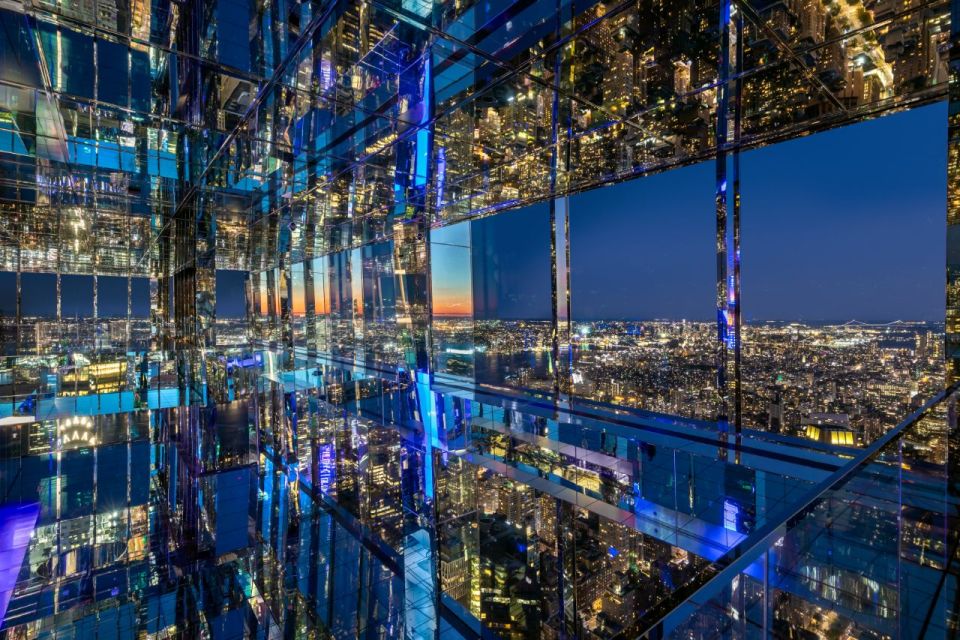
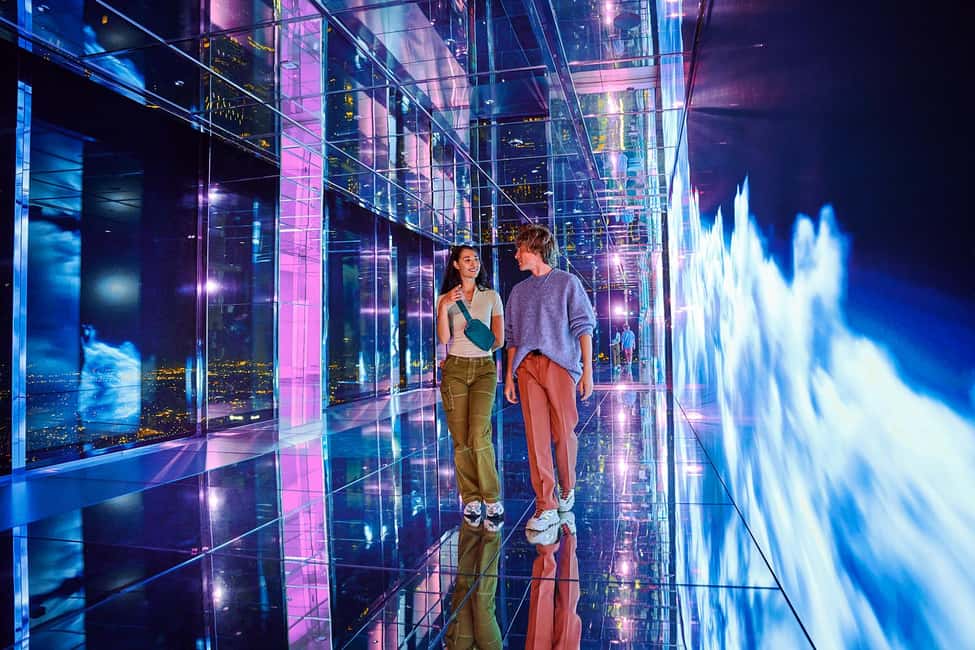
SUMMIT AIR uses two floors of floor-to-ceiling mirrors. The city becomes your background and your foreground at the same time. Instead of just looking outward, you’re seeing reflections of yourself, other visitors, and the skyline all layered together. At night, the lighting changes how the reflections read, and you get a more theatrical look. During the day, the mirrored surfaces feel cleaner and more graphic—like a kaleidoscope version of Midtown.
There’s also a practical reason to pay attention here: the mirror rooms set the “rhythm” of the whole visit. You’ll learn where the best lines are for photos, how to position yourself without blocking others, and what kinds of angles work on glass and reflective floors. The earlier you figure that out, the happier you’ll be later when you’re standing in front of glass ledges.
One consideration: reflective and mirrored flooring can be unforgiving visually. The venue recommends pants, shorts, or tights when possible, and it doesn’t allow skirts. It’s not about taste—it’s about comfort and avoiding unwanted exposure while you’re walking and posing.
Levitation at 1,070 Feet: Transparent Glass Skyboxes and That Step Forward
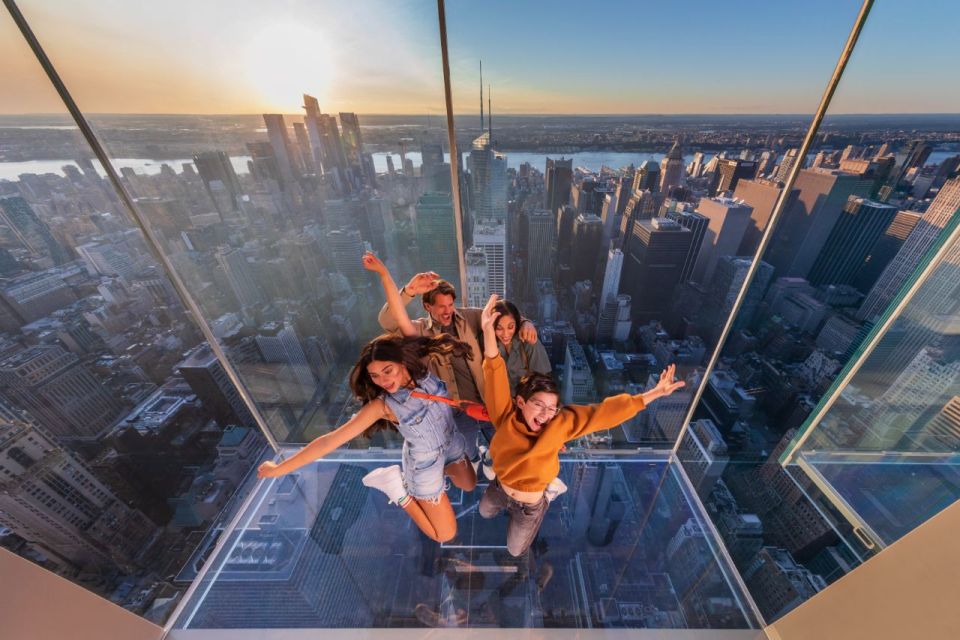
Next up is SUMMIT LEVITATION, and yes, it’s the courage test. You’ll feel the height fast because you’re surrounded by transparent glass and high above Madison Avenue—listed at about 1,070 feet (325 meters), with details also referencing around 1,063 feet above the street level.
What makes Levitation stand out isn’t only the height. It’s the way the enclosure frames the view and makes the city feel close under your feet. You step out over the city on two glass ledges suspended in the air. That’s the moment most people understand why this attraction isn’t really like other skyscraper decks.
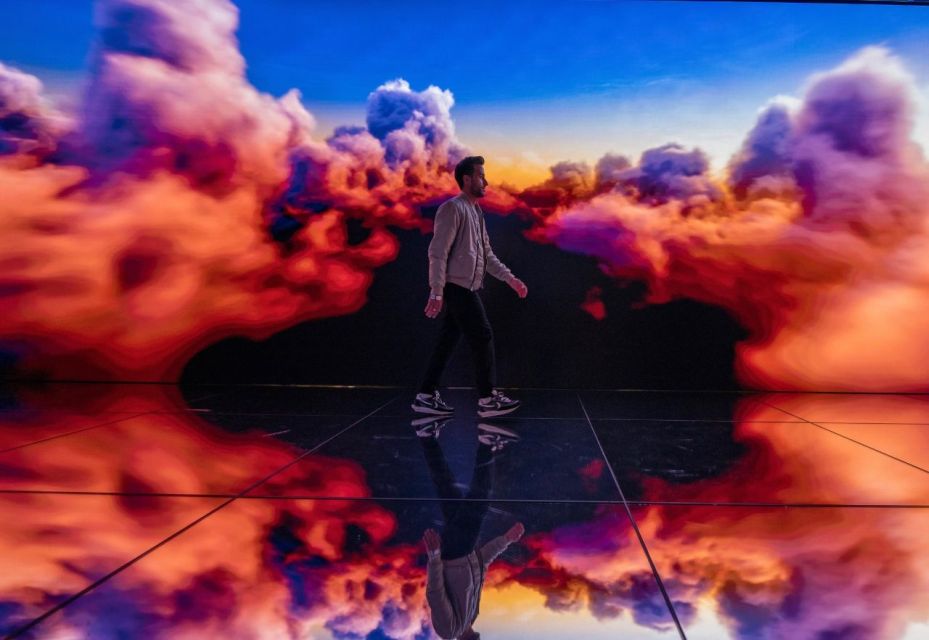
There’s also a fun twist: you’ll see your image float in the clouds on a multi-media screen. That playful element helps balance the nerves. It turns a scary moment into something you can laugh at, which is exactly the right energy for this kind of attraction.
Still, be honest with yourself. This is not the place for vertigo, and if you dislike heights, you might want to rethink your timing and tolerance. A clear day helps the view, but it can also make the height feel more obvious. If you go on a foggy or overcast day, you may feel less “open” but you also risk lower visibility.
AFFINITY and Photo Rooms: Balloons, Crowd Flow, and Quick Turns
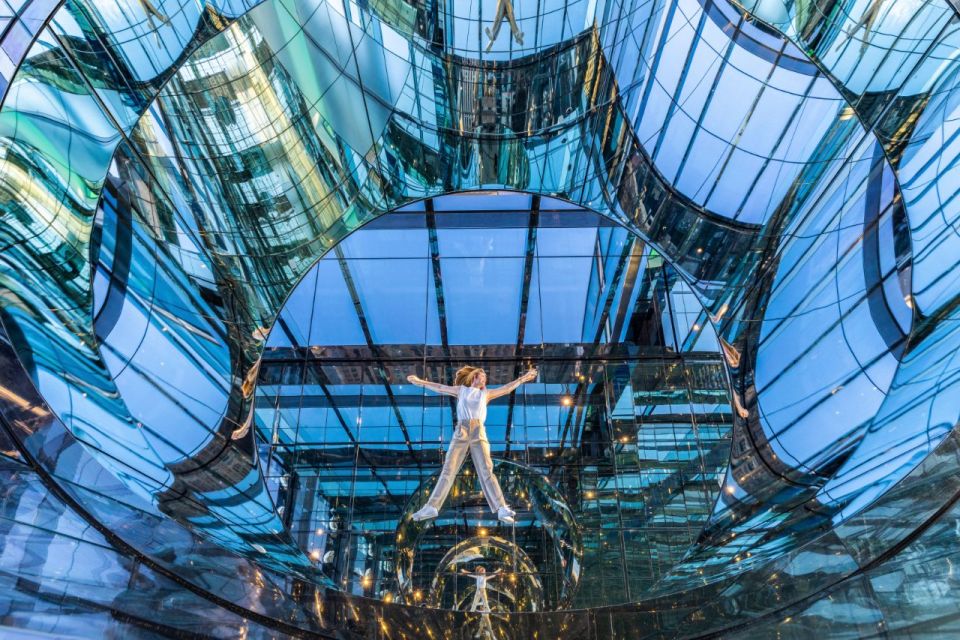
After Levitation, you’ll hit AFFINITY, the silver balloon room. It’s designed to be playful, and the balloon room tends to be a standout. The catch is that it may feel smaller than expected, and you’re typically expected to stay for a limited time. The vibe is more quick stop and photo moment than long hangout.
Then there are other interior photo opportunities, including mirror-and-light spaces that can get packed. One room can become especially busy and make it harder to get photos without bumping into someone’s shoulder. The fix is simple: watch the crowd. When you see people rushing through one corner, pause and aim for a moment when there’s a little breathing room. Staff generally keep things moving fairly well, but peak times mean dense lines in the rooms.
Here’s a key practical tip: wear comfortable shoes and plan your route like a loop. The experience is set up so you proceed forward without much backtracking. If you stop for photos too long early, you might feel rushed at the best viewpoints later.
If you care about professional-looking images, note that digital photos are available for purchase. One review referenced a price of about $25 for digital photos, so if you’re thinking of going that route, mentally budget for it.
93rd-Floor Outdoor Deck: Big Views, and SUMMIT Ascent Isn’t Included
When you reach the 93rd floor, the reward is wide-open sky. You’ll get outdoor observation deck access that gives you another vantage on NYC. This part matters because it shifts the experience from “art rooms with views” to straightforward skyline viewing—wind, light changes, and the feeling of standing outside the building.
One important note: the highest level called SUMMIT Ascent is not included, and it’s currently closed. So you should treat the 93rd-floor outdoor deck as the top of what’s available with this ticket. You still get incredible panoramas from nearly 1,100 feet, and the elevated perspective gives you a different feel than lower observatories.
Also, the 93rd floor is where you’ll find the bar during night experiences. Even if you’re not buying a drink, it’s a good reference point for timing. You’ll likely want to linger there briefly when the city lights are at their best, then move on before lines rebuild elsewhere.
And remember: outdoor decks are weather-dependent. The venue notes that no refund is issued in case of bad visibility and bad weather. So if you’re the type who hates cloudy skies, check forecasts and decide whether it’s worth gambling.




Air at Night vs Daytime Air: LED Show, Music, and Cocktails for Purchase
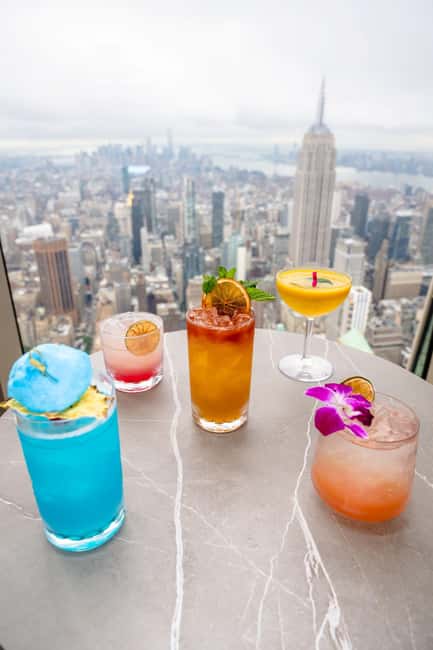
One Vanderbilt’s skyline is dramatic in daylight, but at night the lighting turns the building into a stage. You can do SUMMIT either by day or by night, and the difference is not subtle.
With Air at Night, you get access to all areas of the attraction and an LED light show with vivacious music. You can also purchase cocktails at the 93rd-floor bar. That turns the visit into something closer to a night-out with a view, not just a daytime sightseeing stop.
The mirror rooms often feel different after dark. Reflections pick up LED tones, and the city lights look sharper and more graphic through glass. The Levitation moment can also feel more intense at night because the ground looks darker and the illumination comes mostly from buildings and street grid patterns.
Is daytime easier? It can be. Bright light can make it easier to see and take photos without battling low-light settings. But nighttime has a built-in show factor that can make a shorter visit feel more complete.
My practical suggestion: if you’re doing other skyline attractions the same trip, pick the time that balances your energy. Night works well when you want the full vibe. Day works when you want a calmer pace and clearer visibility.
Price and Value: Why $48 Can Feel Like a Bargain or Not
The ticket price is listed at $48 per person, and the value comes down to what you want from an NYC view.
If your goal is only “highest photo of Manhattan,” there are many observatories to compare. But SUMMIT isn’t only a deck. It includes admission plus all indoor multi-sensory art experiences, and it also includes access to an “Apres” eatery and cafe. That matters because you’re not paying solely for the skyline; you’re paying for a structured indoor sequence of rooms with photo moments and stage-like lighting.
You also get built-in variety in a short window. The visit typically runs 1.5 to 2 hours, which means you can fit it between other plans. That time efficiency is real value in a city where you’ll pay for every extra hour of logistics.
The main value risk is crowding and queues. Long lines can turn what should be a smooth 2-hour block into something that feels tighter. One downside repeatedly comes up in day-to-day planning: waiting down can be just as slow as waiting up. So price isn’t the only number to calculate. Add time cost too.
If you’re the kind of traveler who loves photos, indoor novelty, and skyline views at the same time, $48 starts to feel reasonable fast. If you’re only chasing one rooftop panorama, it might feel pricey compared to simpler viewing options.
Timing, Crowds, and Weather: Practical Moves That Save Your Trip
This is the part where you protect your experience.
Plan for lines. Even when staff runs things well, you’re going through timed entry, plus indoor crowd flow. Arrive early enough to breathe. If you’re relying on a tight schedule after SUMMIT, give yourself buffer time for the walk out and the queue down.
Hot and sunny days can also feel intense inside. The building is high, and the indoor rooms can run busy. Comfortable shoes matter because you’ll walk more than you expect.
Then there’s weather. If visibility is poor, you might not get the crisp long-range skyline that makes this attraction so memorable. And you should know that a refund isn’t issued for bad visibility and bad weather. That doesn’t mean you should avoid clouds, but it does mean you should avoid scheduling Summit as your only skyline plan on a forecast you don’t trust.
If you want the quietest photo moments, aim for when you expect fewer tour groups. You can also improve your odds by being flexible with where you stand in each room rather than trying to claim the exact same spot as everyone else.
Who Should Book SUMMIT One Vanderbilt (and Who Might Want to Skip)
This is a strong fit if you want a skyline experience with personality—mirrors, glass, lights, and photo setups—plus a real outdoor deck view on top.
It also works well for teens and adults who like clever installations. The attraction has an energy that’s more playful than lecture-style. Even if you’re not “into art museums,” the rooms are designed to be visually rewarding fast.
If you have vertigo, skip it. Height sensitivity is a real factor here, and the Levitation segment is specifically the kind of feature that can push uncomfortable feelings. If you’re afraid of heights but can handle them with support, you might still consider going, but be honest about your limits.
Dress matters, too. Avoid skirts, wear pants or shorts or tights when possible, and bring sunglasses. Comfortable shoes aren’t optional. You’ll be on reflective floors and moving through multiple rooms in sequence.
Group size can also affect your comfort. Premium options are available for up to 10 people, while a VIP tour option is for up to 6 people. If you hate crowds, the smaller group structure can make the experience feel less hectic.
Should You Book SUMMIT One Vanderbilt? My Decision Guide
Book it if you want more than a deck. This ticket gives you indoor art installations and a real 93rd-floor outdoor viewpoint, all bundled into a short 1.5 to 2 hour block. The mirror rooms and Levitation glass skyboxes are the kind of features that are hard to replicate elsewhere in NYC, and the night version adds a structured LED show with music plus cocktails for purchase.
Skip it if you’re very height-sensitive, if you’re hoping for a calm, uncrowded stroll, or if you’re planning around strict timing with no buffer for queues. Also reconsider if weather is unreliable and you only care about crystal-clear visibility.
If you’re flexible, show up on time, wear the right clothes, and give yourself extra time for lines, SUMMIT One Vanderbilt is the kind of NYC stop that feels different the moment you step into the first mirror room.
FAQ
How long is the SUMMIT One Vanderbilt experience?
The visit typically lasts 1.5 to 2 hours, depending on your time slot.
Where do I enter SUMMIT One Vanderbilt?
Entry to SUMMIT is through the main concourse of Grand Central Terminal.
What is included with the ticket?
Admission to SUMMIT, access to the indoor multi-sensory art experiences, and access to the Apres eatery & cafe are included.
Are sunset or specific times included?
Sunset admission times are not included, so you’ll need to check availability for the time you want.
Is SUMMIT Ascent included?
No. SUMMIT Ascent access is not included and is currently closed.
Is food and drink allowed during the experience?
No. Food and drinks are not allowed.
Is the experience wheelchair accessible?
Yes, the experience is wheelchair accessible.
Is SUMMIT suitable if I have vertigo?
No. It’s not suitable for people with vertigo.
Can I book a day or night experience?
Yes. You can experience SUMMIT by day or at night, and Air at Night includes an LED light show with music plus cocktails for purchase at the 93rd-floor bar.