REVIEW · PITTSBURGH
Pittsburgh Segway Tour
Book on Viator →Operated by segway pittsburgh · Bookable on Viator
Steel City looks different at 10 mph. This 2-hour narrated Segway tour takes you through downtown Pittsburgh’s highlights, with a short training course first so you can ride with confidence and focus on the views.
What I like most is how smoothly the ride turns sightseeing into motion. You get a brief Segway lesson before you head out, and the route hits major landmarks like Market Square, Point State Park, and PPG Place while you learn the city’s story along the way.
One thing to plan for: the narration is only as good as your spot. In some cases, you may find it harder to hear the guide’s commentary, so I’d aim to stay where you can clearly follow directions and the spoken history.
In This Review
- Key highlights worth knowing before you go
- Station Square start: the easy way to begin
- The pre-tour Segway lesson: where confidence gets built
- Why the bridges and riverfront feel like Pittsburgh’s secret shortcut
- Market Square and the Allegheny County Courthouse: downtown’s brainy side
- Benedum Center and Heinz Hall: the Cultural District on two wheels
- Fort Pitt Museum area and the North Shore sports stops
- Point State Park and PPG Place: the best photo energy
- Geno’s ride management, pace, and what to do about audio
- Price and value: does this tour make sense for your time?
- Should you book the Pittsburgh Segway Tour?
- FAQ
- How long is the Pittsburgh Segway Tour?
- Where does the tour start and end?
- Do I need to speak English?
- Is there a Segway training course before the tour?
- How many people are in the group?
- What landmarks are included on the route?
- How many bridges do you cross?
- What if the weather is poor?
- What is the cancellation policy?
Key highlights worth knowing before you go
- A short practice lesson before you start, so you spend less time wobbling and more time cruising
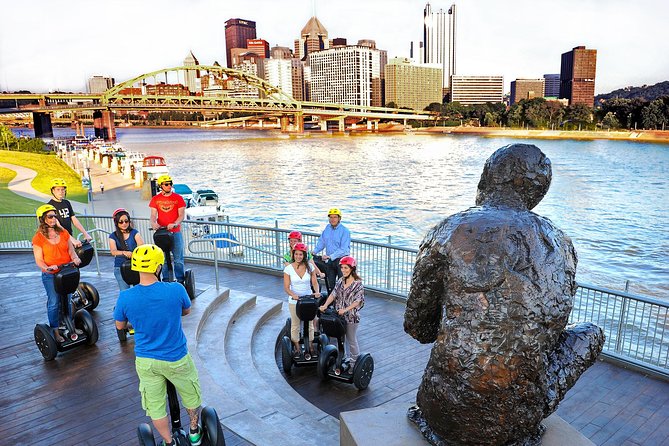
- Three iconic bridges crossed as you learn why Pittsburgh is called the City of Bridges
- Downtown landmarks close together, including Market Square and Point State Park
- Cultural District stops like Benedum Center and Heinz Hall for the Performing Arts
- North Shore sports energy, with PNC Park and Heinz Field on the route
Station Square start: the easy way to begin
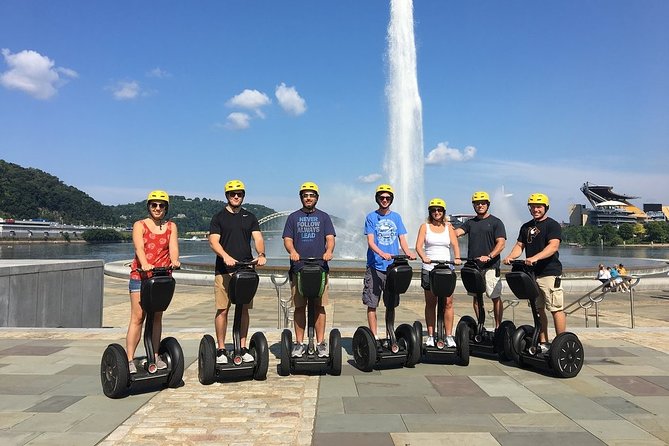
Your tour starts at 228 W Station Square Dr, Pittsburgh, and you’ll head out from there and return the same place at the end. It’s a good setup because Station Square is connected to the city’s riverfront area, and the meeting spot is near public transportation, which matters when you don’t want your day to turn into a parking-finding mission.
You’ll also use a mobile ticket, and you should receive confirmation at booking. That combo is handy if you’re bouncing between other stops in Pittsburgh, since you won’t need to hunt down printed passes.
Since the ride takes place on two wheels, the company asks for moderate physical fitness. That usually means you can handle some standing, balancing, and short stretches of riding without feeling wiped out.
You can also read our reviews of more tours and experiences in Pittsburgh.

The pre-tour Segway lesson: where confidence gets built
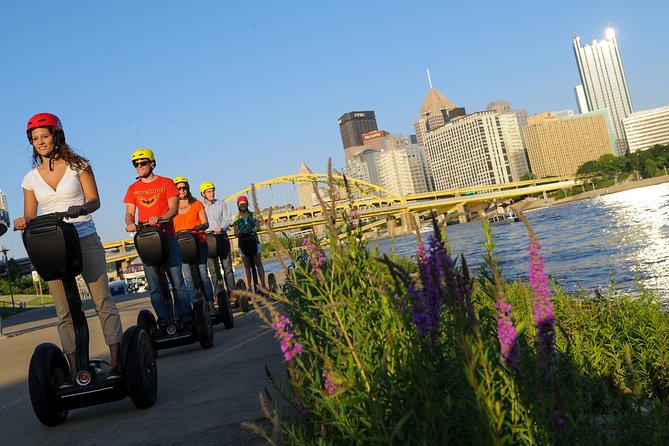
Before you go sightseeing, you’ll take a short training course. This is the moment that can make or break your experience. If you’re new to Segways, the lesson helps you learn turning, stopping, and how to keep a steady, relaxed stance. It also gives the guide a chance to check that everyone can ride safely before you join the group on busier streets.
The tour runs with a maximum of 20 travelers, which typically helps keep the ride organized and not chaotic. That matters because once you’re moving through downtown, the guide needs everyone spaced and in sync.
From a comfort standpoint, the lesson is also where you learn what to do if your speed feels off or your balance feels shaky. Don’t rush the training part; a few extra minutes there can save your whole ride from feeling stressful later.
Why the bridges and riverfront feel like Pittsburgh’s secret shortcut
Pittsburgh is all angles and elevation, and the easiest way to get your bearings is to travel through the city instead of just staring at it. This route crosses three bridges, so you get repeated switches in perspective: river views, skyline views, and that classic Pittsburgh look where downtown seems to stack up in layers.
A stop you’ll connect with early is Point State Park, which sits on 36 acres at the confluence of the Allegheny and Monongahela Rivers, forming the Ohio River. Standing there (and then rolling past it) helps you understand why so many landmarks cluster around the water.
You also spend time near PPG Place, a glass complex above a three-city-block site. That view can feel like a Pittsburgh contrast machine: old downtown energy nearby, and sleek modern buildings reflecting the hills and rivers around them.
Market Square and the Allegheny County Courthouse: downtown’s brainy side
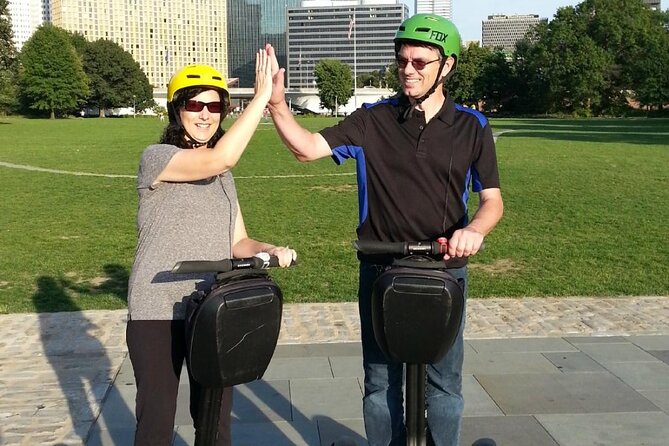
Market Square is one of those places where Pittsburgh’s rhythm becomes obvious fast. It sits at the intersection of Market and Forbes Avenue, and it’s the kind of spot where the city looks both historic and practical—busy enough to feel alive, but centered enough to make the surrounding architecture easy to spot.
Next, you’ll roll through the area around the Allegheny County Courthouse complex, including the older Allegheny County Jail. This complex was designed by H. H. Richardson, and the buildings are considered some of the finest examples of Romanesque Revival style for which he’s known.
What I like about stopping for architecture on a Segway tour is that you don’t need museum-style patience. You get a quick, clear explanation, then you’re back on the move—so you’re not stuck indoors while the rest of Pittsburgh passes you by.
A practical note: downtown can feel more concentrated than you expect. If you’re hoping for more grit and old industrial streets beyond the core, you might feel the route stays fairly “downtown-focused.”
Benedum Center and Heinz Hall: the Cultural District on two wheels
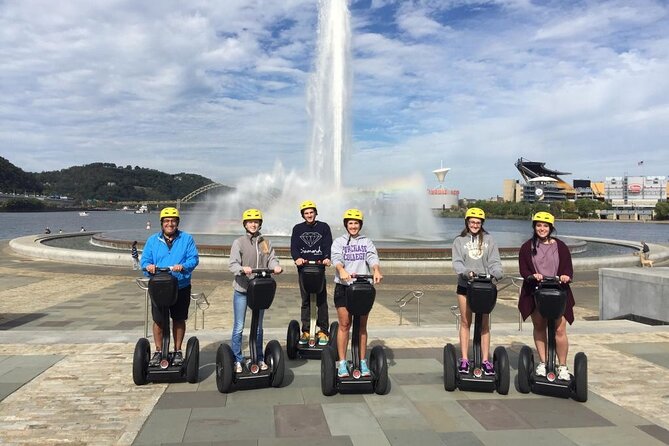
Pittsburgh’s performing arts scene becomes real the moment you enter the Cultural District area. You’ll pass by the Benedum Center for the Performing Arts, located at 237 7th Street. It was built in 1928 as the Stanley Theatre and designed by the Philadelphia firm Hoffman-Henon—so even if you’re not a theatre person, the building itself carries weight.
Then you’ll head to Heinz Hall for the Performing Arts at 600 Penn Avenue. This is home to the Pittsburgh Symphony Orchestra and the Pittsburgh Youth Symphony Orchestra. The hall seats 2,676 and presents about 200 performances each year, which gives you a sense of why this neighborhood matters to locals, not just tourists.
If you love the arts but hate slow, stop-and-read tours, this is a nice middle ground. You get the story in a short burst, and then you move on before downtown attention fades.
Fort Pitt Museum area and the North Shore sports stops
Fort Pitt Museum is an indoor/outdoor museum administered by the Senator John Heinz History Center, and it sits at the confluence where the Monongahela and Allegheny Rivers meet to form the Ohio River. That river geography matters here because it explains why Pittsburgh grew where it did, and why the city’s big sites cluster around water.
After that, the tour shifts into North Shore mode, where sports are a constant backdrop. You’ll pass PNC Park, the home of the Pittsburgh Pirates, which opened during the 2001 MLB season after the controlled implosion of Three Rivers Stadium. It’s one of those landmarks that feels instantly familiar to baseball fans.
You’ll also pass Heinz Field, home of the Pittsburgh Steelers and the Pittsburgh Panthers. If you’re visiting on a non-game day, this stop still works because it ties into local identity: Pittsburgh shows up for teams, and the stadiums are part of the city’s everyday landscape.
Point State Park and PPG Place: the best photo energy
You’ll circle back through the river-and-skyline zone around Point State Park, again emphasizing that confluence point. With 36 acres and the river meeting right there, it’s a straightforward way to understand Pittsburgh’s “three rivers” identity without piecing together bus routes and walking circuits.
Then you’ll visit PPG Place, which sits atop a 5.5 acre site spanning three city blocks near historic Market Square. Centered around a 40-story office tower, it reflects the skies, hills, rivers, and buildings that make Pittsburgh look like it was designed for angles and light.
This is the part where your phone will get used a lot. If your camera has a panoramic mode, this is where it makes sense because the skyline and river views give you natural lines to work with.
Geno’s ride management, pace, and what to do about audio
A huge part of whether a Segway tour feels fun or stressful is the guide’s control. On this tour, the guide name you may hear is Geno, and the style is calm, patient, and focused on keeping the group safe while still moving efficiently.
The pace is fast in a good way, meaning you cover a lot of ground in a short time. Expect frequent stops for explanation and landmark context, plus chances to get photos during the tour. That helps, because trying to juggle riding and filming at the same time is when you start having little mistakes.
Now, audio. This tour is narrated, but if you cannot hear the spoken history from where you are, don’t suffer silently. Position yourself where the guide’s instructions and story are easiest to catch, and if you’re having trouble, ask for adjustments.
If you want to feel extra comfortable, dress for the outdoors and bring what you need for good balance. Good weather helps too, since the experience requires it.
Price and value: does this tour make sense for your time?
You won’t just be paying for a novelty ride. The value comes from a package deal: 2 hours on a Segway, a pre-ride training course, and narrated stops that connect major downtown sights to the bigger story of why Pittsburgh grew the way it did.
It’s also a good value when you compare effort. You’re seeing a lot of geography—bridges, river confluence areas, the Cultural District, and North Shore sports venues—without needing to stitch together transit tickets and long walks across multiple neighborhoods.
Small-group limits matter here. With a maximum of 20 travelers, it’s easier for the guide to keep everyone oriented and to manage safety as you cross roads and move through busy areas.
The one caution is physical comfort. If balancing on two wheels feels tiring even for short periods, or if you expect long flat walking only, you might find the Segway demands more than you want.
Should you book the Pittsburgh Segway Tour?
Book it if you want a quick, active way to see Pittsburgh’s main symbols—bridges, rivers, and downtown landmarks—with a guide managing the ride so you can focus on the views.
Skip it or consider an alternative if audio clarity would bother you, because the narration quality depends on where you stand on the route and whether you can hear the guide clearly.
Also, if the weather is iffy, wait for better conditions or be ready to adjust plans. When the day is clear and you feel steady on the Segway, this is the kind of tour that makes Pittsburgh feel faster, smarter, and more alive.
FAQ
How long is the Pittsburgh Segway Tour?
The tour lasts about 2 hours.
Where does the tour start and end?
It starts at 228 W Station Square Dr, Pittsburgh, PA 15219, and ends back at the same meeting point.
Do I need to speak English?
Yes. The tour is offered in English.
Is there a Segway training course before the tour?
Yes. You take a short Segway lesson before you ride.
How many people are in the group?
The tour has a maximum of 20 travelers.
What landmarks are included on the route?
You pass by or visit landmarks such as Market Square, the Allegheny County Courthouse, the Benedum Center, Heinz Hall, Fort Pitt Museum, PNC Park, Heinz Field, Point State Park, and PPG Place.
How many bridges do you cross?
The tour crosses three bridges.
What if the weather is poor?
The experience requires good weather. If it is canceled due to poor weather, you’ll be offered a different date or a full refund.
What is the cancellation policy?
There is free cancellation. You can cancel up to 24 hours in advance for a full refund.