REVIEW · MAUI
Whale Watching Maui: 2-Hour Small Group Raft Tour from Lahaina
Book on Viator →Operated by Dive Maui · Bookable on Viator
Hearing whales under your boat is the best kind of weird. This small-group inflatable raft trip from Lahaina aims you at the Maui Nui whale sanctuary, where winter humpbacks come to mate and give birth. I especially like the hydrophone + speaker setup, which lets you hear whale songs instead of just hoping you can catch a tail fluke on camera.
The main drawback to plan for is simple: whales are wild, and even the best captains can’t force behavior. Also, the distance rules are the distance rules, so a smaller raft doesn’t automatically mean you’ll be closer than every other tour at any moment.
You get a focused, roughly 2-hour outing with an experienced captain and a marine naturalist on board, plus rain ponchos on wet days, bottled water, and a whales-or-free-guarantee if sightings don’t happen.
In This Review
- Quick take: what makes this tour tick
- Why this Maui Nui raft feels more personal than big-boat whale watching
- Humpback season basics: what you’re likely to see out there
- The 2-hour flow: what happens from Lahaina until you’re back on shore
- Crew and education: captain skills plus Marine Naturalist talk time
- Price and value at $80.60: paying for more than movement
- Weather, reschedules, and the whales-or-free guarantee
- What’s included (and what you need to bring) for a comfy raft ride
- Who this Lahaina raft whale watch suits best
- Should you book this whales-and-hydrophone raft tour?
- FAQ
- Where does the whale watching tour meet in Lahaina?
- How long is the tour?
- What whale species are you looking for, and where do you go?
- Is there a guarantee you will see whales?
- What’s included on the raft?
- Is the tour kid-friendly?
- Can I bring alcohol?
Quick take: what makes this tour tick
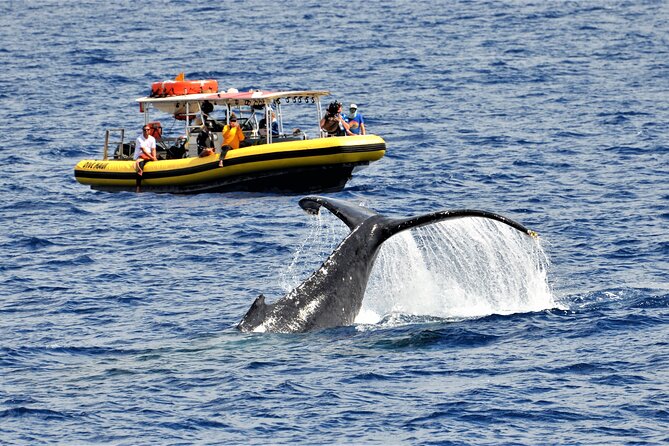
- Maui Nui whale sanctuary route: you head out toward the humpback mating and birthing waters in winter.
- Hydrophone and speakers: whale song audio comes through right from the boat.
- Max 20 travelers: the raft is set up for easier scanning in multiple directions.
- Every seat has front-row energy: the inflatable design aims for strong viewing angles around you.
- Included practicals: bottled water, reef-safe sunscreen, filtered water in paper cups.
- Whales-or-another-trip-free guarantee: it’s built to reduce the risk of a quiet outing.
Why this Maui Nui raft feels more personal than big-boat whale watching
This tour wins on the “you can actually see” factor. With a maximum of 20 travelers, you’re not stuck behind a wall of people, and the raft’s layout supports 360-degree viewing while the captain searches the horizon.
An inflatable raft isn’t just a gimmick. It sits lower in the water and tends to feel more connected to what’s happening around you. One review highlighted how a small group size (only eight onboard) meant fewer crowds and more flexibility when whales moved.
Just keep your expectations realistic. One negative review complained that the raft didn’t end up closer than larger commercial tours, and that’s a valid thing to consider. In practice, the tour’s value is more about the experience quality—service, audio, and maneuvering—than a permanent guarantee of ultra-close proximity.
You can also read our reviews of more tours and experiences in Maui.



Humpback season basics: what you’re likely to see out there
The tour targets humpback whales during Maui’s winter season, when they migrate into warm waters to breed. The Maui Nui sanctuary is described as a mating and birthing area, so sightings often include the kinds of whale behavior that make people lean forward.
From the cruise-style reviews, the “watch list” is pretty clear. You’re looking for mother-and-calf pairs, escort males, and the active behaviors that humpbacks do when they’re competing or showing off. Several accounts mention breaching or strong surface activity, and some describe whales coming near the boat in ways that felt very close-up.
Even when you don’t get constant action, the hydrophone changes the whole game. Hearing the songs shifts your whale watch from “scan and hope” to “listen and learn,” which is especially nice if you’re traveling with kids or anyone who gets impatient with long searches.
The 2-hour flow: what happens from Lahaina until you’re back on shore
The tour starts at Dive Maui / Hawaiian Rafting Adventures, 1223 Front St, Lahaina and ends back at the same meeting point. Check-in is quick, and the trip itself is designed to feel focused: you’re out long enough to find activity, but not stuck for half a day.
Once you’re on the raft, the crew’s rhythm is basically: scan, locate, position, watch. Reviews praise how the captain actively moved the raft to keep the group watching whales—without getting in the way—so you spend less time staring into empty water and more time actually observing behavior.
Then comes the audio moment. The tour includes a hydrophone and high-quality speakers, and at least one account specifically describes a moment where the setup helped make the whale singing clearly audible. That’s a huge upgrade over typical whale watching where you only get visual cues.
At the 2-hour mark, you head back. It’s a short enough outing that it fits easily into a day in Lahaina, but long enough to feel like you did more than a quick sightseeing boat ride.
Crew and education: captain skills plus Marine Naturalist talk time
This is not a “sit quietly and point” type of tour. You get a captain plus a whale-loving Marine Naturalist, and the crew is there to answer questions and explain what you’re seeing.
The names that show up repeatedly in reviews are a good sign of consistent staffing. Captains mentioned include Joe, Will, and Mike, and naturalists mentioned include Renee and Brian. People call out how the crew were personal, interactive, and genuinely excited to share what they know.
One of the best parts of tours like this is when education actually connects to what you’re watching. Reviews mention learning about mothers and calves, escorts, and why males behave the way they do around breeding. That helps you turn a brief sighting into something you remember—because you understand the context, not just the shapes.
If you care about getting more than photos, this crew-and-narration combo is where the value shows up.
Price and value at $80.60: paying for more than movement
At $80.60 per person, this is not the cheapest way to see whales from Maui. But it also isn’t priced like a premium yacht experience, either.
Where the value shows up:
- Small-group format (max 20) with strong viewing angles
- Hydrophone audio included, which many cheaper tours don’t offer
- Bottled water plus practical inclusions like filtered water in paper cups
- Reef-safe sunscreen included (small thing, big convenience)
- Rain ponchos provided when needed
The whales-or-another-trip-free guarantee also matters. It’s a real risk-reducer in whale season, where wildlife behavior can be unpredictable. If you really want to maximize your odds, this guarantee gives you some leverage if the day doesn’t cooperate.
The main “value reality check” is that you’re still dealing with regulations and whale behavior. One critical review argued the raft didn’t deliver closer viewing than large boats, and that’s a fair warning: if your only priority is maximum proximity, you could end up disappointed. If your priority is a well-run, informative, small-group experience with whale song audio, the price starts to make sense.






Weather, reschedules, and the whales-or-free guarantee
This outing requires good weather. If it’s canceled due to poor conditions, you’re offered a different date or a full refund.
That matters because the ocean doesn’t care about your itinerary. One review praised the organizer for rescheduling promptly and communicating clearly, while another described a cancellation due to high winds and waves. In other words: you should expect that weather can change plans, even in peak whale season.
You’ll also get rain ponchos provided on rainy days, which helps when Maui weather does its quick mood shifts. And because the trip is only about 2 hours, delays (when they happen) don’t usually turn your whole day into a write-off.
About the guarantee: it’s simple on paper—see whales or take another trip for free. In real life, the important thing is to stay flexible. If you’re visiting Maui with a tight schedule and one set date only, whale watching always carries some weather risk.
What’s included (and what you need to bring) for a comfy raft ride
This tour brings a bunch of “you don’t want to buy this at the beach” items.
- Filtered water served in paper cups to reduce plastic waste
- Bottled water
- Hydrophone and speakers for whale song audio
- Reef-safe sunscreen
- Rain ponchos on rainy days
- A marine naturalist on board
The only clear policy about drinks is that alcohol is BYO, but no glass is allowed. That’s standard for boats, but it’s good to know so you don’t show up with something that won’t be allowed onboard.
Bring the basics that make a whale trip work: a camera/phone you can secure, and anything you need to stay comfortable in sun or spray. If you burn easily, you’re covered on sunscreen, but sun protection habits still help.
Who this Lahaina raft whale watch suits best
I’d put this tour at the top of the list if you want:
- A small group with better sightlines
- A captain and naturalist who actively explain what you’re seeing
- The chance to hear whale songs, not just watch for spouts
- Family-friendly structure, with guidance and time focused on whale viewing
It’s also a good match if you’re the type who enjoys asking questions. Reviews repeatedly mention crew members answering questions and spending time positioning the raft so the whole group gets a meaningful view.
It may not be ideal if you’re mainly chasing one thing: guaranteed ultra-close whale interaction. Wildlife behavior changes day to day, and regulations still limit approach. This tour sounds like it will maximize the experience, but it can’t rewrite whale nature.
Also note the participation rules listed for this activity: no children under 3, and no pregnant persons. Service animals are allowed.
Should you book this whales-and-hydrophone raft tour?
If you’re in Maui during winter whale season, I think this is a strong booking choice. The combination of small-group raft viewing, a Marine Naturalist, and built-in whale song audio makes it more than just a “boat goes out and you hope” experience.
Book it if you:
- Want a guided, educational outing
- Care about hearing whale calls/songs
- Prefer fewer people on the water
- Like the safety net of a whales-or-another-trip-free guarantee
Second-guess it if you:
- Only want the absolute closest possible whale viewing, no matter what
- Have zero flexibility for weather reschedules
- Are traveling with someone who doesn’t meet the listed participation restrictions
Bottom line: for most people, especially couples and families, this tour looks like a smart way to spend a couple hours in Lahaina chasing humpback magic—while learning what you’re actually seeing.
FAQ
Where does the whale watching tour meet in Lahaina?
The tour meets at Dive Maui / Hawaiian Rafting Adventures at 1223 Front St, Lahaina, HI 96761. The activity ends back at the same meeting point.
How long is the tour?
The whale watching raft tour runs for about 2 hours.
What whale species are you looking for, and where do you go?
The tour focuses on migrating humpback whales. You head to the Maui Nui whale sanctuary area, which is described as a mating and birthing destination.
Is there a guarantee you will see whales?
Yes. The tour offers a whales-or-another-trip-for-free guarantee if you don’t see whales.
What’s included on the raft?
The tour includes filtered water in paper cups to reduce plastic waste, bottled water, hydrophone and speakers for whale songs, a whale-loving Marine Naturalist, and reef-safe sunscreen.
Is the tour kid-friendly?
It is described as family-friendly, but children under age 3 are not allowed.
Can I bring alcohol?
You can bring alcohol (BYO), but no glass is allowed.