
REVIEW · JACKSON
Whitewater Rafting in Jackson Hole : Family Standard Raft
Book on Viator →Operated by Dave Hansen White Water Scenic River Trips · Bookable on Viator
Snake River rapids are a family adventure. I love how this run focuses on Class II and III thrills like Lunch Counter and Big Kahuna, so you get excitement without needing advanced river skills. I also like the stable standard raft setup with pro guidance that helps first-timers feel in control. The one heads-up: you’ll get soaked, and there’s no food or drink on the trip, so plan for a wet (and hungry) day.
You’ll paddle an 8-mile stretch with limestone cliffs, Lodgepole Pine hills, and Grey’s National Forest views, with rapids that even include an underwater waterfall called Champagne. Morning or afternoon departures keep things flexible, and it’s about 4 hours total. If you’re 16+, you’ll pay a $3 Bridger Teton National Forest user fee at check-in.
In This Review
- Key things to know before you go
- Why this Jackson Hole rafting trip works for families
- The Snake River route: 8 miles with named rapids and big views
- Meeting at 225 W Broadway and what happens before the water
- On the water: how paddling works on a standard raft
- The “what will it feel like?” question: excitement and safety together
- What to wear and pack so you don’t ruin the day
- Season and conditions: late September vs mid-summer
- Price and value: is $120 per person fair?
- Who should book this, and who might want another option
- The small details that reviewers keep praising
- Should you book the Family Standard Raft?
- FAQ
- Where do we meet for this rafting trip?
- What’s included in the price?
- Do I need to rent a wetsuit?
- What should I wear since I will get wet?
- Is there an extra fee when we check in?
- How long is the experience?
Key things to know before you go
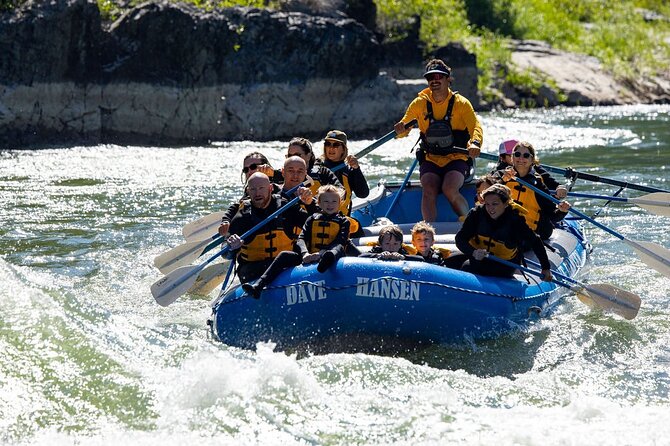
- Class II–III rapids you can actually enjoy: Big Kahuna, Lunch Counter, and Champagne on the Snake
- Small group feel: a maximum of 16 travelers, plus hands-on instruction
- Paddling plan on a 16-person raft: 10 paddle spots, so not everyone paddles the whole time
- You’ll get very wet: synthetic clothing helps, and you’ll want a system for dry clothes
- Wetsuits are optional but common: rentals are additional, and cold water is real
- No food onboard: eat before or after, and come ready to focus on the water
Why this Jackson Hole rafting trip works for families
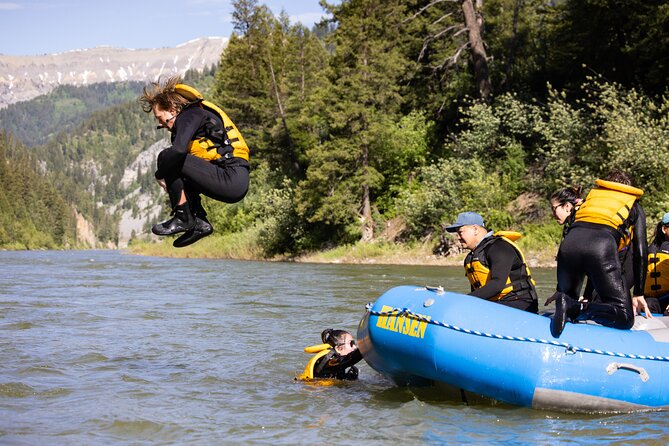
This is the kind of rafting trip you choose when you want real whitewater, but you also care about comfort and confidence. The rapids are in the Class II and III range. That’s the sweet spot for a lot of families: there’s motion, splash, and teamwork, but it’s not the kind of river where you spend the whole time bracing for danger.
What I like most is the way the experience is set up for stability and instruction. You’re not just dropped on a boat. You get a guide, a paddle, and a personal floatation device. Then the guide helps you understand what’s coming and how to handle it—especially when you’re watching the raft hit waves and drops that have names.
One practical drawback to be aware of: you’ll almost certainly be wet for the duration. Even on days with good weather, the river does what the river does. If you show up in cotton, you’ll feel it all day. If you show up with a plan, you’ll enjoy it.
You can also read our reviews of more tours and experiences in Jackson.
- Grand Teton Wildlife Safari in a Enclosed or Open-Air Vehicle (season dependent)
★ 5.0 · 1,212 reviews

The Snake River route: 8 miles with named rapids and big views
This trip runs about 8 miles (13 km) along the Snake River. That matters because you’re not just doing a quick hit-and-run. You get time to warm up to the rhythm of rafting, then you get the payoff when the Class II and III sections roll in.
Here’s what makes the scenery feel like more than background:
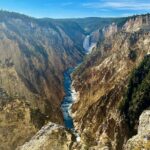
- Limestone cliffs and canyon walls that give the river shape
- Lodgepole Pine hills that look classic Wyoming
- Grey’s National Forest scenery in the distance
And then there’s the fun part: the rapids have personalities. You’ll hear about spots like Lunch Counter and Big Kahuna, plus an underwater waterfall called Champagne. Even if you’re nervous at the start, hearing the rapids named like landmarks helps you stay oriented. You can think of the river like a series of short stories, not one nonstop chaos machine.
Also, the intensity can feel different depending on water conditions. In late September, one family found the rapids less wild, which made the trip a good first experience for kids and adults who were new to rafting. That’s a reminder that the same stretch can feel friendlier or more energetic across seasons.
Meeting at 225 W Broadway and what happens before the water
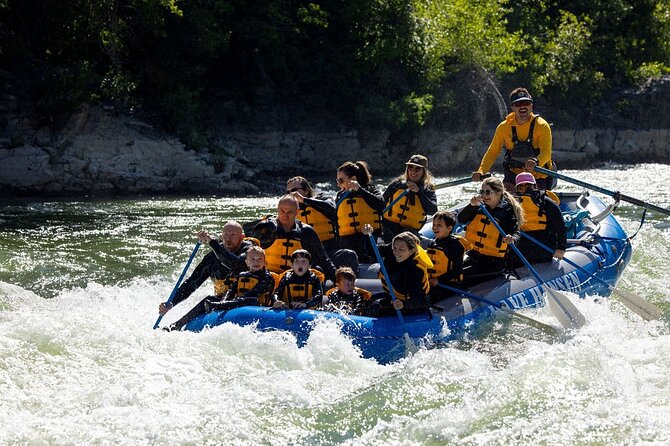
Your day starts at 225 W Broadway, Jackson, WY 83001. The activity ends back at the same meeting point, so you’re not juggling complicated drop-offs and meet-ups.
At check-in, you’ll handle the basics and get geared up:
- You’ll receive a personal floatation device (PFD) and a paddle
- You’ll get instruction from the guide and the staff team
- You’ll pay the $3 Bridger Teton National Forest user fee if you’re 16+
One very practical tip that keeps popping up: bring a backpack and a place to leave dry clothes on the bus while you’re on the water. That’s not just nice—it’s the difference between feeling good after rafting versus spending the next hour cold and damp.
Most people also spend time on the ride out to the launch. A review described a bus ride of about 45 minutes, with a driver who kept things entertaining and informative on the way. Even if your ride time differs, the point is the same: you’ll have a little “getting ready” time before you hit the river.
On the water: how paddling works on a standard raft
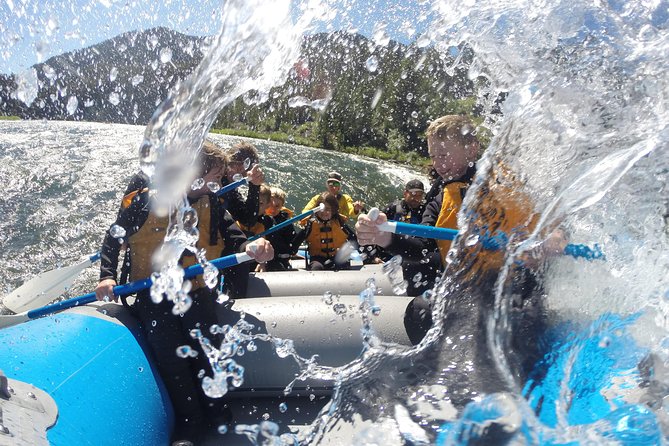
This standard raft experience is designed to balance stability with participation. The boat holds up to 16 people, with 10 paddle spots. That means some people will paddle more than others. On busy days, the guide manages turns and positions so the raft moves well without everyone ending up exhausted.
If you’re traveling with kids, this setup can actually be a big win. Kids who are nervous often relax once they realize the job is manageable: listen, follow instructions, and then paddle when your spot is up. Adults usually like it too because the guide can keep the raft coordinated even when the group has mixed comfort levels.
Class II and III rapids tend to create a pattern: the raft approaches, you hear what to do, you paddle through the push, then you regroup. The guide’s job is to make that pattern feel simple. And the best guides do it with clear instructions plus humor in the right places—so even nervous first-timers can focus on having fun.
The “what will it feel like?” question: excitement and safety together
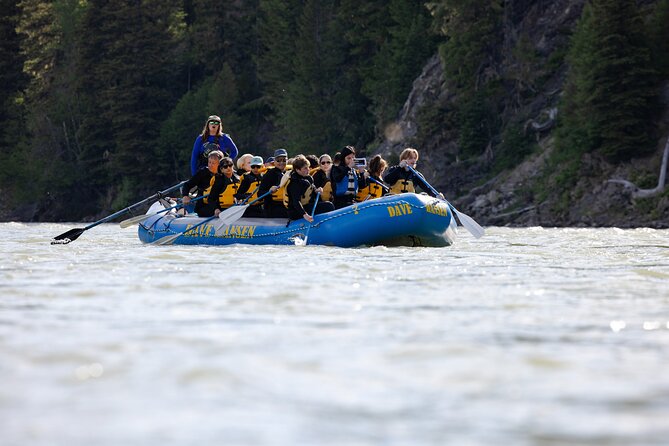
If you’re wondering whether this is safe enough for beginners, your safest answer is in the class range and the way the guide runs the boat. This trip is built around Class II and III, which is generally where first-timers cut their teeth on whitewater.
In real life, families have said they felt safe and still got plenty of laughs. Guides by name—like Hailey, Charlotte, Zach, Bryce, Ben, Sandy, Savannah, and Greta—show up in the feedback with the same theme: professional instruction, good energy, and clear guidance so you know what’s happening when the raft hits a drop or wave.
Another point: timing and temperature matter. One family went in cold conditions around 35 degrees, and they said the wet suit made the biggest difference. If the water is cold when you go, the “thrill” can still feel great—just don’t rely on luck for warmth.
What to wear and pack so you don’t ruin the day
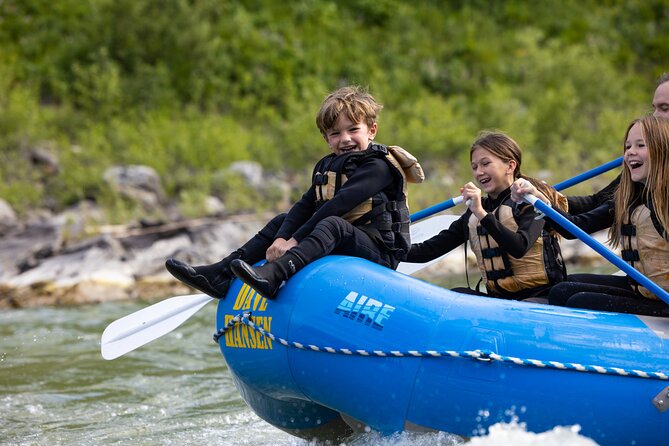
Wear matters more on rafting than it does on most outdoor tours. You’ll get soaked. That means you want clothes that handle water without turning into ice-cold misery.
The trip’s guidance is simple:
- Wear synthetic clothing, not cotton
- Plan for cold water if it’s chilly
- You may want water shoes (especially if you’re renting gear)
If you decide to rent a wetsuit, you’ll want to do it early enough that you’re not scrambling last minute. Wetsuits are additional, but they can be the difference between tolerating the trip and enjoying it.
What to bring:
- A backpack
- A way to keep dry clothes ready for after the raft
- Anything you need to be comfortable after the ride back (warm layer, towel if you use one, and dry socks)
What’s included:
- PFD and paddle
- Guide support
- The actual rafting fun
What’s not included:
- Wetsuits (extra cost)
- Souvenir photos (available to purchase)
- Food or drink
So yes: pack like you’re going to be wet, not just “a little damp.”
Season and conditions: late September vs mid-summer
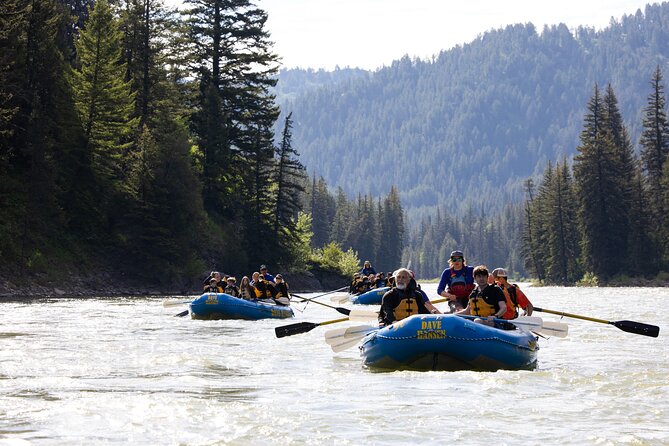
Even though the river stretch is the same, the feel changes with season. That’s not a sales pitch—it’s just reality on rivers.
- Late September: one family described rapids as less wild in late September, which made the experience more approachable for a first outing.
- Mid July and higher water: another family said water was high, so rapids weren’t as rough as in other times, yet still incredibly fun.
You’ll still get Class II and III thrills. The variation is in how punchy the waves feel and how quickly your hands and feet notice the cold.
If you’re traveling with kids or first-timers, you might feel better picking a time when conditions are less intense. If you’re chasing maximum excitement, you’ll still have it—just remember you’ll need the gear and clothing to match the conditions.
Price and value: is $120 per person fair?
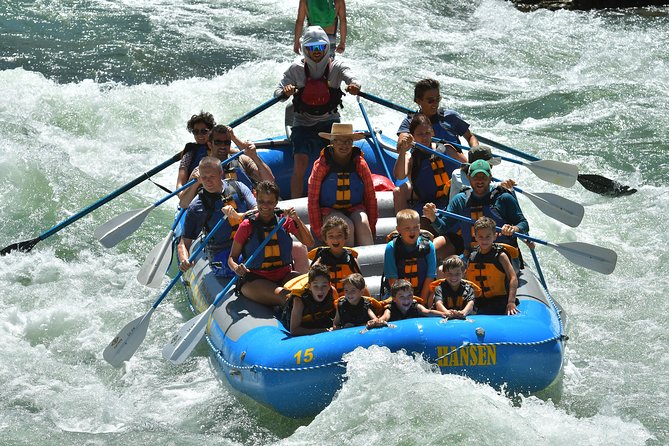
At $120 per person for about 4 hours (approx.), this is priced in the “serious activity” category, but it doesn’t feel overpriced when you look at what’s included.
You’re paying for:
- A guided rafting experience with a trained river guide
- Your PFD and paddle
- A small-group format capped at 16 travelers
- A long enough run (8 miles) to actually feel like a full adventure
And you’re not paying for extras you might skip on other tours. The big optional items here are wetsuits and souvenir photos. That’s good for value because you can choose what you truly need.
Also, that $3 Bridger Teton National Forest user fee for ages 16+ is a small add-on, but it’s real. Factor it in when you budget.
Overall, the best way to think about this price is: you’re buying safety, guidance, and time on the water—not just a ticket to sit in a raft and hope for the best.
Who should book this, and who might want another option
This trip makes the most sense if:
- You have kids or mixed experience levels
- You want Class II–III rapids without advanced rafting skills
- You care about a guided, organized experience
- You want the scenery to be part of the day, not just the background
It might be less ideal if:
- Your group hates getting wet and doesn’t plan with synthetic clothing
- Everyone needs to paddle at all times (since the raft has 10 paddle spots on a 16-person boat)
- You’re hoping for food included (it’s not)
Also, do a quick reality check about expectations. This is a standard raft. It’s not built for every person to have the same paddling time in every moment. If you know that going in, you’ll be happier.
The small details that reviewers keep praising
The most praised aspects aren’t random. They line up into a few themes that matter on a river:
- Clear instruction that helps nervous people settle quickly
- Guides who keep the energy up while staying focused on safety
- Smooth organization from check-in through the ride and into the launch
- Fun, knowledgeable back-and-forth on downtime (some guides and drivers share facts and keep things light)
- A good balance of excitement and control on Class II–III rapids
If you’re choosing this trip, look for confidence in the basics: staff who explain the plan, a guide who can manage the boat, and gear that keeps you warm enough to enjoy the moment instead of just surviving it.
Should you book the Family Standard Raft?
Book it if you want a classic Jackson Hole area whitewater day that works for families and first-timers. The rapids are the right difficulty level for fun, the route is long enough to feel like an adventure, and the small group size means you’re not just a number on a big operation.
Skip or reconsider if you’re not prepared for getting wet, you need food included, or your group expects everyone to be paddling every minute. Bring the right clothes, plan for cold water, and you’ll be in a good spot to enjoy the named rapids and big scenery.
If you’re on the fence, here’s the simplest decision rule: if you can handle being soaked for a few hours and you want real water excitement with guided safety, this is a strong pick.
FAQ
Where do we meet for this rafting trip?
You meet at 225 W Broadway, Jackson, WY 83001. The trip also ends back at the same meeting point.
What’s included in the price?
The experience includes a personal floatation device (PFD), a paddle, and a guide. Food, drink, and wetsuits are not included.
Do I need to rent a wetsuit?
Wetsuits are additional. You’ll likely want one if the water is cold, since you will get soaked on the trip.
What should I wear since I will get wet?
Wear synthetic clothing and avoid cotton. Bring a backpack and plan for dry clothes afterward while you’re out on the water.
Is there an extra fee when we check in?
Yes. Guests 16 and over pay a $3 Bridger Teton National Forest user fee at check-in.
How long is the experience?
Plan for about 4 hours (approx.) for the full experience.
You Might Also Enjoy

More Tour Reviews in Jackson
- Grand Teton Wildlife Safari in a Enclosed or Open-Air Vehicle (season dependent)
★ 5.0 · 1,212 reviews
Not for you? Here's more nearby things to do in Jackson we have reviewed
- Grand Teton Wildlife Safari in a Enclosed or Open-Air Vehicle (season dependent)
★ 5.0 · 1,212 reviews