REVIEW · CHICAGO
Chicago City Tour with Architecture River Cruise Option
Book on Viator →Operated by See it ALL Chicago Tours · Bookable on Viator
Skyscrapers, fountains, and river views—fast and fun. I like how this tour gives you big Chicago highlights without wasting time zigzagging across town, and I also like that the minibus keeps things closer and more relaxed than the big-coach grind. The optional architecture boat adds time and chill, so plan for extra layers if you’re booking the cruise.
This is a great choice if you want your bearings fast. You’ll get guided commentary as you roll through Downtown and North Side areas, with frequent photo stops and real context for why Chicago built the way it did. Guides known for being funny and story-driven (like Avery and Rick) make the facts stick.
For the price, this works best when you have limited time and want a curated route. If you’re hoping for lots of long, independent wandering at every stop, the short breaks may feel a bit tight.
In This Review
- Key things to know before you go
- Palmer House pickup to downtown views from the oversized windows
- The Loop and North Side drive: how the guide makes Chicago make sense
- Millennium Park area and a quick taste of Chicago’s most famous icons
- Chicago River stop with Wrigley Building views and a built-in photo payoff
- Buckingham Fountain and Museum Campus: the skyline view that earns its time
- Lincoln Park and the neighborhoods between classic calm and nightlife
- Rookery Building and the Art Institute: architecture plus art in timed stops
- Shoreline Sightseeing upgrade: the open-top architecture river cruise experience
- Price and time value: who this tour fits best
- What the best guides tend to do for you (and why you’ll notice)
- Practical tips so your photos and timing work
- FAQ
- FAQ
- How long is the Chicago City Tour?
- Can I add an architecture river cruise?
- How long is the river cruise?
- Where does the tour start and end?
- What’s included on the bus portion?
- Does the tour run in bad weather?
- What’s the ticket format?
- Is there free cancellation?
- Should you book this Chicago City Tour (with the river cruise option)?
Key things to know before you go
- Minibus routing that gets you close to sights larger buses can’t easily reach
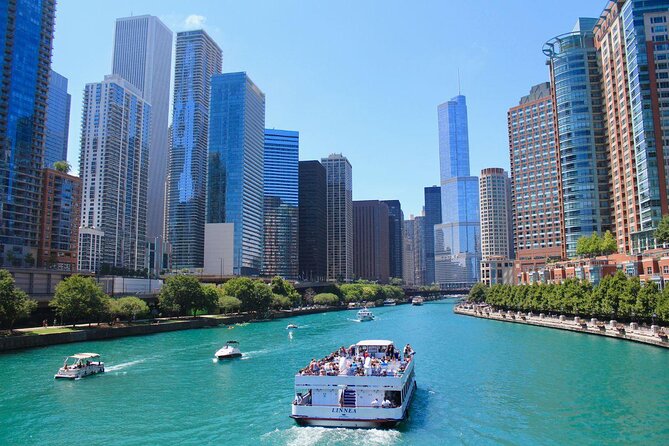
- Chicago River architecture cruise option with an open-air experience and strong narration
- Skyline photo time at Museum Campus plus easy passes near Millennium Park landmarks
- Landmark mix: The Loop, fountains, classic buildings, and major museums
- Quick stops that keep momentum through neighborhoods like Lincoln Park and the surrounding nightlife/residential mix
Palmer House pickup to downtown views from the oversized windows
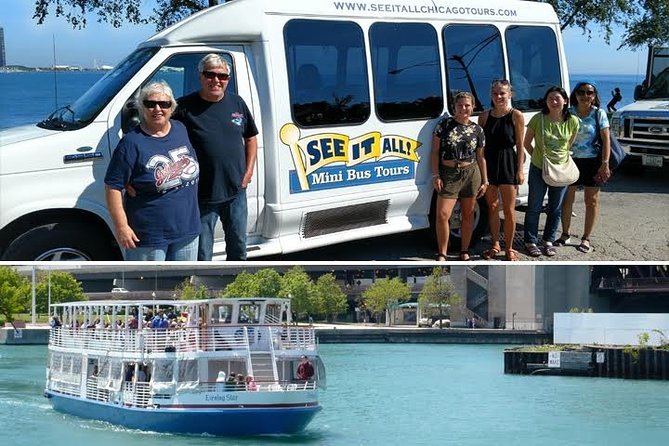
The tour starts at Palmer House, a handy landmark address in the central city. From there, you’re on a climate-controlled minibus that’s built for sightseeing: large windows, comfortable seating, and easy views even when traffic slows down. This matters in Chicago because you can spend as much time stuck at lights as you do seeing buildings if you plan badly.
I like this format because it lets the guide do the heavy lifting. Instead of you trying to connect the skyline dots from a map, the guide points out what you’re seeing and why it matters. Chicago’s story is written in steel and stone, and the best part is that you learn the “so what” behind the architecture while you’re still looking at the buildings.
The tour runs about 2 to 4 hours depending on whether you add the river cruise. That timing is a sweet spot for first-timers and for anyone who wants to pack Chicago into a tight schedule.
You can also read our reviews of more tours and experiences in Chicago.
The Loop and North Side drive: how the guide makes Chicago make sense
Once you’re rolling, the Downtown portion is designed to get you oriented. You’ll hear the story of Chicago’s early skyscrapers, especially the cluster around The Loop. This is where the city’s vertical ambition starts to feel real, not theoretical.
You’ll also pass through North Side neighborhoods that feel different from the downtown core. The Gold Coast and Lincoln Park areas are commonly included, and the way the minibus moves through them helps you understand the shift from business downtown to daily-life neighborhoods. You’re not just looking at buildings here—you’re picking up the vibe of streets, blocks, and urban style.
One practical upside: the minibus can access areas that bigger coaches may struggle with. That translates into closer photo angles and fewer miles of “great view from far away” frustration.
Millennium Park area and a quick taste of Chicago’s most famous icons
Early in the route, you’ll go past Chicago’s main shopping street and another popular tourist stop (a quick visual introduction before you hit the heavier highlights). Then you reach the Millennium Park area, including the landmarks many people come for: the Bean, Pritzker Pavilion, and Crown Fountain.
The key detail is how it’s handled. You slowly pass by and can also be dropped off at the end if you want extra time there. That flexibility is useful because Millennium Park is easy to over-shoot or under-explore depending on your schedule. A slow pass gives you context, and a possible drop-off lets you return if you want to linger.
Photo tip: for the Bean and surrounding features, you’ll get better results when you treat stops like quick scouting. Even if your time is short, you can position yourself for a clean skyline background without panicking.
Chicago River stop with Wrigley Building views and a built-in photo payoff
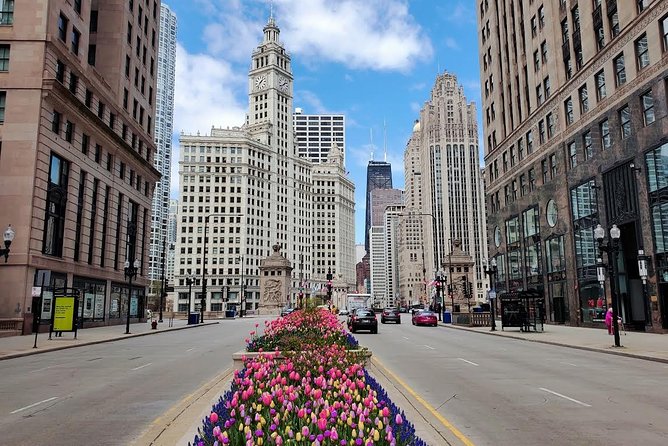
The first big “look right now” stop is Chicago River. Here you’ll see major landmarks like the Wrigley Building and the Tribune Tower, plus areas such as Marina City. Even if you’re only doing the bus portion, this stop helps connect the river to the skyline.
This is a strong moment because the river is not just scenery—it’s the reason Chicago grew. You can feel that in the way the guide explains how water access and shipping shaped the city’s development. It’s also where your later architecture cruise upgrade will make even more sense, since you’ve already seen what the buildings look like from the riverbank.
Stop duration is short, about 5 minutes, so the goal is fast photos and letting the guide point out specific features.
Buckingham Fountain and Museum Campus: the skyline view that earns its time
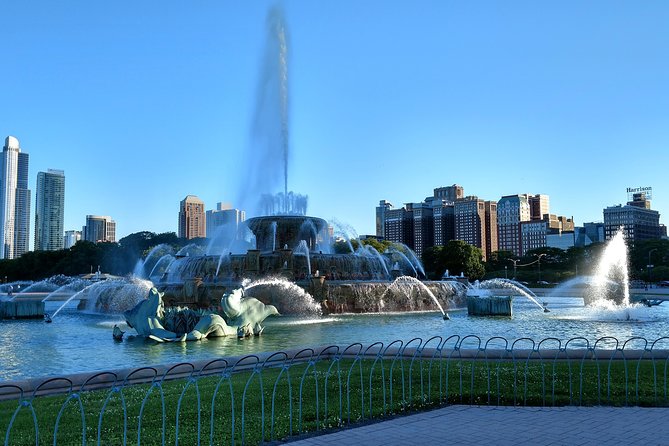
Next comes Clarence F. Buckingham Fountain. It’s known worldwide for its look in the opening credits of Married W/Children, and the tour stops there when it’s operating, typically between May and October. If you’re visiting outside those months, you’re still seeing a famous centerpiece, just without the fountain running.
This stop is about 10 minutes. In that window, you can usually get a decent shot and reset before the next big view.
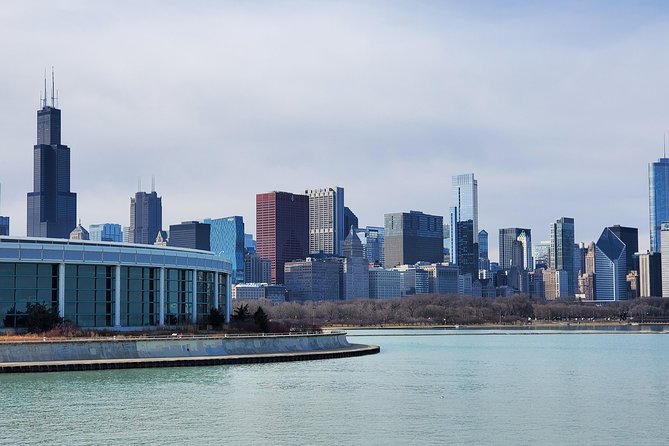
Then you head to Museum Campus, one of the best spots in the city for skyline photos. You get about 10 minutes here, which sounds brief until you realize how much you can do with quick positioning. Museum Campus is one of those places where the skyline reads as a single composition, not a scattered collection.
This is also where the tour earns its “I can see a lot in a few hours” promise. You’re not waiting to find the good angles. You’re being put at them.


Lincoln Park and the neighborhoods between classic calm and nightlife
After Museum Campus, the route includes a major stretch of Lincoln Park—around 1,600 acres—known for the Lincoln Park Zoo plus gardens, fountains, and sculptures. This is a change of pace from the downtown core, and it helps you understand Chicago as more than just skyline and commerce.
You’ll also pass through or stop near an area described as a popular nightlife district and upscale residential zone. The tour highlights include cool restaurants, brownstones, and The Original Playboy Mansion. Whether you’re into nightlife or just prefer good street energy, these are the kinds of details that make a city tour feel like you’re learning how people actually live there.
If you want a city that feels human at street level, this part matters.
Rookery Building and the Art Institute: architecture plus art in timed stops
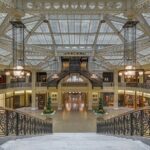
One of the best stops on the whole route is the Rookery Building. It’s listed as one of the world’s very first skyscrapers, and the standout feature is the Frank Lloyd Wright-designed lobby. This is the kind of interior detail that you’d miss if you were just passing by on your own.
You get about 10 minutes. That’s enough time to notice what makes it special without turning it into a museum marathon. Even if you don’t know Frank Lloyd Wright from a basic trivia question, the guide’s explanations help you see why the lobby design is worth your attention.
Then there’s the Art Institute of Chicago stop. This is a big deal, and it’s also a “smart stop” for this kind of time-boxed tour: you’re not stuck for hours inside, but you get the chance to connect Chicago to major art collections. The tour references major works such as American Gothic, The Picture of Dorian Gray, Nighthawks, and Impressionist holdings described as the second most French impressionist paintings in the world.
This is also the part where the guide’s pace really counts. You’ll get a quick, clear orientation to what you’re looking at and what to prioritize if you want to return later on your own.
Shoreline Sightseeing upgrade: the open-top architecture river cruise experience
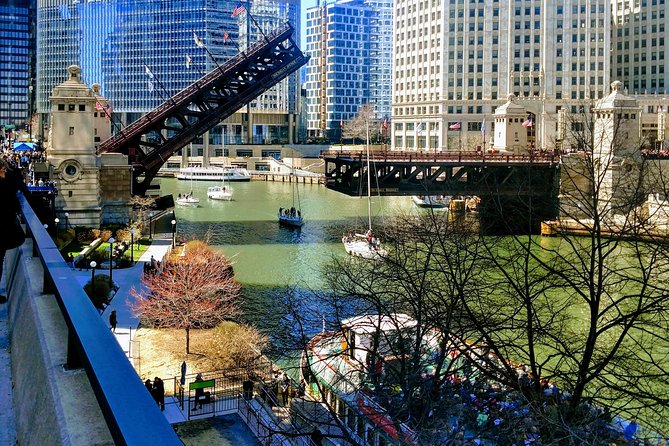
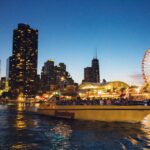
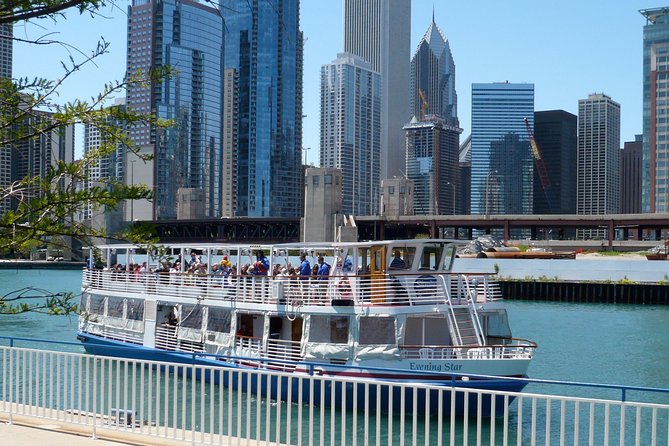
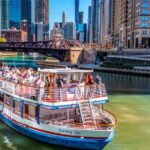
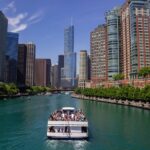
If you choose the architecture river cruise, the minibus portion ends with drop-off near Shoreline Sightseeing at 124 N Streeter Dr. The upgrade is a 75-minute cruise, and it’s open-top, so weather can strongly affect comfort.
Here’s why this upgrade is worth considering: the cruise is where Chicago’s architecture stops being a background and becomes the main subject. From the water, buildings read differently—angles change, details pop, and the city’s evolution feels like a timeline unfolding along the river.
The cruise also gives you another layer of context about the river’s role in Chicago’s history, since you’re experiencing the same corridor the city’s growth depended on. Plus, if you like skyline photos, the river is one of the best ways to get them without needing perfect weather or a rooftop plan.
Important practical note: after the bus tour, you may need to use your own transportation back to where your vehicle or hotel is. If you’re planning dinner, schedule it with a little buffer so you aren’t rushing across town right after you get off the boat.
Price and time value: who this tour fits best
At $49.95 per person, you’re paying for three things at once:
- Guided commentary that turns random landmarks into a story
- Multiple high-impact stops in a short window
- An optional upgrade that adds a major signature experience
That value is strongest if you’re arriving with limited time or if you want an efficient first day. It’s also a good “weather strategy” because the minibus is climate-controlled and the tour runs in all weather conditions, with the reminder to dress appropriately.
It’s also a strong match for people who enjoy structure. If you like a planned route and don’t want to spend your vacation figuring out how to order neighborhoods, this works.
A drawback to consider: many stops are short. That’s great for coverage, but it’s not built for deep exploration at each stop. If you want to spend 45 minutes in every location, you’ll need additional time later.
Small-group feel is part of the pitch here, with a maximum of 99 travelers. In practice, that usually means you’ll get the guide’s attention without constant crowd shuffling.
What the best guides tend to do for you (and why you’ll notice)
The standout pattern in the experience is the guide style. Names that show up in past tour groups include Avery, Rick, Clarence, Ruby, Chicago Bob, Reenie, Reny, Jennifer, Greg, Logan, Keith, Victor, and Trevor. Across these different guides, the recurring strengths are:
- Funny, fast-paced storytelling
- Clear building explanations tied to what you’re seeing
- Non-stop narration that helps you feel like you’re learning even while you’re just riding
On days when Chicago weather is brisk (winter tours can be cold, even on the river), the guide’s pacing matters even more. You’ll get the right amount of out-and-in sightseeing without standing around hoping something interesting appears.
Practical tips so your photos and timing work
A few things will make your experience smoother:
- Dress in layers, especially if you add the open-top cruise.
- Treat each stop like a photo sprint: quick angles, then let the guide finish the explanation.
- If Millennium Park is your priority, plan to use the potential drop-off at the end to spend extra time on your terms.
- If you do the cruise immediately after the bus, be ready to redeem your voucher at the Shoreline ticket booth.
Also, the tour uses a mobile ticket, so make sure your phone battery is happy.
FAQ
FAQ
How long is the Chicago City Tour?
The tour is listed at 2 to 4 hours (about), depending on what you choose and how your schedule flows.
Can I add an architecture river cruise?
Yes. There’s an optional upgrade for a Chicago River architecture cruise with Shoreline Sightseeing.
How long is the river cruise?
The cruise option is a 75-minute ride (about 1 hour 15 minutes).
Where does the tour start and end?
The bus tour starts at Palmer House a Hilton Hotel, 17 E Monroe St, Chicago, IL 60603. The tour ends at Shoreline Sightseeing, 124 N Streeter Dr, Chicago, IL 60611.
What’s included on the bus portion?
You’ll ride in a climate-controlled minibus with guide commentary and see major Downtown and North Side areas, plus stops that can include the Chicago River, Buckingham Fountain, Museum Campus, Lincoln Park, the Rookery Building, and the Art Institute area.
Does the tour run in bad weather?
Yes. It operates in all weather conditions, so dress appropriately.
What’s the ticket format?
You receive a mobile ticket, and confirmation is received at booking.
Is there free cancellation?
Yes. You can cancel up to 24 hours in advance for a full refund.
Should you book this Chicago City Tour (with the river cruise option)?
If you’re short on time and want a clear overview of Chicago’s signature sights, I’d book it. The minibus format helps you see a lot without feeling locked to one massive bus schedule, and the combination of architecture stops plus big photo views is exactly how you get value fast.
I’d especially consider the river cruise upgrade if Chicago architecture is your main theme. The water angle is where the city really clicks into place, and the extra 75 minutes can turn a good day into a standout one.
Skip the upgrade only if you know you’ll hate cold wind, or if your schedule can’t handle the added timing and you’d rather keep your afternoon totally open.