REVIEW · CHICAGO
Chicago’s Secret Interiors Architectural Walking Tour
Book on Viator →Operated by Chicago River Boat Architecture Tours · Bookable on Viator
Chicago hides its best rooms behind lobbies. I love the rare interior access and the way the guide turns facades into real engineering and design stories. Even if you know Chicago basics, the details make stops like the Rookery and Marquette feel personal, not museum-y, and I’ve seen guides bring that same energy (Grant and Ethan pop up in feedback).
One thing to plan around: The Rookery is closed on Sundays, so that signature stop won’t be part of the route that day.
Key things that make this tour worth your time
- Walking-first approach: you connect the skyline view with what’s inside each landmark.
- Short, focused interior visits: enough time to notice craft without dragging.
- A strong mix of styles: Chicago School, Beaux-Arts, Art Deco, Gilded Age hotel glamour.
- Craft details you’d miss alone: light courts, mosaic domes, bronze doors, and terra cotta work.
- Small-group feel: the tour caps at 15 travelers, so your guide can keep the pace manageable.
- Multiple good-weather and cold-weather wins: many moments happen indoors, which matters when Chicago weather turns.
In This Review
- Chicago’s Secret Interiors: why you’ll notice more than the skyline
- Union Station: Burnham’s Beaux-Arts welcome at the start
- The Loop and La Salle: the Financial Canyon story on foot
- Rookery Building: light court, ironwork, and Wright’s touch
- Field Building: Art Deco elegance without the attitude
- Marquette Building: Chicago windows, terra cotta, and mosaic storytelling
- Palmer House (Hilton): Gilded Age hotel glamour rebuilt after 1871
- Cultural Center or Monadnock: two very different ways Chicago sells ideas
- Marshall Field and Company: the Tiffany dome and the Tea Room mood
- Walking comfort and timing: how to make the most of two hours
- Should you book this Secret Interiors tour?
- FAQ
- How long is the Chicago Secret Interiors Architectural Walking Tour?
- What does the tour cost?
- Where does the tour start and end?
- Is there a mobile ticket?
- How many people are in a group?
- Is The Rookery Building always included?
- What kind of accessibility is available?
- What buildings are included on the route?
- What happens if weather is poor?
- Is free cancellation available?
Chicago’s Secret Interiors: why you’ll notice more than the skyline
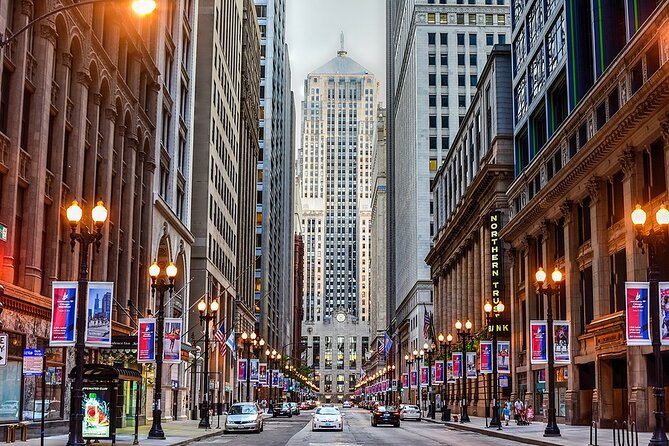
This is the kind of architecture tour that changes how you see Chicago. You start with big-name buildings, sure, but the real payoff is walking in and reading the design you’d usually miss at street speed.
I like that the tour has a clear rhythm. You’re not stuck in one hallway for an hour. You move, you look up, then you step into lobbies and grand rooms where materials and layout do the talking.
And at $35 for about two hours, it feels like a bargain for the number of major interiors you get to experience in one go. You’re paying for context and access, not for a pile of entry fees.
Union Station: Burnham’s Beaux-Arts welcome at the start
You begin at Chicago Union Station, the grand Beaux-Arts gateway designed by Daniel Burnham and completed in 1925. Even before you learn the specifics, the station gives you that early-20th-century confidence: symmetry, scale, and a sense that travel was a ceremony.
Inside, the big target is the Great Hall and its magnificent skylight. That glass-and-light setup is more than pretty. It’s about how architects solved the problem of putting daylight into a huge public interior, so it still feels open even when you’re under a roof.
Practical note: Union Station is also active, so wear comfy shoes and be ready for a steady flow of people. Your guide’s job here is to help you focus on what matters fast—especially when you’re standing in a space that’s designed to pull your eyes everywhere.
You can also read our reviews of more tours and experiences in Chicago.



The Loop and La Salle: the Financial Canyon story on foot
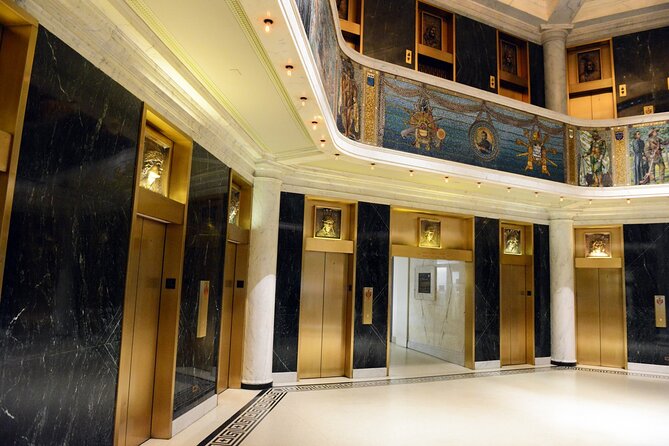
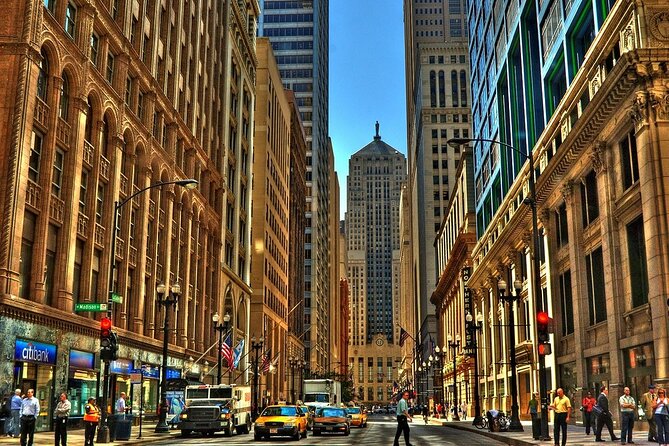
From the station, the walking route pushes you into Chicago’s Loop—the core where business and building design evolved together. The tour frames the area as a kind of Financial Canyon, created by walls of towers and historic facades.
At La Salle, you get the idea in a practical way: you’re between skyscrapers, then you’re pointed toward the architectural choices those buildings made to earn prestige, draw commerce, and manage height. You’ll hear about how the city’s famous employers, financiers, and design-minded leaders shaped what you see today.
Two things help here:
First, you’re learning while you move. Instead of scrolling facts later, you connect the street view with what the buildings are communicating. Second, it sets up the next interiors nicely. Once you understand why these structures are built the way they are, you start spotting design logic everywhere.
If you’re short on time in Chicago, this “start in the Loop, then go inside” approach is a smart way to get value out of limited daylight.
Rookery Building: light court, ironwork, and Wright’s touch
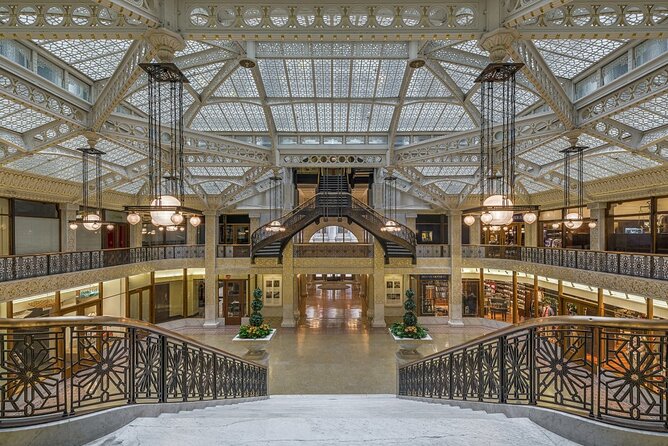
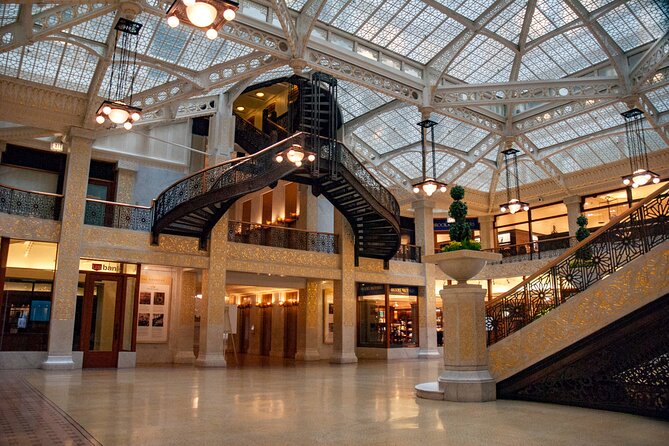
This is one of the most important stops on the route. The Rookery Building traces back to Burnham and Root (1888), and then it gets its most famous interior shift with Frank Lloyd Wright’s later redesign of the lobby.
What you’re looking for isn’t just beauty—it’s problem-solving. The Rookery is praised for its light court, and that makes sense the moment you notice how the building brings light deep into the interior. That’s a major theme in Chicago architecture: how do you give big, dense buildings air and brightness without losing space?
You’ll also notice the mix of Romanesque and Moorish styles, and the famous details that come with that mix—intricate ironwork and the oeriel staircase. These aren’t random decoration. They’re part of how the building defines its identity: solid, ornate, and engineered for public presence.
One big planning note: The Rookery is closed on Sundays, so if your trip lands on a Sunday, don’t expect this stop to be included.
Field Building: Art Deco elegance without the attitude
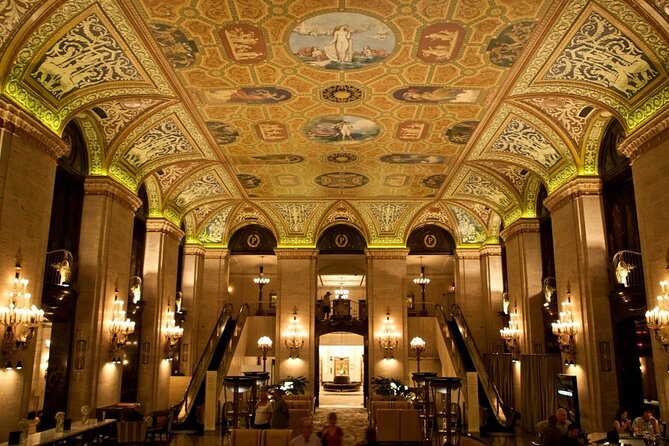
Next comes the Field Building, a standout for Art Deco design. In a city known for older styles and bold Chicago School thinking, Art Deco can feel like a second personality, and this stop shows how smooth the transition can be.
The payoff here is the feeling of craft at eye level. You get to take in the way Art Deco treats geometry and ornament as a system, not just frosting. Even if you don’t use architectural terms on vacation, you’ll recognize the discipline in the lines and the repetition of pattern.
The best part for first-time architecture fans: the tour doesn’t require you to already know the style. The guide’s job is to point your attention toward what that style does differently, so the stop lands as more than a quick “wow.”
If you’re traveling with someone who thinks architecture is boring, this is the sort of building that can change their mind, because the design is easy to enjoy visually even when you’re not reading drawings.
Marquette Building: Chicago windows, terra cotta, and mosaic storytelling
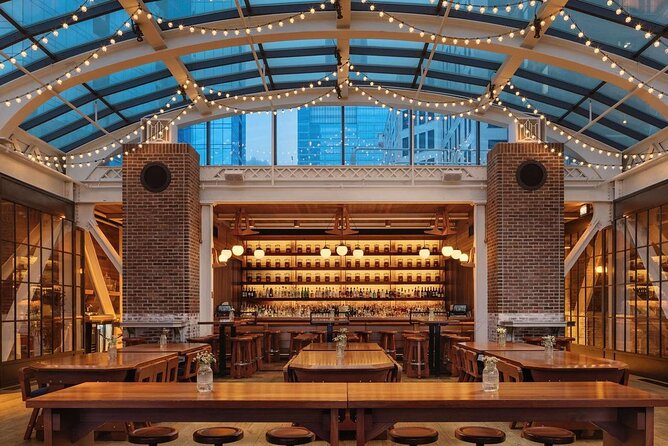
At the Marquette Building, the tour turns its attention to Chicago School innovation. The Marquette is known for pioneering use of the Chicago window and for its terra cotta facade—a combination that gave buildings both function and personality.
Then you step into the lobby area and get the kind of detail work that makes you slow down without being forced to. The stop includes ornate mosaics connected to Jacques Marquette’s exploration of Illinois. It’s a reminder that these buildings weren’t only about offices. They were about identity, pride, and public storytelling.
What I like about this stop for your vacation brain: it gives you a clear “design-to-meaning” connection. You can see the materials outside, then you understand the message inside. It’s also a nice change of pace after the Rookery’s light court focus.






Palmer House (Hilton): Gilded Age hotel glamour rebuilt after 1871
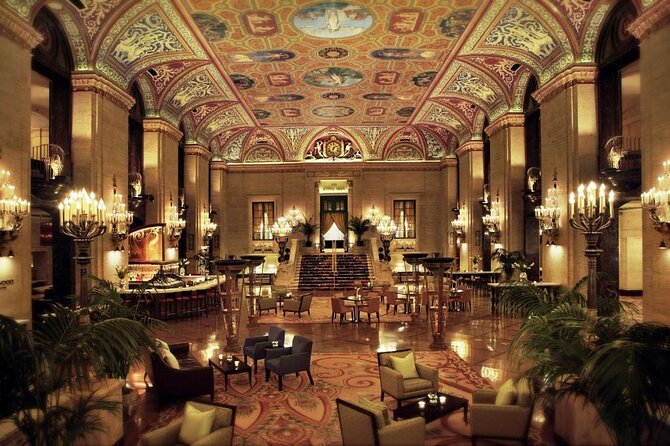
The Palmer House, a historic Hilton property, represents the Gilded Age and the idea that luxury could be built into the city itself. You’re looking at Beaux-Arts-style grandeur with a major historical anchor: the hotel was rebuilt after the Great Chicago Fire in 1871.
Inside, the lobby is the star. You’ll see a frescoed ceiling, mosaic floors, and bronze peacock doors. This stop is about spectacle, but it’s also about continuity—how Chicago rebuilt and rebranded itself after disaster.
If you like architecture that connects to human stories, this is a strong choice. The Palmer House has hosted celebrities and dignitaries, which means the building’s design helped shape impressions for people arriving for big moments.
One tip for getting more out of it: look slightly past the biggest sightlines. Mosaic floors and door details reward small pauses, and with a guide you’ll know what to look for instead of only staring at the ceiling.
Cultural Center or Monadnock: two very different ways Chicago sells ideas
For the tour’s next portion, you’ll visit either the Chicago Cultural Center or the Monadnock Building.
The Chicago Cultural Center is framed as a blend of architectural beauty and cultural heritage. This stop works well if you want the tour to show how Chicago invested in public-facing spaces, not just private commerce.
The alternative is the Monadnock Building, described as a beacon of late 19th-century commercial style. That contrast matters. One option leans civic and arts-minded; the other leans commercial-era building logic and practicality.
Either way, you’ll benefit from the tour’s timing. This is a point where you’ve already seen the Loop’s power structures and older interiors. Now you get a different lens—how design communicates purpose, whether it’s cultural service or commercial identity.
Marshall Field and Company: the Tiffany dome and the Tea Room mood
You finish with the famous retail architecture of the Marshall Field and Company Building (now Macy’s). This stop brings you the kind of decoration that feels like it was designed for lingering.
The top highlight is the Tiffany glass mosaic dome. It’s the sort of detail that can seem like a background feature if you pass too quickly, but with a guide you’ll understand what it’s doing visually and why it mattered in a department store world.
You’ll also see the walnut-paneled Tea Room, which helps explain why department stores weren’t only shopping. They were social spaces with atmosphere, where the building itself helped sell the experience.
If you’re a photo person, this is where you’ll want to slow down a bit and take in the textures. If you’re not, still take a moment—this stop is a good reminder that architecture in Chicago isn’t only about towers. It’s also about the elegance of everyday destinations.
Walking comfort and timing: how to make the most of two hours
This tour is built for movement, but it’s not a long grind. Plan around roughly two hours, with quick stop-and-look windows that keep you engaged.
That stop structure is a big part of why people love it. You get enough time inside each building to notice details like skylights, domes, mosaics, and ironwork, without losing the thread of the story. The guide also tends to keep the group together, which matters when you’re in busy lobbies.
Weather can matter. The experience is described as requiring good weather, and there’s also a practical advantage: many moments are inside. In colder or rainy conditions, you’ll spend enough time under cover that you can still enjoy the day.
For comfort, wear shoes that handle a good walk and carry a light layer. Chicago weather can shift fast, and you’ll likely be moving between indoor and outdoor spaces.
Should you book this Secret Interiors tour?
I think you should book it if you want Chicago architecture that’s specific, timed well, and not stuck only on the “big five” towers. This tour is ideal if you’re the type who likes to look up at facades and then feel satisfied when you finally get inside.
It’s also a good fit if you have a limited schedule and want value: multiple major interiors for $35, plus an expert guide and a small group format.
Skip it or adjust expectations if Sundays are part of your plan, because The Rookery won’t be included. And if you’re someone who needs long, quiet time in one building, the pace may feel a bit fast since the tour works as a sequence of stops.
Overall, this is one of the cleaner ways to understand how Chicago built its identity—through style, engineering, and the human desire to make public spaces feel important.
FAQ
How long is the Chicago Secret Interiors Architectural Walking Tour?
The tour is about 2 hours long.
What does the tour cost?
It costs $35.
Where does the tour start and end?
It starts at Chicago Union Station, 225 S Canal St, Chicago, IL 60606, and ends at the Marshall Field and Company Building, 111 N State St, Chicago, IL 60602.
Is there a mobile ticket?
Yes, the tour uses a mobile ticket.
How many people are in a group?
The tour lists a maximum of 15 travelers.
Is The Rookery Building always included?
No. The Rookery is closed on Sundays, so it will not be included on those days.
What kind of accessibility is available?
Service animals are allowed, and the meeting area is near public transportation.
What buildings are included on the route?
The route includes stops such as Chicago’s Loop area (including La Salle), Union Station, the Rookery Building, the Field Building, the Marquette Building, the Palmer House, Chicago Cultural Center or the Monadnock Building, and the Marshall Field and Company Building.
What happens if weather is poor?
The experience requires good weather. If it’s canceled due to poor weather, you’ll be offered a different date or a full refund.
Is free cancellation available?
Yes. You can cancel up to 24 hours in advance for a full refund.