REVIEW · MAUI
Maui: Ultimate Whale Watch from Lahaina
Book on Viator →Operated by Ultimate Whale Watch & Snorkel · Bookable on Viator
There’s something special about watching humpbacks close up. This Lahaina whale watch puts you on a small raft with front-row-style water views and an onboard hydrophone for whale songs. I like the focus on getting you near wildlife without a giant crowd, and the crew energy often turns a ride into a real show, from Captain Jill finding action fast to guides who know whale behavior. One possible drawback: seat space can feel tight, so if you need wide photo angles or you want to clearly hear everything, plan for that.
This is also one of the more practical Maui whale options because it’s built around time on the water, not extras. You get purified water (no plastic bottles), the boat is low in the water for better spotting, and you’ll get the chance to go again if whales don’t show up. If you’re traveling with very young kids or you’re pregnant, double-check fit ahead of time since the tour has specific limits.
In This Review
- Key things that make this Lahaina whale watch worth it
- Maui whale watching starts with Lahaina’s location
- The raft experience: closer views, fewer distractions
- Hydrophone whale songs: what you should actually listen for
- How the time on the water plays out (Lahaina Harbor to whale encounters)
- Who runs the boat matters: the crew’s role in your day
- Water, rules, and comfort details you’ll care about
- Pricing: is $77 a good value for Maui whale watching?
- The one snag to plan around: “front row” can be a feeling, not a seat map
- Who should book this tour (and who might want another option)
- Should you book Ultimate Whale Watch from Lahaina?
- FAQ
- How long is the Maui whale watch from Lahaina?
- Where do I meet for the tour?
- What’s included in the ticket?
- Is there a hydrophone on board?
- Are there different tour lengths?
- What if whales aren’t spotted?
- What are the age and pregnancy restrictions?
Key things that make this Lahaina whale watch worth it
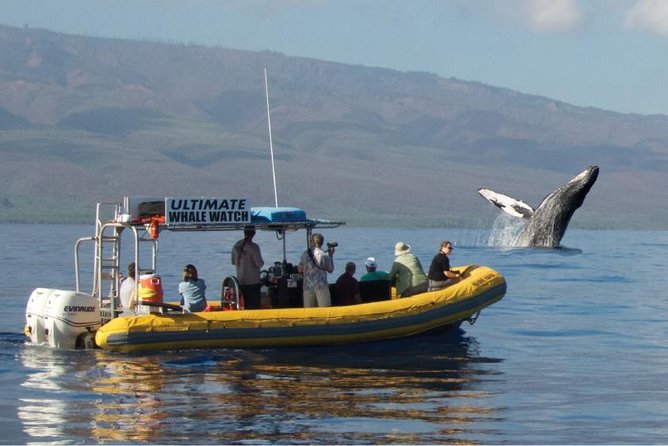
- Low-to-the-water raft setup: The boat rides low so you can scan for blows and body positions without craning all day.
- Small group size (max 28): Fewer people means easier sightlines and less jostling for camera angles.
- Hydrophone on board: You can listen to whale communication through the boat’s hydrophone.
- Guides who actively find whales: The captain and naturalist role matter here, and the crew’s whale-reading skill shows.
- Water + photo-ready moments: Bottled/purified water is included, and the tour explicitly encourages you to bring your camera.
- Re-trip option if whales aren’t spotted: If your day doesn’t deliver whales, you can be invited to take another trip with no extra charge.
Maui whale watching starts with Lahaina’s location
Lahaina is one of those places where whale season actually feels local. When humpbacks move through Hawaiian waters, they’re not just “somewhere out there.” You can often get into real interaction territory, where you’re watching behavior, not just distant spouts.
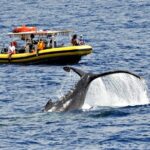
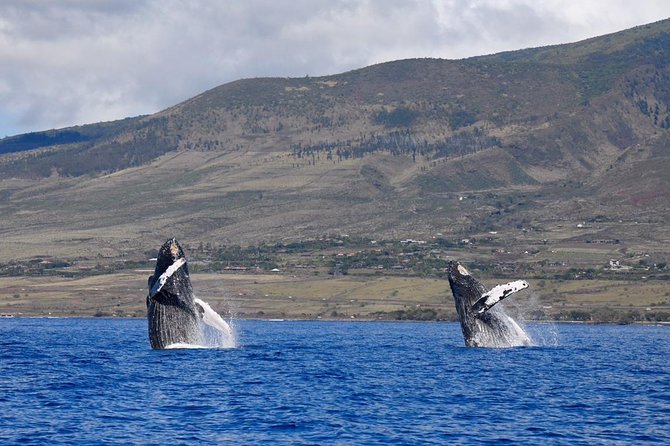
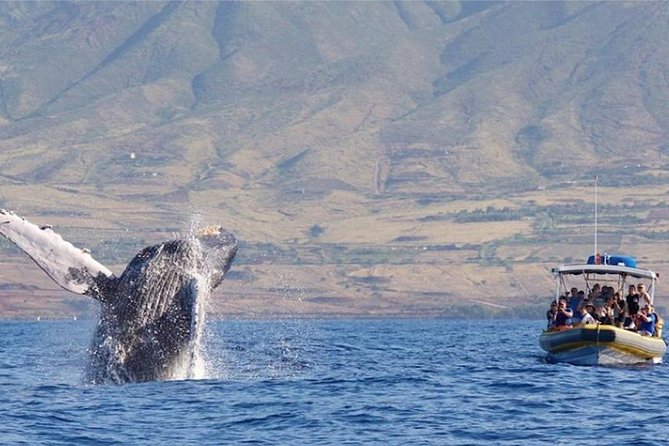
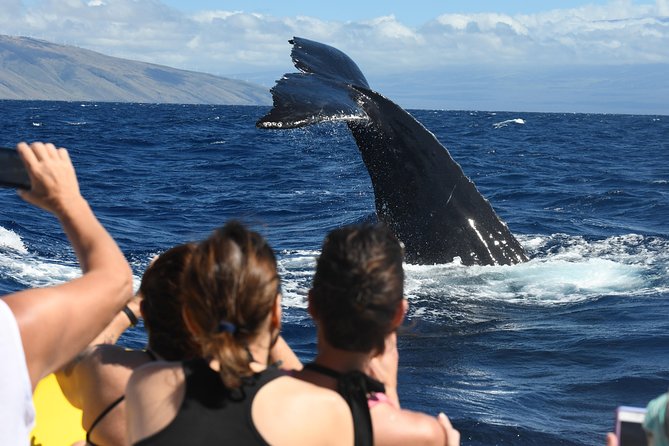
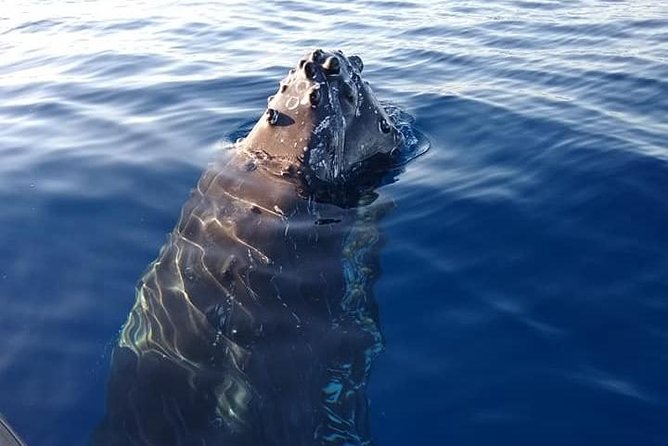
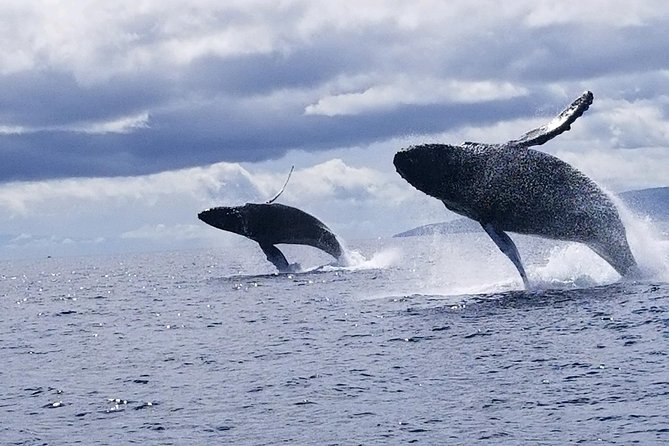
This tour leans into that advantage by keeping things small and fast-moving. Instead of spending your time idling on a big vessel, the crew runs a course designed to get you to whales quickly when conditions allow. That approach shows up in the kinds of sightings you get described in the field: breaching, tail and fin slaps, and the kind of under-buoyancy swim-by that makes you stop thinking and just start filming.
Also, you’re not just there for whales. Many days include dolphins too, including spinner dolphins. When that happens, the pace feels different: whales can be slow and dramatic, while dolphins often move like they’re running drills, popping up in clusters and then vanishing just as fast.
You can also read our reviews of more tours and experiences in Maui.



The raft experience: closer views, fewer distractions
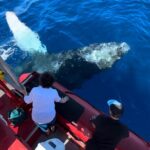
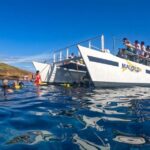
The boat itself is part of the value. This tour uses low, fast rafting vessels that are designed for close encounters and small groups. For you, that usually translates into two practical wins: fewer “lost” minutes and fewer people blocking your view.
You’re also likely to spend less time fighting for the best vantage point. One review notes a very small-boat feel, with seats close to the waterline, and that matters when humpbacks surface. When a whale is at the surface, you’re often watching something happen in seconds, not minutes.
Now the tradeoff. Because it’s a raft with compact seating, space can feel more like a classroom than a lounge. One guest described seating like school-bus style (four across with an aisle down the middle), making photography harder and safety instructions harder to hear. The company’s claim is that every seat is front row because each row lines up along the water, and that’s believable given the low-to-water design. But comfort is personal. If you’re very sensitive to sound clarity or you need big room for your camera setup, arrive with realistic expectations about tight quarters.
Hydrophone whale songs: what you should actually listen for
The hydrophone is one of those features that sounds “extra” until you’re on the water and the guide turns it on. Here, it’s part of the onboard experience, and you can listen to whale songs through the system.
What that means in practice is that you’re not only watching surfaces—you’re adding another sense to the encounter. When humpbacks vocalize, you’re hearing patterned communication that you can often line up with whale behavior. Even if you don’t know the calls ahead of time, it gives your brain something to do besides scanning for a blow. That’s especially helpful on days where sightings come in waves or when the action is spread across a pod.
If you’re the type who enjoys nature in more than one way—sound as well as sight—this hydrophone setup makes the tour feel more complete than a simple sightseeing cruise.
How the time on the water plays out (Lahaina Harbor to whale encounters)
Your main starting point is Lahaina Harbor, at 1229 Front St, Lahaina, HI 96761. The tour is timed for roughly 1 hour 45 minutes to 2 hours 10 minutes, with two duration options (an approximately 1.5-hour option and a 2-hour option).
From there, the whole experience is structured around getting you to whale locations and staying in the right places when whales show up. You can think of the ride in phases:
First: locating whales fast.
This is where a smaller raft approach helps. The crew can move efficiently, and your odds improve when you’re not stuck on a slower schedule. You’ll often see the crew scanning constantly, checking for activity and surface signs.
Second: the close-encounter period.
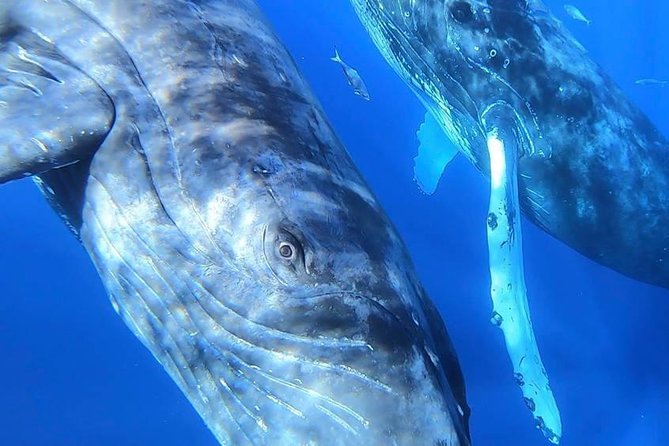
This is when the low boat and small group size matter most. Many encounters described in the experience notes involve whales swimming under the boat or showing off with breaching behavior. If you’ve never seen a humpback breach in person, it’s a shock at close range—the whole body action looks bigger than photos.
Third: dolphins and the extra energy.
When spinner dolphins show up, the experience can shift from slow drama to quick, playful surfacing patterns. The combination of whales and dolphins on the same trip is one of the reasons people book again, even after already doing Maui whale watching once.
There’s no hard promise that every minute will be action-packed, because wildlife sets the pace. But the structure is built to keep you in the game instead of waiting around.
Who runs the boat matters: the crew’s role in your day
This kind of tour lives and dies on the people. The captain and naturalist (or first mate/naturalist role) are the ones reading the water, guiding you to sightings, and explaining what you’re seeing.
From the names and roles that show up repeatedly, the crew quality is a clear strength. People mention Captain Jill for education and whale-finding skills. Other days include captains like Jeremiah and naturalist Cat, with guests praising how the crew balances fun with real information. There are also repeat mentions of guides such as Lacey and naturalists like Kaci, as well as crews where guests highlight both navigation and whale behavior explanations.
What you want on a whale watch is not just facts, but interpretation: why a whale is behaving a certain way, what breaching might signal, and what you can learn from tail flaps or pectoral movements. When the crew does that well, the tour stops being just sightseeing and becomes a learning-and-watching combo.






Water, rules, and comfort details you’ll care about
A few practical items help your day go smoother:
Water included.
You’ll get bottled water, but the tour is eco-friendly: it uses purified water from an igloo-style dispenser, not plastic bottles. That’s a small detail, yet it also signals a company trying to reduce waste.
Service animals allowed.
If you rely on a service animal, this is one of the options that allows it.
Age and pregnancy restrictions.
No children under 3 years. And the tour cannot take guests who are pregnant. If either applies to you, plan another activity route for your group.
Maximum group size.
The cap is 28 travelers, which supports the whole small-group promise and helps keep the boat feel manageable.
Weather matters.
This experience requires good weather. If it’s canceled due to poor conditions, you’ll be offered another date or a full refund. In other words, don’t lock your whole Maui schedule down too tightly around this one activity.
Pricing: is $77 a good value for Maui whale watching?
At $77 per person, the price sits in the “serious but not extravagant” category for Maui whale watching. The best way to judge value here is by what you get for that money, and this tour stacks several things that matter:
- A small raft setup built for close views (not a floating bus)
- A hydrophone feature, which you can’t count on with every boat
- Water included, with an eco-friendly approach
- A re-trip option if whales aren’t spotted on your day
- Crew expertise that helps you interpret whale behavior, not just spot bodies
If you want the classic “see whales” outcome only, any whale watch might do. But if you care about maximizing your chances of getting real sighting time, learning what you’re looking at, and adding hydrophone sound for extra meaning, the total package makes more sense.
Also note the demand signal: this tour is often booked about 24 days in advance on average. That’s a hint. If whales are a priority for your trip, it’s worth reserving sooner rather than later.
The one snag to plan around: “front row” can be a feeling, not a seat map
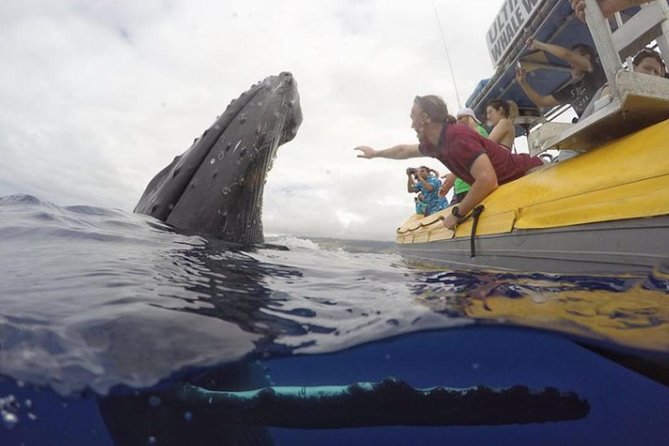
The tour positions itself as having every seat as front row because the boat’s seating lines up along the water. In most cases, that’s exactly how you want it for whale watching.
But comfort can vary, and one downside you should take seriously is the tightness of compact seating. If you’re sensitive to sound levels, one guest reported difficulty hearing safety instructions. If you’re photographing, another guest said the close setup made photos more challenging.
So how do you handle this? You have two good moves:
- Arrive early and get the best available seat, since you’ll want the cleanest line to the water.
- Think hands-and-phone, not tripods and wide rigs. With tight space, small gear tends to be easier.
Who should book this tour (and who might want another option)
This tour is a strong fit if you:
- Want close views without a huge crowd
- Like an experience that mixes watching + learning
- Care about hearing whale communication through a hydrophone
- Prefer a smaller vessel where the crew can move quickly to whale activity
It’s also a good choice if you’re the kind of traveler who might book again after a good day. Several people describe returning for a second outing because the boat size and crew approach make a difference.
You might reconsider if you:
- Need lots of personal space for comfort or photography setup
- Have very young kids (since there’s no under-3 option)
- Are pregnant (the tour can’t accommodate)
- Expect smooth, lounge-like cruising with lots of room (this is a smaller raft experience)
Should you book Ultimate Whale Watch from Lahaina?
I’d book this if whales are a top Maui priority and you want the kind of tour that tries to put you where the action is, using a small raft setup and a crew built for wildlife finding and interpretation. The hydrophone adds value beyond the standard “spot-and-wave” style, and the re-trip option if whales don’t show up is the kind of safety net that makes the risk feel smaller.
If you hate tight seating or you’re traveling with a gear-heavy camera plan, go in with that awareness. Get there early for the best seat you can, keep your kit simple, and focus on the waterline views.
Bottom line: for many people, this is the kind of Maui whale watch they call the highlight. If your dates line up with whale season and the weather cooperates, it’s a smart, value-focused way to spend time off Lahaina Harbor.
FAQ
How long is the Maui whale watch from Lahaina?
It runs about 1 hour 45 minutes to 2 hours 10 minutes, depending on the option you choose.
Where do I meet for the tour?
The meeting point is 1229 Front St, Lahaina, HI 96761. The activity ends back at the meeting point.
What’s included in the ticket?
Bottled water is included. The tour uses purified water from an igloo-style dispenser instead of plastic bottles.
Is there a hydrophone on board?
Yes. You can listen to whale songs through an onboard hydrophone.
Are there different tour lengths?
Yes. There are two options: an approximately 1.5-hour option and a 2-hour option.
What if whales aren’t spotted?
There is a guaranteed whale-sighting approach. If whales aren’t seen on your day, you’ll be invited to take another trip (with no extra charge stated).
What are the age and pregnancy restrictions?
No children under 3 years. The tour also cannot take guests who are pregnant.