REVIEW · NEW ORLEANS
New Orleans: French Quarter Sightseeing Carriage Ride
Book on GetYourGuide →Operated by Royal Carriages · Bookable on GetYourGuide
New Orleans has a way of pulling you in. This one-hour mule and carriage ride gives you a calm seat in the middle of it all, with live narration as you canter past big landmarks like Jackson Square and the St. Louis Cathedral. I like that you get off your feet time while still seeing the must-see stops, and I also like the mix of French Quarter icons plus a guided spin through Faubourg Marigny’s architecture and live-music area. The main drawback to plan for is that street noise (especially near Bourbon Street) can make the guide harder to hear in some seats.
You’ll meet right by Jackson Square, then spend a leisurely hour rolling through streets that are narrow, crowded, and often stressful on foot. The experience is designed for people who want a quick, story-filled orientation without juggling maps, heat, and crowds all at once—just remember this is a pass-by style tour at most stops, not a long photo stop at every corner.
In This Review
- Key points before you go
- Why a mule carriage makes French Quarter sightseeing easier
- Meeting near Jackson Square: how to find your ride and settle in
- St. Louis Cathedral, Jackson Square, and Napoleon House: the big landmarks from the street
- French Market and Bourbon Street: when the history gets louder
- Faubourg Marigny: architecture and a more local music feel
- Your guide and the mule: why names show up in the stories
- Comfort, sound, and what to bring for a 1-hour loop
- Price and value: is $65 worth it for an hour?
- Rain, parade routes, and street closures: how New Orleans can change the plan
- Who should book this ride, and who should skip it
- Should you book this French Quarter mule carriage ride?
- FAQ
- How long is the New Orleans French Quarter sightseeing carriage ride?
- How much does the tour cost?
- Where do I meet the tour?
- Is hotel pickup included?
- Does the tour run in bad weather?
- Are large bags or luggage allowed?
- Can I bring food or drinks?
- Is the tour private or shared?
- Are children or pets allowed?
Key points before you go
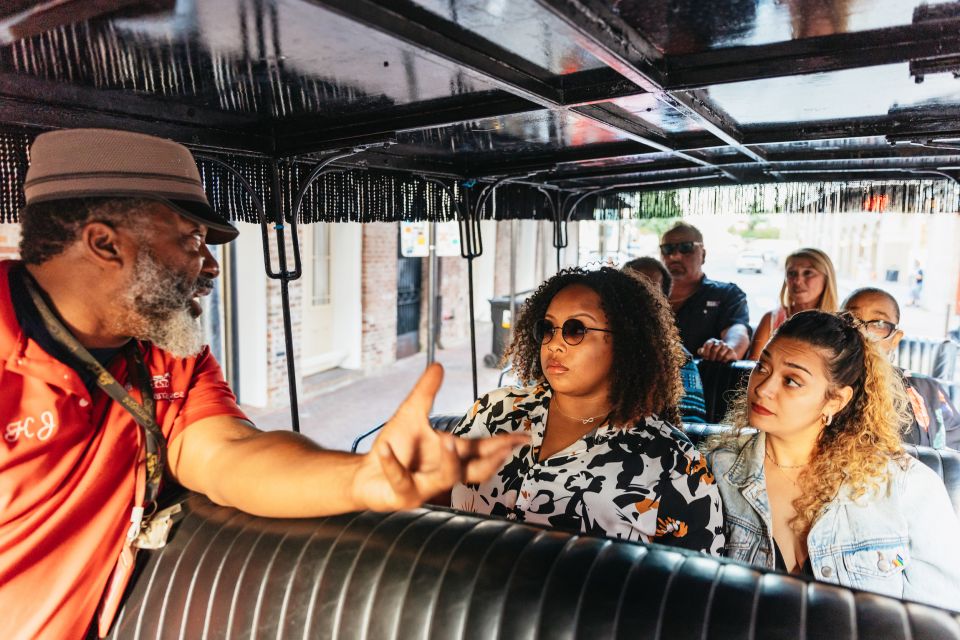
- Easy seat time: A covered carriage means you’re not wrestling with sidewalks while you spot major landmarks.
- Licensed live storytelling: The guide narrates history and street-level details while you ride at a leisurely pace.
- French Quarter icons + Marigny flavor: You’ll see classic sights and then roll into Faubourg Marigny’s local live-music district.
- Pick your spot for audio: If you want to catch every joke and fact, choose seats where you’ll hear best.
- Bring a small beverage, skip big carry-ons: No luggage or large bags, but you may bring your own drink.
- Rain or shine, but plan around streets: The tour runs in rain, yet routes can change during parades and festival closures.
Why a mule carriage makes French Quarter sightseeing easier
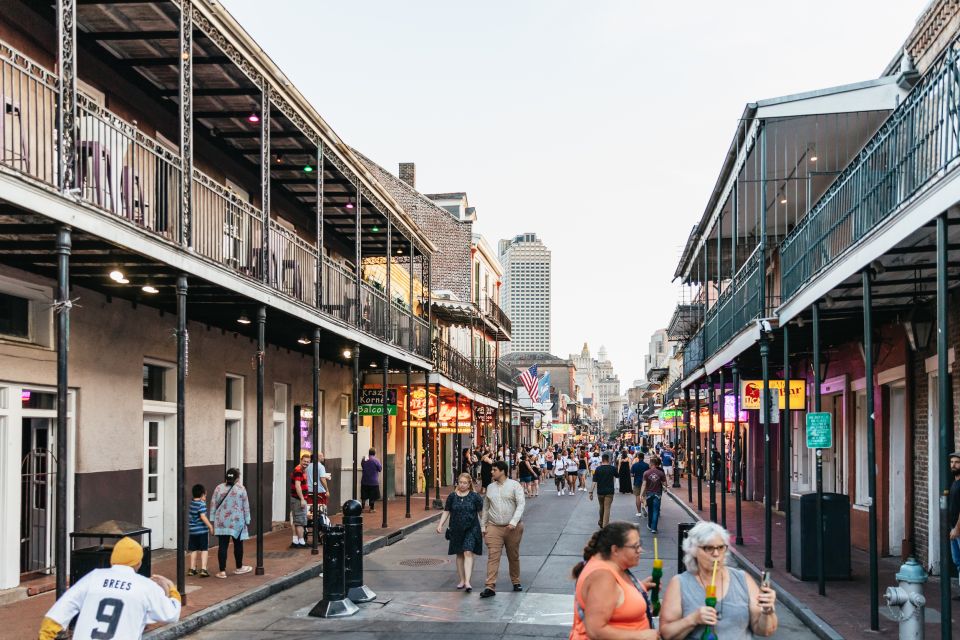
If you’ve ever tried to walk the French Quarter during peak hours, you know the problem: it’s packed, the streets are tight, and you can’t see much without stopping every few minutes. A carriage ride solves that. You trade a lot of walking for slow motion sightseeing. The pace is built for not missing the big picture.
What I especially like about this setup is that it feels different from standing in front of a building reading a plaque. Your guide weaves facts into what you’re passing right now. And because you’re on a mule and carriage, you naturally slow down. That matters in New Orleans, where the fun is in the layers—architecture here, a history story there, and the little rhythms of neighborhoods you’d skip if you were rushing from one spot to the next.
This also tends to work well if you want a first-day overview. In an hour, you’ll pick up enough context to understand what you’re seeing later when you go back on foot.
You can also read our reviews of more tours and experiences in New Orleans.

Meeting near Jackson Square: how to find your ride and settle in
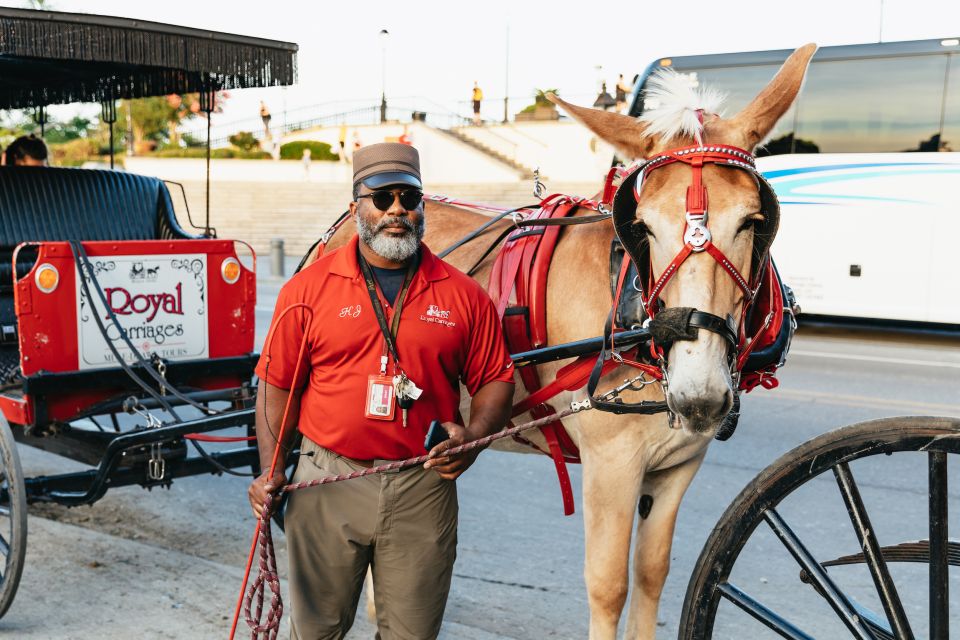
You’ll meet at the red umbrella in front of Jackson Square, normally near St Peter Street. Royal Carriages staff are easy to spot in red shirts. One practical note: festivals can shift where things meet, so if the date overlaps with a big event, don’t assume the exact corner will be identical to a typical day.
The itinerary centers on Decatur at St Peter, and that area is where you start and return. That loop is handy. You’re not traveling across town to begin the tour—you’re staying in the French Quarter orbit, which saves time and keeps your day from turning into transit.
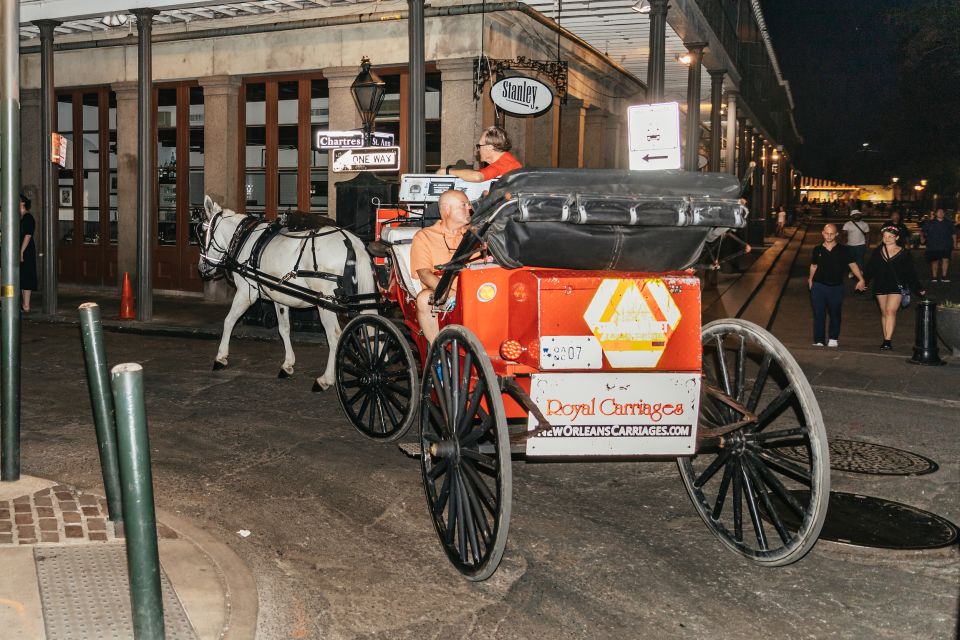
On-board comfort is part of the deal. The carriages have covered seating, and the tour operates in rain or shine. Also, the tour is group-based, with private or small-group options depending on what you book. If you’re sensitive to crowds or want more control over your experience, the smaller option can make a real difference.
Two other useful practical points: luggage or large bags aren’t allowed, and you can bring your own beverage (food and drinks aren’t included). Pack light. If you carry a lot, you’ll spend your “relaxing” time managing it.
St. Louis Cathedral, Jackson Square, and Napoleon House: the big landmarks from the street
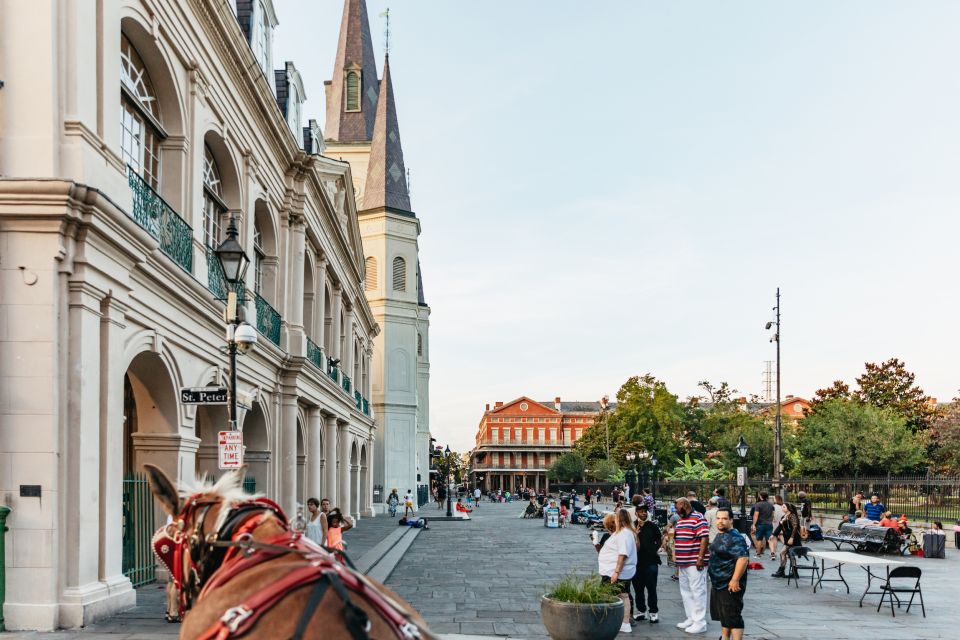
Most of the major French Quarter stops are pass-by moments, which is good to know upfront. You won’t have time to wander into every scene, but you’ll get a guided look at what matters and how the city’s story connects.
St. Louis Cathedral is one of the first major sights you’ll see from the route. Since you’re riding rather than hiking, you get a steady view without craning your neck over moving crowds. It’s also a helpful anchor point because it sets a tone: this is not just entertainment streets; it’s a real city with a long institutional center.
Jackson Square is next in your orbit. Expect it to feel like the heart of the French Quarter from a moving viewpoint—open space, street activity, and that classic postcard feeling. The tradeoff is that, like everything in this tour style, you’re catching glimpses rather than parking yourself for a long look.
Then you’ll canter past Napoleon House. This is one of those landmark names that travelers recognize, but the real value is seeing how it fits into the surrounding streetscape. From the carriage, you notice the scale and closeness of everything—the way the buildings sit right up against the street—and that helps you understand why the French Quarter is so hard to navigate on foot.
French Market and Bourbon Street: when the history gets louder
Two of the most memorable stops on the route are the French Market and Bourbon Street. The French Market is a signature New Orleans scene name, and it’s the kind of place that benefits from a guided pass-by because you can orient yourself for later walking if you want to browse.
Bourbon Street is the opposite experience—lively, loud, and not always easy to hear over. Several riders have noted that it can be hard to catch every word when the noise spikes. That doesn’t ruin the tour, but it does change how you should plan your seating. If you want to follow the narration closely, try to choose a spot where you won’t be swallowed by street sound.
Here’s the smart way to handle Bourbon Street on this kind of ride: treat it as a sensory stop. You’re there to see the rhythm of the street and get the guide’s story around it, not to stand and watch a scene for ten minutes. If you want a quieter, more contemplative pace, the ride into Faubourg Marigny is where you’ll likely feel the change.
Faubourg Marigny: architecture and a more local music feel
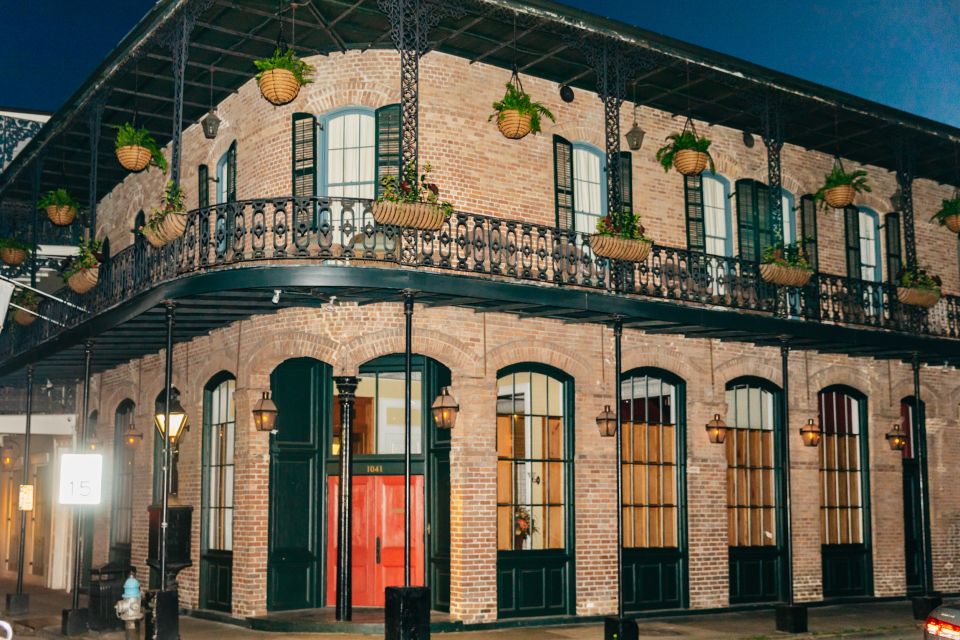
Faubourg Marigny is the part of the ride that often feels like the “oh, so that’s what’s next” moment. It’s not just another street pass. You get a guided segment here, with the tour focusing on the neighborhood’s unique architecture and its live music district vibe.
This is where the experience starts to feel like more than a greatest-hits loop. The French Quarter is famous, yes, but Marigny can feel like the New Orleans that still has its own gravity—more lived-in, more tied to local nightlife. You’ll likely notice the difference in how the streets feel and how the buildings present themselves.
A bonus here is pacing. Because the carriage moves at a leisurely speed, you can actually take in the architectural details while the guide talks. On foot, you tend to rush through Marigny to get back to the Quarter’s main sights. By pairing Marigny with a guided ride, you get the best of both: big-name highlights plus a neighborhood with personality.






Your guide and the mule: why names show up in the stories
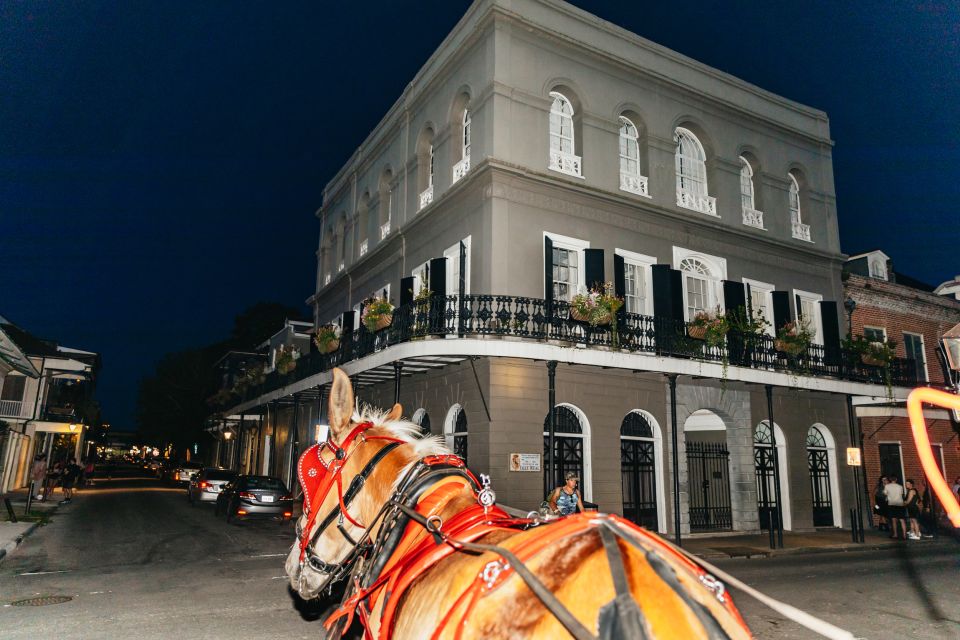
The tour lives or dies on narration. The good version of this ride feels like the guide is giving you a friendly street map of New Orleans—what you’re seeing, what it means, and the little anecdotes that make the city click.
In the strongest examples from recent rides, guides have brought humor and a storytelling style that keeps things moving. Names that have come up include Astrid, Mike, Glen, Lucas, Larry, Tony, Emily, Ann, Amy, and more. You may also hear the guide tailor the tone to the group—one guest described a shift from more general history into a more voodoo-focused angle on the spot.
Mules also become part of the memory. You might ride past on cues like Ginger, Beignet, Fiona, Irma, Benson, Pearl, and others. That matters because it keeps the experience human. The animals aren’t props; they’re the reason the ride feels slow enough to notice anything.
One careful note: a small number of guests have raised concerns about wording or how the guide handled the mule during the ride. I’m not saying you should expect problems. I am saying you should listen to the tone and language. If something feels off, it’s reasonable to speak up respectfully during the tour rather than just absorb it.
Comfort, sound, and what to bring for a 1-hour loop
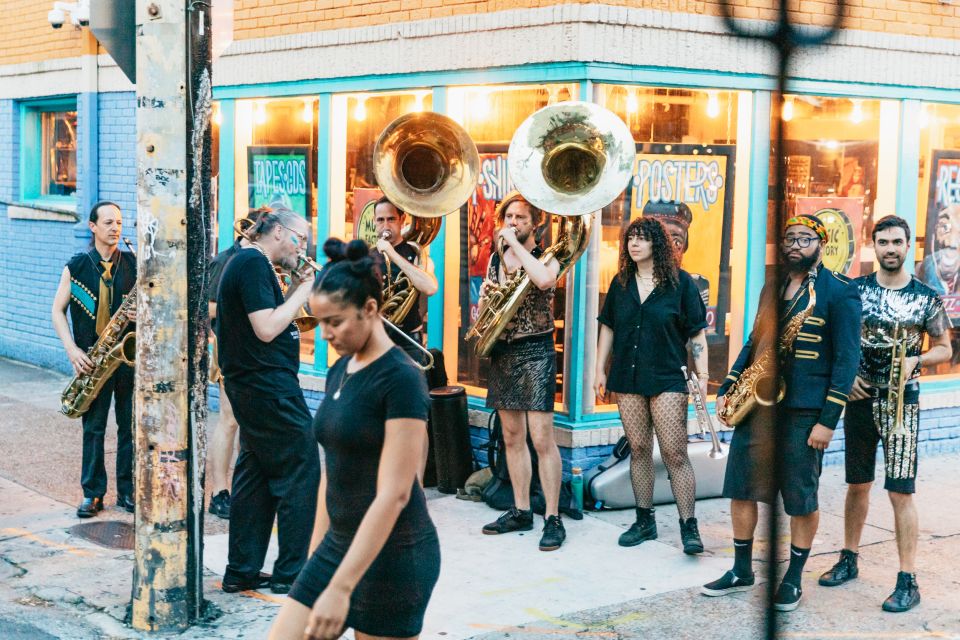
This is a short tour—one hour—so “what you pack” is really about making the hour comfortable rather than turning it into a whole picnic.
- Bring your own beverage. Food and drinks aren’t included, but you can bring a drink on board. One rider even suggested water would be a nice touch, and that’s a solid instinct in New Orleans heat.
- Skip luggage. Large bags and luggage aren’t allowed. Pack a small crossbody or light day bag if you need one.
- Plan for weather. The ride runs in rain or shine, so dress for the day. Covered seating helps, but you’ll still feel the weather on your hands and legs getting to/from the carriage.
- Audio matters. A recurring theme is that it can be hard to hear the guide depending on where you sit and how loud the street gets. If you can, aim for a seat closer to the front where sound carries better.
Also, expect the mule to get breaks. One guest specifically appreciated frequent breaks for the mule, and that’s part of why the pace feels so relaxed. If you’re watching the mule’s rhythm, you’ll feel how the ride isn’t just about moving through a list of stops—it’s about keeping everything steady and calm.
Price and value: is $65 worth it for an hour?
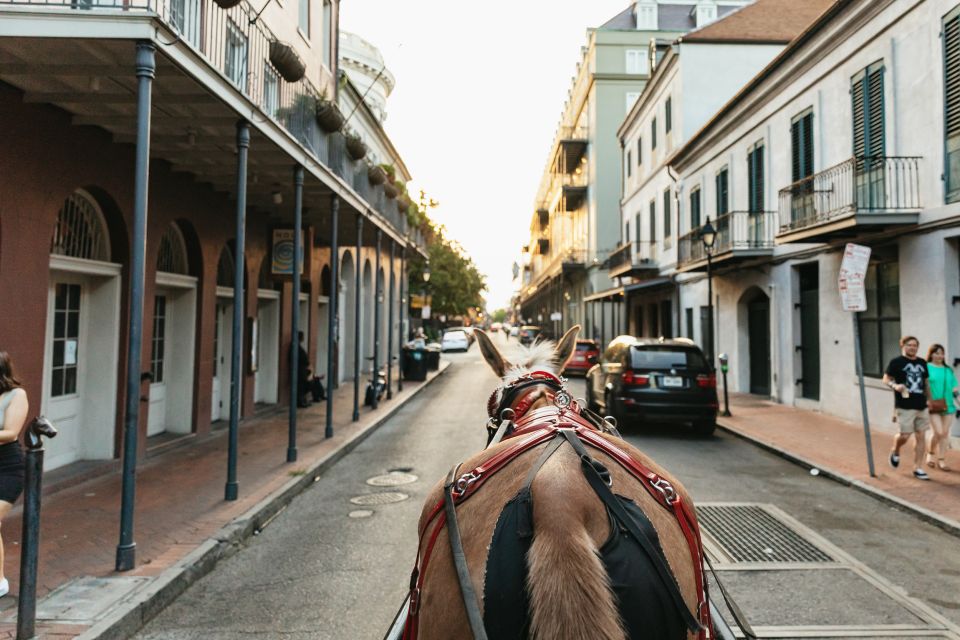
At $65 per person for a one-hour ride, this isn’t the cheapest way to see the French Quarter. But the value is in what you buy: time off your feet, guided context, and a route that takes you through multiple key areas without you having to figure out navigation in tight crowds.
Think of it like this. If you tried to cover Jackson Square, St. Louis Cathedral, Napoleon House, the French Market, Bourbon Street, and then add Marigny on foot, you’d either:
1) walk a lot and miss stories because you’re constantly stopping, or
2) rush through and feel like you didn’t really take it in.
The carriage ride bundles all of that into a single hour with a licensed guide and leisurely pacing. For many people, that’s exactly what makes it feel worth the money—especially if you’re on vacation and your energy is limited.
It’s also a good value if you’re traveling with kids or anyone who doesn’t love long walks. One rider even noted that teenagers enjoyed the ride, which makes sense: it’s visual, not just lecture-style, and the mule adds a fun factor.
If you’re on a strict budget and you’re comfortable walking, you might skip it. But if you want a guided overview without the sore feet, $65 can feel fair.
Rain, parade routes, and street closures: how New Orleans can change the plan
New Orleans runs on schedule… until it doesn’t. Routes are subject to street closures due to parades and festivals, and that can shift how you’re routed around the French Quarter and Faubourg Marigny.
The good news is the tour is designed to keep moving at a leisurely pace. The not-so-fun part is that you should stay flexible on festival days. If you’re visiting during a big event, build extra buffer time and confirm you’re still heading to the right meeting area.
Rain is also part of the deal. The carriage tours operate in rain or shine, and there are no refunds for missed appointments due to rain. If you think weather might slow you down, plan to arrive early rather than betting on being on time by the minute.
In extreme inclement weather, tours might be canceled for safety reasons. That’s rare, but it’s smart to be ready for the possibility if you see serious storm warnings on the day you go.
Who should book this ride, and who should skip it
This is a great fit if you want:
- A fast orientation to the French Quarter with a real guide, not just app-based wandering
- A way to see more streets without wearing yourself out
- A mix of major landmarks plus a guided introduction to Faubourg Marigny
It’s also ideal if you’re nervous about walking in crowded conditions. Getting off your feet is the whole point here.
You might skip it if:
- You hate anything that feels like a pass-by tour rather than a stop-and-stroll experience
- You’re very sensitive to audio issues and want every word without the challenge of street noise
- You’re traveling with a large amount of luggage (since large bags aren’t allowed)
For most people, though, it’s a smart “set your bearings fast” kind of activity.
Should you book this French Quarter mule carriage ride?
I think you should book it if you’re short on time and want a guided, comfortable way to see the French Quarter’s biggest hits plus a neighborhood change-up in Faubourg Marigny. The live narration, the mule-powered pace, and the mix of landmarks make the one-hour format feel efficient.
I’d hesitate only if you need frequent long photo stops or you’re aiming for a quiet, library-like experience. Bourbon Street can get loud, and this tour doesn’t promise extended stops.
If your goal is to learn what you’re seeing and enjoy an easier day on your feet, this is a very solid pick.
FAQ
How long is the New Orleans French Quarter sightseeing carriage ride?
It lasts 1 hour.
How much does the tour cost?
The price is $65 per person.
Where do I meet the tour?
Meet at the red umbrella in front of Jackson Square, normally near St Peter Street. Meeting points can change during festivals.
Is hotel pickup included?
No. Hotel pickup and drop-off are not included.
Does the tour run in bad weather?
The carriage tours operate in rain or shine. If weather is extreme, tours might be canceled for safety reasons.
Are large bags or luggage allowed?
No. Luggage or large bags are not allowed.
Can I bring food or drinks?
Food and drinks aren’t included, but you may bring your own beverage on board.
Is the tour private or shared?
You can choose from private or small-group options depending on what you book.
Are children or pets allowed?
Children 3 and under are free as lap children. Small pets under 20 lbs are welcome. Wheelchairs can be locked up at the Jackson Square meeting point.