REVIEW · NEW ORLEANS
Oak Alley Plantation Tour with Transportation from New Orleans
Book on Viator →Operated by Gray Line New Orleans · Bookable on Viator
Oak Alley’s oak trees stop you cold. I love the quarter-mile alley of 28 trees—each over 250 years old—that turns your arrival into a slow-motion photo walk, and I also like the guided Big House tour with period-costume storytelling. The main trade-off is time: you’re on a tight schedule, with a good chunk of the day spent driving out of the French Quarter.
This mid-day outing is designed like a history reset button. You ride in an air-conditioned coach with lively commentary as the scenery shifts along Lake Pontchartrain and the Great River Road, then you get a guided look at one of the most photographed plantations in the South.
If you want more than mansion-and-oaks, the 90-minute pontoon swamp tour is the cleanest upgrade. It pairs perfectly with the plantation visit because you see the Louisiana water world—cypress swamps, wetland scenery, and wildlife—after learning the human story behind the estate.
In This Review
- Why This Oak Alley Tour Feels Worth It
- The French Quarter Coach Ride: where the day really starts
- Walking the Oak Alley Promenade: the photo moment with real scale
- Inside the Big House: opulence, storytelling, and what to watch for
- The Road Stops: Lake Pontchartrain, the spillway, and sugar-plantation context
- Your Time at Oak Alley: pacing, snacks, and the grounds
- The Optional 90-Minute Swamp Tour: alligators, cypress, and why it fits
- Price and Value: how $89 turns into a half-day plan
- Who Should Book This Oak Alley Tour?
- Should You Book Oak Alley with Transportation?
- FAQ
- Where does the Oak Alley Plantation Tour depart from?
- Is transportation included and is the coach air-conditioned?
- How much time will I spend at Oak Alley Plantation?
- Does the tour include a swamp option?
- What’s included in the price, and what costs extra?
- Can I take photos and videos?
- Is the tour accessible for people with mobility needs?
- What’s the cancellation window for a full refund?
Why This Oak Alley Tour Feels Worth It

- 28 oak trees over 250 years old line a quarter-mile promenade straight to the mansion
- Big House tour built in 1839 with Greek Revival style and guides in period costume
- On-board narration en route covering Lake Pontchartrain and the Lower Mississippi spillway
- Optional 90-minute pontoon swamp tour for close-up bayou scenery
- Air-conditioned coach + round-trip transport from the French Quarter area
- Flash isn’t allowed inside the house, so you’ll focus on photos outside and in the grounds
The French Quarter Coach Ride: where the day really starts
The experience begins in the French Quarter area at the Gray Line New Orleans Lighthouse Ticket Office, at 400 Toulouse St by the Steamboat Natchez Dock. You’ll board a coach for a mid-day departure, and yes—it’s air-conditioned, which matters in Louisiana weather.
What makes the ride more than just transportation is the on-board commentary. You’re not stuck staring out the window; your guide talks as you travel along the shoreline of Lake Pontchartrain and the Great River Road. This is also where you get context for why the landscape (and waterways) shaped plantation life and the region’s economy.
One small practical note from the design of the pickup: the area around the departure point can be busy with traffic. The tour asks you to walk to the departure point if you can. It’s a short stroll for most downtown hotels, but plan for it so you don’t end up sprinting with a camera.
And keep expectations realistic about pacing. The road time is long enough that some people find it a bit much if they’re expecting a quick in-and-out visit. That’s not a deal-breaker, but it helps to mentally budget the day as a mini road trip.
You can also read our reviews of more tours and experiences in New Orleans.



Walking the Oak Alley Promenade: the photo moment with real scale

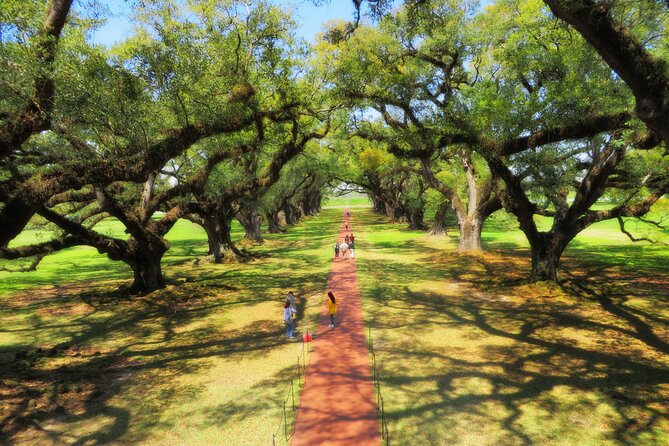
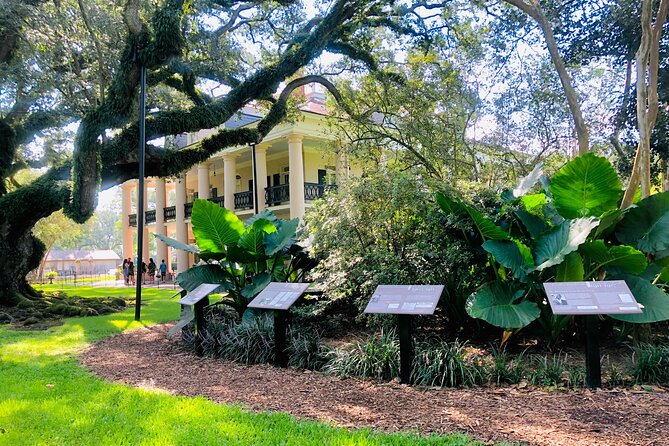
When you step into Oak Alley Plantation, the first thing you notice is the ceiling of green. The promenade is lined with 28 knotty oak trees, and the alley runs about a quarter mile. These aren’t “ornamental” trees in a landscaping sense—they’re living giants, each over 250 years old.
It’s one of those places where the setting does half the explaining. The symmetry pulls you forward. Light filters through the canopy. And because the alley is so iconic, you’ll immediately understand why Oak Alley shows up in movies and TV.
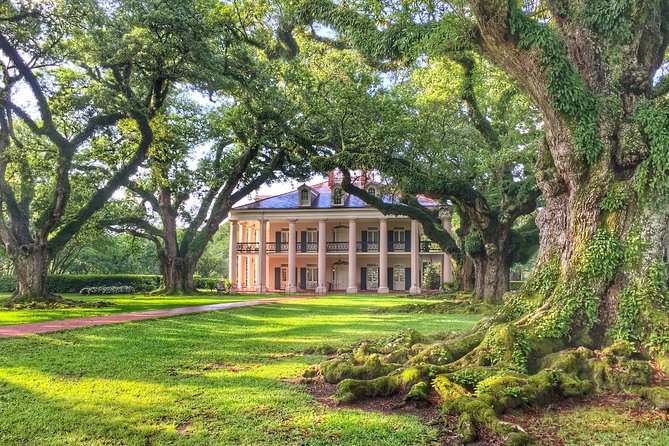
From there, you reach the mansion, known as the Big House. It’s a restored antebellum home with Greek Revival architecture, built in 1839. Even if you don’t care about style names, you’ll feel what the builders aimed for: formality, permanence, and the kind of grandeur meant to be seen from the road and honored by the walk up.
Your visit includes a guided tour of the plantation home, and the guides often wear period costumes. That detail isn’t just for theater. It helps the story land in a believable way, especially when your guide points out room layout, design choices, and how the house functioned as the center of daily plantation life.
Inside the Big House: opulence, storytelling, and what to watch for
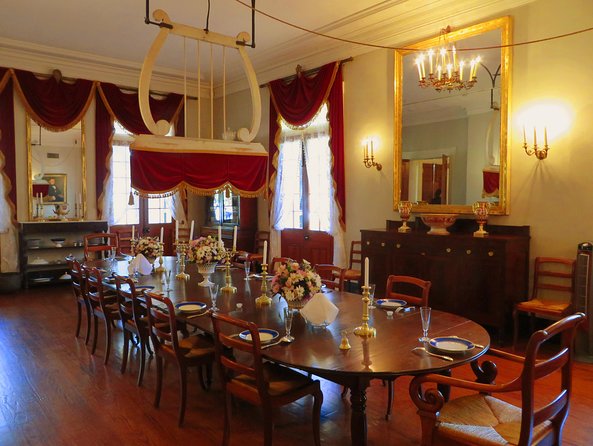
The house tour is the centerpiece: you’ll move through the opulent rooms of this classic southern home and hear colorful commentary about the estate and its former inhabitants. Oak Alley has been used as a filming location too—credited settings include Interview with a Vampire and Primary Colors, and it’s also tied to the Days of our Lives wedding of Bo and Hope.
That movie-connection is handy, because it’s a mental shortcut. You can look at a room and think: people have staged scenes here. Then you zoom out and think: what did real life look like here?
Here’s the part to approach with open eyes. Plantation tours can vary in how much time they spend on the people whose labor made the system possible. Some visitors want the difficult topics covered more directly, while others find the on-site information and exhibits add up over time. The important practical move: don’t treat the house tour as the whole story. Use the grounds time and exhibits to ask questions when you can, and read what’s posted so you get more than just the architecture and lifestyle.
Also, note the photo rule. You can take photos and videos for the most part, but flash is not allowed inside the house. Save flash for outside, and don’t miss the alley shots before you head indoors.
The Road Stops: Lake Pontchartrain, the spillway, and sugar-plantation context
Part of why I like this tour format is that it connects the plantation to the region that made it work. On the coach ride and along the way, you’ll have stops that focus on the water systems and the plantation landscape—meaning you’re not just seeing a single property in isolation.
Expect viewpoints tied to Lake Pontchartrain—even though it’s called a lake, it’s described as a large lagoon and brackish estuary connected to the Gulf of Mexico. You’ll also view the spillway: a Lower Mississippi flood-control operation that, when open, allows floodwaters to flow into Lake Pontchartrain and then toward the Gulf.
Why does this matter for your visit? Because plantations weren’t “just farms.” They were land-and-water systems. Understanding the spillway and wetland geography helps you see how the environment shaped risk, routes, and agriculture.
You’ll also encounter additional plantation-related sites along the broader River Road area. The tour references a historic family-owned working sugar plantation from around 1830, along with sister property Felicity Plantation from around 1846. There’s also mention of a Creole sugar cane plantation complex dating to about 1805, featuring 12 buildings listed on the National Register.
You won’t leave with a full geography lecture. But you will leave with better mental mapping. And that makes the plantation visit feel less like a standalone postcard.
Your Time at Oak Alley: pacing, snacks, and the grounds
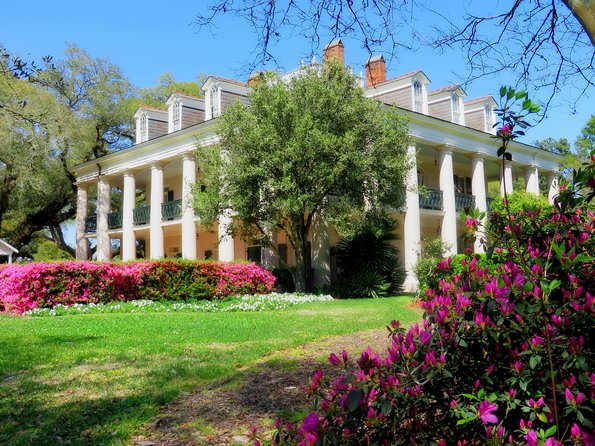
The guided house tour is included, and you get about 2 hours at Oak Alley Plantation. That’s enough time for the house tour and a meaningful walk through the grounds, but it can feel short if you’re hoping for an unhurried stroll, long photo sessions, and extra time in every corner.
Plan to do the alley first if you love photos, because that’s where your “wow” moment usually happens. Then shift into the house and exhibits, and use the remaining time for the grounds.
You’ll also have a chance to buy food onsite. The plantation has a Café and Ice Cream Parlor where you can purchase items like a snack, salad, or sandwich. Those are own expense, so if you get snack-happy, set a rough budget. The tour also notes that it’s a smoke-free facility, which is helpful if you’re sensitive to that.
If rain hits, don’t automatically write off the visit. One recurring point in the experience details is that the grounds can still be enjoyable even in bad weather. You might just adjust your pace—look for sheltered viewing spots and lean into indoor exhibits when needed.






The Optional 90-Minute Swamp Tour: alligators, cypress, and why it fits

If you add the upgrade, you’re stepping into a different kind of Louisiana lesson. The combo includes a 90-minute pontoon swamp tour, which takes you into the wetlands bordering the Mississippi River and into that cypress-and-water environment tied to the region’s story.
This is where the day turns from “plantation architecture” to “ecosystem.” You’ll also get views tied to wetlands and the lagoon system mentioned earlier in the ride. The swamp portion helps you connect the dots: waterways weren’t background scenery; they were part of how the land was lived on and used.
And the guide makes a huge difference on a boat tour because the whole experience depends on pacing and spotting. In the experience feedback, one standout guide name that came up is Capt. T Tom—known for being funny and for demonstrating how alligators respond during feeding. If you’re the type who likes wildlife moments that feel controlled and educational, this upgrade is a strong match.
Just remember what upgrade time means: you’ll trade some flexibility at Oak Alley for more time on the water. If you’d rather soak in the mansion and grounds without rushing, consider whether you truly want the swamp portion.
Price and Value: how $89 turns into a half-day plan
At $89 per person, you’re paying for more than entry tickets. Your money covers round-trip coach transportation from the French Quarter area, an air-conditioned ride, and a guided tour of the plantation home. Admission is included for the time at Oak Alley.
When you look at it this way, the price starts to make sense for a few reasons:
- The logistics from New Orleans can be a pain on your own (timing, getting there, getting back).
- The guide-led house tour adds meaning beyond walking around alone.
- The schedule includes extra context stops on the way, not just a straight shot to one address.
Is it a bargain? Not exactly. But it’s fairly priced for a guided, round-trip, half-day experience with included admission. If you add the swamp tour, you’re essentially getting a second major attraction included in the same day structure, which improves your value if you’re already in a “see the bayou too” mindset.
The only cost that tends to surprise people is food. Lunch is not included. Onsite snacks and sandwiches are available, but you’ll be buying your own.
Who Should Book This Oak Alley Tour?
This is a great choice if you want a guided plantation visit with real transportation support. It fits first-timers to Louisiana, couples who want an easy day outside the city, and families who appreciate structured explanations in a single block of time.
It’s also a good fit for history-curious visitors who like when a guide stitches together more than one piece of the puzzle—plantation life, regional waterways, and the River Road context.
Consider a different plan if you strongly dislike bus time. The drive from the French Quarter takes enough time that it can test patience, especially if you’re planning the day around quick stops. Also, if you know you want very detailed discussion of enslaved people and the full scope of that history, go in ready to spend time reading exhibits and asking questions as available, since emphasis can vary.
If you love scenic photo walks, though, you’re going to have a field day under those oaks.
Should You Book Oak Alley with Transportation?
I’d book it if you want an efficient way to see Oak Alley from New Orleans without handling the logistics yourself. The combination of coach comfort, guided house tour, and the iconic oak-lined promenade makes it feel like a complete experience rather than a rushed roadside stop. If you also want wildlife and bayou scenery, add the 90-minute pontoon swamp tour—it’s the best way to turn this from a plantation visit into a fuller Louisiana day.
If you prefer total control, slow pacing, and extra time wandering without a fixed schedule, then you might find the time allotments limiting. Still, for most people, the guided format and the stunning grounds make the trade-off worth it.
FAQ
Where does the Oak Alley Plantation Tour depart from?
The tour starts at the Gray Line New Orleans Lighthouse Ticket Office in the French Quarter at 400 Toulouse St by the Steamboat Natchez Dock.
Is transportation included and is the coach air-conditioned?
Yes. You get round-trip transportation by coach, and the vehicle is air-conditioned.
How much time will I spend at Oak Alley Plantation?
You’ll spend about 2.25 hours at Oak Alley Plantation (including the guided house tour).
Does the tour include a swamp option?
Yes. There’s an upgrade option that adds a 90-minute pontoon swamp tour.
What’s included in the price, and what costs extra?
Included: guided tour of the plantation home, air-conditioned vehicle, local guide, and round-trip coach transportation. Costs not included: lunch and parking fees.
Can I take photos and videos?
You can take photos and videos for the most part. Flash photography and/or video is not allowed inside the house.
Is the tour accessible for people with mobility needs?
Yes, it’s listed as handicap accessible. Still, portions of the plantation are only accessible by stairs.
What’s the cancellation window for a full refund?
You can cancel up to 24 hours in advance for a full refund. Cancellations less than 24 hours before the start time aren’t refunded.