REVIEW · SEATTLE
Best of Mount Rainier National Park from Seattle: All-Inclusive Small-Group Tour
Book on Viator →Operated by Evergreen Escapes Seattle · Bookable on Viator
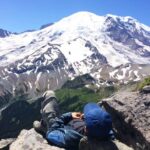
Mount Rainier in one day is the fun part. This Seattle tour is built for people who don’t want to wrestle with driving, parking, and turn-by-turn directions. You get a naturalist guide, real time on the mountain, and lots of chances for waterfalls, forests, and big views—even when the weather plays tricks.
I especially like that the price feels honest: park entry fees and transportation are included, plus snacks, coffee, and a picnic lunch. You’ll also enjoy a small group (max 10), which keeps the hiking pace human and the stops less chaotic. One thing to keep in mind: Rainier’s roads and visibility can change fast, so the exact route and access can shift with weather and seasonal conditions.
In This Review
- Key Points at a Glance
- Why This Seattle-to-Rainier Day Trip Works So Well
- Price and What Feels Included (The Real Value Math)
- Pickup, Timing, and How the Day Flows
- First Steps in the Longmire Area: Forests, Water, and Big Views
- Christine Falls: The Quick Postcard Walk
- Narada Falls: Waterfalls You Can Actually Walk To
- Paradise Valley: Summer Wild Berries or Winter Snowshoe Steps
- Henry M. Jackson Visitor Center: The Fastest Way to Understand the Park
- Myrtle Falls and the Paradise Meadows Feel
- Reflection Lakes: When the View Looks Like a Mirror
- Longmire Museum, Mineral Springs, and Short Loops in Old-Growth
- Lunch and Snacks: One of the Most Complained-About Things Is Handled Here
- How Weather Changes the Day (And Why the Guide Makes It Work)
- What This Tour Is Best For
- Should You Book This Mount Rainier Tour?
- FAQ
- What’s the duration of the Best of Mount Rainier National Park tour from Seattle?
- How much does the tour cost?
- Is pickup offered from Seattle hotels?
- How many people are in the group?
- Is the Mount Rainier National Park entry fee included?
- What’s included for food and drinks?
- Does the tour offer snowshoeing in winter?
- What should I wear?
- Are dietary restrictions accommodated?
- What happens if it rains?
Key Points at a Glance
- Small group size (max 10) makes stops feel personal and the guide can adjust the pace
- All-in-one value includes park entry, snacks, beverages, coffee/tea, and a picnic lunch
- Guided nature learning focuses on geology, plants, wildlife, and why the rivers and falls look the way they do
- Hike in summer, snowshoe in winter with snowshoes and poles provided during winter months
- Stops are designed for views without a nonstop grind (there are short walks and longer stretches)
Why This Seattle-to-Rainier Day Trip Works So Well
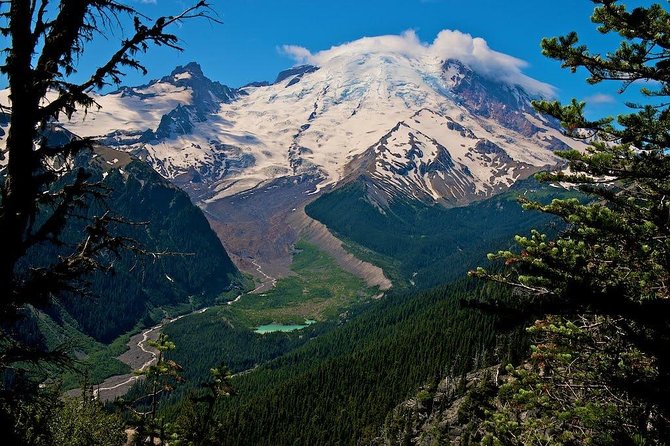
If you’re basing yourself in Seattle, Mount Rainier can feel like a “someday” dream. The problem is simple: you need a car, you need a plan, and the park is big enough that a single day can disappear fast.
This tour solves the hard parts. You’re picked up in downtown Seattle, driven in a comfortable vehicle, and handed a guided route that hits classic scenery without turning the day into a checklist. The naturalist-led approach matters too. When you understand how glaciers shaped the valleys and how lichen and moss survive on wet forest floors, the scenery stops being just pretty and starts being memorable.
I also like the way the day is paced. It’s not only “walk, walk, walk.” You get frequent stops, snacks, and breaks for photos. That makes a big difference if you’re traveling solo, older, or just not trying to prove you’re a wilderness endurance athlete.
You can also read our reviews of more tours and experiences in Seattle.

Price and What Feels Included (The Real Value Math)
At $344 per person for about 10.5 hours, this is not a bargain-basement option. But it can be good value once you price out the real costs you’d otherwise juggle yourself.
Here’s what your money is doing:
- Transportation from Seattle with hotel pickup and drop-off
- National park entry fees
- Coffee/tea plus snacks and water (including sparkling water)
- A catered picnic lunch midday
- Guide time from a local naturalist
- Snowshoe gear (snowshoes and poles) during winter months
- Warm clothing available upon request
If you rent a car, add gas, deal with parking, and then buy entry fees and food on the fly, the total climbs quickly. Plus, you’re paying for planning and interpretation—the guide’s job is to turn “we went there” into “we understood what we saw.”
Pickup, Timing, and How the Day Flows
The day starts at 8:00 am. Your pickup is set up for downtown Seattle hotels and similar stays. If you’re outside the regular pickup zone, you’ll be directed to the default meeting point at the Sheraton Grand Seattle (1400 6th Ave), and you can also request quick pickup stops near SeaTac Airport or Tacoma.
The day runs with a steady rhythm: drive up, short orientation, coffee and pastries, then the park stops begin. The tour is designed so you’re not left guessing. Communication is handled in advance, and you’ll be contacted the afternoon before with your exact pickup time and location, so you don’t need to hover by the door all morning.
You’ll want to treat this like a real day on your feet. Comfortable shoes matter. In October–June, the tour specifies waterproof boots (and they can help with rental options if you reach out).
First Steps in the Longmire Area: Forests, Water, and Big Views
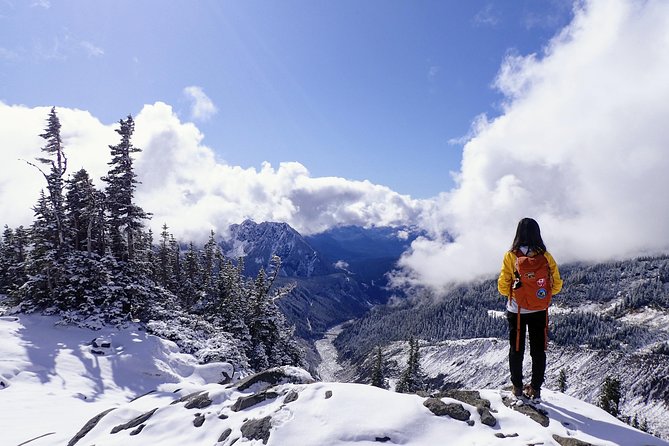
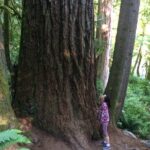
Your morning takes you into Mount Rainier National Park through the Longmire area. This is one of those spots where the forest looks ancient in the way only old-growth can—thick with texture, damp with life, and full of signs that the mountain has been working for a long time.
You’ll start along the Nisqually Vista Trail, then spend about an hour in the Longmire region with time for waterfalls and big mountain views as you move to higher elevations. In plain terms: this is where you get your first “oh wow” moment, and it’s also where the guide can set the story—glaciers, rivers, and why this ecosystem looks the way it does.
What to watch for here:
- Old-growth forest details like moss, lichen, and the shapes of trees
- Waterfalls and wet rocks (great for photos, but expect slippery footing)
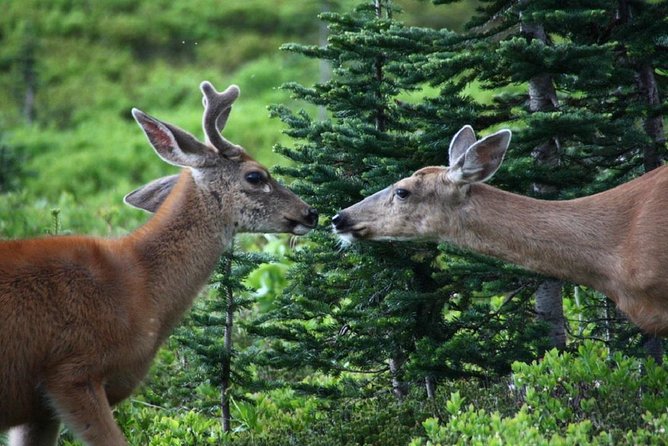
- Wildlife—sometimes it’s close and casual, and you only notice if you slow down
A drawback? This part can be a little damp. If you show up in shoes that hate moisture, the forest will remind you.
Christine Falls: The Quick Postcard Walk
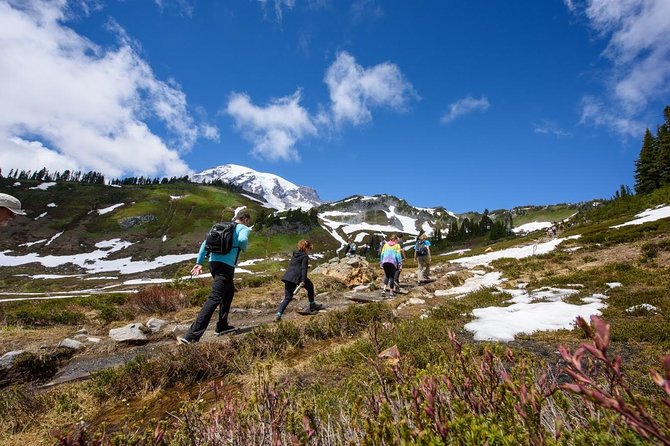
Christine Falls is a short stop with a short walk—about 10 minutes—to a viewpoint. It’s a smart reset in the middle of the morning. You get a classic scene without needing to commit to a longer hike right away.
This is also a good moment for people who want a break from elevation changes. The guide can point out how water routes itself through the terrain, and how snowmelt timing can affect what you see.



Narada Falls: Waterfalls You Can Actually Walk To
Next comes Narada Falls, one of the park’s favorites. You’ll have about 30 minutes for foot-access along the route up the mountain and time near the falls.
This stop is usually where the trip starts to feel fully “Rainier.” Narada is dramatic in the way only moving water can be: you’ll hear it before you fully see it, then you’ll understand why glaciers matter.
One thing I like about this part of the day: it’s built for different comfort levels. You can enjoy the walk, and the pace is guided, not competitive. If you’re hiking with kids or someone who needs a slower tempo, this is one of the easier ways to still feel like you did something real.
Paradise Valley: Summer Wild Berries or Winter Snowshoe Steps
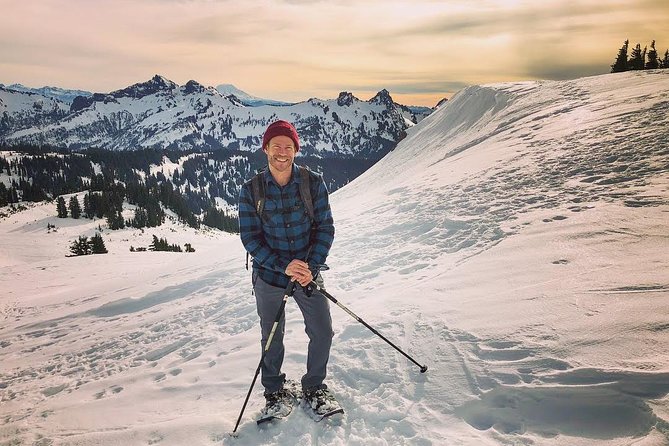
Paradise Valley is the main event. You’ll spend around 3 hours here, and what it looks like depends on the season.
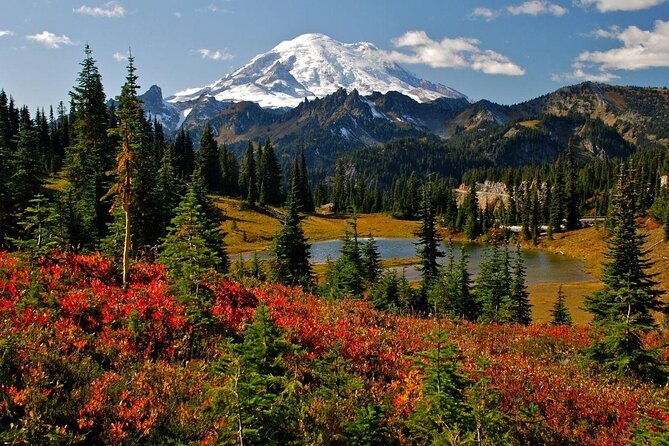
In summer, you might find sub-alpine trails and the chance to pick wild berries (yes, that’s part of the experience). In winter, Paradise becomes a snow scene, including an introductory snowshoe trail and the “winter solitude” feeling that only happens when most people are tucked indoors.
This is also where the included gear matters. The tour provides snowshoes and poles during winter months. In one winter day described by a guest, snowshoeing happened right on time despite cloudy, drizzly conditions, and the guide kept it fun instead of fussy.
What to plan for:
- In winter, you need warm layers and gear that handles snow slush
- In summer, you’ll still want weather protection, since Rainier weather can flip quickly
Henry M. Jackson Visitor Center: The Fastest Way to Understand the Park
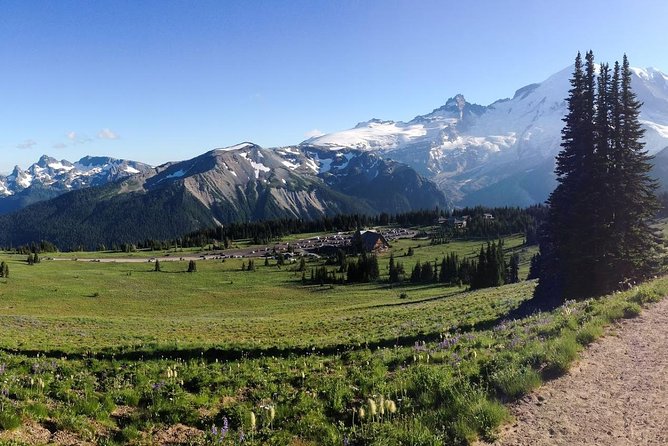
Next up is the Henry M. Jackson Visitor Center with about 20 minutes to explore. This is where information turns into a better hike.
A visitor center stop is practical: it gives you interpretive context, helps you connect the dots between glaciers, rivers, forests, and volcanic activity, and it’s also a comfortable break when the weather gets moody.
If you like nature facts you can remember later, this stop is worth the quick time.
Myrtle Falls and the Paradise Meadows Feel
Back in Paradise, you’ll visit Myrtle Falls, with about 30 minutes. This is another walkable waterfall stop, and it’s positioned so you’re often looking toward Mt. Rainier’s peak as you move through the area.
Myrtle Falls is ideal if you want “short effort, big payoff.” The trail to the falls is described as easily walkable, and the scenery tends to stay open enough to keep your camera busy.
Downside to consider: you’ll likely be standing around for photos. If it’s cold or wet, plan your layers like you mean it.
Reflection Lakes: When the View Looks Like a Mirror
You may also stop near Reflection Lakes for about 15 minutes. This is the “postcard shot” type of place—Rainier over a mirror-like lake when conditions cooperate.
Because this stop is described as possible, don’t build your day around it like it’s guaranteed. But when it works, it’s exactly the kind of moment that makes a long day feel worth it.
Longmire Museum, Mineral Springs, and Short Loops in Old-Growth
Later in the day, you’ll head to Longmire, including the Longmire Museum (about 20 minutes) and nearby old-growth stops.
Longmire is built for a gentler pace:
- You can grab souvenirs, cocoa, and use the bathroom
- You get old-growth forest trails
- You also get a feel for the historic part of the park setting
Then the tour includes two short loops:
- Trail of the Shadows (about 30 minutes): old-growth spruce trees clustered around bubbling mineral springs, plus views of Rainier’s peak
- Twin Firs Loop Trail (about 30 minutes): massive trees towering over you in that “how is this even standing?” way
If you’re the type who likes forest details—fungus, moss textures, lichen on logs—this is the part of the day that rewards slowing down.
Lunch and Snacks: One of the Most Complained-About Things Is Handled Here
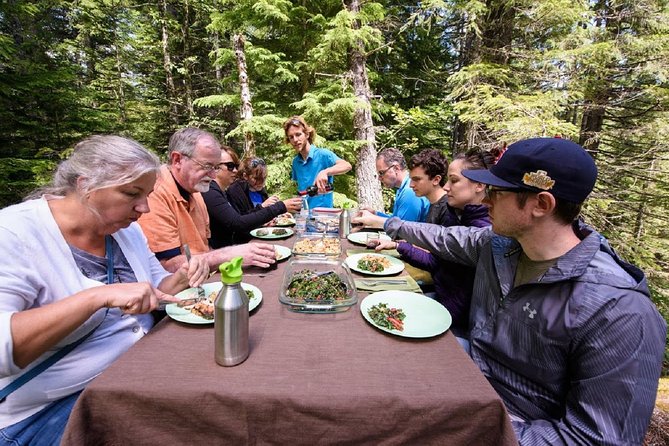
The tour includes a midday picnic lunch from a local female-owned caterer. The menu is described clearly: grilled chicken or salmon or a sandwich/wrap, with a grain or green salad and water or soda.
Beyond that, you’ll have lots of snacks plus water and coffee/tea. That matters on a day when you’re hiking in cool air, standing around in wind, and taking in elevation changes. You burn calories faster than you think.
I’ve also picked up a theme from how guides handle food: people with restrictions often ask in advance, and the tour asks you to inform them at least 48 hours before the trip. That’s the practical part—plan ahead, and you’ll be able to focus on the mountain instead of worrying about what you can eat.
How Weather Changes the Day (And Why the Guide Makes It Work)
Mount Rainier is famous for changing fast. One day can be clear and bright, the next can be cloudy, drizzly, and low-visibility. The key is that this tour is run in all weather conditions, and the guide adjusts accordingly.
You can see it in how guides operate in the real world. In winter conditions, one guest described how road closures limited access and the guide shifted to the best available options. In autumn weather, other guests praised how the guide kept the pace and still aimed for strong viewpoints even when clouds rolled in.
So here’s the advice you should follow: don’t treat clouds as failure. Treat them as part of the mountain. On a misty day, you may get fewer long-distance summit views, but you still get forest, falls, rivers, and the feeling of being in a wild place that doesn’t care about human schedules.
What This Tour Is Best For
This is a strong fit if:
- You want classic Rainier highlights without renting a car
- You like nature interpretation while you walk
- You value a small group and a guide who can adjust for comfort levels
- You travel from Seattle and want a full day that’s already planned
It’s also a good choice for people who want a real hike but aren’t trying to do an all-day suffer-fest. The tour is described as easy to moderate and is built for varied fitness levels with a max group size of 10.
Should You Book This Mount Rainier Tour?
Book it if you want the simplest path from Seattle to a full day on Mount Rainier with transport, entry fees, food, and snow or hike gear handled. At $344, you’re paying for more than sightseeing—you’re paying for time saved and for a guide who can explain what’s in front of you.
Skip it or rethink it if:
- You hate cold, wet weather and refuse to dress for it
- You’re looking for a private, do-whatever-you-want schedule
- You need guaranteed summit visibility no matter what the sky does
If you’re okay with Mother Nature steering the day sometimes—and you want a well-run, small-group way to see the best of Rainier—this is a very solid bet.
FAQ
What’s the duration of the Best of Mount Rainier National Park tour from Seattle?
The tour runs about 10 hours 30 minutes.
How much does the tour cost?
The price is $344.00 per person.
Is pickup offered from Seattle hotels?
Yes. Pickup and drop-off are offered at various downtown Seattle hotels, Airbnbs, and other downtown stays. If you’re outside the legal pickup zone, you’ll meet at the Sheraton Grand Seattle (1400 6th Ave).
How many people are in the group?
It’s a small group with a maximum of 10 travelers.
Is the Mount Rainier National Park entry fee included?
Yes. National park entrance fees are included.
What’s included for food and drinks?
You’ll get coffee and/or tea, lots of snacks, sparkling water and water, and a picnic lunch.
Does the tour offer snowshoeing in winter?
Yes. During winter months, the tour may include an introductory snowshoe trail, and snowshoes and poles are provided.
What should I wear?
Wear comfortable closed-toe walking shoes or hiking boots. Waterproof boots are required October–June. Dress in layers, and bring warm clothing for winter months.
Are dietary restrictions accommodated?
If you have dietary restrictions, you must inform the operator at least 48 hours before departure so they can do their best to accommodate.
What happens if it rains?
The tour operates rain or shine, and guides craft the best itinerary for weather conditions.