REVIEW · SEATTLE
Guided forest hike to Seattle waterfalls incl. Snoqualmie Falls
Book on Viator →Bookable on Viator
Snoqualmie country is all motion and water. This half day tour blends a 2-hour old-growth forest hike with big-name waterfalls like Snoqualmie Falls, plus quick stops in historic logging towns and a lake view that often brings Mount Si into the frame. I love that you get guided navigation on rocky, rooted trails without needing a car. I also like the balance of walking and short rides so you can still see more than just the falls. One consideration: the hike is called moderate, but the footing can be uneven and some stretches feel like a steady climb, so it’s not ideal if you have knee or hip issues.
You’ll start in downtown Seattle at 415 Pine St, then head east with a small group (up to 14) in an air-conditioned vehicle. Expect a morning-style pace: enough time to enjoy the waterfalls and photo stops, but not a slow, all-day roam.
In This Review
- Key takeaways
- First, Know What You’re Signing Up For
- Starting in Seattle: Pickup, Group Size, and Getting There Smoothly
- Stop 1: Snoqualmie Falls Lookouts, Snoqualmie Depot, and Borst Lake Reflections
- Stop 2: Twin Falls and Upper Falls Through Ollalie State Park
- What the hike feels like on the ground
- The reward: cascades that keep showing up
- Pace and “not for beginners” warnings
- Trail basics: water, snacks, and restrooms
- After the hike: Snoqualmie and North Bend stops with history and Twin Peaks flavor
- Price and Value: What $79 Buys You in Real Terms
- What Guides Actually Do That Improves the Day
- Who This Tour Fits Best (and Who Should Skip It)
- Weather, Clothing, and Personal Prep That Actually Matters
- My Booking Recommendation: Should You Book This One?
- FAQ
- How long is the tour?
- What parts involve hiking?
- Where do I meet and where do we end?
- Is transportation included?
- Are admissions included for the attractions?
- Is this tour suitable for everyone physically?
Key takeaways
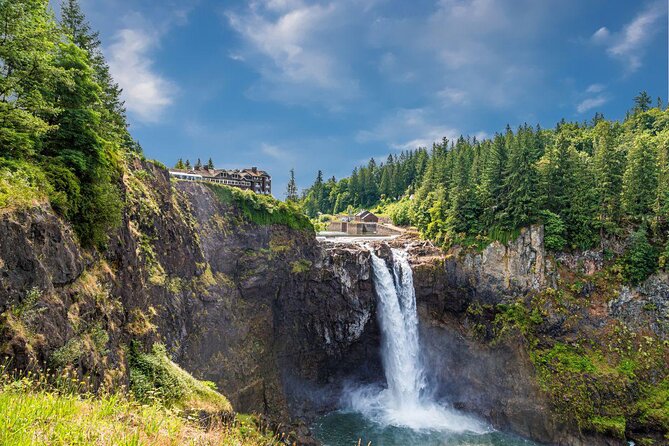
- Two waterfall targets, one forest hike: Twin Falls and Upper Falls on foot, then Snoqualmie Falls with lookout platforms.
- Old logging towns with real character: Snoqualmie and North Bend add context beyond the water.
- Comfort-minded transportation: Air-conditioned van and a schedule built around short drives between stops.
- Terrain reality check: Roots, rocks, inclines, and some mud mean good footwear and a steady step.
- Photo options that work: Platforms at Snoqualmie Falls and a calm stop at Borst Lake for reflections.
- Small-group feel: You stay in a group of 14 or fewer, which helps pacing and safety.
First, Know What You’re Signing Up For
This isn’t a long, rugged backcountry trek. It’s a guided, half day outing that’s active by necessity. Your route is built around the Pacific Northwest’s signature ingredients: waterfall power, old-growth forest shade, and mountain scenery visible between trees.
The biggest value for me is how efficiently it stitches together distinct places. You get:
- A guided walk in Ollalie State Park through old forest
- A visit to one of Washington’s headline waterfalls, Snoqualmie Falls
- A lakeside pause at Borst Lake, where Mount Si is often reflected
- Town stops in Snoqualmie and North Bend that add a bit of history and pop culture context without turning the day into a museum tour
The tour also includes a logistics-friendly pickup in central Seattle (415 Pine St) and an option to meet near the Space Needle if you request it. That matters when you’re staying in the city and don’t want to spend your vacation figuring out who has the car.
You can also read our reviews of more tours and experiences in Seattle.

Starting in Seattle: Pickup, Group Size, and Getting There Smoothly
You’ll meet at 415 Pine St in downtown Seattle at 9:00 am. The tour returns you to the same meeting point. If you prefer, pickup/drop-off can be arranged near the Space Needle upon request.
Group size is capped at 14 travelers, and the vehicle is air-conditioned. Several reviews stress that this setup keeps things organized—especially when you’re going to trailheads and viewpoints in a tight schedule.
One small drawback to keep in mind: group tours depend on timing. There’s one negative report about a no-show and poor communication, plus a separate comment about being forced to reshuffle in the van after late arrivals. I can’t predict whether you’ll hit that situation, but it’s a good reminder to be early, stay reachable by phone, and know where you’re supposed to board.
Stop 1: Snoqualmie Falls Lookouts, Snoqualmie Depot, and Borst Lake Reflections
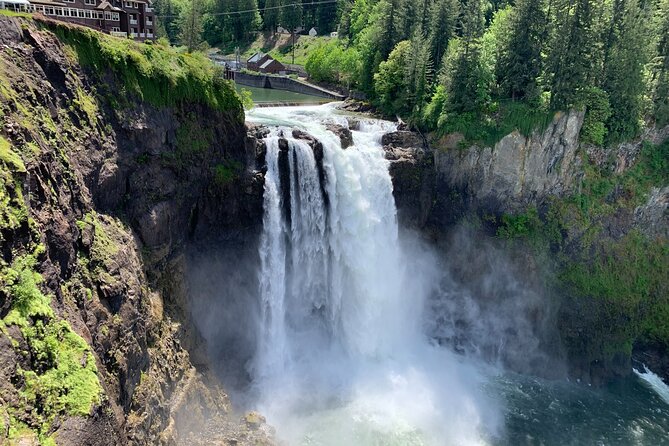
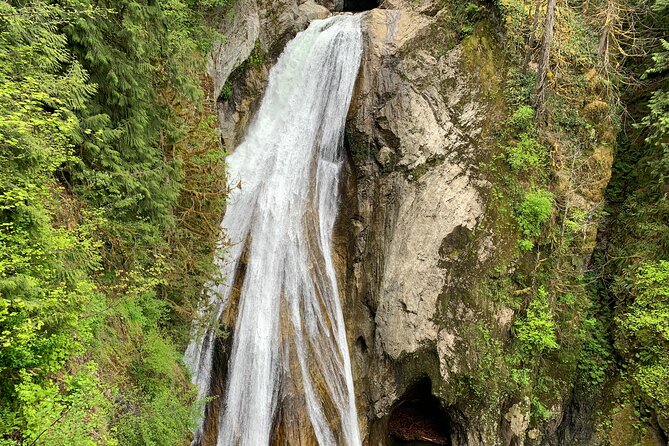
You first drive to Snoqualmie Falls. This is the showstopper: a 270-foot tall cascade, visited from a few platforms. Platforms are a huge deal here because they let you see the falls without spending time “figuring out” the best angles on your own. You can focus on photos and sound rather than route-finding.
After you’ve soaked in the main waterfall, you ride through Snoqualmie town. You’ll pass an old depot dating to the 1890s and see historic locomotives left around the area. That’s a nice contrast: loud water up front, then quiet reminders that this region was built around logging and rail.
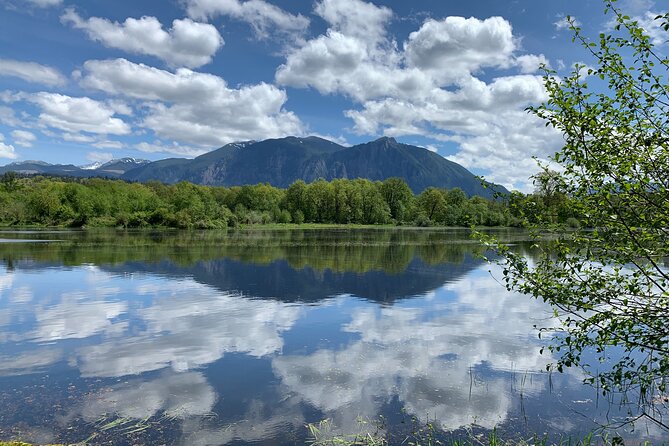
Before heading back toward Seattle, you stop at Borst Lake. Mount Si is often reflected there, which is exactly the kind of scenic payoff you hope for in this part of Washington—different from the dramatic drop of Snoqualmie Falls. It’s also a calmer break in the schedule before the hike portion and/or return drives.
Practical note: admission is listed as free at this stop, so you’re not paying extra just to stand on a viewpoint and take in one of the most famous falls near Seattle.
Stop 2: Twin Falls and Upper Falls Through Ollalie State Park
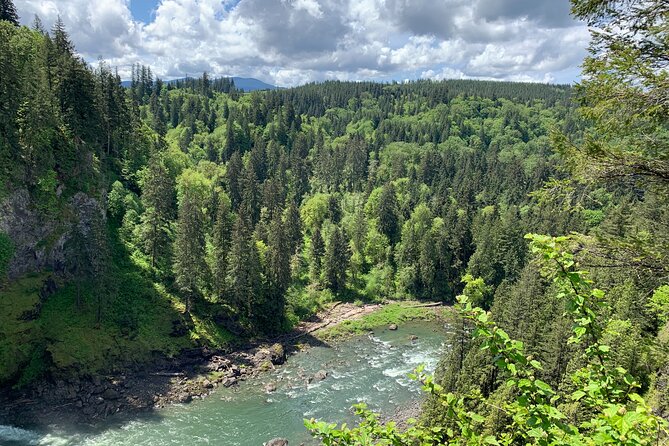
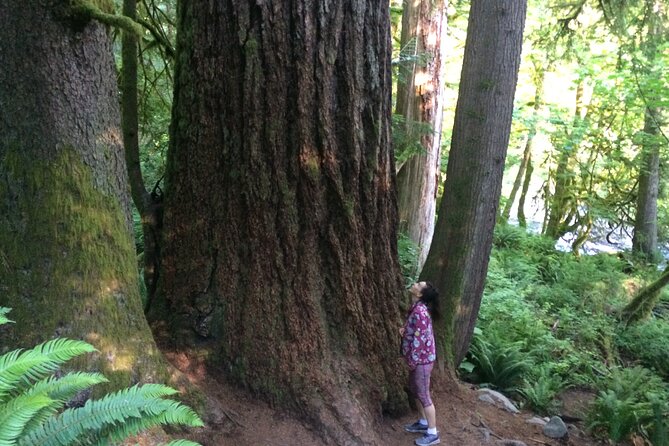
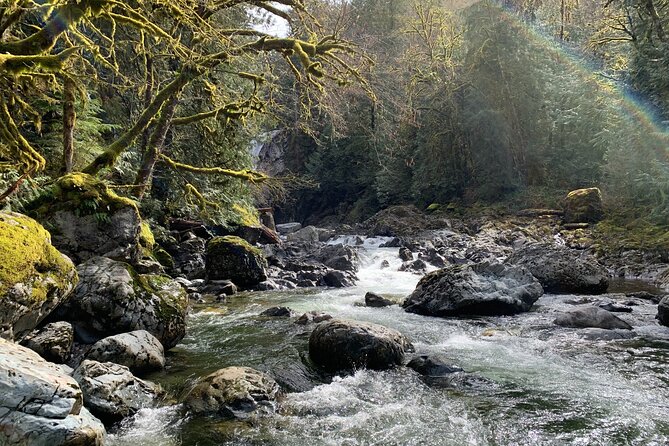
This is the heart of the tour. You drive about 30 minutes east to the Olallie State Park trailhead, then you hike for around 2 hours through old-growth forest toward Twin Falls and Upper Falls.
What the hike feels like on the ground
The terrain is where you’ll want to be honest with yourself. The description labels it moderate, but multiple people point out that it’s not a casual “walk in the park.” Expect:
- Roots and rocks you have to step around
- Narrower sections where you have to watch your footing
- Inclines that come in bouts (some stretches can feel like a steady climb)
- Occasional mud, especially if it’s been raining or the forest is damp
Reviews also give clear footwear advice. Walking shoes or hiking boots are repeatedly recommended. If you’ve ever slipped once on roots, you’ll feel why. Even if you’re in decent shape, you’ll get more confidence with a grippy sole.
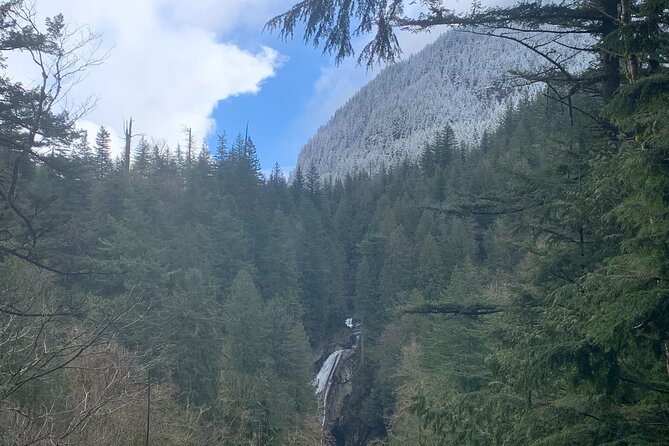
If you like to go prepared: bring a rain jacket. Rain is common in the Pacific Northwest, and one review describes getting a rain-soaked but fun, moody experience. Layers also help because the forest shade can feel cool even when the sky is bright.




The reward: cascades that keep showing up
Twin Falls and Upper Falls aren’t just one waterfall and done. You’re moving through the area as the water comes into view in sections. That keeps the hike interesting: you’re not trudging to one distant spot with no payoff until the end.
As you hike, your guide adds context on what you’re seeing—trees and plants, and the local area history. Different guides are named in reviews (John, Susan, Brie, Rachel), but the consistent theme is that they lead you safely, pace the group, and share useful details along the trail. That makes a real difference when you’re dealing with a trail that has uneven footing.
Pace and “not for beginners” warnings
A recurring message is that the tour is fine if you’re used to hiking. If you’re brand new, you might still manage, but you may not love the pace. One reviewer even said it felt fast for a first hike, with inclines that were consistent rather than gentle.
The good news: some comments also mention that the guide works with different walking speeds and you can go at your own pace for parts of the route. The watch-out is that the schedule is structured, so there’s less time for a slow linger than on a self-guided hike.
Trail basics: water, snacks, and restrooms
The tour provides water and snacks. One person also mentions fruit as a special touch near the top. That’s the sort of small detail that keeps you from running out of energy on a forest climb.
Restroom access is limited. One review points out that the restroom near the hiking area is a basic long-drop setup, and they recommend bringing wipes or similar hand hygiene. If you’re picky about restroom comfort, pack your own solution.
After the hike: Snoqualmie and North Bend stops with history and Twin Peaks flavor
Once you finish the loop, you drive through North Bend and Snoqualmie. The route includes a big floating bridge across Lake Washington on the way to the falls. That’s not just a transfer—it’s a scenic reset. You’ll also pass through town areas where old steam engines and historic relics sit around the tracks, which helps connect the day’s scenery to the region’s logging past.
North Bend is also tied to the TV show Twin Peaks. One review notes the diner from the show is located there, which makes the stop fun if you’ve already seen it. Even if you haven’t, the small-town vibe and rail-town cues add texture between major scenic moments.
Price and Value: What $79 Buys You in Real Terms
At $79 per person, this tour sits in the “reasonable for a guided half day” zone—especially if you don’t have a car. You’re paying for:
- Guide time on both the forest hike and viewpoint routing
- Transportation from downtown Seattle and back
- Small-group management (max 14)
- Built-in stops at multiple highlights instead of one single trail
If you compare it to rideshare or renting a car just to reach trailheads and viewpoints, the value can look even better. One review specifically mentions that getting to the Twin Falls trail via Uber can get expensive, and this tour becomes a cost-effective alternative.
Also, Snoqualmie Falls is listed as free at the platform viewpoints. So a meaningful portion of your money goes toward the guiding and logistics, not just paid admissions.
The “value trade” is that you’re trading flexibility for structure. You’re not picking your exact photo time or lingering as long as you might on a solo hike. If you want a relaxed, unhurried day, you might find the schedule slightly tight. If you want an efficient guided hit of the highlights, this price makes more sense.
What Guides Actually Do That Improves the Day
Good guides don’t just point at waterfalls. They help you handle the parts of the route you’d struggle with alone:
- Keeping you from getting off track on a forest trail
- Setting expectations for footing and pace
- Finding photo angles without stopping the whole group too long
- Explaining what you’re seeing: trees, plants, and local context
Several guides are named in reviews, including John, Susan, Brie, and Rachel. While I can’t tell you which guide you’ll get, you can expect that style: friendly, patient group handling, and practical trail guidance—especially for people who aren’t experienced hikers.
One review also mentions extra stops when elk appeared. That’s a great example of what makes guided walking worthwhile: the guide can adjust in the moment for wildlife and photo opportunities.
Who This Tour Fits Best (and Who Should Skip It)
This tour fits best if you:
- Want a guided forest hike that’s active but not all-day intense
- Enjoy waterfall viewpoints and like switching between walking and short scenic drives
- Are staying in Seattle without a car and want a clean plan
- Can handle rocky, rooted trails and don’t need perfectly smooth ground
It’s not recommended if you have knee and hip problems. That warning matters because several people describe consistent inclines, uneven footing, and the need to watch your step.
If you’re a brand-new hiker, you can still consider it, but be realistic. Bring good footwear, keep expectations grounded, and accept that you may feel challenged. One reviewer framed it as not truly beginner-friendly, even though it’s labeled moderate.
Weather, Clothing, and Personal Prep That Actually Matters
This tour requires good weather. If weather isn’t cooperating, the tour may switch to a different date or offer a full refund. Since it’s the Pacific Northwest, plan for the “cool shade plus possible rain” pattern.
What to pack:
- Hiking shoes or boots with grip
- Layers (forest shade can be chilly even on a clear day)
- A rain jacket
- A small pack for water/sanitizer needs (even though water and snacks are provided)
- Optional: hiking sticks, if you use them for uneven ground (one review strongly suggested them)
Also, your pace will be affected by footing. If you plan to take photos, it’s smart to do it quickly and safely. The best experiences on this kind of trail come from steady walking, not from rushing stops.
My Booking Recommendation: Should You Book This One?
I’d book this tour if you want a guided mix of Twin Falls, Snoqualmie Falls, and a forest walk that feels like a real Pacific Northwest experience without committing to a full day in the wild.
I would think twice if:
- You have knee or hip issues
- You hate rocky, rooty trails and want smooth paths only
- You’re hoping for a slow, relaxed hike with lots of extra time to linger
If you’re in the middle—comfortable with a moderate walk and willing to watch your footing—this is a strong value. You’ll get big waterfall moments, old logging-town context, and enough scenery variety to feel like you did more than a single stop.
FAQ
How long is the tour?
The tour runs about 4 hours 30 minutes (approx.).
What parts involve hiking?
You’ll do a 2-hour moderate hike in Olallie State Park, including sections with inclines, leading you toward Twin Falls and Upper Falls.
Where do I meet and where do we end?
Pickup and drop-off are in downtown Seattle at 415 Pine St. The activity ends back at the same meeting point. Pickup near the Space Needle is available if requested.
Is transportation included?
Yes. The tour includes an air-conditioned vehicle for comfortable travel.
Are admissions included for the attractions?
Snoqualmie Falls admission is listed as free. The Twin Falls portion includes admission, as noted in the stop details.
Is this tour suitable for everyone physically?
Most travelers can participate, but it’s not recommended for travelers with knee and hip problems. If you’re prone to slips on uneven ground, you’ll want solid footwear and to take the terrain seriously.