REVIEW · CHARLESTON
Charleston historical walking tour with a Professor of History at The Citadel
Book on Viator →Operated by Charleston History Walk by Eric Lager, Ph.D. · Bookable on Viator
Charleston’s past becomes personal on foot. This tour is led by Eric Lager, a Ph.D. historian and professor at The Citadel, turning streets and buildings into clear stories. I love the small group setup (12 or fewer) and how he keeps the pace tight while still answering questions. One thing to consider: it’s a lot of walking packed into about three hours, so comfy shoes help.
You’ll cover big-name stops and still get the why behind them. Think St. Michael’s Church (finished in 1761), the British-built Old Exchange & Provost Dungeon, and a Battery view of Fort Sumter where the first shots of the Civil War were fired. Most of the route is outside or includes stops marked free, so your money goes mostly to the guide and not ticket fees.
At $40 per person, this is a strong value if you want more than postcard facts. You’ll get an English-language tour with a mobile ticket, and it’s built for history and architecture fans. Bring a water plan since bottled water isn’t included, and if weather turns ugly, you’ll need to be flexible.
In This Review
- Key highlights you’ll feel quickly
- Why a Citadel Ph.D. makes Charleston history click
- Mills House Hotel and Dock Street Theater: early Civil War and first stages
- Practical note for this opening stretch
- Pink House, Washington Square, and Charleston civic buildings
- What to watch for on this section
- St. Michael’s Church and French Gothic Revival in Charleston
- George Washington’s 1791 stay and the British-built Old Exchange
- French Quarter to Hibernian Hall: politics, Greek Revival, and a long fuse
- Fort Sumter from the Battery: where the Civil War’s first shots came from
- Quick mindset shift for the finale
- Pace, comfort, and what to bring for a 3-hour walk
- Should you book this Charleston History Walk with Dr. Eric Lager?
- FAQ
- How long is the Charleston historical walking tour?
- How much does the tour cost?
- What’s included in the price?
- Is bottled water included?
- What group size can I expect?
- What language is the tour offered in?
- Where does the tour start and end?
- Do I need to buy tickets for all stops?
- Is service animal access allowed?
- What happens if weather is bad?
- What is the cancellation window?
Key highlights you’ll feel quickly
- Ph.D. guide with a professor’s teaching style for 400+ years of Charleston context
- 12-person max keeps sound clear and questions possible
- A smart mix of civic, church, and war-era landmarks instead of one-note sightseeing
- Lots of free stops along the route, so the guided experience is the main cost
- Ends on the Battery near Rainbow Row, so you can keep wandering right away
Why a Citadel Ph.D. makes Charleston history click
A good walking tour doesn’t just tell you what happened. It helps you see the connections—who had power, what people believed, and why buildings look the way they do. With Dr. Eric Lager, Ph.D., you get that kind of cause-and-effect storytelling, delivered by a real academic working in history.
What I like most is that the tour doesn’t treat Charleston like a museum behind glass. The route moves through working civic spaces and church sites, plus places tied to the Revolution and the Civil War. That means the facts land harder because you’re standing in the same kinds of places where decisions were made.
The format also matters. You’re in a small group, so you’re not stuck with your voice drowned out by the crowd. He also handles questions in real time, which is a big deal for history nerds and casual learners alike. If you want the short answer and the longer explanation, you’ll usually get both.
You can also read our reviews of more tours and experiences in Charleston.



Mills House Hotel and Dock Street Theater: early Civil War and first stages
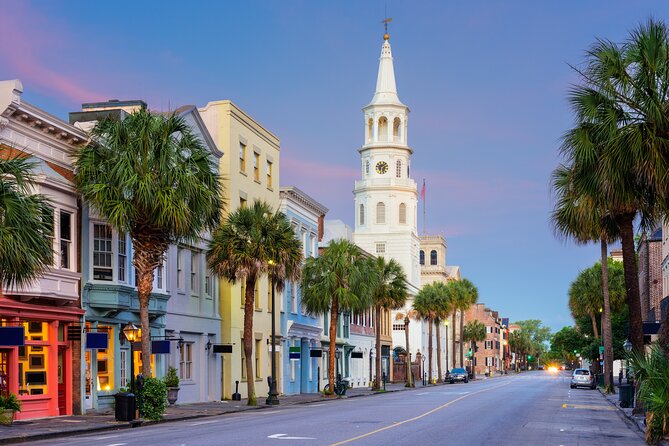
The tour starts at 108 Meeting St and gets moving right away. You begin near the downtown core, then hit the historic hotel district and the kind of entertainment venue that reflects how Charleston life worked in different centuries.
First up is the Mills House Charleston, Curio Collection by Hilton. It’s not just a name on a brochure. It played an important role in the early part of the American Civil War, and that context changes how you see a “regular” building. Even if you’re mostly seeing the exterior, the guide frames why a hotel mattered when the city was under pressure.
Next comes Dock Street Theater, described as the first theatre built in North America. That alone is interesting, but the bigger value is the way the story connects the theater to the colorful (and sometimes notorious) people tied to its past. It’s a quick stop, but it sets the tone: you’ll keep learning what’s behind the facades.
Then you’ll pass by the Pink House Gallery, dating to around 1712. This is the kind of stop that makes you appreciate small details in an old city. After that, the walk continues into key civic areas, where the stories turn more political and structural.
Practical note for this opening stretch
You’ll likely spend short chunks of time at each place—often around 5 to 10 minutes—while you move between them. That means this is best for people who like a guided walk more than a sit-down tour.
Pink House, Washington Square, and Charleston civic buildings
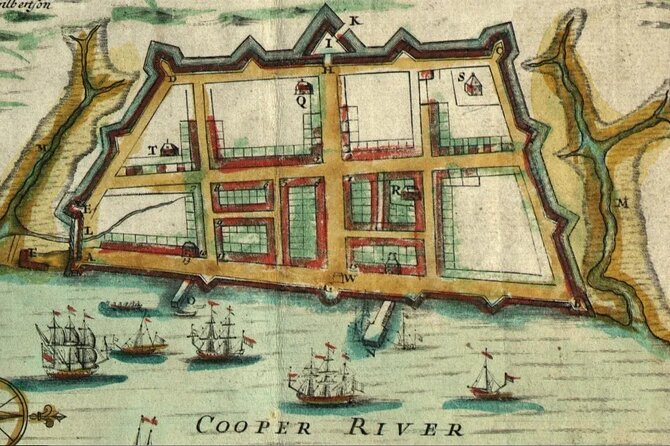
After the early stops, the tour leans into the city’s “public face.” You’ll reach Washington Square, a historic square lined with monuments that help you understand what Charleston wanted to remember. Squares like this are not neutral space. They show how a city tells its own story.
From there, you move to Charleston City Hall. The building’s evolution is part of the lesson—once serving as a meat market and bank before becoming City Hall. That transformation is a reminder that civic architecture doesn’t appear fully formed. It changes as the city grows and as needs shift.
You’ll also visit the Charleston County Courthouse, tied to the history of an old South Carolina statehouse. Courthouses and statehouses are where power becomes policy. Seeing the site in context makes the political timeline feel more concrete than just reading dates.
Stops like these are valuable because they show the machinery of the city. The people who argued, voted, and enforced rules didn’t live in the abstract. They operated in specific rooms and spaces, and the guide helps you place those moments in time.
What to watch for on this section
Look at how the buildings are arranged around the squares and streets. The way landmarks relate to each other can clue you in on what mattered when Charleston expanded.





St. Michael’s Church and French Gothic Revival in Charleston
Next comes the spiritual side of Charleston, with St. Michael’s Church as a standout. The guide highlights it as Charleston’s oldest church edifice, completed in 1761. What surprised me in the way the stop is framed is how a church can reflect a city’s identity over long stretches, not just religious life.
You’ll also make time for the French Huguenot Church, connected to the French Huguenots in Charleston. The stop includes a focus on the church as the first built in the Gothic Revival style. That architectural detail matters because it shows how communities brought their tastes, beliefs, and cultural signals with them.
The payoff here is how the guide uses religion and architecture together. Churches are often explained as spiritual sites only. Here, you also get how design choices and cultural communities shaped what Charleston became. Even if you’re not the type who tours churches often, this section helps you understand why locals built them the way they did.
These stops are also a nice pace reset. You get a change of focus from civic buildings to faith and community, and your brain gets a breather before the route moves deeper into national and wartime events.
George Washington’s 1791 stay and the British-built Old Exchange
At this point, the tour starts tipping from local Charleston into bigger American history. One of the key stops is the Heyward-Washington House, where George Washington stayed while visiting Charleston in 1791. It’s the kind of detail that turns a famous name into a real timeline event with real place.
Then you’ll head toward the Old Exchange & Provost Dungeon. The guide frames it as the last public building built by the British in North America. Just as important, the stop connects to a major political milestone: the Constitution was ratified here in 1788. If you’ve ever wondered why certain cities became central during the founding era, this is one of your answers.
A practical heads-up: admission for some of these specific indoor-focused sites is marked as not included. You may still see what you need from the outside, but if you want to go in for full context, budget for that separately.
This segment is also where the tour’s storytelling really earns its keep. Washington in 1791 and the ratification in 1788 aren’t just facts. The guide helps you feel the shift from colonial rule to a new national order, then sets up what comes next.
French Quarter to Hibernian Hall: politics, Greek Revival, and a long fuse
Charleston’s French Quarter is next, and yes, it’s the kind of area people love for its charm and streetscapes. The point on this walk isn’t just pretty buildings. It’s what those streets say about who lived here, how communities formed, and how cultural identity got stamped into the urban layout.
Then comes Hibernian Hall, a stop tied to the seeds of disunion and connected to Greek Revival architecture. That combination is the key. The building style is one story; the political meaning is another. The guide keeps both in play so you’re not left thinking Greek Revival is just decorative.
This is also another area where admission is marked not included. Plan to decide on the spot whether you want to pay for inside access, depending on your interests and time.
The way this section works is that it bridges the gap between cultural heritage and national conflict. You go from the “how Charleston looks” layer to the “how Charleston mattered” layer.
Fort Sumter from the Battery: where the Civil War’s first shots came from
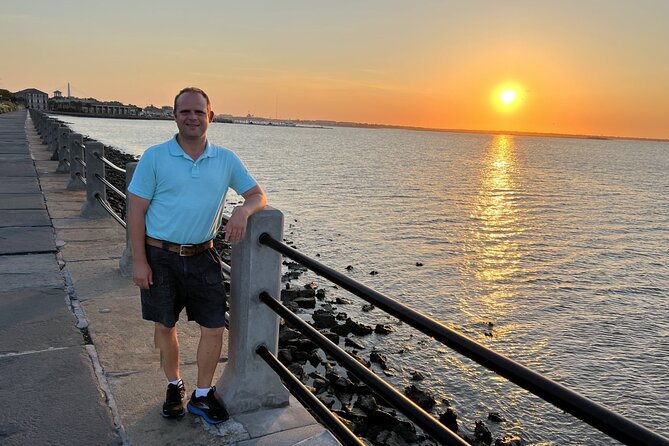
You finish with a strong emotional landmark: Fort Sumter National Monument. The key detail is that you don’t go out to the fort. Instead, you take in the view from the Battery on Charleston Harbor, where the first shots of the Civil War were fired.
That matters for how you experience the ending. It’s not about stepping onto a battlefield deck. It’s about standing in Charleston’s harbor setting and letting the guide connect the moment to the city’s role in the conflict. This approach also keeps the day moving so you end on a useful high note instead of burning time on additional transport.
The tour ends on 39 E Battery, near the iconic Rainbow Row area. If you still have energy after the walking-and-talking, you’re in the right place to keep exploring on your own with the route fresh in your mind.
Quick mindset shift for the finale
Treat the harbor view as a “story checkpoint.” You’re not just looking at water and stone. You’re seeing a geographic position that shaped national events.
Pace, comfort, and what to bring for a 3-hour walk
The tour runs about 3 hours and moves through many landmark points in short time windows. That can feel fast in a good way. The guide covers a wide span of history and keeps it organized, so you’re not drowning in random facts.
Because it’s built around walking, you’ll want to dress and prepare like you’re out on your feet for most of the afternoon. The route is described as requiring moderate physical fitness. If you’re someone who struggles with steady walking, consider that before booking.
Also plan for comfort items. Bottled water isn’t included, so bring a small refill bottle or plan to purchase water nearby. Weather matters too: the experience requires good weather, and if conditions are poor you’ll be offered a different date or a full refund.
Finally, the small group size is the secret sauce. With 12 people or fewer, you’re more likely to hear details clearly and keep pace with the guide’s flow. It’s a format that works well for history buffs, but it also works for first-timers who want a grounded introduction without feeling lost.
Should you book this Charleston History Walk with Dr. Eric Lager?
If you want Charleston history with depth, structure, and a real professor behind the microphone, I think this is an easy yes. For $40, you’re paying for a guided framework that connects architecture, politics, religion, and war across centuries—plus you get that intimate 12-or-fewer group experience.
I’d hold off only if you’re looking for a slow, scenery-only stroll or a tour with lots of long indoor time. This is a walk-and-learn format, and some key stops may involve optional admissions you’d handle separately.
If you’re the type who enjoys asking why things happened and how buildings reflect power, you’ll probably love it. If your goal is purely photo spots with minimal talking, you might find the pace too information-heavy. Most people, though, come away feeling like they now understand how Charleston got from the 1700s to the Civil War—and why the city looks the way it does today.
FAQ
How long is the Charleston historical walking tour?
It lasts about 3 hours (approx.).
How much does the tour cost?
The price is $40.00 per person.
What’s included in the price?
All fees and taxes are included.
Is bottled water included?
No. Bottled water is not included.
What group size can I expect?
The tour has a maximum of 12 travelers.
What language is the tour offered in?
The tour is offered in English.
Where does the tour start and end?
It starts at 108 Meeting St, Charleston, SC 29401, and ends at 39 E Battery, Charleston, SC 29401, near Rainbow Row.
Do I need to buy tickets for all stops?
Some stops are marked as free, while others have admission marked as not included. If you want entry at the not-included sites, you may need to arrange those tickets separately.
Is service animal access allowed?
Yes, service animals are allowed.
What happens if weather is bad?
The tour requires good weather. If it’s canceled due to poor weather, you’ll be offered a different date or a full refund.
What is the cancellation window?
You can cancel for a full refund up to 24 hours in advance. If you cancel less than 24 hours before the start time, the amount you paid will not be refunded.