REVIEW · CHARLESTON
Charleston’s Old South Carriage Historic Horse & Carriage Tour
Book on Viator →Operated by Old South Carriage · Bookable on Viator
Charleston can feel big. This one-hour carriage ride makes it feel manageable. You cover about 30 blocks on cobblestone streets while learning how this “Holy City” grew from colonial beginnings through the Civil War.
I especially like the way the tour pairs real Belgian and Percheron draft horses with stories you actually remember later. And you get a lot of face-to-face sights for one price, including churches, gardens with wrought iron gates, and antebellum mansions with classic piazzas.
One thing to plan for: your exact route can vary. Charleston assigns zones for the city’s carriage traffic, so you might not pass every famous spot in the same way on every trip.
In This Review
- Key things you’ll notice on this Old South Carriage Tour
- First Stop at 14 Anson Street: where the tour starts and ends
- Draft Horses, Ramp Boarding, and the feel of a real working carriage
- The city gate stop and Charleston’s route lottery (and why it’s not a dealbreaker)
- What you see: churches, wrought-iron gates, gardens, and piazzas
- The Gov. William Aiken House moment and why stops matter
- How the narration works: Palmetto Guild certified guides, with names like Wendy and Ro
- Photo stops without the parking hassle: wrought iron, gardens, and quick framing tips
- Timing, comfort, and what to wear on a one-hour horse tour
- Price and value: is $50 worth it for 30 blocks and 300+ years?
- Who should book this tour (and who should consider another plan)
- Should you book Charleston’s Old South Carriage Historic Horse & Carriage Tour?
- FAQ
- Where does the tour depart from?
- How early do I need to check in?
- How long is the tour?
- What kind of horses pull the carriage?
- How much of Charleston will we see?
- Are carriages covered, and is poncho help available?
- Can I bring a stroller, snacks, or drinks?
- What happens if weather is bad?
Key things you’ll notice on this Old South Carriage Tour
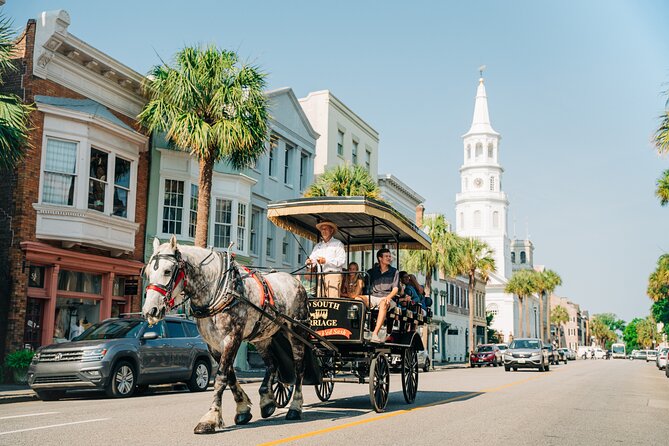
- Draft-horse handling up close: Belgian or Percheron teams that work calmly through busy streets
- A real guide, not a prerecorded script: certified, Palmetto Guild–examined narrators tell the story as you go
- Historic sights in motion: gardens, churches, and mansions strung together without the walking fatigue
- Short and efficient: about 50–60 minutes to see roughly 300+ years of Charleston
- Route varies by city zone: you’ll still hit the historic district, but landmark order can change
First Stop at 14 Anson Street: where the tour starts and ends
Your tour begins at 14 Anson St, one block north of the City Market. This is the Old South Carriage Company stable—so you’re not meeting out on the street where everything feels chaotic. You check in, then you can use the restroom and grab water if you need it.
Before you board, you’ll also have a chance to say hi to the draft horses. That matters more than you’d think. When you see the horses cared for and calm, the whole ride feels different. It turns a sightseeing activity into a living, working scene from the past.
One small practical tip: plan to arrive early. You’re required to check in 15 minutes before your scheduled start time, and late arrivals can mean lost reservations. Charleston is popular, and this is one of those tours where timing affects your day.
You can also read our reviews of more tours and experiences in Charleston.


Draft Horses, Ramp Boarding, and the feel of a real working carriage
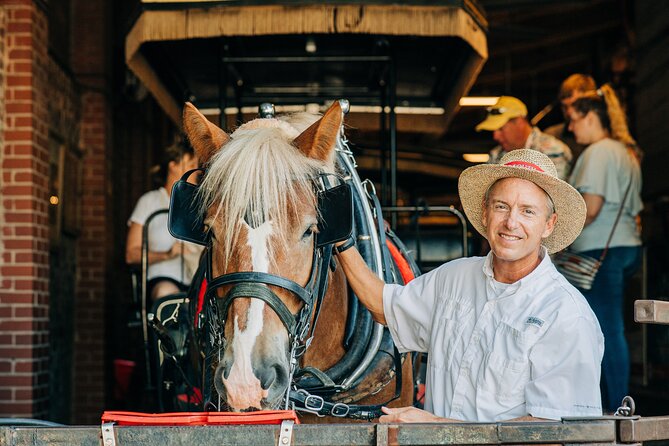
This tour runs with Belgian or Percheron draft horses, the kind bred for heavy farm work in the early 1800s. That doesn’t just sound romantic. It helps explain why the carriage move feels steady and why the ride is designed for comfort, not speed.
Boarding is set up for easier access with an inclined ramp/easy loading platform. From there, your guide runs the show—greeting you, then orienting you to what you’re about to see.
Carriage capacity is limited: the surrey-style carriages seat up to 16 passengers, and wagonette carriages seat up to 8. Either way, you’re not stuck in an endless group line like some big bus tours. The vibe stays more personal, which you’ll feel when questions pop up.
If you’re bringing kids, this is one of the better family-friendly formats. Kids 3 and under are free if they sit on a parent’s lap. If they need a seat, you’ll want to plan for a child seat.
The city gate stop and Charleston’s route lottery (and why it’s not a dealbreaker)
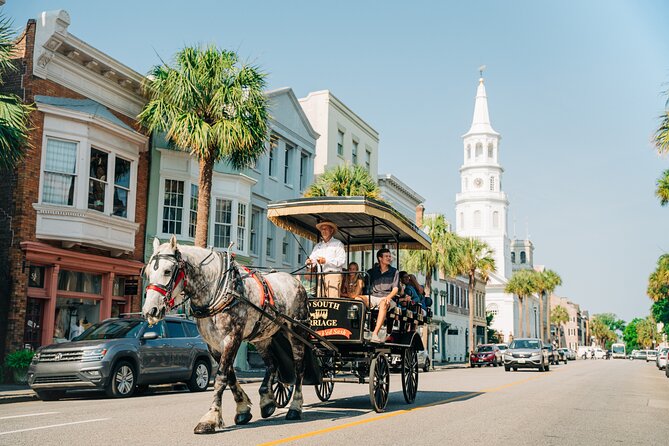
After leaving the stable, the carriage heads to a city gate near the Market. Then you roll out on a route assigned by the City of Charleston.
Here’s the key point: you can’t choose your route. The city uses a zone system to spread carriage traffic evenly. That means your hour may take you past the classic highlights you’re expecting, but the order—and whether you catch certain landmarks—can shift depending on the zone you’re given that day.
This is the one potential letdown mentioned in feedback: someone planned for specific famous sights and didn’t get them on their particular route. The fix is simple. If your goal is to see every single headline attraction, treat this as one piece of your Charleston day, not the whole plan.
Think of it like this: you’re buying historic district coverage with stories, not a guaranteed list of every famous view point.
What you see: churches, wrought-iron gates, gardens, and piazzas
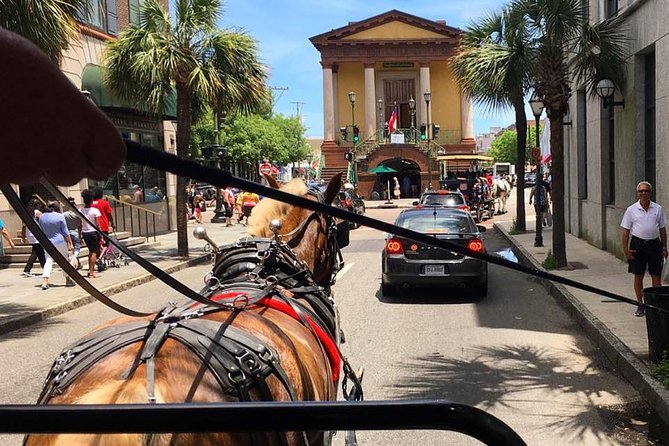
On the ride, you cover about 30 blocks and see a large slice of the historic district’s signature look. Charleston has a way of mixing softness and drama—brick, cobblestone, steeples against bright sky, and gardens framed by tall wrought iron gates.
You’ll pass churches and church steeples often enough that you start noticing how the skyline forms a kind of map. You’ll also see lush residential gardens behind ironwork, plus antebellum mansions with the classic piazzas that define the “Old South” aesthetic.
One reason I like this format is that the views come in small batches. You get a sight, you get context, and then you move on. On foot, people often rush. On a bus, people often zone out. Here, you naturally keep your eyes up.
And yes, the horse helps. The pace makes the details stick—especially the gates, balconies, and the way street layouts shape sightlines.
The Gov. William Aiken House moment and why stops matter
One of the most notable stop types you’ll experience is outside historic homes, including the Gov. William Aiken House. This building is listed on the National Register of Historic Places (listed in 1977). That gives you an anchor point during the hour: you’re not just drifting past pretty facades—you’re seeing places tied to real people and real periods.
Even when the exact landmark list varies by route, the structure stays similar:
- pass major exterior landmarks
- pause when the guide wants you to look closely
- then move to the next story-driven section
Those short pauses are valuable. They turn a carriage ride from passive watching into active learning. And because you’re covering ground, you end up with more “I know what I’m looking at” moments than you would with an audio-only walk.



How the narration works: Palmetto Guild certified guides, with names like Wendy and Ro
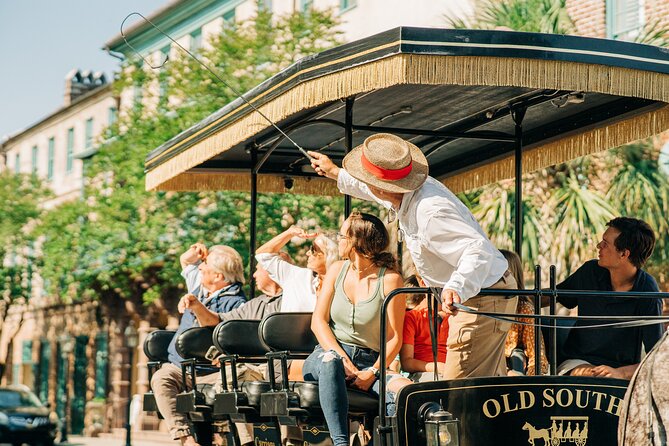
The narration is one of the strongest parts of the experience. You don’t get a generic script. The guides are certified and required to be members of the Palmetto Guild, which signals they’ve passed a history exam focused on Charleston.
In feedback, names like Wendy, Ro, Carol, Carrie, and Jesse come up often. Even if you don’t know the guide ahead of time, you can expect a similar style: clear storytelling, humor sprinkled in, and history connected to what you’re seeing right outside your carriage.
What you’ll get is more than dates. You’ll hear how Charleston earned its nickname and how it fits into national events, including the Civil War era. The ride is built for people who want context, not just architecture.
Practical note: if you tend to get bored when tours turn into lectures, this one usually holds attention because the guide is tied to the street scene. Your eyes and ears stay synced.
Photo stops without the parking hassle: wrought iron, gardens, and quick framing tips
If you like photos, this tour is set up well. You’ll see a lot of the classic Charleston looks that are hard to capture well while you’re walking and dodging traffic—especially wrought iron gates and garden fronts. The carriage also gives you a slightly raised, steady viewing angle compared with sidewalk shots.
A few practical tips that help:
- Bring your camera/phone charged. You’ll want quick bursts when you see garden gates and church steeples.
- Dress for comfort over style. You’ll sit for an hour and take photos between segments.
- Expect weather to matter. The carriage has a roof, but you can still get wet in harder rain.
The carriage is roofed for shade and some rain protection. Lightweight ponchos are available for purchase at 14 Anson St where you board.
Timing, comfort, and what to wear on a one-hour horse tour
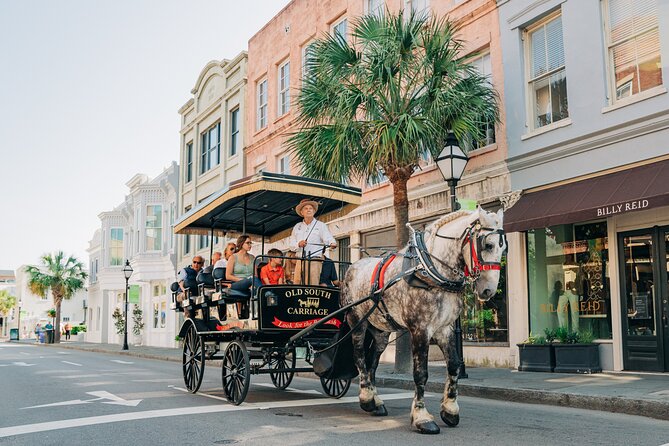
This is an approximately one-hour ride, typically 50–60 minutes once you’re moving. The real time savings is that you cover about 2.5 miles and many blocks without draining your legs.
Still, comfort depends on weather. If it’s cold, windy, or rainy, you’ll feel it more since you’re seated and not walking. One piece of feedback called out that blankets would have helped on a cold day. That’s a good reminder: bring layers, and if you get cold easily, treat it like a weather test.
Also remember the food rule. Food isn’t allowed on the carriage, but drinks are allowed. You can buy bottled water at the stable before or after.
If you’re traveling with a stroller, plan ahead: strollers can’t be accommodated on the carriage, but you can store them at the stable.
Price and value: is $50 worth it for 30 blocks and 300+ years?
At $50 per person for about an hour, this tour isn’t the cheapest thing in Charleston. But it can be good value if you want three things at once: efficient sightseeing, a guided narrative, and a sense of place.
Here’s why it can feel worth it:
- You cover roughly 30 blocks without transportation changes.
- You get guided storytelling tied to what you’re looking at, not a random hop-around.
- You get the signature Charleston look—churches, mansions, gardens—without choosing a dozen stops on your own.
If you love doing everything independently, you might feel limited by the one-hour window. But if your day includes museums, food stops, or shopping, this ride can be a clean, low-effort way to tie the city together.
For most visitors, the sweet spot is the beginning or middle of your trip—so the stories help you interpret what you later see on your own.
Who should book this tour (and who should consider another plan)
You’ll probably love this if you:
- want an easy way to see the historic district without a big walking day
- enjoy guided history told in plain language
- like the visual charm of Charleston’s gardens, wrought iron, and steeples
- are traveling as a couple, solo, or family and want a shared activity
You might think twice if:
- you’re only interested in one or two specific headline landmarks and need them every time
- you’re sensitive to cold weather since you’re seated most of the tour
- you’re hoping to control the exact streets you’ll visit (the city zone system decides)
One more note for pet lovers: dogs are welcome as long as they’re well-behaved. Smaller pups may ride in your lap, and larger dogs can sit in the front row. Service animals are allowed.
Should you book Charleston’s Old South Carriage Historic Horse & Carriage Tour?
If you want a classic Charleston experience that’s paced for people who like to look around and learn something real, I’d book it. This tour stacks a lot of sight value into a short time—plus you get live narration from certified guides and the feeling of watching draft horses do their job.
Just go in with the right mindset: enjoy the historic district coverage and storytelling, not a guaranteed pass-by of every single famous spot. If you match your expectations to that, this one-hour ride can become one of the most memorable parts of your Charleston trip.
FAQ
Where does the tour depart from?
The carriages board and depart from the Old South Carriage Company stable at 14 Anson Street, Charleston, SC 29401 (one block north of the City Market).
How early do I need to check in?
You must check in 15 minutes prior to your scheduled tour time. If you don’t, your reservation may be cancelled without refund.
How long is the tour?
The carriage tour lasts approximately 1 hour, typically 50–60 minutes.
What kind of horses pull the carriage?
The tour uses Belgian and/or Percheron draft horses.
How much of Charleston will we see?
The tour covers about 30 blocks and around 2.5 miles, featuring 300+ years of Charleston history. Specific landmarks can vary by route.
Are carriages covered, and is poncho help available?
Yes, the roof offers shade and some protection from rain. If it’s raining hard you may get wet, and lightweight ponchos are available for purchase at 14 Anson Street.
Can I bring a stroller, snacks, or drinks?
Food is not allowed on the carriage, but drinks are allowed. Strollers can’t go on the carriage, though you can store them at the stable.
What happens if weather is bad?
The experience requires good weather. The tour runs during rain, but not during thunderstorms. If it’s cancelled due to poor weather, you’ll be offered a different date or a full refund.