Follow Charleston’s side streets to the past. This 2-hour small-group walk turns the city into a storybook, using tight lanes and overlooked passages to connect major landmarks like Rainbow Row with the quieter neighborhoods they sit inside. I love the focus on alleys and hidden passages, and I also like that you get a local, licensed guide who can answer questions on the fly, with crowd favorites like Duggar and Dennis showing up in the guide lineup.
Two things that make this tour feel like a smart use of your time: you walk a route designed for personal attention (max 13 people), and you get a clear mix of famous Charleston sights plus side streets you’d miss on your own. The Old Exchange and Provost Dungeon area is a key anchor, and the South of Broad and French Quarter segments help you see how the city’s layout actually works.
One possible drawback: the tour is built around outdoor stops and narrated walking, not indoor museum time. If you’re hoping to go inside major sites, you’ll want to plan separate tickets, because the tour itself does not go inside the Old Exchange and Provost Dungeon or into buildings on the stops.
In This Review
- Key things I’d plan around
- Charleston’s Hidden Alleys: Why This Walking Tour Works
- The 2-Hour Route: What You’ll See on the Walk
- Starting at 122 E Bay St: The Old Exchange Area Sets the Tone
- South of Broad Alleys: The Neighborhood Part That’s Easy to Miss
- Rainbow Row: Famous Views, Kept to the Street
- French Quarter Lanes: More Alleys, More Story
- Philadelphia Alley: A Short Stop With a Big Sense of Place
- How Guides Make This Tour Shine (Duggar, Dennis, Evans Byrd, Al Mixson)
- Price and Value: Why $34 Feels Fair for What You Get
- What to Wear and Bring for a Comfortable Walk
- Who Should Book This Tour in Charleston
- Should You Book Hidden Alleyways and Historic Sites Walking Tour?
- FAQ
- FAQ
- Where does the tour start and end?
- How long is the Hidden Alleyways walking tour?
- What’s included in the tour?
- Do you go inside the Old Exchange and Provost Dungeon or any buildings?
- What landmarks and areas are covered?
- How many people are in the group?
- Is the tour offered in English?
- What should I bring?
- Can I cancel for a full refund?
Key things I’d plan around
- Small group (max 13): you’ll actually hear the guide and ask questions without shouting
- Outdoor-only key stops: Old Exchange and Rainbow Row are viewed from the street
- Off-the-map alley time: expect 4 to 6 alleyways and lanes, depending on the guide
- Neighborhood context: you’ll cover the South of Broad and French Quarter areas on foot
- Revolutionary and Civil War storytelling: framed as facts and anecdotes as you walk
- Guide style varies (Duggar, Dennis, Evans Byrd, Al Mixson): look for your favorite fit
Charleston’s Hidden Alleys: Why This Walking Tour Works
Charleston can feel like one of those cities where the postcard spots steal all the attention. This tour does the opposite. You still see the headline places, but the main event is what happens between them—those narrow alleys, passageways, and lane-like streets that show you how Charleston functioned before cars and big thoroughfares.
I like tours where the guide doesn’t just list dates. This one connects the dots with local details as you walk: the architecture around you, how neighborhoods sit next to each other, and the kinds of historical moments tied to these locations. You also get a clear time-box. At about 2 hours, you can fit it early in your trip for orientation, or squeeze it in without feeling like you’re losing an entire afternoon.
Price-wise, it’s $34 per person—cheap enough that it won’t blow up your day, but structured enough that you’re paying for more than just walking. You’re paying for a licensed local guide and for the planning that turns a messy downtown map into a coherent route.
You can also read our reviews of more tours and experiences in Charleston.


The 2-Hour Route: What You’ll See on the Walk
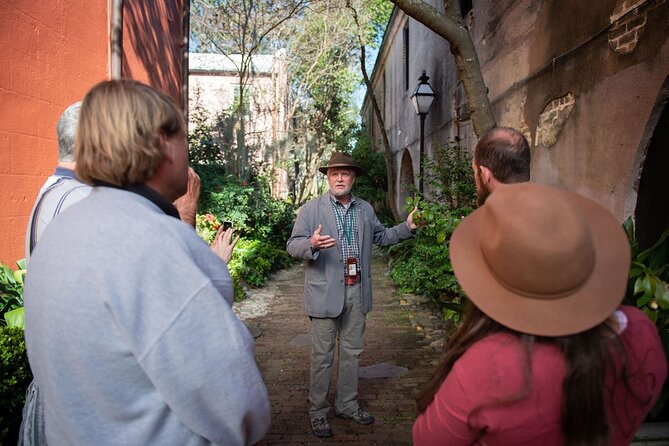
The tour runs about 2 hours and ends back near where it starts. The meeting point is easy to recognize: 122 E Bay St, Charleston, SC 29401. The rest is a guided loop that strings together street-level views with narration along the way.
A useful detail: the stops along the tour can vary by guide. In practice, that means you can expect the core anchors, but you should not assume every alley name you see in someone else’s itinerary. The tour generally includes 4 to 6 alleyways or lanes, plus well-known points of interest.
You’ll also get a schedule rhythm that helps. One short stop here (around 10 minutes), a longer neighborhood stretch (around 30 minutes), then another quick landmark view. That pacing keeps the walk from turning into a long march where everyone zones out.
Starting at 122 E Bay St: The Old Exchange Area Sets the Tone
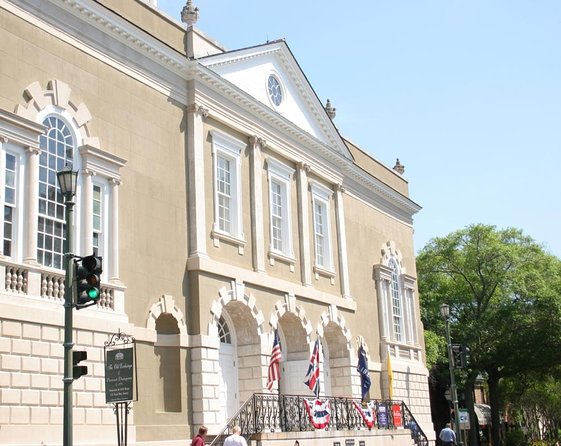
Your first stop is the Old Exchange and Provost Dungeon area. The tour begins on the north side of the Old Exchange and Provost Dungeon at 122 East Bay Street. Here’s the key practical point: you do not go inside the building. The tour is narrated at the exterior, so you get context and storytelling without switching into ticket lines or indoor pacing.
Even from outside, this is a smart starting point because it anchors the rest of the walk in a real sense of place. The building is described as having a roughly 300-year history, with connections to pirates, patriots, and presidents. That blend of eras matters: it trains your brain to see Charleston as layers, not one neat timeline.
One more thing to consider: since there’s no interior visit, you won’t get a “museum-style” experience here. If you want that, you can plan a separate visit later with the right admission. For this tour, the value is what the guide helps you notice as you move on.
South of Broad Alleys: The Neighborhood Part That’s Easy to Miss
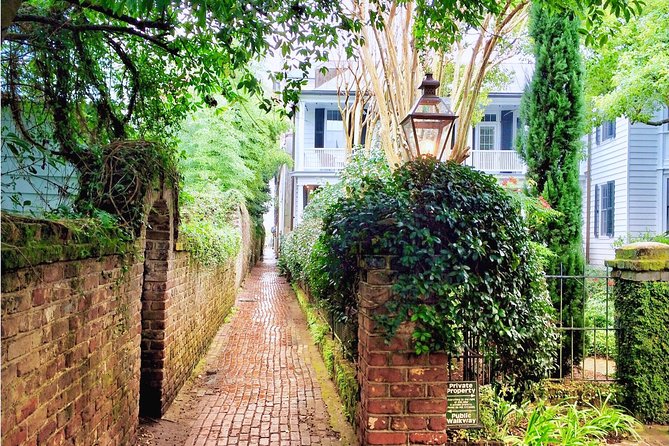
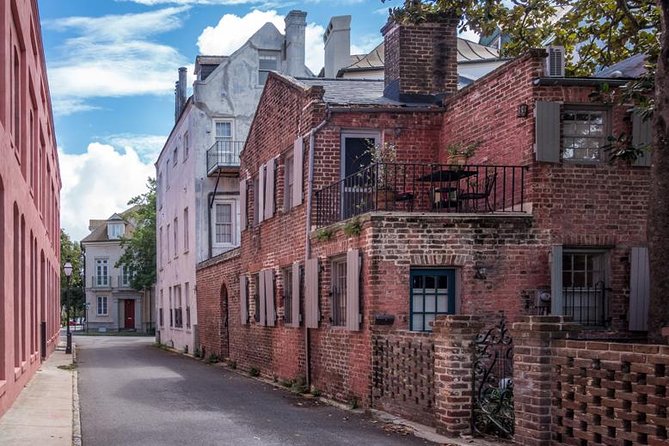
After the Old Exchange, you move into the South of Broad area. This is where the tour starts earning its name. You’ll explore between 4 and 6 alleyways along with popular points of interest, and some stops land in the residential sections of the historic district called South of Broad.
Why I love this segment: South of Broad isn’t just a “pretty streets” zone. It’s a window into how Charleston’s historic city blocks work. When you walk the alleys there, you start to understand why locals built the city the way they did—how people moved, where privacy mattered, and how side passages held daily life.
This portion is also useful for first-timers. You’re learning context while you’re standing in the place itself, rather than learning from a guidebook at your hotel. And since it’s a walking tour with time for narration, you get Civil War and Revolutionary-era facts and anecdotes tied to what you’re seeing.
Rainbow Row: Famous Views, Kept to the Street
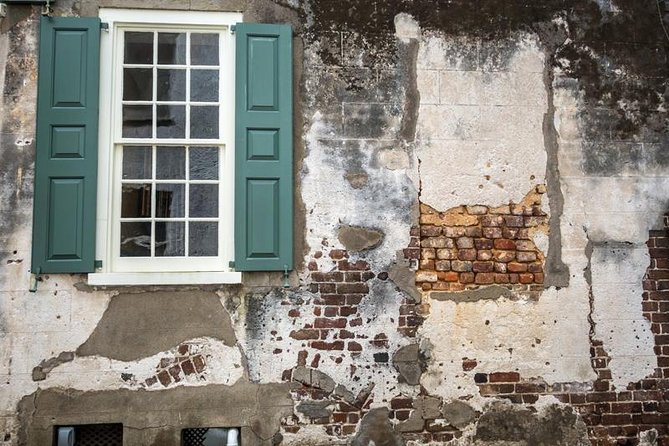
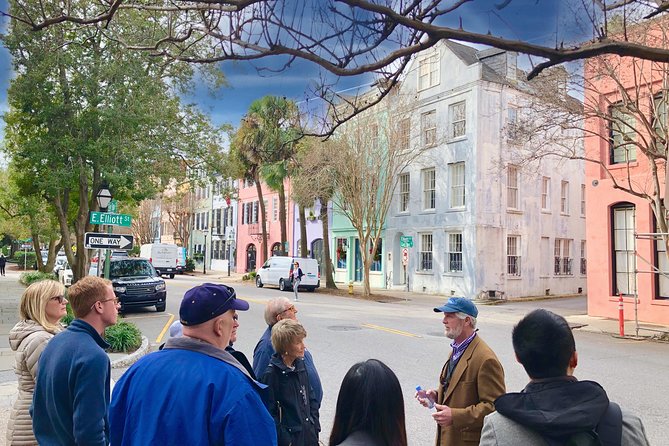
Next comes Rainbow Row, described as the longest cluster of Georgian row houses in the United States. You’ll spend about 10 minutes here, and again, you won’t go into any buildings. This is a street-level stop—photos, architecture viewing, and guide narration that connects the rows to the broader story of Charleston.
This is the “I can recognize this place” moment that makes the rest click. Before you hit the alleys, you might not fully grasp how row houses and side lanes fit together. After Rainbow Row, the nearby passages feel less mysterious and more purposeful.
A practical note: since you’re not going inside, your comfort matters more than your interests in museums. If you like architecture and street scenes, this stop hits the mark. If you mainly want interior access, keep expectations focused on outdoor storytelling.





French Quarter Lanes: More Alleys, More Story
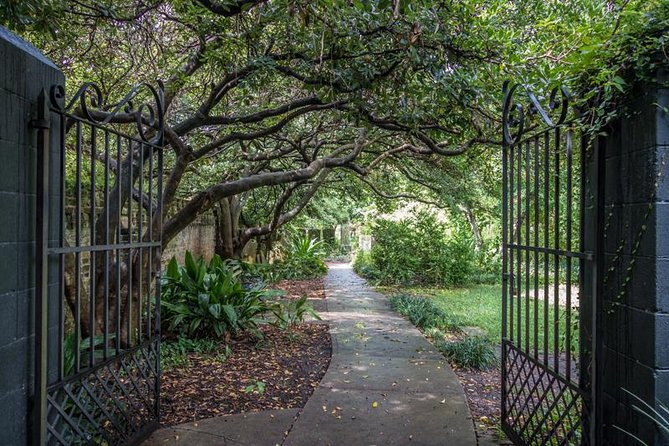
Then you shift into the French Quarter area. This part of the tour mixes several points of interest with about 4 to 6 alleyways, depending on the day and guide.
The French Quarter segment is where the tour often feels most “local.” When you walk these lanes, you’re not just seeing history—you’re seeing the city’s ongoing rhythm in the same spaces. That makes the narration feel less like a lecture and more like a guided walk through a neighborhood you could actually live in.
You also get additional named stops and landmarks as you go. St. Philip’s Episcopal Church is mentioned as part of what you may see on the tour, plus sites like the Heyward-Washington House museum. Even when you’re not entering buildings, the guide’s explanation can help you spot why these places matter.
Philadelphia Alley: A Short Stop With a Big Sense of Place
Philadelphia Alley is another signature alley stop, but it works as a reminder that Charleston’s hidden passages don’t all look the same. You’ll typically get a 10-minute view here, and the exact alleyways visited can vary.
Here’s what matters: you should expect the tour to “stage” the alleys. You’ll walk enough to feel the city’s layout, then pause long enough to understand the historical or architectural point being made. That’s better than a stop that’s too short to learn anything or too long where you’re just standing around.
If you like clever, slightly offbeat city planning, this is the part that makes Charleston feel different from other Southern historic towns. It’s also a reminder that the city’s story isn’t only on the major corners.
How Guides Make This Tour Shine (Duggar, Dennis, Evans Byrd, Al Mixson)
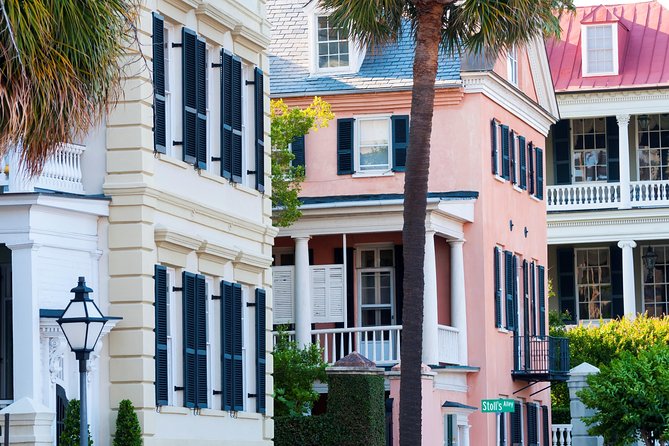
The tour’s rating is near perfect, and the pattern in the guide feedback is consistent: people praise guides for storytelling, professionalism, and making the walk feel personal. Names that come up again and again include Duggar, Dennis, Evans Byrd, Al Mixson, and Bruce.
What I take from that: the guide isn’t just reciting facts. The best versions of this tour turn Charleston into a conversation. You can ask questions, and the guide weaves the answer back into what you’re walking past.
Another standout theme is that some guides bring extra layers beyond straight history. One guide is praised for horticulture and plant knowledge, and many are praised for knowing the neighborhood culture and architectural details. That matters because it changes how you experience the city after the tour. You’ll start noticing details on your own walks—trees, plants, and building features that you would’ve otherwise glossed over.
Price and Value: Why $34 Feels Fair for What You Get
At $34 per person for about 2 hours, this is priced like a true walking tour, not a premium “museum plus bus” package. What makes it good value isn’t just the price tag—it’s what’s included.
You get:
- a professional licensed local guide
- narration and historic context tied to the route
- small-group pacing for better attention
- a set of iconic outdoor stops (Old Exchange area and Rainbow Row) plus alley walking in multiple neighborhoods
Also, water and weather matter. The tour operates in all weather conditions, so you’re essentially paying for a route and a guide who keep things moving even when it’s not ideal outside. That’s part of the value: you’re not guessing the best streets to follow.
One note: mobile tickets are included, so you’re not stuck dealing with printouts. And while some stops reference admission not included, the tour explicitly does not go inside buildings on the key points. So you’re not paying for entry as part of this experience—you’re paying for the guided walk.
What to Wear and Bring for a Comfortable Walk
This tour runs in all weather conditions, so plan for real outdoors time. Comfortable shoes are a must—Charleston walking can be uneven, and the whole point of the experience is getting into narrow alley spaces and historic district sidewalks. A water bottle is recommended, even if you think you’re only outside for a short time.
If you travel with kids, they must be accompanied by an adult. The tour is designed for most travelers to participate, but it’s still a walking tour, so you’ll want to match it to your group’s stamina.
Finally, keep in mind that the tour is small-group but still a group. You’ll benefit most if you can walk steadily and keep up with short scheduled stops.
Who Should Book This Tour in Charleston
This tour is a great match for:
- first-time visitors who want orientation plus “how Charleston works” context
- history lovers who prefer a guide to tie stories to what they’re seeing right now
- people who like architecture and street-level details as much as named landmarks
- travelers who want off-the-beaten-path alley time without committing to a long day
It may be less ideal if:
- you mainly want indoor sites and ticketed interiors
- you have very limited mobility and need low-impact routes with minimal uneven pavement and tight spaces
- you’re expecting a strictly one-route itinerary with no variation between guides
Should You Book Hidden Alleyways and Historic Sites Walking Tour?
Yes, I think you should book it if you want an efficient, story-driven introduction to Charleston’s historic core. The combination of alley walking, named stops like Rainbow Row and the Old Exchange area, and a small group size makes it a good use of $34 and about 2 hours of your time.
To make it even better, pick the guide style you like. If you have the option, selecting guides such as Duggar, Dennis, Evans Byrd, or Al Mixson—based on what people consistently praise—can tilt your experience toward extra storytelling depth and local detail.
FAQ
FAQ
Where does the tour start and end?
The tour starts at 122 E Bay St, Charleston, SC 29401, USA, and it ends back near the meeting point.
How long is the Hidden Alleyways walking tour?
It’s approximately 2 hours.
What’s included in the tour?
You get an alleyways and historic sites guided walking tour in a small group with a professional licensed local guide, plus narration about history and events that shaped Charleston.
Do you go inside the Old Exchange and Provost Dungeon or any buildings?
No. The tour begins at the north side of the Old Exchange and Provost Dungeon, but the guide notes that they do not go inside. The stops like Rainbow Row also do not include going into buildings.
What landmarks and areas are covered?
You’ll see the Old Exchange and Provost Dungeon area (from outside), Rainbow Row, the South of Broad area, the French Quarter area, Philadelphia Alley, and points of interest such as the Heyward-Washington House museum and St. Philip’s Episcopal Church.
How many people are in the group?
The tour has a maximum of 13 travelers.
Is the tour offered in English?
Yes, it’s offered in English.
What should I bring?
Comfortable shoes are recommended, and a water bottle is recommended.
Can I cancel for a full refund?
Yes. You can cancel up to 24 hours in advance for a full refund. If you cancel less than 24 hours before the start time, the amount paid is not refunded.