REVIEW · CHARLESTON
Charleston Horse-Drawn Carriage Tour: Explore Historic Charleston
Book on Viator →Operated by Palmetto Carriage Works · Bookable on Viator
One hour, and Charleston feels instantly organized. This horse-drawn carriage tour is a simple way to see key sights, hear clear stories, and get great photos without huffing and puffing. I love the certified driver-guide format and how easy it is to enjoy the city from an open-sided carriage, plus the route usually includes landmarks like St. Philip’s Church and the U.S. Custom House. One thing to keep in mind: the city’s route system is partly a lottery, so you will not see every single headline stop every time.
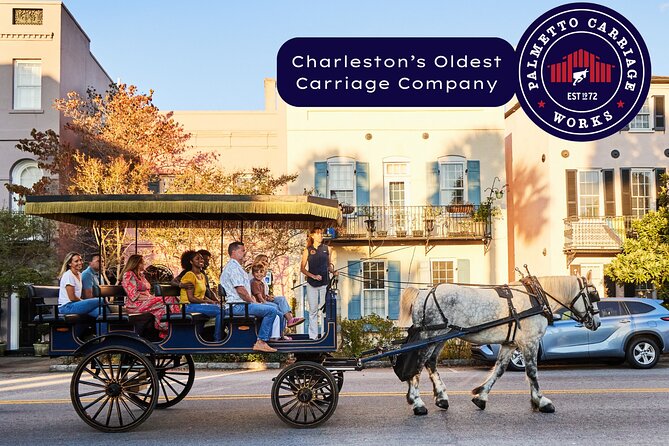
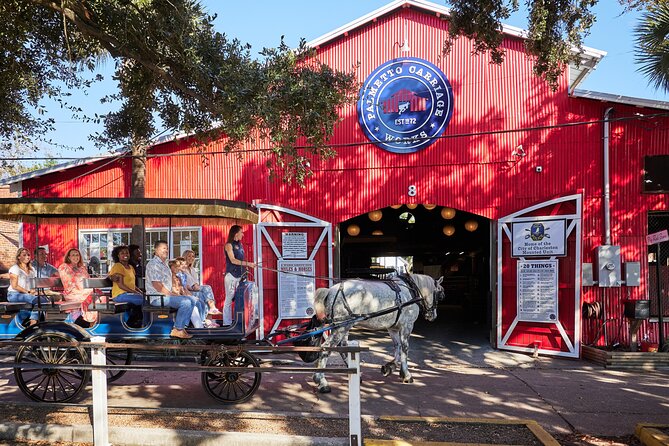
You start at Palmetto Carriage Works, the Big Red Barn right by the City Market, then roll through roughly 30 blocks of the historic district. The ride is about an hour, the carriages are covered, and you’ll learn Charleston’s storyline from pirates and plantations to the Revolutionary and Civil War eras and Reconstruction. I also like that they’re family-friendly and small enough to feel personal, with a maximum of 16 travelers per carriage.
My main caution is expectations. If you’re hoping for a nonstop parade of famous places, you might feel some stretches are quieter residential streets, and the pacing can include a little idle time. Still, if you want a friendly, low-stress introduction that helps you decide what to visit next, it’s a strong pick.
In This Review
- Key highlights worth your attention
- Big Red Barn Meet-Up: The easiest way to get oriented fast
- Covered carriage comfort and the best photo angles
- What you actually see: City Market gate, palmetto streets, and about 30 blocks
- St. Philip’s Church: the landmark that turns a ride into a story
- The U.S. Custom House: a building with a pause in the middle
- How certified guides turn neighborhoods into clear, funny explanations
- Horses up close: calm handling and why it changes the tone
- Price and value: what $49.95 buys in an hour
- Best time to go and practical tips that matter on the ground
- Who should book this carriage tour in Charleston
- Should you book Palmetto Carriage Works today?
- FAQ
- Where does the horse-drawn carriage tour depart from?
- How long is the horse-drawn carriage tour?
- Are there multiple departures during the day?
- Is the tour narrated?
- How many people can fit on a carriage?
- What happens if it rains?
- Can I bring a stroller?
- Is the tour accessible for mobility needs?
Key highlights worth your attention
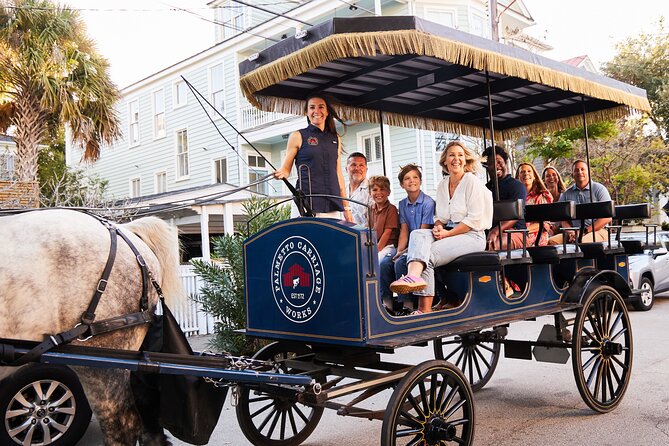
- Big Red Barn start near City Market: meet at 8 Guignard St, get a short orientation, then head out.
- Certified tour guides: guides are part of the Palmetto Guild of Certified Tour Guides and follow formal testing and recertification.
- Photo-friendly open-sided carriages: you’ll have a good chance for street-level shots along the historic district.
- About 30 blocks in ~1 hour: enough time to see a meaningful slice without tiring out your feet.
- Route variety under a city lottery system: you’ll see a mix of churches, gardens, and architecture, but specific landmarks aren’t guaranteed.
- Small-group feel: up to 16 travelers per large carriage (and smaller carriages may be used).
Big Red Barn Meet-Up: The easiest way to get oriented fast
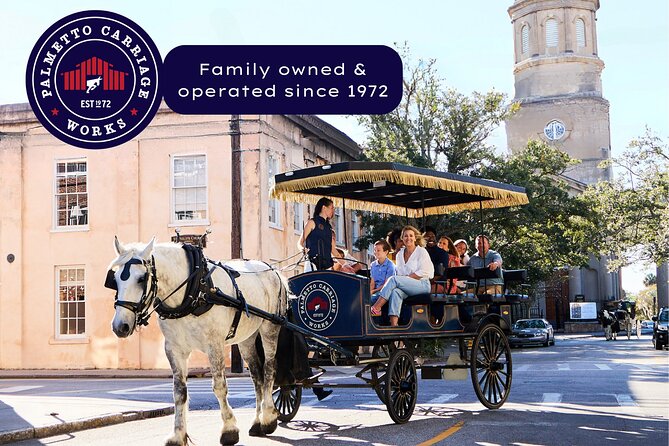
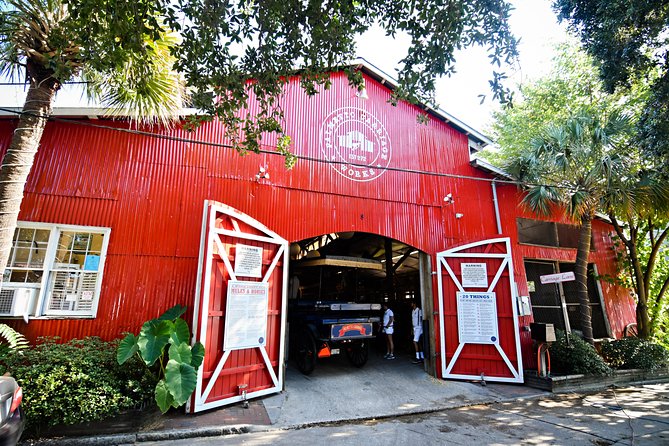
This tour begins at Palmetto Carriage Works, also called the Big Red Barn, at 8 Guignard St—basically one block from the Charleston City Market. It’s a smart start point. Even if you’ve never been to Charleston, you can use the market area as your mental anchor, then branch out on foot or by shuttle after your ride.
Before you go anywhere, you’ll get a brief 15-minute orientation and a look around the barn. If you arrive early, this is the moment to ask questions and get comfortable with what the ride will feel like. One small plus I noticed from real experiences is that you may get a chance to interact with the horses right at the barn area, which helps the whole thing feel less like a drive-by show.
The ride ends back at the same spot, so you’re not stranded across town. It’s also practical if you’ve got lunch reservations or you want to stay close to the Market zone before dinner.
You can also read our reviews of more tours and experiences in Charleston.

Covered carriage comfort and the best photo angles
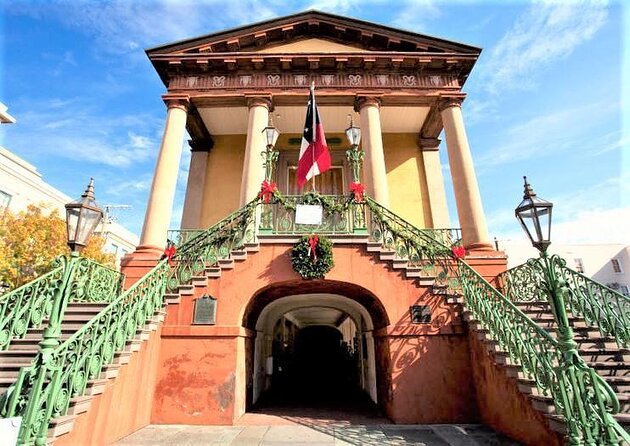
Charleston is gorgeous but hot, sunny, and often a little unpredictable. This is why I like that the carriages are covered. You still get that street-facing experience, but you’re not fully exposed to weather like you’d be on an open vehicle with no shelter.
Since it’s a horse-drawn carriage, you move at a slower, calmer speed. That matters in a city like Charleston where even a short walk can turn into a long one. From the open-sided design, you get the chance to take photos at eye level—especially when you’re passing churches, gardens, and historic mansions along quieter streets.
A practical note: it’s still an outdoor experience. If it rains hard, you may get wet on the sides, and umbrellas aren’t allowed. Bring a rain jacket or poncho and plan to dress for a little exposure.
What you actually see: City Market gate, palmetto streets, and about 30 blocks
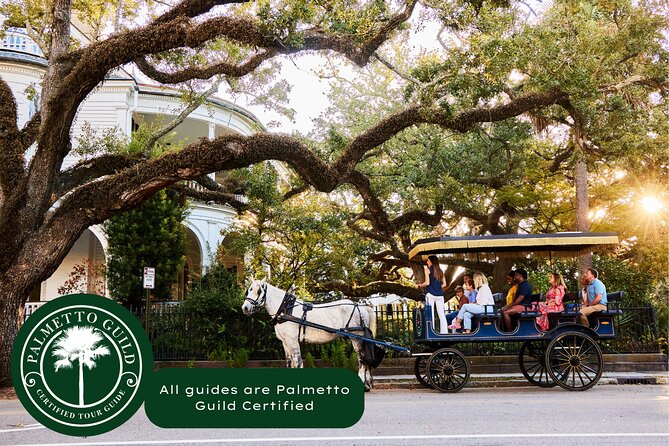
The route is the star of the show, and it changes based on the city’s rules. You’ll enter the historic district near the City Market, and your guide will assign a unique tour route. The goal is roughly 30 blocks through the historic area.
Here’s what you can expect to notice as you ride:
- Antebellum architecture that shows up in homes, gates, and street layouts
- Lush gardens and shaded porches that make the neighborhoods feel lived-in
- Palmetto-lined streets, which is a Charleston look you don’t fully get from photos
- Bits of sensory detail—like the sweet scent of jasmine from porches—when the route lines up with the right streets
This is also a good place to set your expectations. Charleston’s historic district is listed as the 2nd largest in the world, so an hour can’t cover everything. Instead, your carriage gives you a guided sampling across different parts of the historic zone, often described as multiple “zones,” so you can spot where you want to walk later.
St. Philip’s Church: the landmark that turns a ride into a story
One of the most famous sights you might pass is St. Philip’s Church, described as the oldest congregation in the U.S. south of Virginia. It’s the kind of stop that can get lost in a fast walking itinerary, but from a carriage you can slow down enough to really take it in.
Why this matters: the church isn’t just a photo subject. It’s a marker that helps you understand Charleston’s older community roots and why certain streets feel like they’ve been doing the same thing for centuries—hosting worship, commerce, and daily life in the same physical space.
If St. Philip’s is on your route, use it as your anchor point. Ask your guide for the context tied to that area, then later compare it to what you see on foot. That mix—carriage first, then walking—often makes the city click.
The U.S. Custom House: a building with a pause in the middle
Another highlighted stop is the U.S. Custom House. The big story is in the timeline:
- Construction began in 1852
- Work was halted due to South Carolina’s potential secession from the Union
- The building was finally completed in 1879
Even if you’re not a history nerd, this is the kind of detail that makes architecture feel like a document. The Custom House becomes more than a pretty facade; it becomes a snapshot of what Charleston was living through—politics, uncertainty, and then a long wait before the final shape of the building.
If your route includes this area, don’t just take a quick photo. Use the slow pace to study the building’s position and street setting. From a carriage, you can see how the structure relates to the surrounding blocks.



How certified guides turn neighborhoods into clear, funny explanations
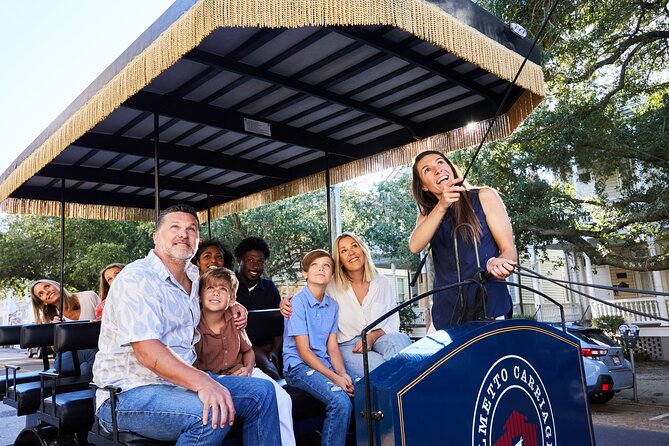
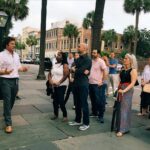
The biggest factor in whether this tour feels worth your time is the guide. This company uses certified guides from the Palmetto Guild of Certified Tour Guides. Certification isn’t casual: it requires passing an extensive test facilitated by the City of Charleston and attending recertification classes every three years.
In plain terms, that means you’re not just listening to a script read from a phone. Guides are trained to understand the story and deliver it in a way that helps you connect street features to what happened there.
Real examples show how varied the experience can be while staying strong. Some guides I’ve seen praised include Jim, Jenny, Jason Looney, Brianna, Mike C, Luke, Brandon, Bill, Josh, and Richard. The common theme across these names is that the ride includes humor and lively details, and guides tend to answer questions while you’re moving through the neighborhoods.
One gentle caution, based on how route time can work: if you’re expecting every minute to be a famous stop, you might notice more storytelling in the spaces between sights. If you’re okay with that, it’s often where the city becomes understandable.
Horses up close: calm handling and why it changes the tone
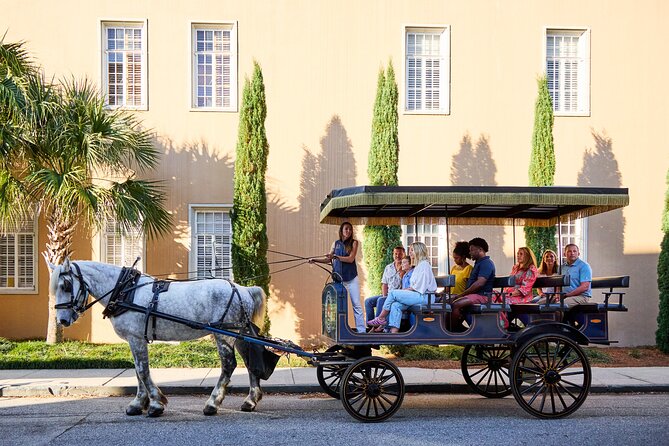
This tour runs on trust in two things: the horses and the people who work with them. Multiple experiences mention staff treating the animals with care, and some riders loved that they could connect with the horses at the barn area before boarding.
A useful takeaway for you: if you’re going to be anxious around animals, it helps to arrive early enough to watch the barn routine. You’ll get a sense of how calm and deliberate everything is before the carriage starts moving.
And for families, horses are a big part of the emotional payoff. For couples, they often add charm—this is not the same feeling as sitting on a bus, where the ride can feel distant.
Price and value: what $49.95 buys in an hour
At $49.95 per person, you’re paying for a lot more than transportation. You’re paying for:
- A guided, narrated drive through a meaningful portion of Charleston’s historic district
- Small-group pacing (up to 16 travelers per large carriage)
- Photo angles you get on a slow-moving carriage
- A low-effort way to learn what to prioritize later
If you’re only in Charleston for a short time—say you’re doing a day trip—this kind of introduction usually saves you money and time afterward. Instead of guessing which streets to walk, you’ll come away with names, landmarks, and neighborhood cues you can chase on foot.
Where the value equation can soften: if you get unlucky with the route assignment and you were hoping for a specific landmark list, you may feel the hour didn’t match your personal “must-see” list. That’s not a sign the tour is bad. It’s just the reality of a city-regulated system where the exact streets vary.
Best time to go and practical tips that matter on the ground
Timing helps. One simple tip from real experiences: go early in the day if you want fewer crowds and less traffic around the historic district. If you’re scheduling a day with lunch and museum time, consider placing this first so you can spend the rest of your day walking with better direction.
Weather matters in Charleston, so dress smart:
- Tours operate in all weather conditions, as long as conditions aren’t dangerous
- In rain, wear a rain jacket or poncho since rain can come in from the carriage sides
- Carriages are covered, but you’re still outdoors
Small logistics that help:
- You can bring your own snacks or drinks, and the barn shop sells drinks and snacks
- Alcohol isn’t allowed, per the city open container law
- If you use a wheelchair, the carriage boards from a platform with a ramp and staff can assist as needed
- Strollers can’t ride on the carriage, but you can store them safely at the barn while you’re out
If you’re traveling with kids, this is a fairly straightforward win: the pace is slow, the horses are engaging, and the guide stories keep attention moving.
Who should book this carriage tour in Charleston
This is a strong fit if you want:
- A first-time introduction to historic Charleston without overplanning
- A comfortable activity for families and couples
- A way to see architecture and landmarks when walking feels like too much
- A calm, scenic break before you switch to self-guided strolling
It may not be the perfect match if you’re the type who only values a tight checklist of famous stops and gets restless with storytelling time or quieter residential streets. In that case, you’ll want to pair this with targeted walking stops you pick based on what you see during your ride.
Should you book Palmetto Carriage Works today?
I think you should book this tour if you want an easy, guided “orientation” experience that helps you enjoy Charleston more later. The $49.95 price makes sense when you treat it as a smart planning tool: you’re buying a guided slice of the historic district, with certified guides and photo-friendly carriage views.
Book it with flexible expectations on exact landmarks. If you keep the goal simple—learn the city’s main story, pick up street cues, and enjoy a charming hour—you’ll likely feel like you got your money’s worth. If you’re after a strict hit-list only, double-check your priorities and plan follow-up walking stops accordingly.
FAQ
Where does the horse-drawn carriage tour depart from?
All tours begin and end at the Big Red Barn at 8 Guignard Street, one block from the City Market.
How long is the horse-drawn carriage tour?
The carriage tour lasts about one hour.
Are there multiple departures during the day?
Yes, there are multiple departures throughout the day so you can match the tour to your schedule.
Is the tour narrated?
Yes. The narration is provided by certified guides who are members of the Palmetto Guild of Certified Tour Guides.
How many people can fit on a carriage?
Large public carriages can seat up to 16 travelers (not including the driver). There are also smaller carriages that seat four or eight.
What happens if it rains?
The tour operates in all weather conditions unless conditions are dangerous. In rain, it’s recommended to wear a rain jacket or poncho. Umbrellas are not allowed.
Can I bring a stroller?
Strollers can’t be accommodated on the carriage itself, but you can keep them at the barn while you’re on the tour until you return.
Is the tour accessible for mobility needs?
There is a ramp to the boarding platform at the barn and staff can assist as needed. There is a small gap to step over, but boarding is designed to work for mobility needs.