REVIEW · NEW ORLEANS
New Orleans French Quarter Food Tour: Cajun, Creole and Culture
Book on Viator →Operated by Intrepid Urban Adventures - USA · Bookable on Viator
New Orleans really tells its story through food. This walking tour strings together Jackson Square, the French Market, and classic Quarter bites with a local guide who explains how Cajun, Creole, and Southern cooking evolved. You get a mix of big flavor and street-level history while sampling a full meal’s worth of staples like gumbo, po’boys, and beignets.
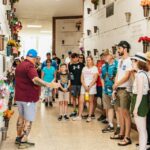
I especially like that this isn’t just eat-and-go. You’ll learn how the region’s multicultural background shows up in the food, and you’ll get practical spice context through a hot sauce tasting. Also, the small group size (max 12) means your guide can actually answer questions without turning it into a lecture.
One consideration: this is a walking tour with tastings that may land later in the route, so if you prefer frequent nibbles early on, you might want to eat a light breakfast first. The guide can help with alternatives, but substitutions for dietary needs aren’t guaranteed at every stop.
In This Review
- Quick hits before you lace up
- Is $81.10 a fair price for French Quarter food and history?
- Getting oriented at 701 Decatur St and Jackson Square
- The French Market stop that connects food to place
- The French Quarter tasting loop: Cajun, Creole, and heat
- What you’ll likely eat (and why this combo works)
- When the tour feels more cultural than purely foodie
- Hot sauce tasting: a small step that upgrades every meal after
- Walking logistics: 1.5 miles, relaxed pace, real streets
- Dietary needs and substitutions: ask early and be ready with options
- Who will enjoy this tour most?
- Guides that shape the feel of the tour
- Should you book this French Quarter food tour?
- FAQ
- How long is the tour?
- Where does the tour start and where does it end?
- What food is included?
- Can the tour accommodate vegetarian or special dietary requirements?
- How much walking is involved?
- Is the tour child-friendly?
- What if weather is bad?
Quick hits before you lace up
- Max 12 people keeps the vibe friendly and questions actually get answered
- 5 food samples plus sweets adds up to a full meal, not a few crumbs
- Jackson Square + St. Louis Cathedral views give you context before you start tasting
- French Market stop connects you to America’s oldest public market feel
- Hot sauce tasting turns spice into a lesson you can use all trip
- Relaxed pace over ~1.5 miles makes the 2.5 hours feel manageable
Is $81.10 a fair price for French Quarter food and history?
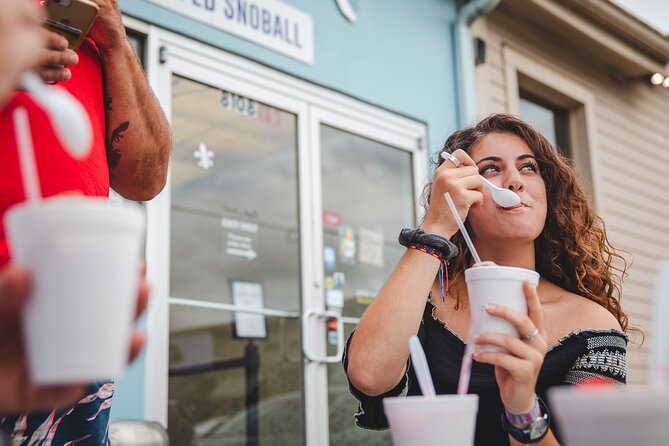
At $81.10 per person for about 2 hours 30 minutes, this tour is priced like a guided experience, not a casual snack run. What you’re paying for is the guide’s storytelling, the route planning, and the fact that tastings are designed to equal a full meal. You’re also not paying for museum-style admissions, since the landmark stops here are generally free to enter.
Here’s why that matters for value: in the French Quarter, it’s easy to spend $15–$30 per stop and still leave hungry (or just over-caffeinated). This tour packs in the best-known classics—gumbo, a po’boy or muffuletta sample, jambalaya or red beans and rice, beignets, and pralines—plus a hot sauce tasting. Even with variations by season and vendor availability, the tour is set up so the total food amount stays meal-sized.
It also helps that it’s offered in English, you get a mobile ticket, and the tour typically runs with a local, English-speaking guide. That combination reduces friction when you’re jet-lagged and just want to get oriented fast.
You can also read our reviews of more tours and experiences in New Orleans.

Getting oriented at 701 Decatur St and Jackson Square
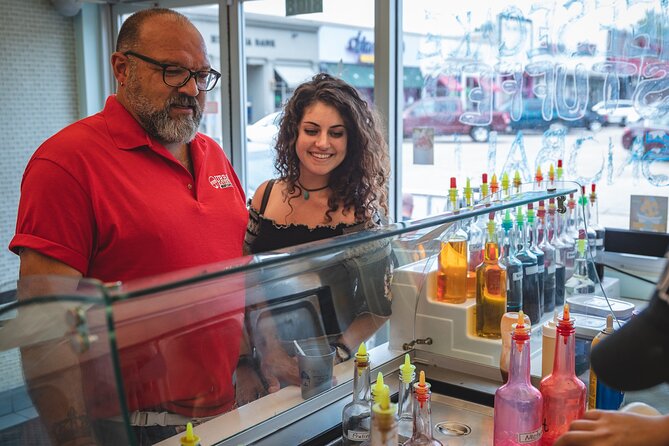
The tour kicks off at 701 Decatur St, right in the French Quarter zone near Jackson Square. You’ll end at Jackson Square, so the route feels like a loop that helps you learn the neighborhood without a map app takeover.
Jackson Square is the perfect first stop because you get the big-picture setting immediately: you’ll enter the square and look for the equestrian statue of Andrew Jackson in the center, while your guide waits facing St. Louis Cathedral. This matters because New Orleans food isn’t just recipes—it’s geography, migration, and everyday culture. Starting here gives you a mental framework before you start tasting.
A practical note: you’ll spend about 30 minutes here. That’s long enough for stories and photo stops, but not so long that you lose your appetite.
The French Market stop that connects food to place
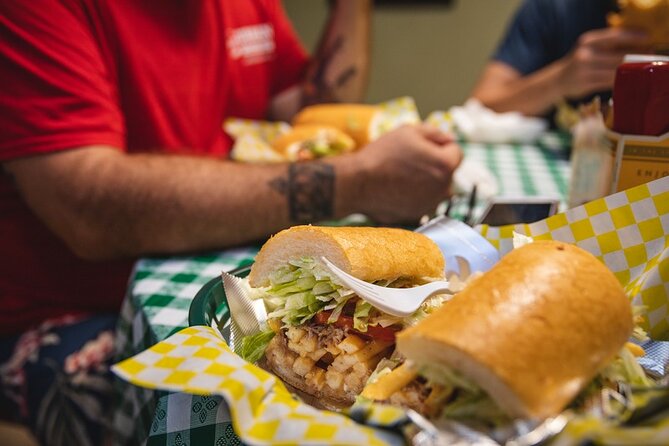
Next comes the French Market, which the tour positions as America’s oldest public market. You’ll have about 30 minutes here, and the value is more than just food. This is where you feel how markets shape a city’s eating habits—who sells what, what locals grab on a quick run, and how long certain traditions have lasted.
You’ll also get small bites as part of the tastings on your way through. The guide’s job is to connect what you’re eating to what you’re seeing around you, and that’s where the tour tends to score well. People often love this stop because it’s not just a single “order and leave” moment. It feels like you’re walking through a working part of the Quarter.
If you’re the type who likes to understand the how behind the what, this stop is a strong point in the route.
The French Quarter tasting loop: Cajun, Creole, and heat
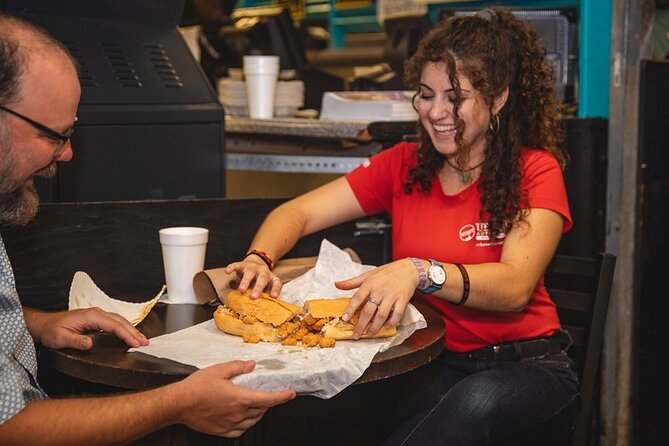
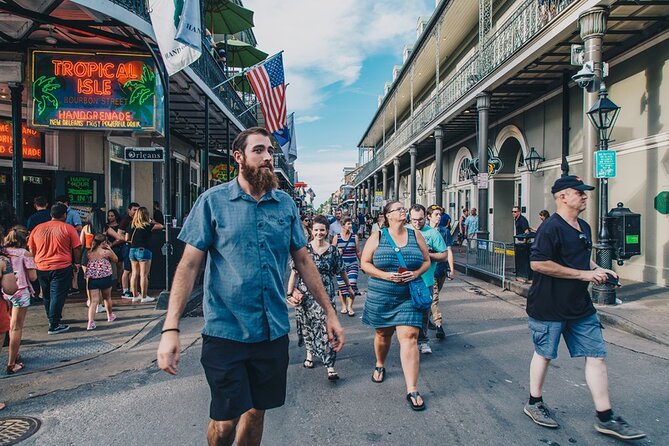
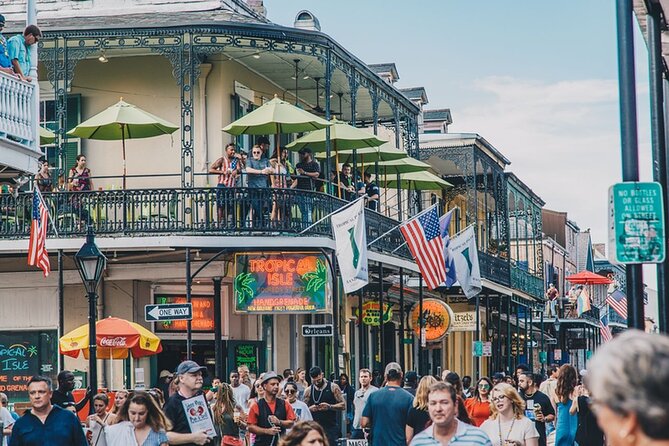
The final stretch is the French Quarter walking portion—about 1 hour 30 minutes, covering roughly 14 blocks (around 1.5 miles). This is where the tour does what it promises: you’re strolling the streets and sampling dishes that define New Orleans.
You can expect the guide to bring the flavors together as a story:
- Cajun dishes leaning into seasoning and bold cooking style
- Creole dishes showing up as a blend of influences
- Southern classics that still feel local because they’re lived-in, not touristy
During this part, you’ll taste a classic Cajun dish and then “turn up” the heat with a hot sauce tasting. You’ll also try something heartier like gumbo—the kind of dish that feels simple in the bowl but gets complicated when you ask why it’s made the way it is.
What you’ll likely eat (and why this combo works)
The sample menu is an example, and it can vary by day and vendor availability, but it generally includes a very similar structure:
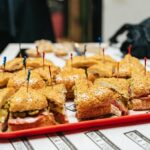
- Starter: cup of gumbo (chicken andouille or seafood, depending on availability)
- Main: po’boy or muffuletta sample (with olive salad and Italian meats for muffuletta when that option is available)
- Main: jambalaya or red beans and rice
- Dessert: beignet (fresh and hot)
- Dessert: praline (New Orleans-style candied pecans)
This order makes sense. You start with a savory, familiar anchor (gumbo), then move through sandwich or rice-based comfort, then end with the sweet stuff. If you’re worried you’ll get overloaded too fast, remember you’re walking and pausing often. That rhythm helps the food actually feel enjoyable instead of like a sugar crash.



When the tour feels more cultural than purely foodie
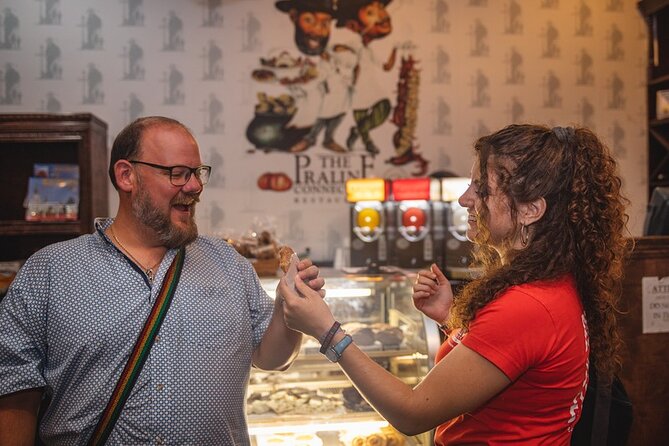
Let’s be honest: a few people come into a French Quarter food tour expecting constant eating from the start. This tour is designed more like a food-and-culture orientation, with tastings as proof points.
The upside: you’ll leave with more than a list of what to order later. You’ll understand the roots of the cuisines you’re tasting, and that makes your next restaurant meal better. It’s one thing to eat gumbo. It’s another thing to know what influences shaped it.
The downside: if your personal sweet spot is maximum food volume early and lots of variety in tiny samples, you may find the tastings feel more spaced out than you hoped. One way to avoid that feeling is simple—show up hungry, but not starving. A light breakfast or coffee before the tour can keep your energy up without dulling your appetite.
Hot sauce tasting: a small step that upgrades every meal after
The hot sauce tasting might sound like a gimmick, but it’s one of the most practical parts of the tour. The guide offers insights into Louisiana’s spice heritage, which helps you make sense of heat beyond the label on a bottle.
Here’s the real benefit for you: once you taste and talk about the flavor profile—vinegar, pepper, smoke, and how heat builds—you’re less likely to order blindly later. You can also ask better questions at restaurants because you’ll know what you’re looking for.
If you’re a spice fan, this is a fun moment. If you’re not, you can still learn without turning it into a dare.
Walking logistics: 1.5 miles, relaxed pace, real streets
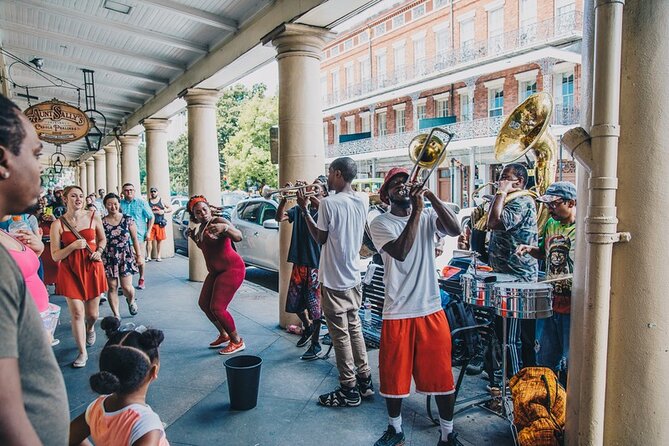
This is a walking tour, about 14 blocks and roughly 1.5 miles total. The pace is described as relaxed, and there are regular stops—which is important in the Quarter, where sidewalks, crowds, and street heat can change fast.
What you should plan for:
- Comfortable shoes. You’ll be on foot for the whole experience.
- Water. Even with stops, you’ll be moving for 2.5 hours.
- Timing. You’ll spend around 30 minutes at Jackson Square, 30 minutes at the French Market, then the longer French Quarter segment.
Because the tour is small (max 12), the group usually moves together rather than splitting into mini-challenges for photos and pace control.
Dietary needs and substitutions: ask early and be ready with options
If you have vegetarian or other dietary requirements, this is a key consideration. The tour notes that some stops aren’t always able to accommodate vegetarian or other dietary needs, and substitutions may not be available everywhere. Your guide can still offer recommendations for places where you can purchase suitable alternative food during the tour.
So here’s how to handle it well:
- Tell them your needs when booking.
- Have a backup plan for that market-and-street reality.
- Treat the guide’s recommendations as part of the experience, not an afterthought.
Even with limitations, the tour is designed so the total amount of food included equals a full meal. That doesn’t guarantee your exact menu items, but it does mean you shouldn’t leave starving.
Who will enjoy this tour most?
This experience is a good match if you want:
- A first-day or second-day French Quarter orientation
- A tour that mixes food and history without feeling like a museum
- Classic dishes you can use as ordering targets later in your trip
It’s also described as child-friendly. Kids under 4 can join free, and there’s a reduced child price for ages 4 to 11. The route is walkable, and there are regular pauses for pacing and attention.
For solo travelers, the small group size helps you chat with your guide and others without feeling like you’re trapped in a crowd.
Guides that shape the feel of the tour
The quality of a food tour often comes down to the guide’s voice and how they connect dishes to place. This one tends to get praised for exactly that—people bring up guides by name like Christy, Neil, Andre, Adam, Kaffey, and Chip. Across those examples, common strengths include solid history tied to each stop and real enthusiasm for local food choices.
One fun detail: Andre is noted as a chef in one account, and there’s even mention of guides sharing recipes at the end of the tour. That kind of added takeaway can help you recreate the flavors later, even if you can’t find the exact same ingredient back home.
Should you book this French Quarter food tour?
If your goal is a smart, beginner-friendly way to eat classic New Orleans dishes while learning why they taste the way they do, I’d book it. The combination of gumbo, po’boy/muffuletta, rice dishes, beignets, and pralines plus a hot sauce lesson is exactly the kind of value that works when you only have a couple days in town.
I would think twice if you want a purely snack-driven tasting marathon with constant sampling from the first minute. This tour is more balanced: food plus cultural context, spread across a relaxed walk.
FAQ
How long is the tour?
The tour lasts about 2 hours 30 minutes.
Where does the tour start and where does it end?
It starts at 701 Decatur St, New Orleans, LA 70116, and it ends at Jackson Square, New Orleans, LA 70116.
What food is included?
You’ll have 5 food samples, including items such as beignets, gumbo, and a po’boy (or muffuletta depending on availability), plus other local specialties like jambalaya or red beans and rice and sweet treats like pralines. A hot sauce tasting is also included.
Can the tour accommodate vegetarian or special dietary requirements?
The tour notes that some stops can have limitations and substitutions aren’t always available. Your guide can offer recommendations for where you can buy suitable alternative food during the tour.
How much walking is involved?
It covers about 14 blocks on foot, roughly 1.5 miles (2.4 km), with a relaxed pace and regular stops.
Is the tour child-friendly?
Yes. Children under 4 can join free of charge, and there is a reduced price for children aged 4 to 11.
What if weather is bad?
The tour requires good weather. If it’s canceled due to poor weather, you’ll be offered a different date or a full refund.