
REVIEW · NEW ORLEANS
New Orleans Sightseeing City Tour
Book on Viator →Operated by New Orleans Ghost Adventures · Bookable on Viator
New Orleans rewards people who look up and listen. This bus tour is a fast, guided way to see more than the French Quarter, including neighborhoods with real stories behind the scenery. I like how the route moves you beyond the postcard and into areas you’d miss if you stayed on foot.
My second favorite part is the stop at St. Louis Cemetery No. 3, where the guide explains the above-ground burial style you’ll never guess just by walking by. The main drawback is that it’s a group on a bus, so once in a while the flow can get interrupted by side chatter or the occasional disruptive moment—nothing ruins the tour, but it’s real life.
In This Review
- Key highlights at a glance
- From Bon’s Street Food to Jackson Square: the start that sets you up
- French Quarter icons you’ll actually understand from the bus
- Marigny and Treme: where the city’s culture shows up
- The Ninth Ward and Katrina: history you can’t ignore
- St. Louis Cemetery No. 3: respectful time in an above-ground world
- City Park and beignets breaks: the smart way to manage your energy
- Garden District, Lafayette Cemetery No. 1, and Magazine Street from the bus
- Congo Square and jazz origins: ending on a cultural note
- Price and timing: is $40 a fair deal for 2 to 2.5 hours?
- Guides, humor, and how the bus ride feels in real life
- Who should book this New Orleans city tour (and who might not)
- Should you book the New Orleans Sightseeing City Tour?
- FAQ
- Where do I meet for the tour?
- How long is the New Orleans Sightseeing City Tour?
- What’s included in the price?
- Is there beignets during the experience?
- Does the tour visit a cemetery?
- Does the tour include Marie Laveau’s tomb?
- Is the tour family friendly?
- How strenuous is the walking involved?
- Is the tour wheelchair accessible?
- What if my plans change?
Key highlights at a glance

- Jackson Square to St. Louis Cathedral views: classic landmarks, plus quick context so you know what you’re looking at
- Marigny and Treme on one ride: street culture tied to the famous TV setting and local history
- Ninth Ward and Hurricane Katrina impact: painful history covered in a clear, human way
- St. Louis Cemetery No. 3 entry: above-ground burials explained respectfully, with time to look
- Garden District, Magazine Street, and Lafayette Cemetery No. 1: architecture and shopping streets from the comfort of a bus
From Bon’s Street Food to Jackson Square: the start that sets you up
You meet at Bon’s New Orleans Street Food (620 Decatur St, Unit 1B). Aim to arrive about 15 minutes early so you’re not sprinting in humid weather, and so the group can board without delay.
From there, the tour kicks off at Jackson Square, one of the best places to start because so much of New Orleans identity radiates from this one spot. You’ll pass the iconic St. Louis Cathedral and the Cabildo as part of the opening run, with the guide giving you the kind of context that makes the next stops feel connected.
You can also read our reviews of more tours and experiences in New Orleans.



French Quarter icons you’ll actually understand from the bus
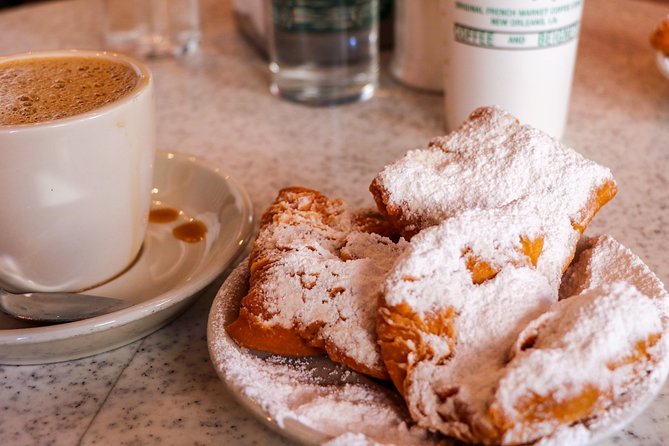
Even if you’ve only seen the French Quarter from photos, you’ll recognize the big hitters immediately once you roll past them. The exterior view of St. Louis Cathedral is the star here, and you’ll get a clear history lesson about what you’re looking at, not just dates thrown at you.
You also get the Cabildo in the mix, which helps you connect the square’s role in colonial-era power and later city life. This matters because New Orleans is a stack of eras—if you don’t get that mental map early, later neighborhoods can feel random.
One practical tip: the bus means you’ll see plenty of buildings, but you won’t be able to get close-up photo angles like you can on a walking tour. Still, the tradeoff is speed, and speed is the whole point of this experience.
Marigny and Treme: where the city’s culture shows up

Next comes a ride through Faubourg Marigny and then Treme, neighborhoods that are famous for music, resilience, and everyday life. You’ll see the revitalized Marigny area and hear why it has become such a strong creative corridor.
Treme is where the tour gets extra meaningful if you’ve watched the TV show set here, because the guide uses that connection to explain real community roots. You’re not just looking at streets—you’re picking up the way locals talk about neighborhood identity, pride, and survival.
This section tends to land well with first-timers because it makes the city feel less like a museum. You’re seeing places that still function as real communities, not just backdrops.
The Ninth Ward and Katrina: history you can’t ignore

Then the bus heads toward the Ninth Ward, including the upper area effects and the Lower 9th Ward story tied to Hurricane Katrina. This isn’t a light stop in tone. The guide frames what changed, why it mattered, and how the neighborhood has continued shaping itself since.
I appreciate that the tour doesn’t treat Katrina like a news headline. Instead, it’s explained as a direct impact on people and place, which gives you something to hold onto as you move through the city.
A word of advice: if you’re sensitive to heavy topics, go in with that knowledge. You don’t need to brace yourself, but you should expect real emotion in this part of the day.
St. Louis Cemetery No. 3: respectful time in an above-ground world
One of the best reasons to pick this tour is the real cemetery stop. You enter St. Louis Cemetery No. 3 and spend about 15 minutes inside with the guide explaining the above-ground burial style.
Why this is worth your time: New Orleans has a burial tradition shaped by local conditions, and it’s hard to understand without a guide’s explanation. You’ll also have a chance to look around rather than just walking past gates for a quick photo.
This cemetery is also where the tour keeps its promise of being more than a drive-by city highlight reel. You’re getting a cultural lesson that stays with you after you leave.






City Park and beignets breaks: the smart way to manage your energy
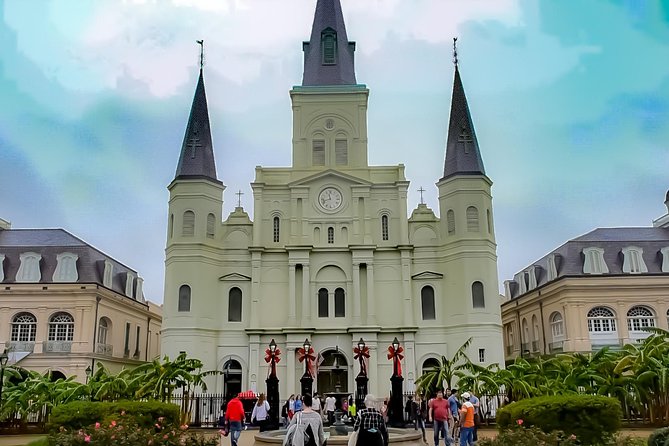
After the cemetery, the tour pauses at New Orleans City Park. There’s time for a break—about 15 minutes—where you can buy beignets and coffee at your own expense.
This stop works for two reasons. First, it gives you a breather so you can reset during an otherwise information-heavy day. Second, it’s timed to help you enjoy the city’s famous snack culture without dragging the tour pace.
If you choose the 12:30 or 4pm departure, you may have the option to grab beignets and coffee before heading out (also at your own expense). Since New Orleans is a walking-and-eating city, that kind of flexible timing is a plus.
Garden District, Lafayette Cemetery No. 1, and Magazine Street from the bus
When the route turns toward the Garden District, you’ll notice the change right away. The architecture feels different, the streets feel more planned, and the vibe shifts toward old neighborhood elegance.
You’ll pass Lafayette Cemetery No. 1 (entry isn’t included), plus you’ll get a brief history moment about it. This is a good reminder that not everything here is about getting inside—sometimes learning why a place matters from the outside is enough.
Magazine Street then becomes your shopping and food street moment. The guide helps you connect what you’re seeing—so when you later walk there on your own, you’ll know where you are and what the streets are known for. You’ll also pass NOMA located in one of New Orleans most scenic parks, which adds another “wait, I’ve heard of that” stop along the route.
Congo Square and jazz origins: ending on a cultural note
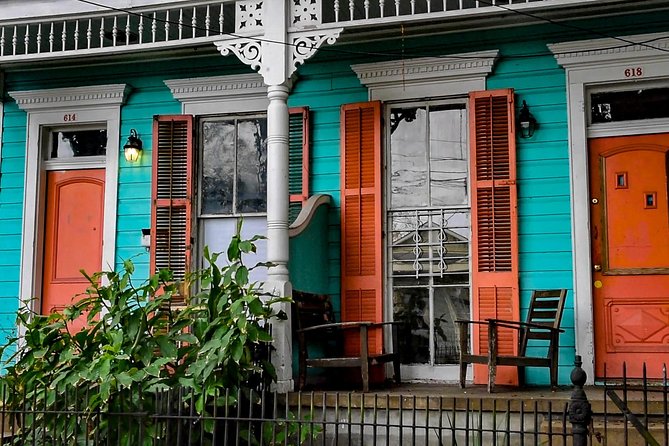
The tour also ties the city’s sound to its roots with a stop at Congo Square, described as the birthplace of jazz. That ending matters because it gives your New Orleans day a theme, not just a list of sites.
You’ll pass by other recognizable spots too, including one connected to Marie Laveau’s favorite places used for rituals. And later, you’ll get windows on local life with stops passing by places like Buckner Mansion, a local art studio you’re encouraged to check out during your stay, and the Mother in law lounge.
Finally, you wrap back at the original meeting point at Bon’s. It’s a clean loop that keeps your day simple: you come in, you get oriented, and you leave with a better sense of where to go next.
Price and timing: is $40 a fair deal for 2 to 2.5 hours?
At $40 per person, this tour is priced like an orientation experience—meaning you’re paying for (1) the licensed guide, (2) transportation in an air-conditioned vehicle, and (3) access to one meaningful paid experience component: St. Louis Cemetery No. 3 with entry and explanation.
You also get a break tied to Cafe du Monde. The included food and drink break is great if you time it well, but note that coffee/tea and extra snacks may not be included depending on what you select. Still, having a guided food stop in the middle of the day is often a better value than trying to coordinate your own.
The timing also helps. A 2 to 2.5 hour format is long enough to see multiple neighborhoods, yet short enough that you’re not stuck missing an entire evening. If you’re planning meals and music later that day, the schedule supports it.
Group size is capped at 42, which is fairly big but still feels manageable on a bus. Multiple departure times are offered, so you can pick what fits your day rather than rearranging everything around one option.
Guides, humor, and how the bus ride feels in real life
The guide experience is the difference-maker on tours like this, and the overall pattern here is strong. Many guides are described as fast-paced storytellers who keep people engaged with humor and clear explanations, and you may hear a mix of city culture and family storytelling along the way.
I’d treat that as a style choice, not a flaw. But if you prefer strictly academic history with zero personal anecdotes, keep that in mind. One caution from a smaller number of comments is that the balance can tilt personal at times, and occasionally it can affect how much attention stays on major historical facts.
On the positive side, guides are often credited with giving recommendations for what to eat after the tour and helping you feel like you’re getting the city map, not just the sightseeing highlights. Names that have come up in recent guiding teams include Cynthia, Sean, Scott, and DJ, plus the driver is sometimes praised as well (Carl was mentioned by name in one case).
The bus itself is air-conditioned, and that matters more than you’d think in New Orleans heat. You’ll also be moving through neighborhood streets quickly, so the ride is part sightseeing and part transit.
Who should book this New Orleans city tour (and who might not)
This is a great match if you:
- want a first-time New Orleans overview that covers more than the French Quarter
- like guided history with stops where you can actually look around
- want to save energy while still seeing neighborhoods such as Treme and the Ninth Ward
- enjoy the idea of beignets as part of your day planning
You may want a different option if you:
- want maximum personal space and zero distractions (group bus tours can’t promise that)
- need strict wheelchair access, since the bus used is not wheelchair accessible and requires steps for boarding and exiting
- prefer short, focused stops with zero personal storytelling from the guide
The bottom line is that this tour is designed for getting your bearings fast and giving you a solid foundation for the rest of your trip.
Should you book the New Orleans Sightseeing City Tour?
Yes, if your goal is orientation plus meaningful sights in a short window. At $40, the mix of guided neighborhood driving, an actual cemetery visit, and a beignet-friendly break makes it feel like more than a simple ride around town.
I’d book it early in your trip if you can. You’ll get better at spotting what matters afterward—especially after the Ninth Ward and cemetery segments, which give the city its context.
If you’re sensitive to heavier topics, plan to be present for the Katrina history portion. Just go in knowing it’s part of the point.
FAQ
Where do I meet for the tour?
You’ll meet at Bon’s New Orleans Street Food, 620 Decatur St Unit 1B, New Orleans, LA 70130. The tour ends back at the same meeting point.
How long is the New Orleans Sightseeing City Tour?
The tour runs about 2 hours to 2 hours 30 minutes.
What’s included in the price?
The tour includes a licensed tour guide, an air-conditioned vehicle, a stop by an above-ground cemetery (St. Louis Cemetery No. 3), and a food & drink break at Cafe du Monde.
Is there beignets during the experience?
You may have a beignets option depending on what you select at checkout, and you can also purchase beignets and coffee during the stop at New Orleans City Park. For coffee and/or tea, those are listed as not included, so it may depend on your choices.
Does the tour visit a cemetery?
Yes. The tour stops at St. Louis Cemetery No. 3 and includes entry, with the guide explaining the above-ground burial style.
Does the tour include Marie Laveau’s tomb?
The tomb of Marie Laveau is in St. Louis Cemetery 1. This tour passes by Cemetery 1, but entry is not included; the cemetery stop during the tour is St. Louis Cemetery No. 3.
Is the tour family friendly?
Yes, it’s considered family friendly and is appropriate for guests of all ages.
How strenuous is the walking involved?
There is a fair amount of walking, but it is mostly on flat surfaces. It is not considered strenuous.
Is the tour wheelchair accessible?
No. The bus used for this tour is not wheelchair accessible, and guests must be able to walk and navigate a few steps to board and exit.
What if my plans change?
Free cancellation is available up to 24 hours in advance for a full refund. If you cancel less than 24 hours before the start time, the amount paid is not refunded.