REVIEW · BOSTON
Boston’s Freedom Trail: A Revolutionary Walking Tour
Book on GetYourGuide →Operated by Boston History Company · Bookable on GetYourGuide
Freedom Trail history, measured in walking time. This tour strings together the Golden Dome at the Massachusetts State House with the Boston Massacre Site, and keeps the story moving through the people, ideas, and messiness of the American Revolution. I like that it goes beyond the usual names and includes women, African Americans, and immigrant patriots, not just the headline players.
One thing to plan for: it is a steady 2.5-hour walking route. Entry tickets to attractions are not included, and it also notes it is not suitable for people with mobility impairments, even though it says wheelchair accessible—so double-check what your route comfort looks like before you go.
In This Review
- Key highlights worth your time
- The Big Idea: 16 Freedom Trail stops in 2.5 hours
- Price and walking value: what $31 really covers
- Starting at The Embrace: where to meet and how to find your guide
- Boston Common to the Massachusetts State House: seeing the Revolution’s center
- Park Street Church and Granary Burying Ground: names you’ll actually recognize
- King’s Chapel, Franklin’s statue, and the role of public ideas
- Old Corner Bookstore and Old South Meeting House: where words turned dangerous
- Old State House and the Boston Massacre Site: the Revolution gets sharp
- Faneuil Hall and the Paul Revere House: speeches, planning, and urgency
- Old North Church: the steeple and the two lanterns moment
- Copp’s Hill Burying Ground and the human side of the cause
- USS Constitution and Bunker Hill Monument: payoff at the waterfront and the rise to action
- How the guides can change your experience (and what to watch for)
- Who should book this Freedom Trail tour, and who should skip it
- Should you book this Boston Freedom Trail walk with Boston History Company?
- FAQ
- Where does the tour start?
- How long is the Boston Freedom Trail walking tour?
- How much does it cost?
- Does the tour cover all 16 official Freedom Trail sites?
- What language is the guide?
- Are entry tickets to attractions included?
- Is there a costume?
- Can I bring video recording equipment?
- What should I bring for the tour?
- Can I cancel and get a refund?
- Is the tour suitable for wheelchair users?
Key highlights worth your time
- All 16 official Freedom Trail sites in one guided outing, so you’re not piecing together separate tours
- Built-in context for the Revolution, including Boston Tea Party and the Boston Massacre, tied to where events happened
- Stop-by-stop stories about famous Americans like John Hancock, Paul Revere, and Samuel Adams—plus lesser-told roles
- Old North Church and the two lanterns story, explained where it matters
- A guide you can actually talk to, with frequent questions and humor (I especially liked the dad-joke energy)
- Easy meeting point at The Embrace on Boston Common, right by the Visitor’s Center
The Big Idea: 16 Freedom Trail stops in 2.5 hours
Boston’s Freedom Trail is famous, but it can also be a little chaotic on your own. This tour fixes that. You get one experienced live guide who keeps you pointed in the right direction and connects each stop into one flowing (and funny) narrative.
The goal is simple: see all 16 official sites without spending your vacation hunting down clues. At 2.5 hours, the pace is brisk enough to feel efficient, but it still gives time for explanations at the major moments—especially the places you’re likely to remember later, like the Massacre Site and the lantern story.
Best part for first-timers: you leave with mental map clarity. After this, Boston landmarks stop being random photos and start being a timeline.
You can also read our reviews of more tours and experiences in Boston.



Price and walking value: what $31 really covers
At $31 per person, you’re paying for the guide and the guided route. That’s a lot of value in Boston, where a self-guided walk can still feel like homework if you don’t know what you’re looking at.
A key detail: entry tickets are not included. So if you’re expecting included access to museums or paid sites, plan to cover those separately. The tour itself is the framework—the “why this matters” layer—so you’ll know what to prioritize if you come back for deeper looks.
Also, since the tour is walking-based, what you wear matters. Comfortable shoes and water aren’t optional. You want your body to match the guide’s energy.
Starting at The Embrace: where to meet and how to find your guide
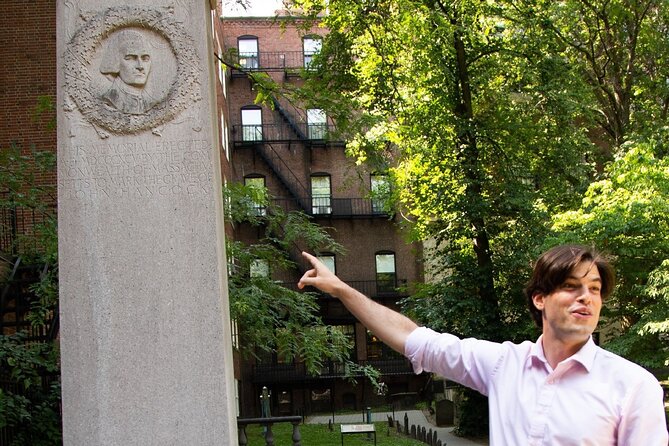
You start right on Boston Common, at The Embrace statue next to the Visitor’s Center. The address given is 139 Tremont Street, which is the practical anchor point you’ll use when you arrive.
Your guide is not in costume. Instead, they carry a flag with Boston History Company on it. That reduces the classic walking-tour problem of guessing who the guide is while everyone else is talking and taking photos.
This meeting setup is great because it’s easy to orient yourself fast. In a short trip like this, you don’t want the first 20 minutes to be a scavenger hunt.
Boston Common to the Massachusetts State House: seeing the Revolution’s center
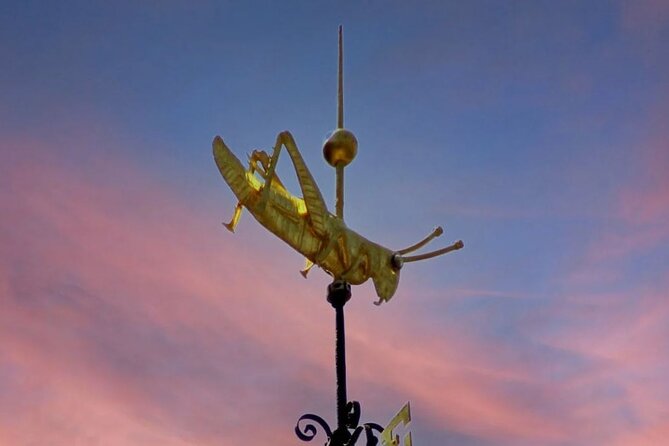
You begin on Boston Common, the natural starting nerve of the Freedom Trail. Your guide uses the opening stretch to set expectations: this is a story about rebels, Midnight Riders, and everyday people caught up in big decisions.
Then you move toward the Massachusetts State House area, where the famous Golden Dome becomes the visual cue for why government and conflict were inseparable in this era. Your guide’s job here is to make the building feel less like architecture and more like power—who had it, who challenged it, and why the stakes were so high.
I like this part because it gives you a “control room” understanding before you scatter into smaller stories. Once the guide frames it, every later stop feels like it clicks into place.
Park Street Church and Granary Burying Ground: names you’ll actually recognize
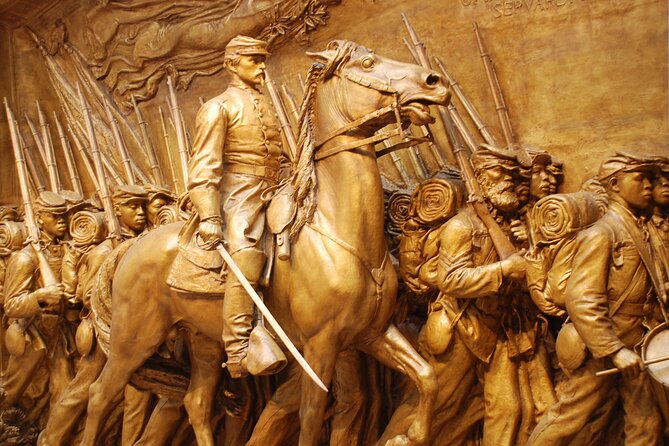
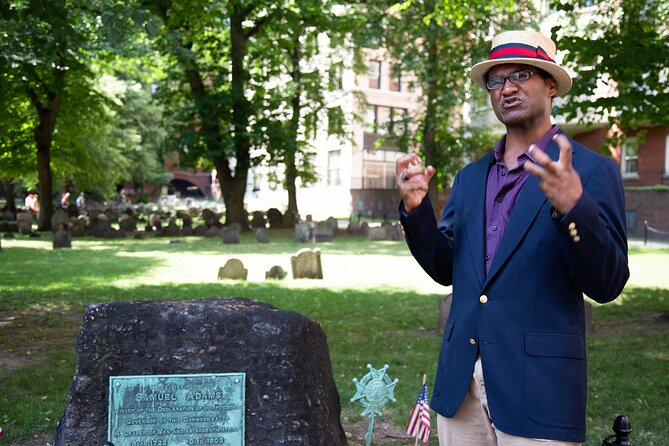
Two stops do heavy lifting here: Park Street Church and Granary Burying Ground. Park Street Church works as one of the key anchors that keeps the route legible. Granary Burying Ground is where the emotional weight lands.
This is one of the tour’s major highlights because you visit the final resting places of John Hancock, Paul Revere, and Samuel Adams. When you stand in a cemetery tied to the Revolution, the story shifts from abstract speeches to real lives and real consequences.
Granary also helps with the tour’s broader approach. Even when the big names get the spotlight, you’ll hear about other figures too—women, African Americans, and immigrant patriots and pioneers. That makes the Revolution feel larger than the usual textbook cast.
Tip for your comfort: expect a quiet-ish pause compared to the street segments. Bring patience for brief stop-and-listen moments.






King’s Chapel, Franklin’s statue, and the role of public ideas
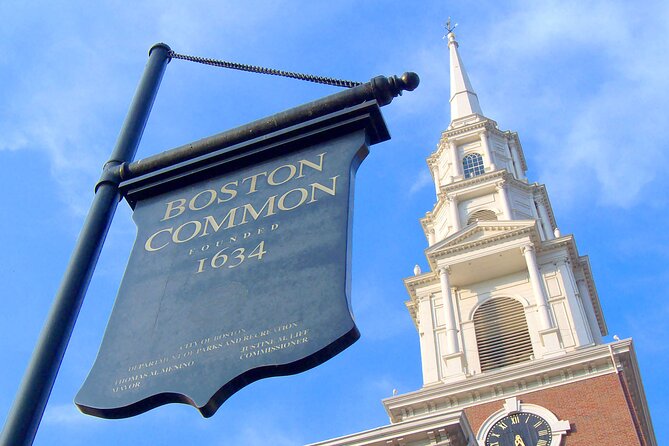
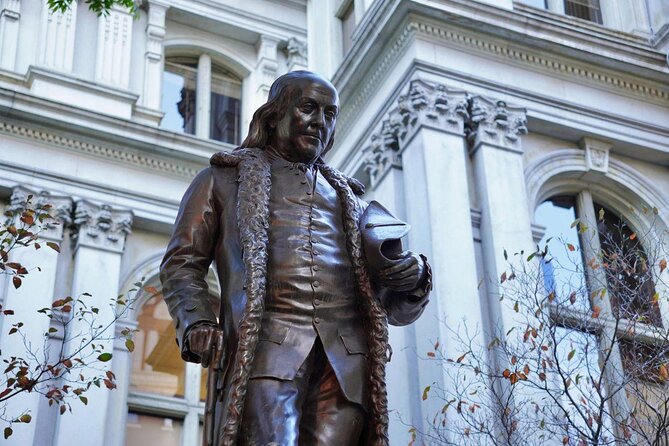
As you continue, you’ll pass King’s Chapel and the Benjamin Franklin Statue. These stops matter because they remind you the Revolution wasn’t only about armies. It was also about ideas, persuasion, and civic life.
Franklin’s presence on the trail gives you permission to think beyond the simplest “patriots vs. British” framing. You get stories that connect reform-minded thinkers and practical communication to how people organized and argued.
King’s Chapel is another official site that gives the guide room to talk about Boston’s public institutions and how they shaped opinion. Even without entry-ticket attractions, the outside view plus a good guide explanation can still land the point.
If you like history that connects culture to politics, this middle section is where you’ll start feeling the tour’s payoff.
Old Corner Bookstore and Old South Meeting House: where words turned dangerous
The route includes the Old Corner Bookstore and the Old South Meeting House. On paper, they look like landmarks. In the guide’s hands, they become tools that explain how people coordinated.
This is where you’ll hear about explosive events tied to the Revolution—your guide specifically connects the Boston Tea Party to the broader story as you walk through the areas where planning and pressure built.
The Old South Meeting House stop is especially useful for first-timers. It helps you understand that revolutions don’t ignite out of nowhere. They’re staged through meetings, messaging, and timing—often by ordinary people who just show up and refuse to accept the official version of events.
If you’re an “I need context” person, don’t rush photos here. Listen for how your guide connects these stops to the bigger chain of events.
Old State House and the Boston Massacre Site: the Revolution gets sharp
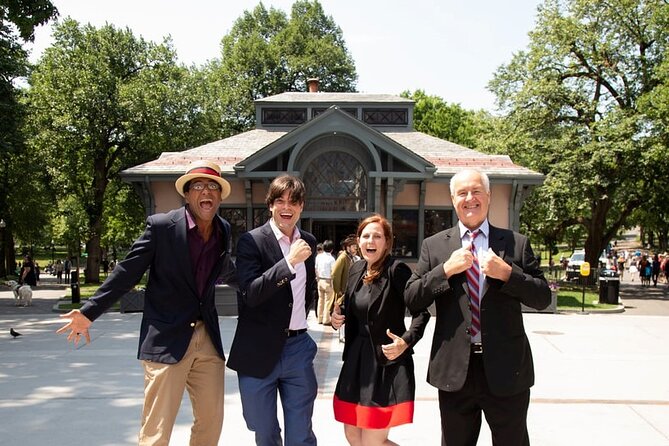
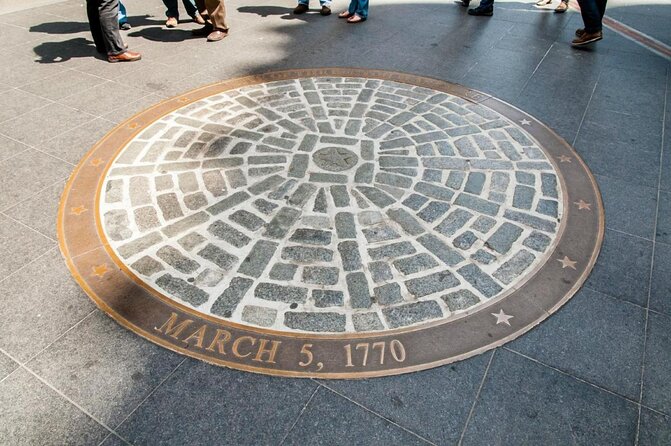
Then comes the dark turning point: the Old State House and the Boston Massacre Site. This is one of the most intense parts of the Freedom Trail experience, and it’s also the moment where a guide makes a huge difference.
The Boston Massacre Site is where the tour focuses on the Bloody Massacre as it happened. Even if you already know the name, the explanation at street level helps you picture cause and effect: where tension built, how quickly it escalated, and why it mattered politically.
The Old State House connects the personal shock to official power. You’ll feel how the Revolution wasn’t only about independence as a slogan. It was about legitimacy—who had the authority to act, and what happened when people believed that authority had crossed a line.
This section tends to stick with people. It’s the part you’ll later use to orient the rest of Boston’s story.
Faneuil Hall and the Paul Revere House: speeches, planning, and urgency
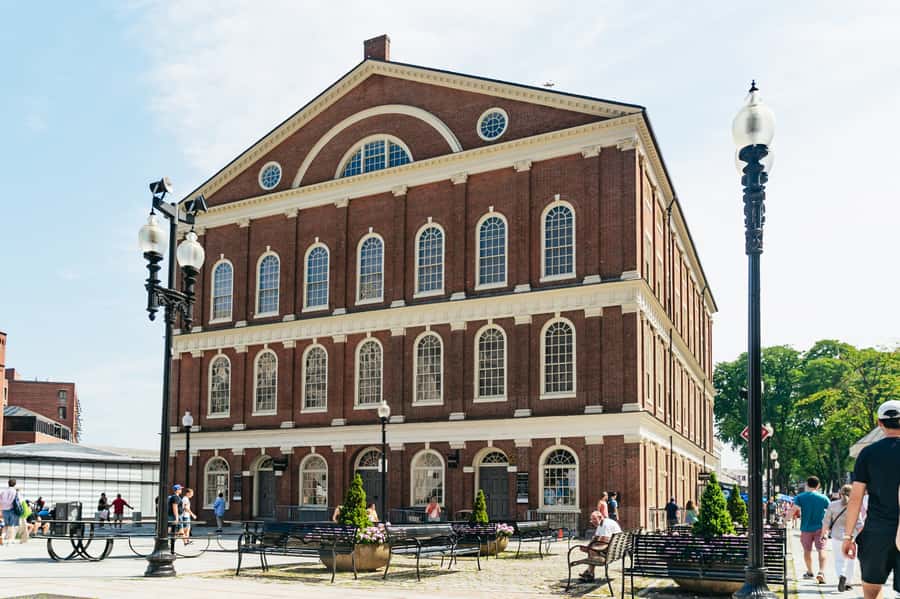
After the street-level drama, you shift toward planning and persuasion with stops that include Faneuil Hall and the Paul Revere House.
Faneuil Hall is on the trail for a reason, and your guide uses it to underline how Boston’s public culture helped fuel revolution. You’re not just walking past a building—you’re learning how talk became action.
Then you reach the Paul Revere House, where the focus naturally moves to Revere’s world: coordination, warning systems, and the famous rhythm of Midnight Riders. If you’ve ever heard a story about lanterns and horse rides, this is where it starts making sense as a system rather than a legend.
This is also where the tour’s humor shows up in smaller doses. A good guide will keep it light, but won’t sand down the seriousness of what these people were preparing for.
Old North Church: the steeple and the two lanterns moment

This is a standout stop: the Old North Church, including the steeple where the two lanterns were hung. The guide explains the lantern story in context, right at the location, which is the only way it really lands.
The value here is not just knowing what happened. It’s understanding why this kind of message mattered. Your guide ties the lantern signal back to the wider chain of events and to the urgency that drove people to act fast.
I like this stop because it turns a famous line into a clear picture. You can stand there and think through visibility, timing, and communication. It feels like history you can almost reenact with your own eyes—without turning it into a gimmick.
Copp’s Hill Burying Ground and the human side of the cause
The tour continues to Copp’s Hill Burying Ground. Burial grounds can be oddly overlooked by people who only chase battles and monuments, but this stop reminds you the Revolution was full of loss, belief, and complicated family ties.
Here, your guide helps widen the lens. Beyond the biggest household names, you’ll hear about women, African Americans, and immigrant patriots and pioneers as part of the story’s larger cast. That matters because it changes the emotional tone of the trail. It stops being only triumph and starts being a human timeline.
If you prefer to keep your pace moving, Copp’s Hill can slow things down slightly because it’s a pause-and-listen kind of stop. Still, it’s the right kind of pause. You’ll feel less like you’re ticking boxes and more like you’re building understanding.
USS Constitution and Bunker Hill Monument: payoff at the waterfront and the rise to action
On the far end of the Freedom Trail route, you reach USS Constitution and later Bunker Hill Monument. These two stops make the walk feel complete in a way that a museum-only approach can’t.
USS Constitution gives you the waterfront connection. Your guide frames it inside the Revolution story, so it doesn’t feel like a random ship on a sightseeing route. Even if you’ve heard of it before, the Freedom Trail context changes how you see it.
Then you finish with the Bunker Hill Monument. This is where the Revolution becomes physical again: a place marked for effort, cost, and resolve. It’s an important capstone for the tour’s theme of pressure turning into action.
You’ll walk back to your starting area as the tour ends back at the meeting point.
How the guides can change your experience (and what to watch for)
This tour is very dependent on the guide. The good news: the guide talent here shows up again and again.
In the names I’ve seen associated with this experience, Rob Crean, Kenneth, Charlie R, Matthew, Alissa, Stuart, Noah, Malcom, Jim, Sam, Jules, Megan, Stewart, and Julia all get credit for strong storytelling and keeping people engaged. You’ll also get frequent opportunities to ask questions, and the humor ranges from gentle quips to those classic dad-joke moments your guide throws in.
Two practical tips:
- If English isn’t your first language, plan to focus. One guide has been noted for speaking at a fast pace, so you may want to arrive rested.
- If you prefer quiet history, this is still an active walking tour with a group rhythm. You’ll hear people chatting and questions in between stops, so think of it as lively, not hushed.
Who should book this Freedom Trail tour, and who should skip it
This tour is a strong fit if you want one guided route that covers all the major Freedom Trail sites and gives you context you can’t easily get from a phone screen. It’s also great for short trips, since 2.5 hours is enough to build a usable mental map.
It’s especially good if you care about more than just famous men in powdered wigs. The guide’s approach includes women, African Americans, and immigrant patriots and pioneers, plus themes like abolition, American education, and immigration.
I’d think twice if:
- You need a slower, more flexible schedule. This is a walking route with lots of stops.
- You rely on mobility support and want a clear “step-by-step” plan, because the info lists both wheelchair accessibility and also says it is not suitable for people with mobility impairments. Confirm details before booking.
- You want entry tickets included. They’re not part of the package.
Should you book this Boston Freedom Trail walk with Boston History Company?
If your goal is to see the Freedom Trail’s full official circuit and understand it in human terms, I think this is an easy yes. $31 is a reasonable price for a live guide who can connect the Golden Dome, the Massacre Site, and the two lanterns story without turning the day into a scavenger map.
Book it if you:
- Have limited time in Boston
- Want context at every stop, not just facts on a sign
- Like guides who mix stories, clear explanations, and light humor
Skip it if you want a ticket-driven museum day, or if your walking tolerance is low enough that 2.5 hours on your feet could derail you. If that’s you, look for a less time-crunched plan.
In short: for most first-time visitors, this is a smart way to turn a famous trail into something you actually understand.
FAQ
Where does the tour start?
Meet your guide at The Embrace statue on Boston Common, next to the Visitor’s Center at 139 Tremont Street.
How long is the Boston Freedom Trail walking tour?
The duration is listed as 2.5 hours.
How much does it cost?
The price is listed as $31 per person.
Does the tour cover all 16 official Freedom Trail sites?
Yes. It’s described as visiting all 16 official sites on the Freedom Trail in one tour.
What language is the guide?
The tour guide provides the tour in English.
Are entry tickets to attractions included?
No. Entry tickets are not included.
Is there a costume?
No. Your guide will not be in a costume. They will have a flag with Boston History Company to identify them.
Can I bring video recording equipment?
No. Video recording is not allowed.
What should I bring for the tour?
Bring comfortable shoes and water, plus comfortable clothes.
Can I cancel and get a refund?
Yes. Free cancellation is offered if you cancel up to 24 hours in advance for a full refund.
Is the tour suitable for wheelchair users?
The information says the tour is wheelchair accessible, but it also notes it is not suitable for people with mobility impairments, so it’s worth confirming what your needs are before you go.