
REVIEW · NEW YORK CITY
Metropolitan Museum Guided Group Tour
Book on Viator →Operated by Walks - USA · Bookable on Viator
The Met can swallow your whole day. This is a small-group route that gets you inside, moving, and actually understanding what you’re seeing in the 2- or 3-hour window.
I love the skip-the-line entry—it cuts down the “wait, then find a painting” problem—and I also love how the guide links big-time objects into a route that feels logical, from the Temple of Dendur to the Antioch Chalice.
One thing to plan for: the tour can feel fast-paced, because you’re covering highlights and you may want extra time in a few galleries after.
In This Review
- Key things you’ll notice on this Met highlights tour
- A smarter way to handle the Met’s size
- Meeting point at 1000 5th Ave: timing that actually matters
- What happens on the 2- or 3-hour route
- Temple of Dendur to the Antioch Chalice: the route that builds wonder
- Tudor armor, Greek statuary, and Roman emperors—how the guide keeps you oriented
- The Sargent lesson you’ll actually remember: Madame X context
- Small-group vibe: why the tour feels different from big bus energy
- Value check: is $65 worth it?
- Smart packing and museum etiquette that will save you stress
- Who this tour suits best (and who should skip it)
- My booking verdict: should you book this Met tour?
- FAQ
- How long is the Metropolitan Museum guided group tour?
- How much does the tour cost?
- Is there a skip-the-line ticket included?
- What language is the tour offered in?
- Where is the meeting point?
- When should I arrive for the start?
- How many people are in the group?
- Is there a bag check and security on-site?
- Can I take photos or use a selfie stick?
- Can the tour change if galleries are closed?
Key things you’ll notice on this Met highlights tour
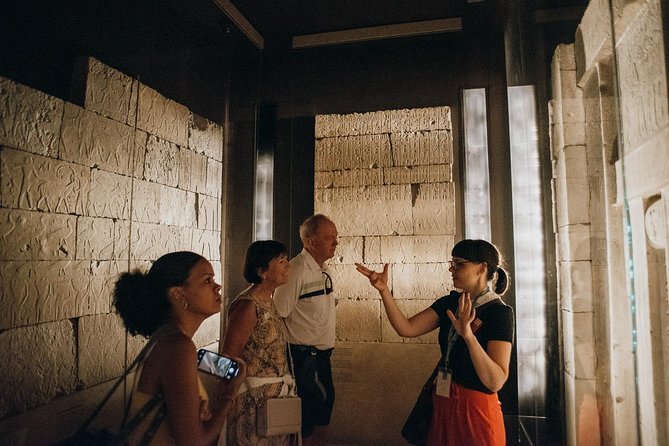
- Max 18 people keeps the group manageable and easier to hear over the crowds
- Skip-the-line ticket helps you get past entry faster (you’ll still hit security)
- Temple of Dendur (15 BC) is a showpiece you’ll understand, not just walk past
- Tudor armor + the Antioch Chalice brings the “wow” with stories behind the objects
- Madame X context gives you the backstory behind John Singer Sargent’s most famous controversy
- You can keep exploring after the guided portion ends
A smarter way to handle the Met’s size
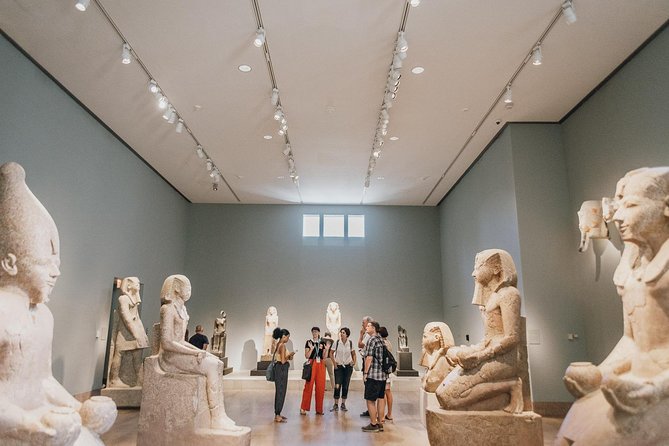
The Metropolitan Museum of Art is massive enough to make even good plans fall apart. One hallway turns into ten, and suddenly your “quick look” turns into a totally different afternoon. This tour gives you a guided route so you’re not guessing where to spend your attention.
I like that the group stays small. When you’re with a guide who can actually manage the pace, you spend less time stuck behind other people and more time at the artworks. You’re also less likely to leave feeling like you only “touched” the museum.
The tour focuses on highlights across major departments, so you get variety without wandering blindly. Think: Egypt, Tudor England, ancient Greece and Rome, plus major painting stories you’ve probably heard of but never had explained well.
You can also read our reviews of more tours and experiences in New York City.



Meeting point at 1000 5th Ave: timing that actually matters
You meet at the Metropolitan Museum of Art, 1000 5th Ave. Plan to arrive about 15 minutes early, because the tour starts on time and late arrivals can miss the beginning.
Even with a skip-the-line ticket, there’s still a security check before you enter. Allow extra time for that process, which can take up to 15 minutes. If you also want the bag check, give yourself more breathing room. In a museum this big, starting smoothly is half the battle.
This is a walking tour at a moderate pace. Comfortable shoes help a lot. Also note that the route can change if some galleries are closed or unavailable, so don’t assume you’ll see every single stop in exactly the same order.
What happens on the 2- or 3-hour route
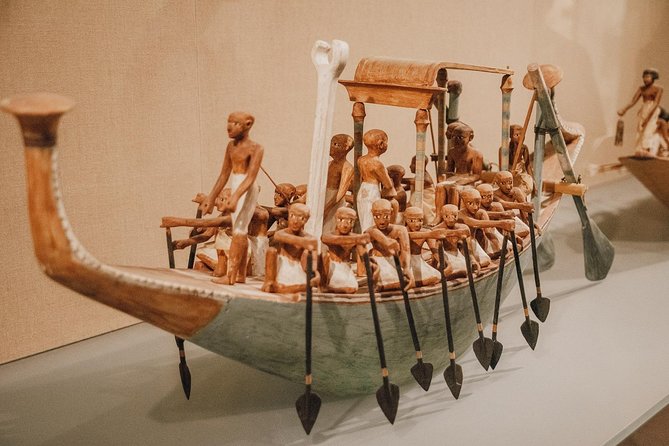
You choose between 2 hours or 3 hours. The 3-hour option is the better fit if you want time to pause, ask questions, and actually look at details instead of only reading wall labels while walking.
The basic flow is simple: you meet, you walk with your guide, and you stop at key objects that represent different eras and styles. Your guide explains why each piece matters and what to notice visually. The goal isn’t to see everything. The goal is to leave with a strong foundation for what you’ll recognize during the rest of your self-guided visit.
One practical upside: after the guided portion ends, you can keep exploring. That means the tour works as a starting point. You don’t have to commit your whole day to the group.
Temple of Dendur to the Antioch Chalice: the route that builds wonder
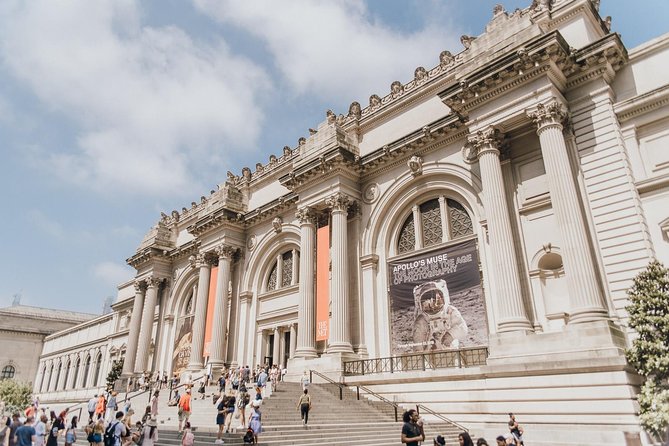
The tour starts with a walk up the museum’s famous steps, an easy New York photo moment before you hit the galleries. From there, you head through highlights that jump across time in a way that feels clean and organized.
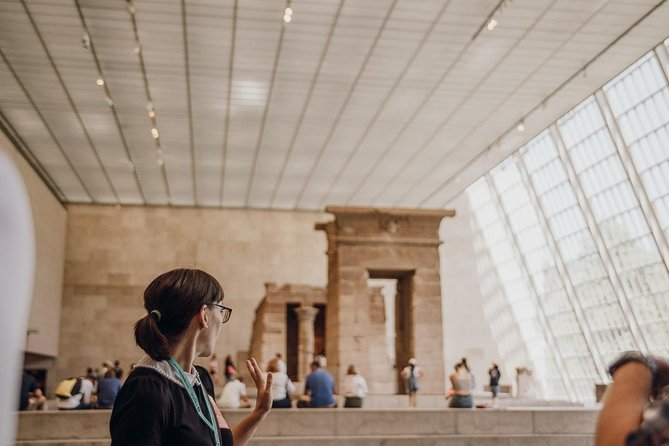
One of the biggest “anchor” stops is the Temple of Dendur, dated to 15 BC. It’s not just about seeing an ancient structure. Your guide helps you understand what you’re looking at and why it’s so important in a museum setting. When you know the story, the stones don’t feel like scenery. They feel like evidence.
Then you move to stories that add drama and surprise. The tour includes the Antioch Chalice, traditionally linked with the idea of the Holy Grail. Even if you don’t care about legends, it’s a great way to understand how objects pick up meaning over centuries—through belief, collecting, and display.
This is one reason the tour is worth it: without a guide, it’s easy to walk past famous objects and miss what makes them special. With the guide, the “why” lands fast.
Tudor armor, Greek statuary, and Roman emperors—how the guide keeps you oriented
Next you cross into Tudor-era England to see a suit of armor associated with Henry VIII. This kind of object can feel intimidating if you don’t know how to look at it. Your guide helps you read it like a snapshot of power, craftsmanship, and personality in a specific historical moment.
After the Tudor stop, you head into the world of Greek and Roman statuary. This is where the museum’s scale can feel overwhelming on your own. The tour turns it into a guided sequence: heads, busts of emperors, ancient frescoes, and the sense of continuity between eras.
A big advantage here is pacing. Instead of trying to absorb a whole department in one go, you hit selected “most worth your attention” works. You’ll likely notice details you would otherwise skip, like posture, carving choices, and how artists tried to communicate rank or character.
And yes, the pace can be brisk. That’s the trade for getting several eras covered in a short time.






The Sargent lesson you’ll actually remember: Madame X context
One of the most memorable parts of the tour is the story tied to John Singer Sargent’s Madame X. If you’ve heard about it before, you probably know it caused controversy, but not always why.
This tour gives you the context behind the scandal and what was at stake artistically and socially. It’s a good example of what the guide adds beyond basic museum labels: a timeline of events, comparisons to what came before and after, and the human side of how reputations get made and damaged.
This kind of artwork discussion is also why the tour is valuable even if painting isn’t your main interest. It teaches you a method for looking: what to focus on first, what details matter, and how to connect the work to the moment it was created.
Small-group vibe: why the tour feels different from big bus energy

This tour caps at 18 travelers, which is a huge help inside the Met. In a museum where the crowd can feel like a permanent weather system, smaller groups keep you from getting swallowed.
I also like that guides adapt to the group’s needs. One person gets more from visual detail stops, another wants historical background. When the guide can shift the emphasis without losing the route, the tour feels personal rather than scripted.
From the guide names people have shared, Rob, Phil, and Katie come up often for storytelling and an engaging style. Jett and Stephan were also praised for pace and for keeping the experience fun for different ages. You can’t guarantee a specific guide, but it’s reassuring to know the tour has a track record of strong personalities bringing the museum to life.
Value check: is $65 worth it?

At $65 per person for about 2 to 3 hours, you’re paying for three things: an organized route, a local English-speaking guide, and a skip-the-line ticket. You’re also buying time. Time in the Met is everything, because the museum can easily eat your whole day.
If you’re the type who likes museums but hates the planning part, this is solid value. A good guide helps you avoid the most common problem: spending an hour “finding something” and then losing the thread. Here, the thread is already set.
If you’re the “I want to roam and read every label” type, you might not get full value from a highlight tour. In that case, use the guided time as your warm-up, then spend longer hours on the galleries that really grab you.
For first-time Met visitors, I think this is one of the easiest ways to start without getting lost. For repeat visitors, it still works if you want new angles on familiar works.
Smart packing and museum etiquette that will save you stress
You’ll be walking, so pack like a city walker. Wear shoes you can stand in for a few hours, and keep water handy if you’re going to keep exploring afterward.
Photography rules matter here. The tour allows non-flash photography in general, but museum rules also limit photography inside galleries. Selfie sticks are prohibited. If you show up with one, you’ll lose time at security or during handling—best to skip it.
If you want to bring a bag, use the bag check, but build in extra time. It’s listed as available, and that extra minute now can save you from feeling rushed once the tour begins.
Who this tour suits best (and who should skip it)
Book this tour if:
- You want a guided highlights plan instead of wandering through 2 million-plus objects
- You only have half a day to make the Met matter
- You like learning the “why” behind famous works, not just seeing them
- You want a calm starting point and then freedom to continue on your own
Consider a self-guided day if:
- You’d rather take long looks and move at your own pace without stops
- You’re likely to get restless with a scheduled route and group timing
- You plan to focus on only one department for hours
For families, the small-group size and stories can work well. One reason guides are praised is that they can adjust their pacing so different ages stay engaged.
My booking verdict: should you book this Met tour?
I’d book it if your biggest worry is getting overwhelmed. The Met is too big to “wing it” well unless you’ve been there a lot. This tour helps you pick up the museum fast, with a route that makes famous works feel understandable.
Choose the 3-hour option if you’re curious and want a slightly slower rhythm. Choose the 2-hour option if you’re tight on time but still want the “big hits” and the context.
FAQ
How long is the Metropolitan Museum guided group tour?
It runs approximately 2 to 3 hours, depending on the option you choose.
How much does the tour cost?
The price is $65.00 per person.
Is there a skip-the-line ticket included?
Yes. The tour includes a skip-the-line ticket to the Metropolitan Museum of Art.
What language is the tour offered in?
The tour is offered in English.
Where is the meeting point?
You meet at the Metropolitan Museum of Art, 1000 5th Ave, New York, NY 10028, USA.
When should I arrive for the start?
Please arrive 15 minutes before the start time. No refunds can be provided for late arrivals or no-shows.
How many people are in the group?
The tour has a maximum of 18 travelers.
Is there a bag check and security on-site?
A bag check is available. There is also a security check before entering the building, which can take up to 15 minutes.
Can I take photos or use a selfie stick?
Non-flash photography is allowed, but photography cannot be used inside the Museum. Selfie sticks are prohibited.
Can the tour change if galleries are closed?
Yes. Galleries and artwork visited during the tour are subject to closure and absences without prior notice, and the guide may modify the route on the day.