REVIEW · NEW YORK CITY
Wall Street Insider Tour with a Finance Professional
Book on Viator →Operated by ExperienceFirst · Bookable on Viator
Lower Manhattan moves fast, but this tour slows it down. You get a guided, insider-style walk through the Financial District with a guide who has real finance-world perspective, not just trivia, with stops around Federal Hall and Trinity Church.
What I like most is the mix of big-name landmarks plus human stories—stuff about how money works and how the neighborhood grew into what it is now. I also really appreciate the small group feel, and guides like Jesse, Julie, and Jose show a common thread: they share personal anecdotes and keep the energy up with clear explanations and humor.
The main thing to think about: you do not enter the NY Stock Exchange, since it has been closed to visitors since 2001. If you’re hoping for an inside look, this tour will feel like the difference between seeing the stage door versus stepping into the theater.
In This Review
- Key Points to Know Before You Go
- Why This $39 Wall Street Walk Feels More Like an Explanation Than a Lecture
- Getting Oriented Near 22 Broad Street (and Why the Route Works)
- Federal Hall: Where New York’s Founding Energy Meets Finance
- Trinity Church: The Quiet Pause With Big Names Attached
- Charging Bull: The Photo Stop That Actually Teaches You Something
- Seeing Goldman Sachs and Deutsche Bank Area From the Street
- The NYSE Reality Check: Why It’s Still Worth It
- Ending Near the Federal Reserve: The Place the Stories Point Toward
- What the Guide Adds: Personal Finance World Stories (Jesse, Julie, Jose, and More)
- Timing, Weather, and Comfort Tips That Make the Tour Easier
- Who This Tour Is Best For (and Who Might Want Something Else)
- Should You Book the Wall Street Insider Tour With a Finance Professional?
- FAQ
- Is the Wall Street Insider Tour with a Finance Professional mostly outdoors?
- Do we go inside the NY Stock Exchange?
- How much walking is involved?
- Where does the tour start and end?
- What’s included in the tour price?
- What’s not included?
- Is this tour accessible for wheelchairs or strollers?
- What happens if it rains?
- What languages is the tour offered in?
Key Points to Know Before You Go
- Insider-led finance perspective helps you connect the buildings to how decisions get made
- Mostly outdoors on a ~1-mile walk (good for timing, not great for people who hate street walking)
- You won’t enter the NYSE because it’s been closed to the public since 2001
- Federal Hall, Trinity Church, and Charging Bull give you the “who, what, where” quickly
- Hard moments are covered (like slavery in early markets and how later events shaped the area)
- Small group limits mean you’re more likely to hear the guide clearly and ask questions
Why This $39 Wall Street Walk Feels More Like an Explanation Than a Lecture
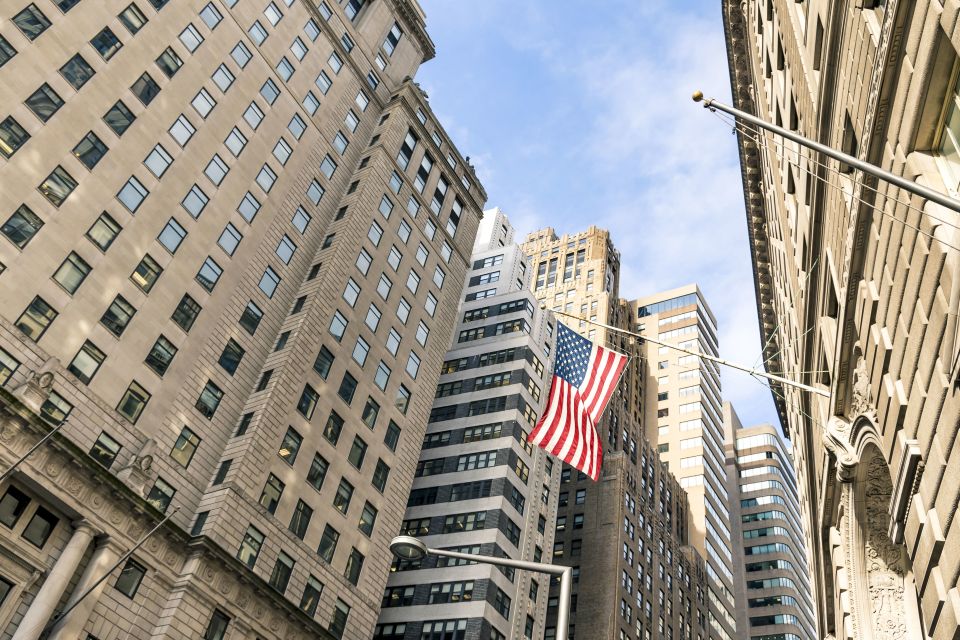
Wall Street can look like glass-and-steel from far away, but it’s really a story built block by block. This tour uses a finance-professional guide to translate what you’re seeing into how the system evolved—long before smartphones, algorithms, or even the modern NYSE address you’ve heard of.
At $39 for about 1 hour 15 minutes, the value is in the guidance. You’re paying for interpretation: why these locations mattered, how they fit into a 400+ year timeline, and what daily life around FiDi can feel like. It’s not a museum ticket. It’s orientation with context, and that’s often what you want most in Lower Manhattan.
The price also makes sense for the short duration. You get the essentials—Federal Hall, Trinity Church, and the Charging Bull area—without spending half a day fighting subways and long lines.
You can also read our reviews of more tours and experiences in New York City.



Getting Oriented Near 22 Broad Street (and Why the Route Works)
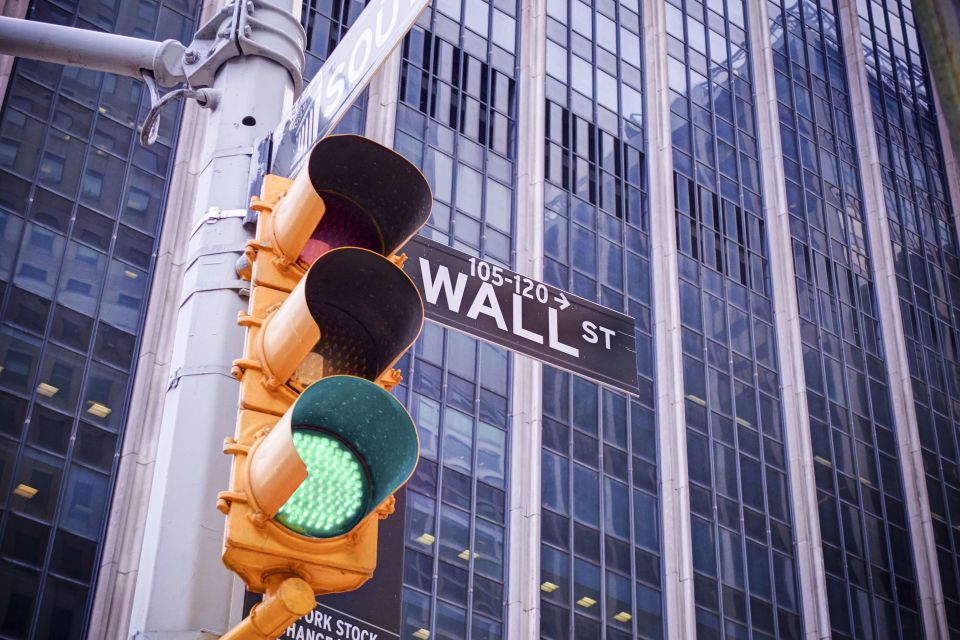
You start at 22 Broad St, right in the Financial District where it’s easy to connect from public transportation. That matters because Lower Manhattan is simple to reach but annoying to circle when you’re late. With a set start near the core streets, you can arrive, meet up, and get moving fast.
The tour is designed as a short loop with a finish near Harry B Helmsley Plaza / 137 Broadway, ending close to the Federal Reserve area. That gives you a satisfying sense of “start here, end here” geography—so you don’t just collect photos, you leave with a mental map.
Expect a moderate walk of about 1 mile, mostly level. It’s outdoors much of the time, which is great on a clear day and less charming if it’s pouring rain and windy. Bring the basics: comfortable shoes and layers.
Federal Hall: Where New York’s Founding Energy Meets Finance
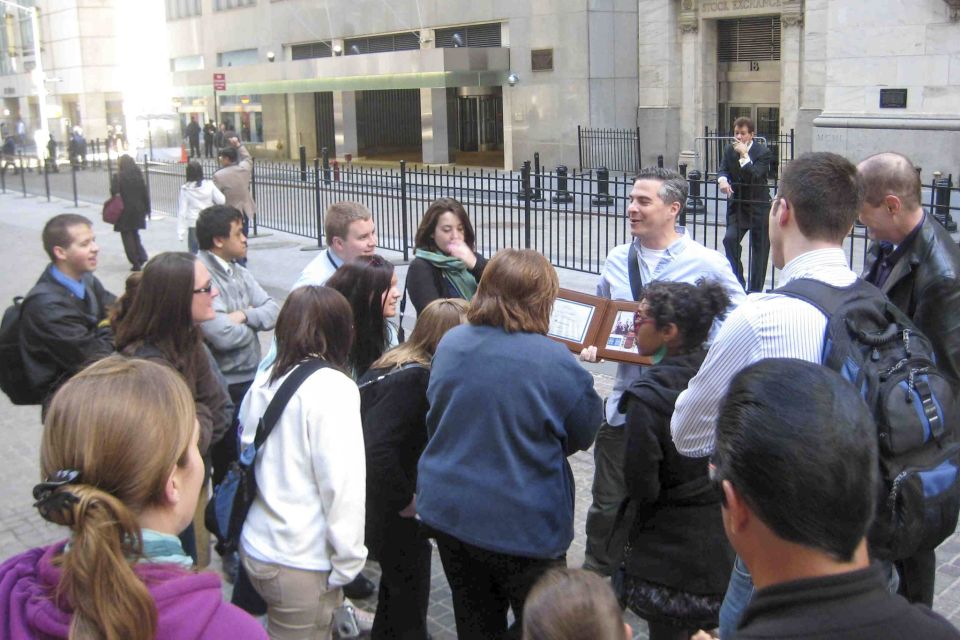
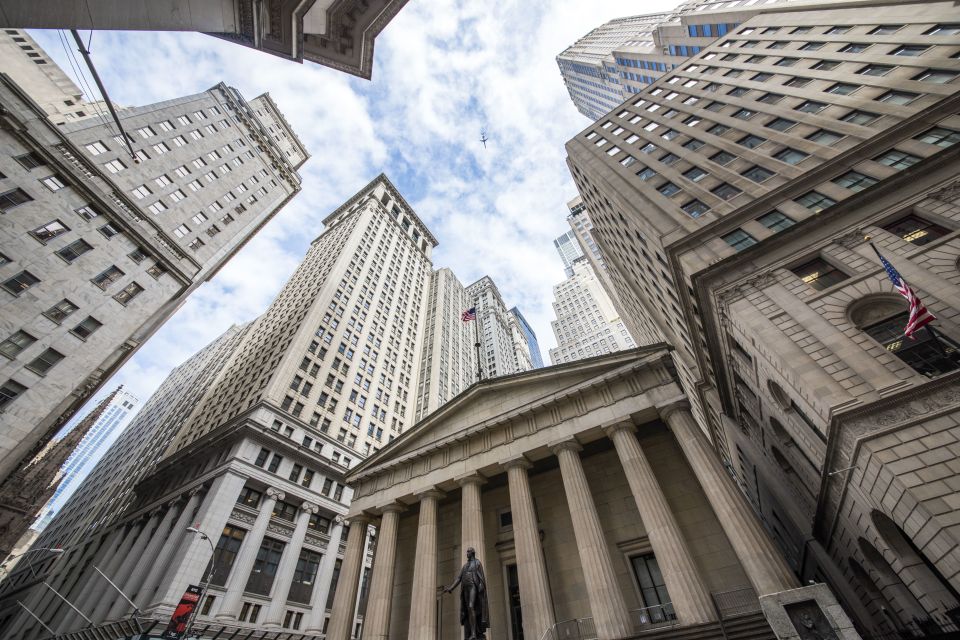
The tour kicks off at Federal Hall, where George Washington became President. This stop works because it bridges eras. You’re not just looking at a landmark—you’re standing in a place where early American political power and the idea of markets and institutions began to crystallize.
This is also one of the most useful stops for first-timers. If you only know Wall Street as money culture, Federal Hall gives you the broader context: the nation’s early government and the financial infrastructure that would later concentrate here.
Time on site is about 20 minutes, so you get enough to absorb what it means without feeling rushed. And since the tour is focused, the guide usually frames what to notice so the building doesn’t become a generic photo backdrop.
Trinity Church: The Quiet Pause With Big Names Attached
Next is Trinity Church, a place that feels calmer than the streets around it. You’ll also hear how it connects to early American figures, including being the burial place of Alexander Hamilton.
This stop matters because it adds contrast. Wall Street is often portrayed as loud, competitive, and ruthless. Trinity Church reminds you the area also has deep civic and personal history—people built lives here, not just portfolios.
If you’re sensitive to heavy topics, this is where that tone can shift in a thoughtful way. The tour doesn’t skip the difficult parts of how money shaped society, and the guide may set you up for that later perspective with the solemn atmosphere here.
Plan on about 15 minutes. It’s enough time to slow down, hear the story, and then get back into street-level Lower Manhattan.
Charging Bull: The Photo Stop That Actually Teaches You Something
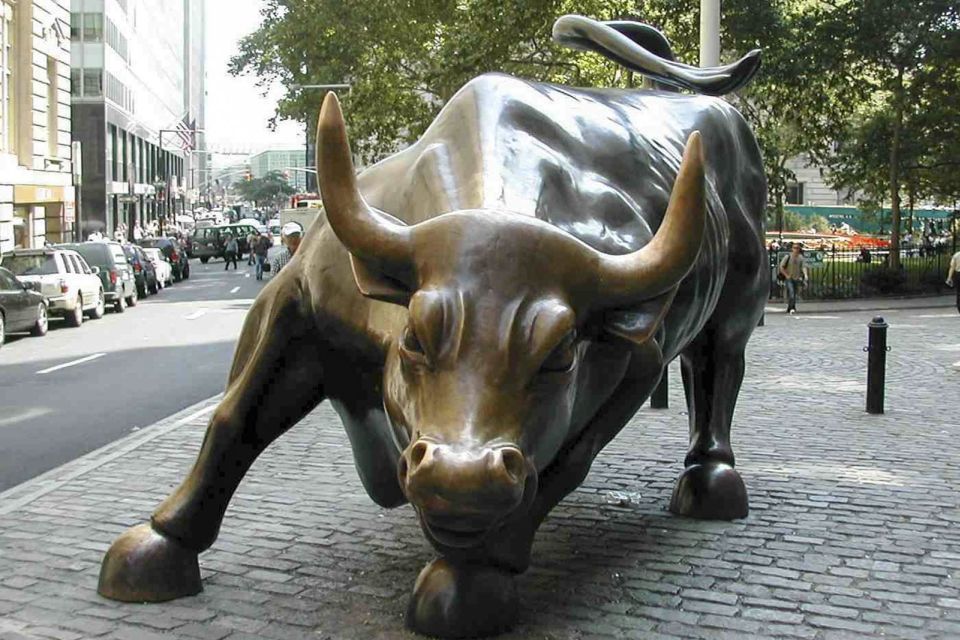
Then you hit Charging Bull (the Wall Street Bull) for about 15 minutes. Yes, it’s a classic photo spot. But the tour treats it as a symbol, not just a selfie moment.
The guide typically connects the bull to the idea of market optimism and public perception—the story people tell about money when they don’t have spreadsheets in hand. It’s a good point to pause because it helps you explain to yourself what you’re seeing later when you pass modern financial buildings.
Real talk: this is the type of stop where crowds can exist. If you want clean photos, you’ll do better by following your guide’s timing and standing where they suggest. Even then, the area is famous for a reason, so expect some movement around you.





Seeing Goldman Sachs and Deutsche Bank Area From the Street
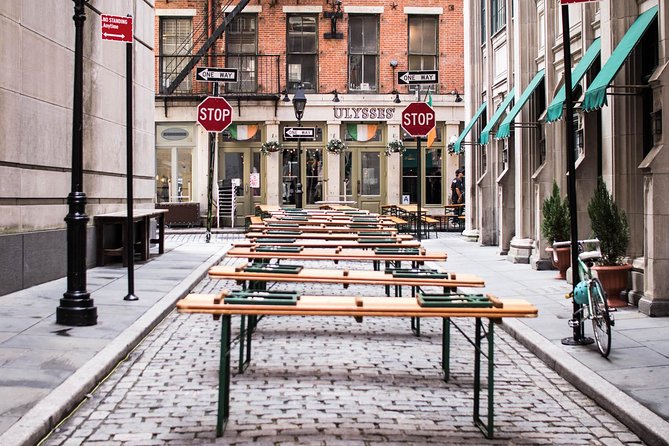
You’ll pass major financial landmarks along the way, including the area associated with Goldman Sachs and Deutsche Bank, often referred to as 60 Wall Street. Since the tour is mostly outdoors, your “inside access” is more about seeing the fronts, understanding their role, and placing them into the timeline you’re hearing.
This part is where a finance-professional guide really pays off. The buildings alone don’t tell you how institutions operate. The stories do. You’ll get the sense of how high-level meetings and big negotiations fit into the city’s physical layout—and why Lower Manhattan became the gravitational center for U.S. finance.
One practical note: because you’re outside and walking, your ability to hear can depend on your position in the group. I’d suggest staying closer to the guide if you want every detail. If audio is an issue, you’ll likely pick up more by moving toward the front rather than expecting perfect sound from anywhere.
The NYSE Reality Check: Why It’s Still Worth It
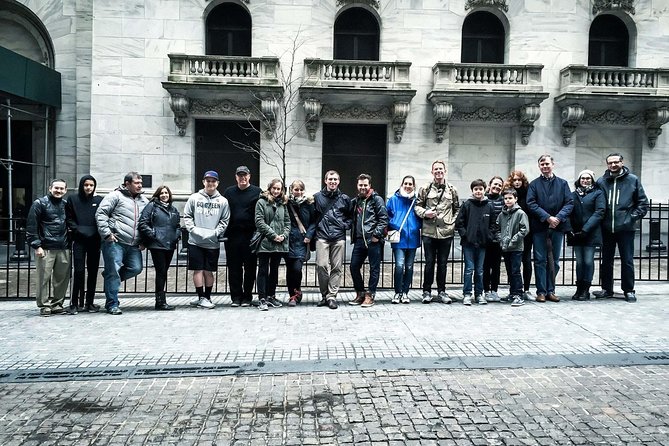
Here’s the big, make-or-break fact: you do not go inside the New York Stock Exchange. The building has been closed to visitors since 2001.
I know that’s disappointing for some people. But I also think it can still be worth it, because this tour is about explaining the system and the neighborhood, not selling you an inside-the-building fantasy. When you’re walking past the financial district’s key spaces, your guide can point out what you should notice from the street and how those locations connect to the larger story.
If your dream includes entering the NYSE itself, you’ll want a different plan. If your dream is to understand what Wall Street is and why this part of Manhattan matters, then this tour can deliver that clearly.
Ending Near the Federal Reserve: The Place the Stories Point Toward
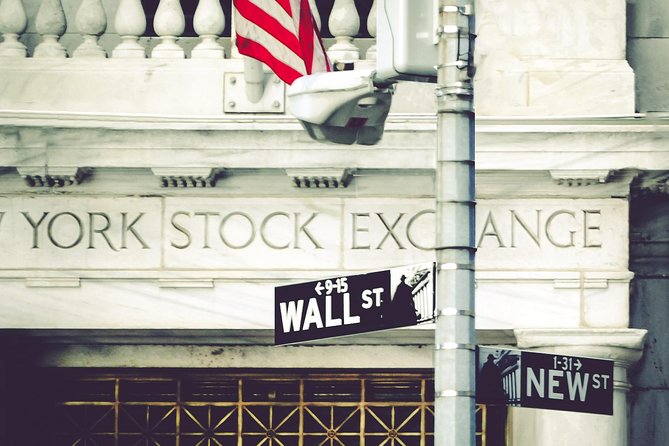
The tour ends near the Federal Reserve area, close to the Helmsley Plaza / 137 Broadway finish. This last stretch matters because it ties the whole walk together.
You’re not just finishing at a random corner. You’re ending where monetary policy and economic influence come into focus. The guide’s framing through earlier stops often makes this feel like a “there it is” moment—how the street-level landmarks connect to national-level decisions.
Time-wise, you’re still moving, not trapped in a final long stop. Expect the last minutes to focus on wrap-up context and how to keep your bearings once the guide walks away.
What the Guide Adds: Personal Finance World Stories (Jesse, Julie, Jose, and More)
The most consistently praised part is the guide approach: clear explanations, strong storytelling, and personal anecdotes from finance-adjacent or finance-experience backgrounds. Names like Jesse, Julie, and Jose show up as examples of guides who bring energy and humor without turning the tour into stand-up.
A great part of this experience is the way the guide balances the shiny with the complicated. You can learn about the entrepreneurial spirit and immigrant-driven institution building, but the tour also does not shy away from the darker parts of money’s past—like early slavery-related markets and how 20th-century events and 9/11 changed the area’s trajectory.
That balance is one reason people rate the tour highly. You leave with more than landmarks. You leave understanding how finance is tangled up with society, politics, and human choices.
Timing, Weather, and Comfort Tips That Make the Tour Easier
The tour is about 1 hour 15 minutes and includes about 1 mile of mostly level walking. That’s short enough to fit on a busy itinerary, and long enough to feel like you actually did something meaningful.
It runs rain or shine, so dress for the weather in Lower Manhattan. If it’s cold or windy, you’ll want layers. If it’s wet, bring something that lets you keep your phone dry for photos around Charging Bull.
Also, bring a mask if it matters to you. If you forget, a mask is available for $1.
For families, the length helps. For first-time Wall Street visitors, the structure helps even more. You hit the major points quickly, then the guide’s story stitches them together.
Who This Tour Is Best For (and Who Might Want Something Else)
This is best for you if you like finance and want a street-level understanding of how it developed. It’s also a smart choice if you don’t have a finance background, because the guide’s job is to translate concepts into plain language and local landmarks.
I’d especially recommend it for:
- First-time visitors who want to get oriented in FiDi fast
- People who enjoy history but want it connected to systems and today’s world
- Anyone traveling with someone who thinks Wall Street is only for experts
You might want to skip it (or pair it with another activity) if:
- Your main goal is entering the NY Stock Exchange building
- You hate outdoor walking in any weather
- You need a mostly indoor experience
Should You Book the Wall Street Insider Tour With a Finance Professional?
Book it if you want a short, high-context walk that turns buildings into meaning. For $39, the best value is the guide’s finance-world perspective and the way the tour covers both the institution story and the human side—including the tough chapters. The 4.7 rating and the strong recommendation rate reflect that people leave feeling they learned something real and useful.
Don’t book it if you’re focused on ticking off an inside-visit to the NYSE. This tour is about seeing and understanding from the outside, then ending near the Federal Reserve for a satisfying sense of the story’s end point.
If you choose it, go in with one mindset: you’re not here just for photos. You’re here to understand why these eight blocks became the center of U.S. finance—and how the city shaped the money, even when the money shaped the world back.
FAQ
Is the Wall Street Insider Tour with a Finance Professional mostly outdoors?
Yes. It’s mostly an outdoor walking tour, with a chance to visit inside a few buildings.
Do we go inside the NY Stock Exchange?
No. The NY Stock Exchange has been closed to visitors since 2001, so the tour does not include entrance.
How much walking is involved?
You’ll cover about 1 mile at a leisurely pace. The route is fairly level.
Where does the tour start and end?
It starts at 22 Broad St, New York, NY 10005, and ends near Harry B Helmsley Plaza at 137 Broadway, New York, NY 10006.
What’s included in the tour price?
You get a professional, entertaining guide with financial industry experience, plus time to see the Financial District and Wall Street highlights.
What’s not included?
The tour does not include entrance to the NY Stock Exchange. A face mask is available for $1 if you need one.
Is this tour accessible for wheelchairs or strollers?
Yes, this tour is accessible for strollers and wheelchairs.
What happens if it rains?
Tours run rain or shine. If extreme weather forces a cancellation, you’ll be offered the chance to reschedule or receive a full refund.
What languages is the tour offered in?
The tour is offered in English.