
REVIEW · NEW ORLEANS
New Orleans: Walking Tour Inside St. Louis Cemetery No. 1
Book on GetYourGuide →Operated by New Orleans Hop-On Hop-Off · Bookable on GetYourGuide
A cemetery tour with secret access. Step into St. Louis Cemetery No. 1, a spot that is closed to regular visitors, and you’ll hear the stories behind names like Marie Laveau and the Nicolas Cage pyramid tomb.
I especially like the private-only entry feel. It’s not a casual wander; it’s a guided route that gets you close to the city’s above-ground crypts and below-ground sites, with explanations you won’t find from a fence post. I also love the way guides such as Zelda, Richie, and Jimmy blend history with humor and real context, so the whole place feels like a living part of New Orleans, not just a set of stones.
One thing to consider: the tour is short and moves at a brisk pace, so you need to be ready for heat and for seeing a lot in 55 minutes. Bring water, plan for sun, and don’t expect extra-long lingering at every tomb.
In This Review
- Key Things You’ll Notice on This St. Louis Cemetery No. 1 Tour
- Entering St. Louis Cemetery No. 1 Through Authorized Gates
- Where You Meet, and How to Start Without Losing Time
- The Route: Front Gates to Famous Tomb Stops
- New Orleans Burial Customs: Why the Tombs Look Like This
- Marie Laveau Stop: The Voodoo Queen Story Explained
- Nicolas Cage’s Pyramid Tomb (Yes, It’s Real Here)
- Guides Are Part of the Value: Humor, Clarity, and Shade
- Timing, Walking Pace, and What to Bring in Real Life
- Price and Value: Is $25 a Fair Deal?
- Who This Tour Suits Best (and Who Might Skip It)
- Should You Book This St. Louis Cemetery No. 1 Tour?
- FAQ
- Where do I meet for the St. Louis Cemetery No. 1 walking tour?
- How long is the tour?
- Is St. Louis Cemetery No. 1 open to the general public?
- What famous tombs will I see during the tour?
- What is included in the price?
- What language is the tour guide?
- Is the tour wheelchair accessible?
- Do I need to pick up anything when I arrive?
- Can I cancel if my plans change?
Key Things You’ll Notice on This St. Louis Cemetery No. 1 Tour
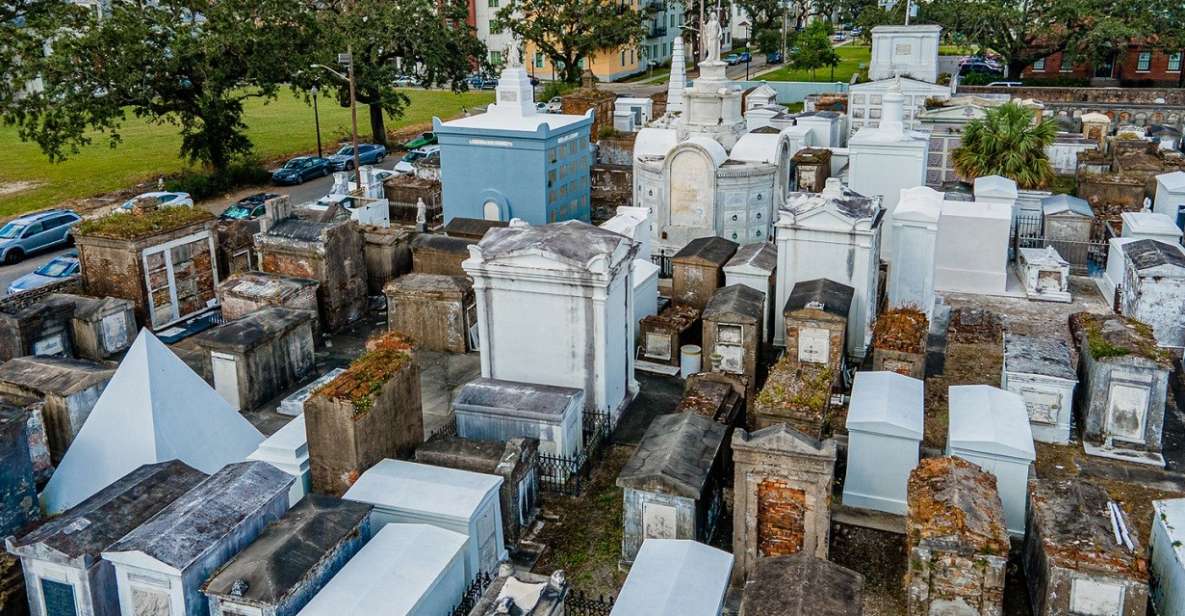
- Authorized access only: the cemetery is closed to the general public and you’ll enter as part of the tour.
- Marie Laveau’s tomb stop: you’ll visit the gravesite tied to the Voodoo Queen legend.
- Nicolas Cage’s pyramid tomb: yes, the famous actor’s tomb is part of the route.
- Above-ground and below-ground burial customs: you’ll see how New Orleans uses vaults, crypts, and space differently than most places.
- Guides who make stories stick: Zelda, Richie, Jimmy, and others are praised for humor plus clear facts.
- Shade breaks and practical comfort: tents and even cooling mist pop up during hot stretches.
Entering St. Louis Cemetery No. 1 Through Authorized Gates
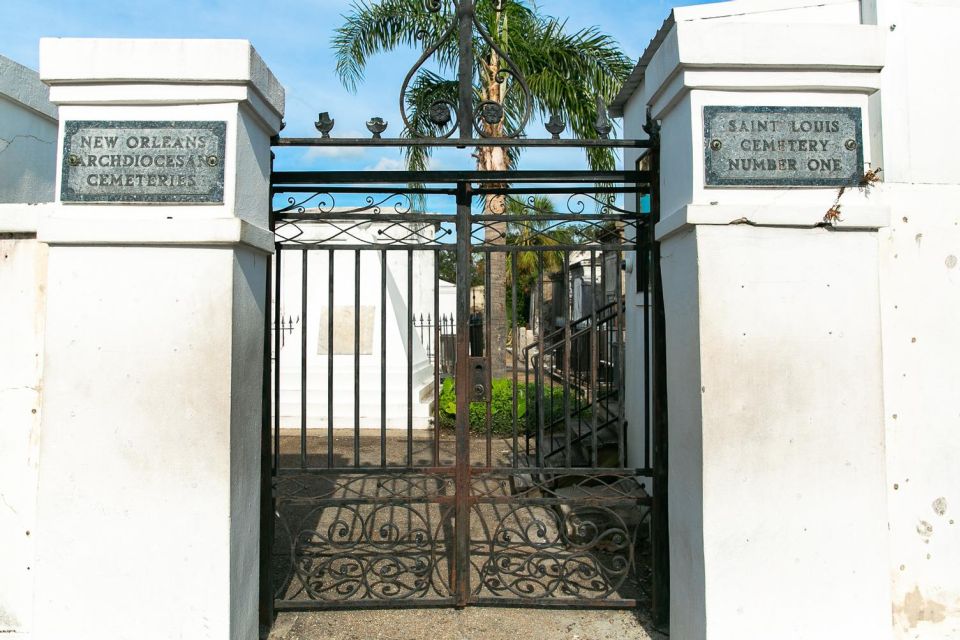
This isn’t a typical cemetery stroll. What makes it compelling is the setting: St. Louis Cemetery No. 1 is famous, old, and beautiful, but it’s also closed to the general public. On this tour, you get into the cemetery through the authorized route and hear the “why” behind what you’re seeing.
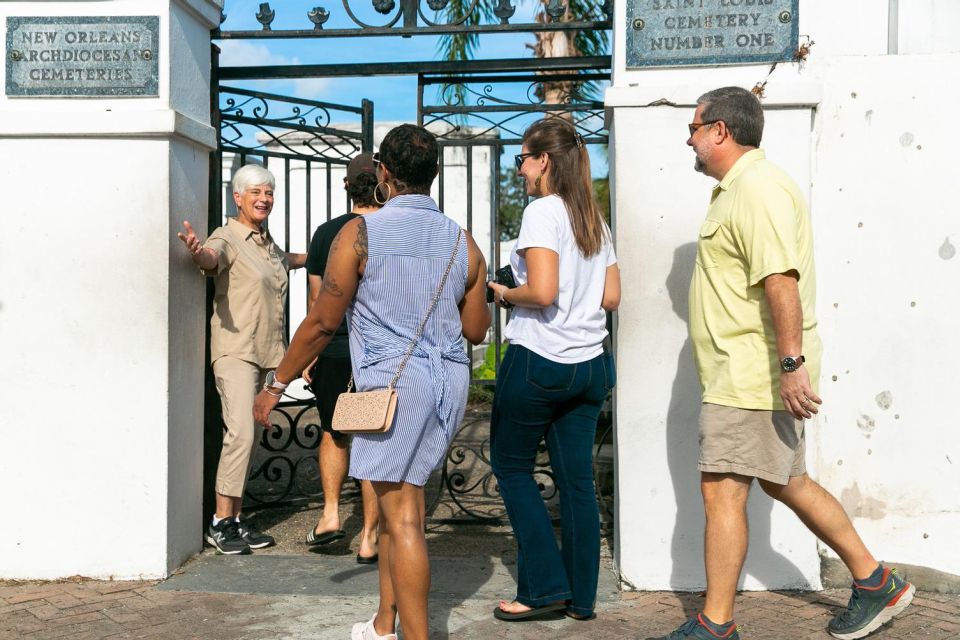
You’ll start at the Basin St. Station Visitor Center area near the French Quarter, then walk through the front gates with your guide setting the tone. The vibe is part spooky, part educational, and that balance is the point. New Orleans burial practices aren’t random. They’re shaped by geography, weather, and long-standing traditions, and the guide helps you connect the stones to the people and the city.
And yes, the famous names matter. You’ll see Marie Laveau’s tomb, and Nicolas Cage’s pyramid-shaped tomb is on the route too. But the tour is also about how the city treats memory: where families place remains, how tombs are built above ground, and how caretaking works over time.
You can also read our reviews of more tours and experiences in New Orleans.



Where You Meet, and How to Start Without Losing Time
Your meet-up point is at 501 Basin St., at the Basin St. Station Visitor Center. Look for the Cemetery Tour Desk inside the visitor center. This spot is right by the French Quarter area, at the intersection of Basin Street and St. Louis Street, so it’s easy to pair with other neighborhood plans before or after.
Before the walk begins, the visitor center is useful in real ways. You can check out exhibits about New Orleans, including an interactive map tied to Hurricane Katrina floodwaters. There’s also a café, restrooms, and a gift shop. It’s not just waiting room energy; it’s a chance to get your bearings fast.
Then you’ll get your tour stickers and depart on time. A few practical tips matter here. Some visitors find that they need paper tickets at the desk even if they booked online, so don’t assume your digital confirmation is enough. If you want an easy start, arrive early and let the check-in staff handle the rest.
The Route: Front Gates to Famous Tomb Stops

Once your group is together, you’ll head to the cemetery gates and begin learning right away. The guide’s early explanation is important because New Orleans cemeteries don’t work like the cemeteries most people picture from other U.S. cities. Instead of only flat headstones in open fields, you’re dealing with crypts, vaults, and architecture built to handle the realities of the city.
The tour typically includes close looks at elaborate above-ground crypts and access to perspectives on below-ground burial sites. You’ll also move through different sections where the guide explains who is buried where and why certain parts feel different from others.
The route is designed for a quick, focused visit. That’s helpful if you want a strong overview without spending half a day in a cemetery. It can also be a drawback if you love slow photography sessions or want to sit and stare for long stretches. The pace is part of the format because tours run back-to-back.
New Orleans Burial Customs: Why the Tombs Look Like This
The most valuable part of the tour is understanding the burial customs. The guide doesn’t just point at monuments. You learn what makes New Orleans cemeteries distinct.
Expect to see above-ground crypts and vaults that show a different idea of space and preservation than most modern burial grounds. The cemetery’s design reflects the city’s long relationship with building in ways that can handle humidity and flooding realities.
You’ll also hear about the cemetery’s history and how it became such an iconic part of New Orleans identity. One detail I like from the tour’s explanations is the way caretaking can show up physically. You may hear about perpetual care—how some graves have it and others don’t—and how that difference can show up in the upkeep patterns you notice while walking.
If you’ve ever wondered why tombs feel like mini buildings and why there’s so much symbolism carved into stone, this is where the tour turns from spooky into understandable. It helps you read the cemetery like a map.
Marie Laveau Stop: The Voodoo Queen Story Explained
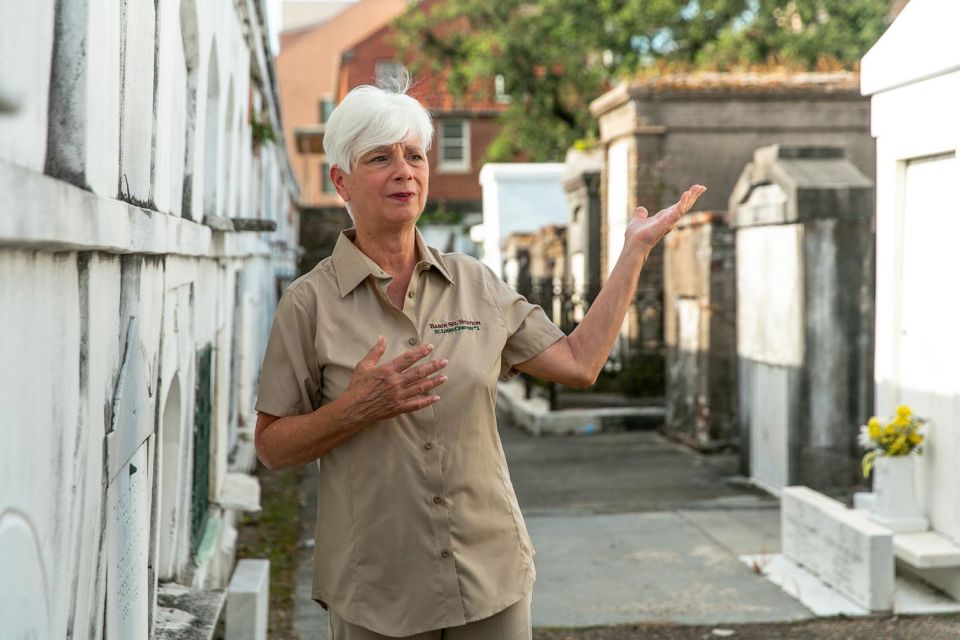
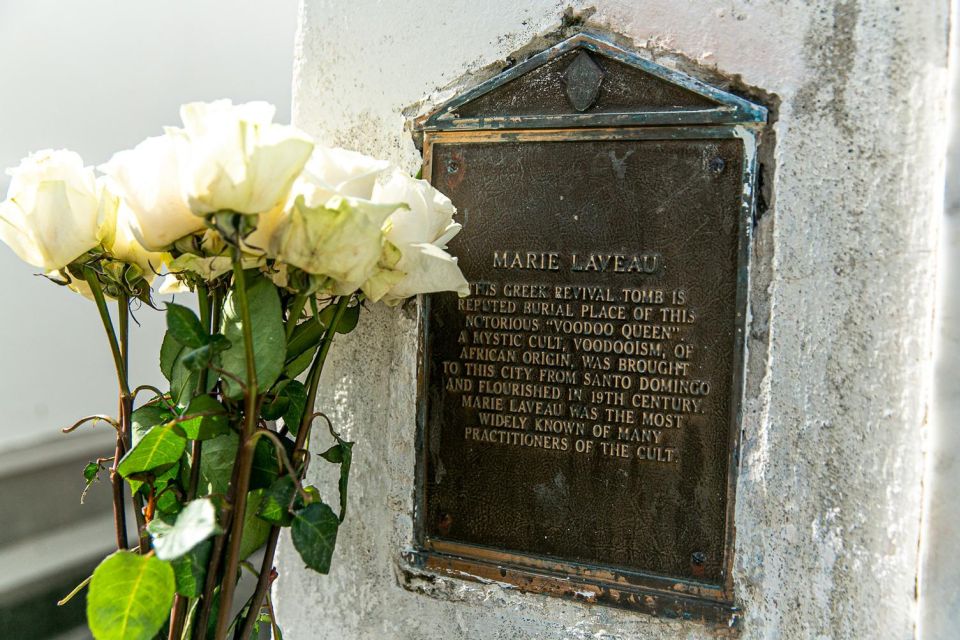
One of the signature moments is the tomb of Marie Laveau, often described as the Voodoo Queen. Even if you already know the legend, the value here is how the guide frames it in context, not just as a headline.
This stop works because it gives the tour a cultural anchor. It connects burial practices to the larger story of New Orleans, where religion, folk practice, and local tradition have always mixed in complicated ways. The guide also tends to keep the tone respectful while still making the story vivid.
You should also expect the tour to connect Laveau’s story to the cemetery itself—why certain figures became linked with specific kinds of remembrance, and how the city’s residents used the cemetery as a place for lasting presence. This isn’t just about learning a spooky name. It’s about seeing how New Orleans holds onto myth alongside documented past.






Nicolas Cage’s Pyramid Tomb (Yes, It’s Real Here)
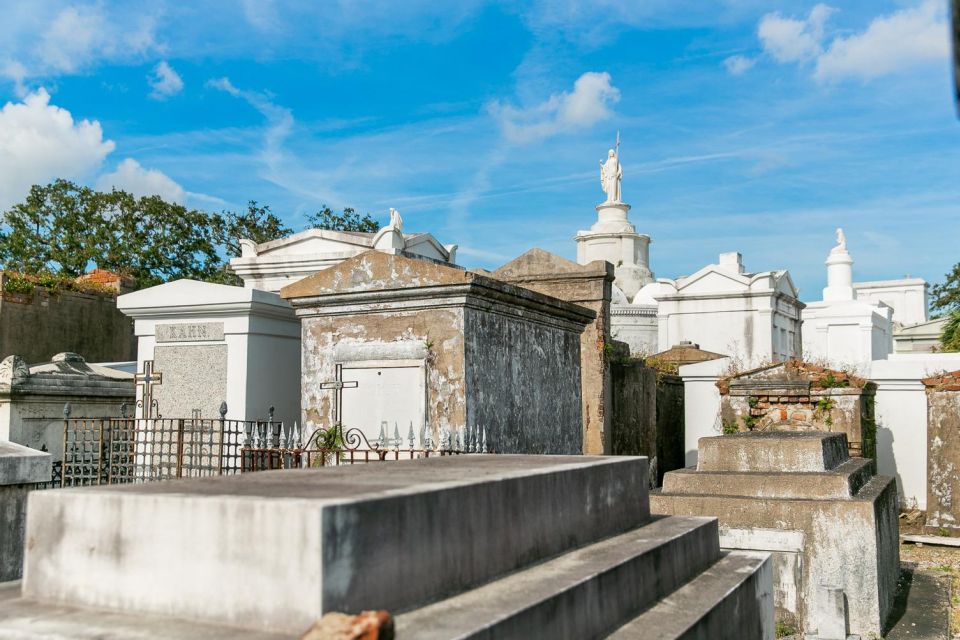
Another standout is Nicolas Cage’s pyramid-shaped tomb. It’s the kind of detail that grabs your attention immediately, and it works well in a short tour because it breaks up the density of older monuments with something modern and oddly specific.
The guide uses that stop to help you see how the cemetery continues to evolve as a place of public memory. You’re not only looking at history in the abstract; you’re seeing how different eras and famous people still end up in the same space, following the local cemetery logic.
This stop can also remind you to stay present. It’s tempting to treat a famous tomb like a photo prop. The better way is to let the guide explain what the structure represents and how it fits into New Orleans’ approach to above-ground burial.
Guides Are Part of the Value: Humor, Clarity, and Shade
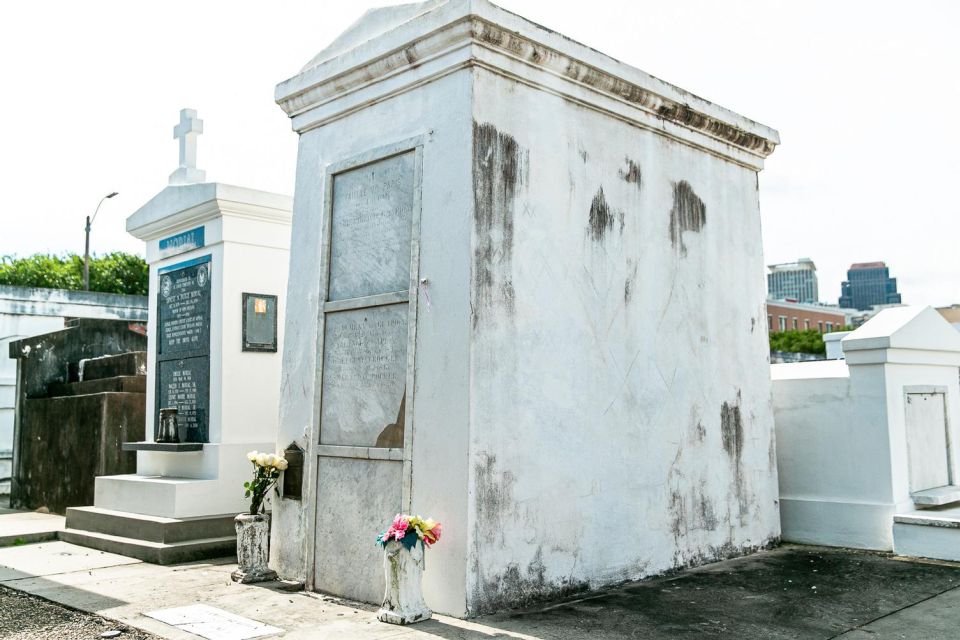
A lot of the reviews point to the same thing: the guide makes the tour feel fun without turning it into a joke. Names you might hear include Zelda, Richie, Jimmy, Taylor, Libby, Buddy, and Mama Nita. Different personalities, same goal: make the cemetery understandable and interesting.
The strongest guides do two jobs at once. First, they keep the facts clear. You learn about notable figures tied to New Orleans, and you hear how the cemetery’s layout relates to that. Second, they manage the mood. Stories land better when the guide’s pacing and tone match the setting, especially when the sun is brutal.
That practical side matters. Many tours include shade and some form of comfort breaks, such as tents and even cooling mist. You’ll also get direction on where to stand and when to move, so the group can keep going without overheating.
Some guides also encourage questions throughout. That can be a big deal on a cemetery tour because you’ll likely want to ask what things mean, not just who is buried there. A guide who answers calmly and clearly helps you leave with more than a photo.
Timing, Walking Pace, and What to Bring in Real Life

This experience is 55 minutes total, with the walking portion around 45 minutes. That means you’re moving through a lot of ground quickly, and there are limited chances to slow down at every crypt.
So plan for comfort:
- Bring water. The cemetery and its surrounding streets can be hot.
- Use sunscreen and wear light clothing.
- If you’re heat-sensitive, a small umbrella can help with shade.
- Wear shoes that handle uneven surfaces.
You might notice the tour includes areas that offer shade via tents. Even so, you should still assume you’ll have sun exposure. Guides typically manage this well, but you’ll be happier if you show up prepared.
Photography can be part of the experience. One tip from tour accounts: your guide may encourage pictures or videos, so if that matters to you, keep your phone ready without blocking others.
Price and Value: Is $25 a Fair Deal?

At about $25 per person, this tour prices itself like a practical add-on, not a half-day production. The value comes from two things working together.
First, you’re getting entry to a site closed to the public. That alone raises the value because you’re not paying for a generic “look around from outside” experience. You’re paying for authorized access plus interpretation inside.
Second, you’re buying the guide’s storytelling and explanations. The cemetery could overwhelm you if you’re just wandering on your own. The tour turns the stones into stories, and it also helps you understand why burial customs in New Orleans look the way they do.
Is it perfect value for everyone? If you want long stays at a few monuments, this tour might feel short. But if you want an efficient, meaningful overview with a guide who keeps things lively, $25 for roughly an hour is a fair match.
Who This Tour Suits Best (and Who Might Skip It)
You’ll love this tour if you:
- Want an overview of one of New Orleans’ most famous cemeteries without spending hours.
- Like guided storytelling that mixes famous names with practical cultural context.
- Enjoy learning how a place reflects local history, not just seeing it.
You might skip it if you:
- Hate walking in heat or dislike time-boxed routes.
- Prefer self-guided wandering where you can stop for 20 minutes at one tomb.
It also pairs nicely with a French Quarter plan. Since you meet near Basin Street and the visitor center has exhibits and facilities, you can build a simple day: learn at the visitor center, do the cemetery tour, then head out for food and music.
Should You Book This St. Louis Cemetery No. 1 Tour?
If your idea of a great New Orleans day includes above-ground crypts, burial customs you can actually understand, and a guide who keeps the mood smart and fun, I’d book it. The authorized access is the big advantage, and the Marie Laveau plus Nicolas Cage stops make it memorable even if you’re a first-timer.
If you’re extremely sensitive to heat or you hate quick pacing, make your plan carefully and come prepared with water and shade tools. Also choose a time when you’ll feel comfortable walking through the cemetery in the sun.
Overall, this is one of those small-ticket experiences that punches above its weight because you’re paying for access and interpretation, not just entry.
FAQ
Where do I meet for the St. Louis Cemetery No. 1 walking tour?
Meet at 501 Basin St at the Basin St. Station Visitor Center. Look for the Cemetery Tour Desk inside the visitor center.
How long is the tour?
The tour lasts about 55 minutes, with walking time listed around 45 minutes.
Is St. Louis Cemetery No. 1 open to the general public?
No. The cemetery is closed to the general public and it is only for authorized tours like this one.
What famous tombs will I see during the tour?
You’ll stop by the tomb of Marie Laveau and you’ll also see Nicolas Cage’s pyramid-shaped tomb. The tour also includes other notable figures from New Orleans’ past, including Homer Plessy.
What is included in the price?
The price includes a guided walking tour of St. Louis Cemetery No. 1 and a live guide.
What language is the tour guide?
The tour is in English.
Is the tour wheelchair accessible?
Yes, the tour is listed as wheelchair accessible.
Do I need to pick up anything when I arrive?
You check in at the Cemetery Tour Desk inside the Basin St. Station Visitor Center and you may need paper tickets at check-in. You’ll also receive tour stickers before heading into the cemetery.
Can I cancel if my plans change?
Yes. Free cancellation is available up to 24 hours in advance for a full refund.