
REVIEW · NEW YORK CITY
New York Pass: 100+ Things To Do including Empire State Building
Book on Viator →Operated by The New York Pass · Bookable on Viator
Sky-high sights start with one scan.
The New York Pass is interesting because it turns 100+ must-dos into a simple, digital pass you can plan around day by day, including iconic skyline stops like the Empire State Building. I like the sheer mix: observation decks, museums, neighborhoods, and even boat rides are all in the same system. One thing to keep in mind: for a number of the biggest attractions, you still need reservations or time-slot pickup, so you can’t assume true skip-the-line at every stop.
What I really like is the flexibility of picking a pass length that matches your trip, from 1 to 5 days, and then building a route around what’s open when. The pass is also designed for independent touring: you use the Go City app to see what to do next and how to enter. The drawback is practical, not theoretical: some attractions require waiting in line to receive a time slot or a ticket, even when your admission is covered.
In This Review
- Key Things To Know Before You Build Your NYC Plan
- The $169 Value Bet: When the New York Pass Really Pays Off
- Using the Go City App Like a Local: Scan, Reserve, Repeat
- Empire State Building Timed Entry and Night Views
- One World Observatory and the 102-Story Elevator Ride
- One World to 9/11: Respectful Timing for Memorial and Museum Stops
- Statue of Liberty and Ellis Island: What’s Included, What’s Not
- Top of the Rock vs Midtown Crowds: The Line-to-Time-Slot Reality
- Edge NYC Above Hudson Yards: Glass Platform Drama
- High Line and Hudson Yards Vessel: A Walk You’ll Actually Remember
- Museum Power Days: MoMA, Guggenheim, Whitney, MoMA PS1, and More
- Natural History and Intrepid: Big Exhibits With Straightforward Time
- Waterfront Views: Circle Line Midtown Cruises and South Street Seaport History
- Central Park by Bike and Walk: The Best Way to Avoid NYC Fatigue
- Neighborhood Tours and Photo Stops: Wall Street to Little Italy
- Sports, Speakeasies, and Quirky Add-Ons: Yankee Stadium, Broadway, VR, and Jazz
- Big Bus and the Practical Limits of Hop-On Hop-Off
- Should You Book This New York Pass?
Key Things To Know Before You Build Your NYC Plan

- You activate the clock on your first visit: the pass stays valid for the consecutive calendar days you purchased, not 24-hour periods.
- Reservations matter for the headline sights: Empire State Building, Statue of Liberty/Ellis Island (advanced reservations), and several museums and tours have similar rules.
- Time slots often mean more waiting: a number of top venues require you to queue to get your slot, even with the pass.
- Some entries are limited by attraction policy: for example, Statue of Liberty pedestal/crown levels are not included.
- Each attraction can be used once: plan to hit the big stuff efficiently rather than treating it like unlimited admission.
- The app tells you what to do at the door: ticket desks, kiosks, and pickup steps vary by venue, so follow the in-app instructions for your specific stop.
The $169 Value Bet: When the New York Pass Really Pays Off
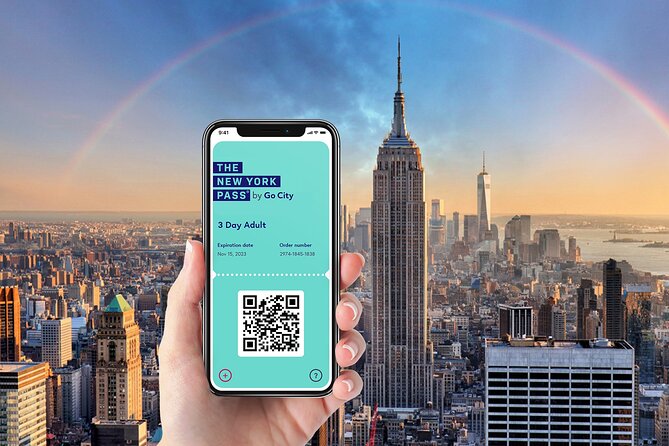
At $169 per person, this pass only feels like a win if you actually stack several paid attractions close together. The strongest value comes when you choose expensive “anchor” experiences that you’d otherwise have to buy one by one, like a major observation deck, a big museum day, and a Statue of Liberty/Ellis Island ferry visit.
A smart way to judge value is to price out your likely lineup before you arrive. If your plan includes at least 3–5 paid attractions that require advance buying (and especially if you’ll use multiple skyline viewpoints), the math often gets easier. If your plan is mostly free walking and a single paid sight, you’ll likely do better paying as you go.
Also, note that your best days are the ones where you start early. Several included experiences can require time-slot pickup, and some venues don’t operate every day. I’ve found that the pass is at its best when you treat it like a scheduling tool, not a magical shortcut.
You can also read our reviews of more tours and experiences in New York City.



Using the Go City App Like a Local: Scan, Reserve, Repeat

The pass is a mobile ticket inside the Go City app, and it’s designed to be updated immediately after you order (you hit Get ticket to sync your pass). That matters because a lot of the friction people run into is simply not having the pass correctly loaded when they show up.
Here’s the practical approach I’d use:
Check your day plan in the app, then mark which stops are reservation-required and which ones are “general admission but with a ticket desk or time-slot pickup.” For example, Empire State Building needs a reservation, while other skyline options may require you to wait in line to obtain a time slot.
One more reality check: the pass doesn’t replace the venue’s own system. If a museum assigns entry windows at the ticket desk, you still need to follow that flow. From real-world feedback patterns, the pass works best when you arrive with your phone charged and the app open, so you can quickly find the essentials for your stop.
Empire State Building Timed Entry and Night Views
The Empire State Building is the kind of stop that anchors a whole itinerary. You go up for huge views—on a clear day you can see far across the region—and the experience is included with your pass. But the big catch is that reservations are required for this attraction.
That impacts strategy. If you’re hoping for sunset-style timing, be aware that your pass doesn’t allow booking a sunset time slot. I’d plan to aim for late afternoon into evening instead. That way, you can often catch the city lights turning on, and you’re less likely to waste your prime skyline hour.
Expect a more controlled entry flow than some other venues, because reservation timing is part of the process. If your day is already packed, I’d treat Empire State as a fixed point and build everything else around it.
One World Observatory and the 102-Story Elevator Ride

One World Observatory sits in Lower Manhattan and delivers a modern, high-tech ride up to the top. The elevator goes up in about 47 seconds using the SkyPod, and you’re 102 stories above ground.
With the pass, your admission is covered, but you should expect a queue to get a time slot once you’re there. This is one of those places where the pass doesn’t mean instant entry; it means you’re not buying the ticket, but you still follow the venue’s timed system.
What you’ll likely appreciate most is the way the experience blends views with interactive content about the city’s cultural and financial history. For itinerary planning, One World is a great counterpart to Midtown observation decks. It keeps your skyline day varied: different borough energy, different angles, and a different style of storytelling.
One World to 9/11: Respectful Timing for Memorial and Museum Stops

The National 9/11 Memorial & Museum is not just a landmark stop—it’s a solemn one. You’ll see the reflecting pools and visit areas designed for quiet reflection, then move into the museum’s exhibits with artifacts, testimonies, and interactive displays.
Practical note: you’ll need to wait in line to receive a time slot. Also, the day you plan matters because the memorial’s museum can be subject to closures (and in real trip planning, that’s been a source of disappointment). When you treat this stop as flexible rather than non-negotiable, your whole pass day feels less stressful.
I’d also build this into a day where you have time for slow movement afterward. The emotional weight can change your pacing. Plan lighter nearby activities after, so you don’t rush out and miss the meaning.






Statue of Liberty and Ellis Island: What’s Included, What’s Not

This is one of the classic reasons people buy the pass. You get the ferry visit for Statue of Liberty and Ellis Island, and you can explore Ellis Island where millions were processed upon arrival.
But read the fine print because it changes the experience: the pass does not include entry to the pedestal or crown levels inside the Statue of Liberty. Those special levels must be purchased separately, and the visit itself requires advanced reservations.
This affects planning more than people expect. Because you need a reservation, build your day around the ferry timing rather than assuming you can stroll over and get a slot. If you’re hoping for crown or pedestal access, decide that upfront, since it’s not part of the base inclusion.
If you want the best value from your day, aim for this stop earlier when your energy is high. Then you can follow with another Lower Manhattan attraction without dragging through the whole city afterward.
Top of the Rock vs Midtown Crowds: The Line-to-Time-Slot Reality

Top of the Rock is famous for wide panoramas and especially for views of the Empire State Building. The pass covers admission, but again, plan for process: you’ll wait in line to receive a time slot.
This is where your itinerary can either feel smooth or chaotic. If you’re combining multiple skyline viewpoints, I’d schedule Top of the Rock on a different day than Empire State, or at least separate them by several hours. That reduces stress if one venue runs slower than expected.
If the weather is questionable, also check your plan carefully. Observation decks are weather dependent, and visibility can make or break the experience. Use the app guidance for the latest operational notes for your exact day.
Edge NYC Above Hudson Yards: Glass Platform Drama

Edge NYC is an open-air glass-platform experience about 100 stories up in Hudson Yards. If you like modern design and big-city spectacle, this is the “wow” stop that’s easy to justify even when you’re tired.
The pass includes admission, but entry timing is managed through on-site steps. You’ll reserve entry in the next available time slot, and that reservation is done via kiosks outside the Edge entrance.
I also suggest checking your time window closely. In real feedback patterns, some visitors have felt timing affected whether an upgrade charge appeared. Even if your pass covers admission, your specific session time can influence pricing at the venue, so confirm inside the app before you go.
Then pair Edge with nearby walks: Hudson Yards is a natural base for a High Line afternoon, and the whole area is built for foot traffic.
High Line and Hudson Yards Vessel: A Walk You’ll Actually Remember
The High Line is one of those New York experiences that feels like a free asset—except your included plan includes guidance and time structure. Here, you get a tour that connects Hudson Yards’ industrial past to the modern park concept, plus time around The Hudson Yards Vessel, which features interlaced staircases with about 2,500 steps.
Important note: this activity requires advanced reservation. That makes it a strong candidate for the “book first” part of your trip planning. If you wait too long, you risk missing the session you wanted.
This stop is also great for photos and pacing. It’s not just a landmark; it’s built for movement at human speed. If you’re doing multiple observation decks, the High Line tour gives you a change of pace and keeps your day from turning into pure queueing.
Museum Power Days: MoMA, Guggenheim, Whitney, MoMA PS1, and More
Museums are where the pass often feels most fair, because admission costs can stack up fast.
MoMA is included, but you’ll need to present your pass at the ticket desk to get issued a ticket for the next available time slot. That means you should treat MoMA as a timed visit, not a “drop in anytime” stop.
The Guggenheim offers its own architectural magnet: the spiral ramp designed by Frank Lloyd Wright makes even casual browsing feel like part of the attraction. You’ll get access to exhibitions and permanent collections during your visit window.
The Whitney focuses on American art from the 20th and 21st centuries, with artists like Georgia O’Keeffe, Edward Hopper, Jasper Johns, and Jackson Pollock referenced in the included description. If you love art that feels more modern and more American in spirit, this is an ideal counterweight to MoMA.
If you’re up for a borough change, consider MoMA PS1 in Long Island City. It’s included and provides experimental art space and a sense of contemporary energy. I like planning it when I’m already doing Queens logistics, because it turns a transit day into a meaningful stop.
Two special-case notes:
- Museum of Sex is adults-only, and patrons under 18 aren’t allowed.
- The Museum of Jewish Heritage is a Holocaust memorial museum, which pairs well emotionally with other Lower Manhattan history stops.
Natural History and Intrepid: Big Exhibits With Straightforward Time
If you want science and spectacle without complicated city navigation, American Museum of Natural History is a top choice. The included highlights are the 94-foot blue whale and Tyrannosaurus Rex, plus fossils, specimens, and artifacts. The practical catch: this activity requires advanced reservation.
That means you should pick it for a day where you can commit. Once you’re in, the museum layout is built for roaming, and you can spend your two hours moving at your own pace without needing a strict schedule.
Then there’s Intrepid Museum, which is a floating museum built around historic ships and aircraft. You can get close to USS Intrepid, space shuttle Enterprise, a Concorde, and the submarine Growler. It’s included and runs on a straightforward visit model, but it’s also listed as needing an advanced reservation.
Together, these two stops make a great “non-walking” day. You get massive indoor highlights, and you’re not constantly battling cross-town distance and weather.
Waterfront Views: Circle Line Midtown Cruises and South Street Seaport History
If your feet are tired, water is your friend. Circle Line Sightseeing Cruises – Midtown lets you see the skyline from the water and choose different cruise options, including a sunset-style harbor lights route. You’ll be waiting in line for a boarding pass, so again, it’s not instant entry, but the ride itself is a relaxing payoff.
For maritime atmosphere on land, the South Street Seaport Museum gives you historic ships dating back to the 19th century and maritime artifacts. It’s a good add-on if you’re already doing Lower Manhattan.
If you’re planning a day around Statue of Liberty and Ellis Island, consider a cruise on a separate day. That spreads your “major queue experiences” across your trip and keeps at least one day feeling light.
Central Park by Bike and Walk: The Best Way to Avoid NYC Fatigue
Central Park is too big to “see everything” by foot, but it’s perfect for bikes or a guided walk. The included options include a 2-hour guided bike tour that targets park highlights like Strawberry Fields, Shakespeare Garden, and Cherry Hill, plus the option for bike rentals if you want to explore at your own pace.
There’s also a walking tour option with a guided approach to movies and park history. This is especially useful if you’re sightseeing with people who want stories, not just routes.
For bike plans, I recommend an early start. You’ll get better energy and better light for photos, and you’re more likely to complete a solid chunk of the park before you start feeling “NYC tired.”
Pair Central Park with nearby neighborhoods rather than forcing cross-town marathons. When the pass is used well, it reduces decision fatigue: you can stay in one general area and hit multiple included stops without crisscrossing the city all day.
Neighborhood Tours and Photo Stops: Wall Street to Little Italy
A big reason this pass works is that it isn’t only skyline and museums. You can add guided walks in places like Little Italy and Chinatown, plus a Harlem walking tour that’s focused on history and how economic cycles shaped the neighborhood.
There’s also a Wall Street walking tour centered on how money became the global financial institution it is today. If you want context before you look at skyscrapers, it’s a smart pairing.
For fun photo landmarks and the Brooklyn Bridge area, there’s a walking tour around DUMBO and Brooklyn Bridge, plus options linked to TV and movie sites in Central Park. Many of these walking tours require advanced reservations, so if you’re interested, treat them like planned events, not optional side quests.
Sports, Speakeasies, and Quirky Add-Ons: Yankee Stadium, Broadway, VR, and Jazz
Not every included stop is “classic tourist NYC.” Some are fun because they’re specific and different.
- Yankee Stadium classic tour: you’ll learn the history of the Yankees and get access to areas and artifacts. Tours are popular, and you should arrive about 15 minutes early, with time for security.
- Broadway & Times Square walking tour: a guided route that focuses on two districts and what’s behind the scenes.
- Escape Virtuality: a VR/AR experience where private escape rooms require a minimum of four players, with smaller parties sometimes offered other VR experiences.
- ROOM 623 – Harlem’s Speakeasy Jazz Club: a reserved experience tied to the Harlem Jazz Series, with scheduling rules listed for reservations.
These add-ons are great when you want variety across days. Just remember that anything that needs reservations can become your stress point if you leave it too late.
Big Bus and the Practical Limits of Hop-On Hop-Off
The pass includes Big Bus New York with hop-on hop-off access on the Uptown and Downtown loops. It’s included for up to 10 hours, and it has live commentary and many stops.
Here’s the thing: “hop-on hop-off” still depends on routes running normally. If there’s a major parade, route closures can happen, and in real-world planning that can wreck your day. So keep your bus day as a flexible element, not the foundation of your entire schedule.
If you love buses, it’s a convenient way to reduce walking. If you’re tight on time, I’d treat it as transport support plus a few strategic stops.
Should You Book This New York Pass?
Book it if:
- You have multiple days and you’re willing to plan your top sights around time slots and reservations.
- You want a simple, one-system way to cover observation decks, museums, and a few guided neighborhood tours.
- You’re the type who can start early, accept short waits, and move efficiently.
Skip it (or keep expectations modest) if:
- You want complete spontaneity and hate any timed process.
- Your plan includes only one or two paid attractions. At $169, the pass needs volume to feel worth it.
- You’re sensitive to queues. Some included stops still require waiting in line to obtain a ticket or time slot.
My honest take: this pass can turn a first-time NYC visit into a highly efficient checklist—but only if you treat it like a plan. Use the Go City app, lock in reservation-required stops early, and then let the day flow around your booked anchors.