REVIEW · BOSTON
Boston: Freedom Trail History Small Group Walking Tour
Book on GetYourGuide →Operated by Hub Town Tours · Bookable on GetYourGuide
Fifteen years of conflict, mapped on foot. This small-group Freedom Trail walk strings together the American Revolution in a logical route, from Boston Common to the North End, with a guide who explains why loyalty to crown and country became such a breaking point.
I love the small-group setup (up to 15 guests) because it keeps the walk from turning into a shoulder-to-shoulder shuffle. I also like that the tour hits the big names and the key “why it mattered” moments, including Granary Burying Ground and the Old State House, not just a pile of dates.
One possible drawback: you’ll cover about 2 miles on city sidewalks at a steady pace. If you’re not used to walking in weather changes, you’ll want to come prepared with comfortable shoes and layers.
In This Review
- Key Points to Know Before You Go
- Getting the Revolt Map: What This Freedom Trail Walk Really Does
- Boston Common to the Massachusetts State House: Where Pressure Starts
- Granary Burying Ground and King’s Chapel: Patriots You Can Point To
- Boston Latin School to Old Corner Book Store: Education, Printing, and Control
- Old South Meeting House to Old State House: The Moment Loyalty Breaks
- Boston Massacre Site to Faneuil Hall: Momentum in Public
- Paul Revere House, Hanover Street, and the Road Toward North End Night
- Old North Church, Copp’s Hill, and the Charlestown Views You’ll Remember
- How Much This Tour Delivers for $35
- Who This Tour Fits Best (And Who Might Feel Frustrated)
- Should You Book This Freedom Trail Tour?
- FAQ
- Where is the meeting point for the Boston Common Freedom Trail tour?
- How long is the tour?
- How much does the tour cost?
- How large is the group?
- Does the tour cover all 16 official Freedom Trail landmarks?
- Are museum admissions included?
- How far do you walk during the tour?
- Is video recording allowed, and can I bring large luggage or bags?
- Is this tour suitable for young children or limited fitness?
- What if my plans change at the last minute?
Key Points to Know Before You Go
- Up to 15 guests means more questions and less crowd stress on narrow sidewalks
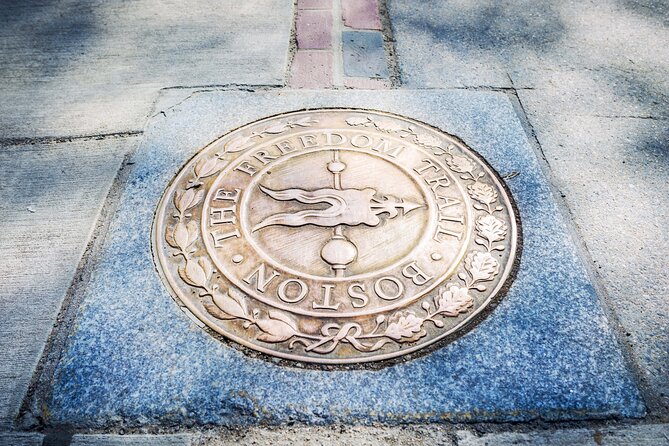
- You’ll see all 16 official Freedom Trail landmarks in one outing
- Expect story-driven stops focused on the lead-up to the Revolution, not just plaques
- The route ends in the North End at Copp’s Hill Terrace, with views toward Charlestown
- You’ll visit resting places of key figures like Samuel Adams and Paul Revere
- Plan for a roughly 2-mile walking route and winter-friendly clothing when needed
Getting the Revolt Map: What This Freedom Trail Walk Really Does
Boston’s Freedom Trail can feel like a scavenger hunt if you do it solo. This tour works because you get the plot. You start at the beginning and keep walking forward through the same tension Bostoners faced in the 1760s and 1770s: where to stand when the crown’s demands grew harder and rebellion started looking less theoretical.
I like that the guide ties the landmarks to the choices real people made. That turns places like meeting houses and court buildings into something you can picture—arguments in rooms, decisions made quickly, and rumors that could spread faster than anyone could control.
You’ll also love the pace if you want your history organized. It’s not a long, slow museum day. It’s a guided route where the stories move with your feet.
You can also read our reviews of more tours and experiences in Boston.



Boston Common to the Massachusetts State House: Where Pressure Starts

You begin at the Boston Common at the Boston Foundation Monument, inside the park near the northern edge. From that first stop, the guide frames what Boston was in the mid-1700s: a city where politics didn’t stay in papers. It landed on streets, sermons, and public meetings.
Next come the iconic core landmarks—Boston Common itself, then the Massachusetts State House area, and Park Street Church. These stops are useful because they explain how public life worked. You get a sense of where the city gathered, where authority was displayed, and why people felt both ownership and anger.
One practical tip: bring a quick plan for photos. With a guided walk, you won’t have long “wander time” at every stop. If you want a photo at each major point, be ready to snap fast and then listen.
Granary Burying Ground and King’s Chapel: Patriots You Can Point To
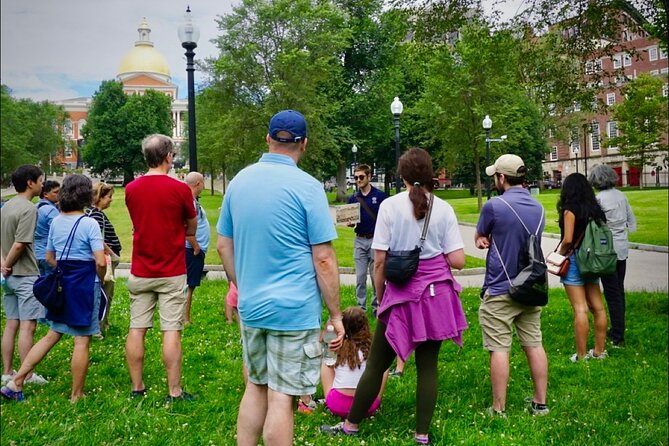
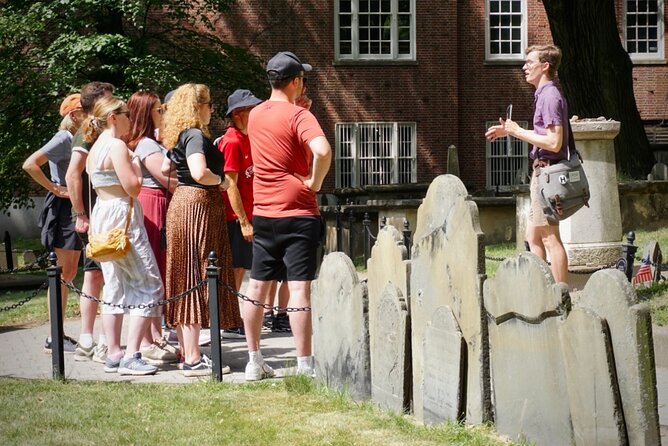
The tour leans hard into people here, not just buildings. Granary Burying Ground is a highlight because it makes revolutionary-era names feel real. Seeing burial sites shifts the story from rumor to legacy: these weren’t abstract “founders,” they were neighbors whose lives ended on the same streets you’re standing on.
Then you move to King’s Chapel, which adds another layer. Instead of only focusing on rebellion, the guide connects religion, authority, and the public voice of the time. That matters because revolutionary conflict wasn’t only about taxes or laws. It was about who had the right to speak for the community.
If you’re the type who loves asking questions, this is a good stretch. The guide’s explanations tend to make the next stop easier to follow because you understand the mindset behind it.
Boston Latin School to Old Corner Book Store: Education, Printing, and Control
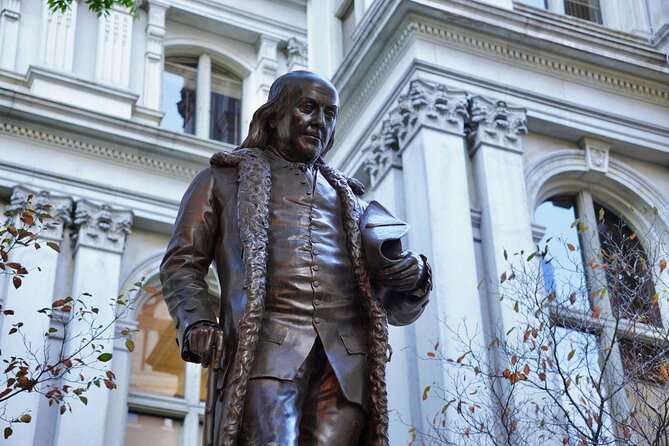
From Boston Latin School and the Benjamin Franklin statue area, the tour shifts toward ideas. The point isn’t to turn the walk into a “great men” tour. It’s to show how education, communication, and civic identity fed the revolution-era debate.
You’ll then hit Old City Hall and the Old Corner Book Store. These are the kinds of landmarks that can look ordinary at first glance—until you understand why the distribution of information mattered. When the guide explains what people read, how they argued, and how messages moved, these stops start to feel like part of the power system.
This is also where the tour benefits from a strong guide. Several guides leading this route have been praised for keeping the facts clear while still giving you the human side of the story. Names that come up in the history of this experience include Mark, Toby, Amir, Eric, Alejandro, Nick, and Maura—each described as turning the lead-up to the Revolution into something you can actually remember.
Old South Meeting House to Old State House: The Moment Loyalty Breaks
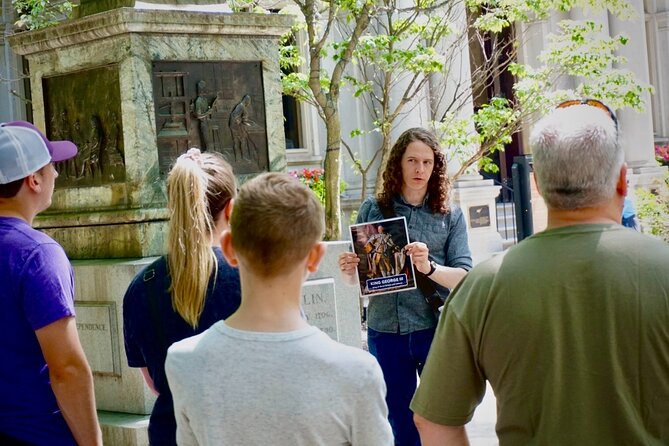
When you reach Old South Meeting House, you’re stepping into one of the loudest themes of this whole era: public action. Meeting houses and gatherings weren’t background scenery. They were stages where decisions gathered steam.
Next is Old State House, paired with time at the Boston Massacre Site. This section is one of the most important on the walk because it shows how fast conflict escalated. You learn how “official” events could ignite popular anger, and how the words people used for each other changed the meaning of what happened next.
A detail I found especially useful in understanding the tour’s approach: you may hear points that challenge common simplifications, like the idea that Paul Revere’s midnight ride didn’t follow the simplified story people repeat today, or that the tea taxes and political responses evolved in ways that weren’t one straight line. The guide keeps the storyline grounded in context, not just a single heroic narrative.






Boston Massacre Site to Faneuil Hall: Momentum in Public
After the Old State House and massacre area, the walk continues to Faneuil Hall. Faneuil Hall is more than a stop for a quick look. It’s where you learn about the city’s habit of turning speeches into collective movement.
You’ll also pass by or incorporate Quincy Market as a break point. The tour schedules time there so you can grab a snack and reset your legs. I like this part because it keeps you from turning the second half into a rushed sprint.
If you’ve ever tried to do the Freedom Trail in one day and ended up with a blur of buildings, you’ll appreciate how this tour spaces the pauses. It’s enough time to regroup without turning the day into a series of stops you forget two blocks later.
Paul Revere House, Hanover Street, and the Road Toward North End Night
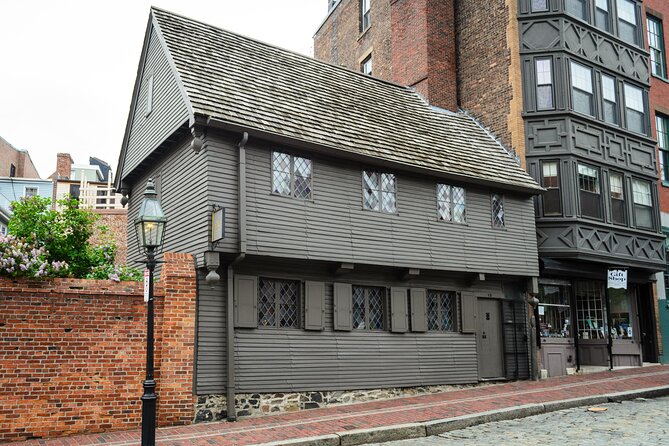
The walking route brings you toward the Paul Revere story next, with a stop at Paul Revere House. This is where you’ll understand how “revolution” lived in ordinary routines: housing, travel, messages, and risk.
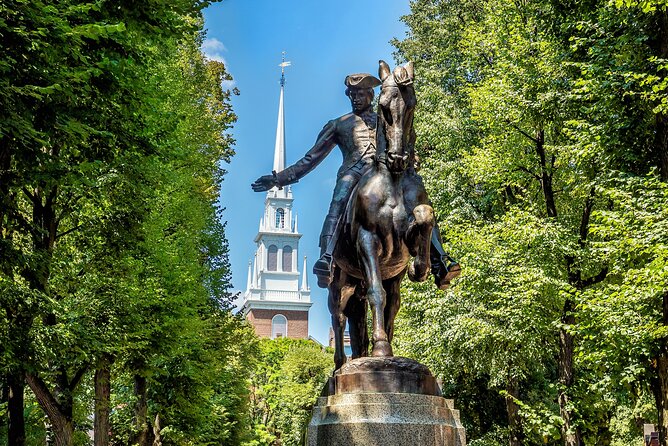
Then you continue along Hanover Street and a Paul Revere statue stop, which works as a visual anchor. It’s helpful to see the figure represented in public space after learning the earlier political context. It connects the big decisions back to the people carrying messages and planning next steps.
This half also tends to feel more personal because the story shifts from city-wide events to a tighter lens on individuals and networks. If you like when history gets specific, you’ll enjoy it here.
Old North Church, Copp’s Hill, and the Charlestown Views You’ll Remember
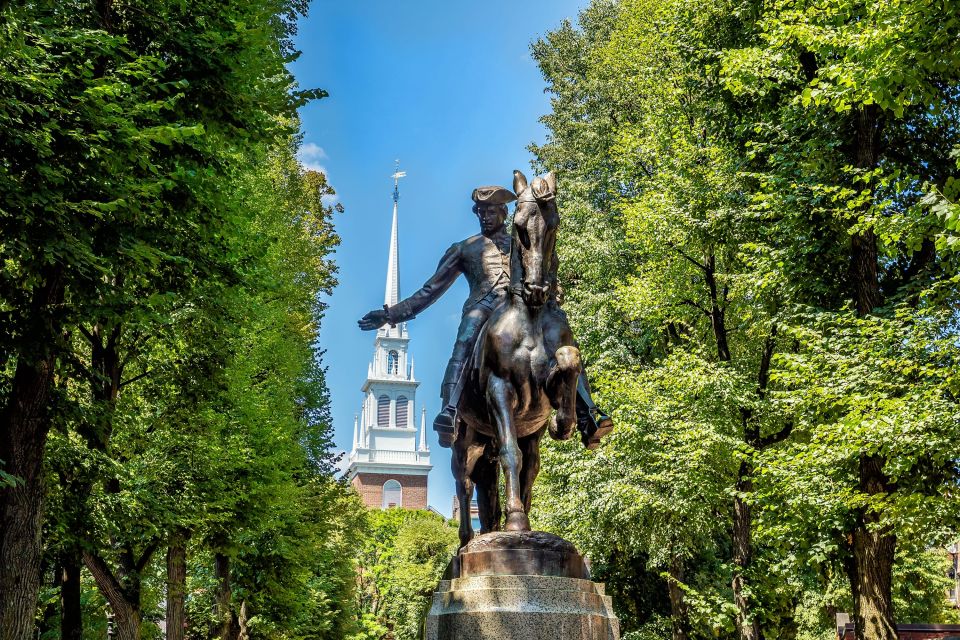
You finish the landmark run with Old North Church and then head to Copp’s Hill Burying Ground. Copp’s Hill is where the walk earns its emotional weight. Seeing the burial sites reinforces the idea that the revolution wasn’t only an argument; it was a lived, costly turning point.
After that, you get scenic route views toward USS Constitution and Bunker Hill Monument. You don’t have to “tour” those places deeply to benefit from the sightlines. Standing where you can look across toward Charlestown helps you understand the geography Bostoners would have cared about—where movement happened and where danger could show up.
Finally, you reach the finish point at Copps Hill Terrace, steps from Old North Church and near North End dining. From this viewpoint, you can see the bigger picture of what you just walked. The tour’s design helps you realize that the Freedom Trail isn’t random. It’s a connected story you can trace with your eyes as well as your feet.
How Much This Tour Delivers for $35
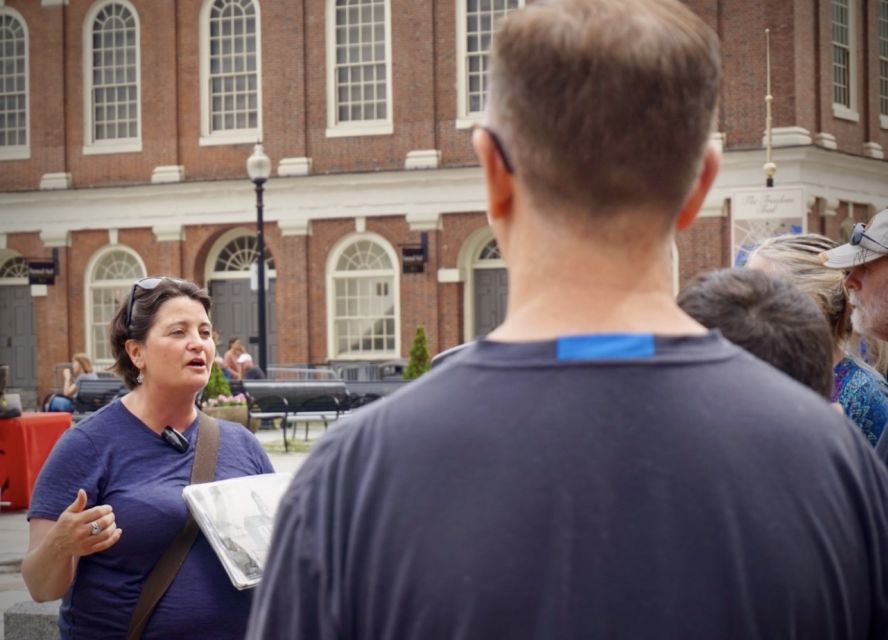
At $35 per person for about 150 minutes, this is a strong value if your goal is to learn more than you could from a map alone. The math gets even better when you factor in the small-group size—up to 15 guests—because it makes the guide time more useful. You can ask questions and you’re less likely to lose the thread when a crowd funnels through one narrow sidewalk.
This price point also makes sense for a first-time Boston visit. The tour covers a concentrated set of landmarks across Boston’s most story-heavy neighborhoods, and it ends in a part of town (the North End) where you’re already close to dinner plans.
Also, the guide style seems to matter a lot here. In the feedback behind this experience, guides like Toby and Amir are praised for explaining without drowning you in dates, even in harsh cold. Nick is described as presenting facts in a way that lets you think for yourself rather than swallowing a single version of events.
One more practical value: you’ll leave with a mental checklist. Some people say it would be nice to have a hit list to track everything as you go, but the route structure already makes it easier to remember what came first and what followed.
Who This Tour Fits Best (And Who Might Feel Frustrated)
This is a good match if you want a guided storyline through the American Revolution and you like walking. It’s also ideal if you’re visiting winter or shoulder season, because a guided route helps you stay warm and on track while still seeing the major landmarks.
It’s not a great fit for people who struggle with distance and pace. The route is listed as about 2 miles, and the tour notes it isn’t suitable for children under 6 and for people with low fitness or mobility impairments. At the same time, it’s labeled wheelchair accessible, so if mobility is a concern for you, I’d suggest asking questions directly about your specific needs before you book.
If you hate being outside for long stretches, this can also feel like a “real walk,” not a sit-and-lecture tour. Come dressed for wind and cold, and you’ll have a much better day.
Should You Book This Freedom Trail Tour?
Yes, I’d book it if you want the Freedom Trail to make sense quickly. It’s one of the better ways to connect the landmarks into the actual logic of the Revolution—how choices escalated, how public meetings turned political, and how people like Samuel Adams and Paul Revere fit into the bigger chain of events.
Skip it only if you want total freedom to wander for long stretches on your own. This tour is guided, paced, and story-led. If you can live with that structure, you’ll come away feeling like you learned something you can carry into every other Boston stop.
FAQ
Where is the meeting point for the Boston Common Freedom Trail tour?
Meet your guide inside Boston Common at the Boston Foundation Monument on the northern boundary of the park, opposite 50 Beacon Street (02108).
How long is the tour?
The tour duration is about 150 minutes (about 2.5 hours). It varies, but won’t be more than 3 hours.
How much does the tour cost?
The price is $35 per person.
How large is the group?
This is a small-group tour with a maximum of 15 guests.
Does the tour cover all 16 official Freedom Trail landmarks?
Yes. The tour includes the Freedom Trail (all 16 landmarks).
Are museum admissions included?
No. Admission inside museums is not included.
How far do you walk during the tour?
The accessible route is approximately 2.0 miles (3.2 km).
Is video recording allowed, and can I bring large luggage or bags?
Video recording is not allowed. Luggage or large bags are also not allowed.
Is this tour suitable for young children or limited fitness?
It’s not suitable for children under 6. It’s also not suitable for people with mobility impairments or low level of fitness.
What if my plans change at the last minute?
You can cancel up to 24 hours in advance for a full refund, and you can reserve now and pay later.