REVIEW · BIG ISLAND OF HAWAII
Big Island, Hawaii: Volcanoes National Park Safari
Book on Viator →Operated by Safari Helicopters · Bookable on Viator
Volcanoes look different from the air. I love the easy Hilo Airport meetup and the way your pilot doubles as guide, with narration that can cover everything from lava to waterfalls. I also love the small max of 6 passenger size, which makes the flight feel more personal. One drawback: if clouds or smoke block the most active caldera area, your route can change and you might not get the big crater moment you hoped for.
This safari is a tight, safety-first flight (about 55 minutes) over volcanoes, forests, and lava fields around Volcanoes National Park. You’ll get a pre-flight safety debrief and then hop straight into the helicopter for a view that’s hard to duplicate from the ground—though seat position and weather matter more than you’d think.
In This Review
- Key highlights to know before you fly
- Volcanoes National Park Safari: Taking off from Hilo and finding the view
- What that 55-minute helicopter flight covers (and why time feels short)
- Hitting the orchids and native forest before the volcano
- Volcanoes National Park from above: lava, vents, and the real caldera story
- Pilot narration: why this tour feels different from a simple ride
- Seats, weight limits, and visibility: the stuff that can change your comfort
- Weather and route changes: how the safari handles Plan B
- Pricing and value: what $379 buys you (and what to compare it to)
- Who this helicopter safari suits best
- Should you book the Big Island Volcanoes National Park Safari from Hilo?
- FAQ
- How long is the Volcanoes National Park helicopter safari?
- Where does the tour start?
- What time should I arrive?
- Is hotel pickup or drop-off included?
- What’s included in the price?
- Are snacks included?
- What language is the tour offered in?
- How many people are on the flight?
- What are the weight requirements?
- What happens if weather prevents flying over the volcano area?
- What’s the cancellation policy?
Key highlights to know before you fly
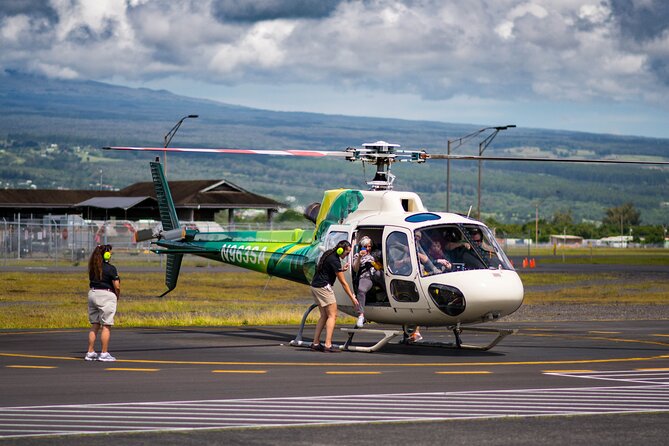
- Hilo departures are simple: Meet at 2220 Kekuanaoa St, and plan to arrive about 40 minutes before takeoff.
- Pilot narration is the point: You’re not just watching. You’re getting history, geology, and local context from the captain.
- You see more than the volcano: Orchid farms, lush forest, lava flows both old and new show up on the route.
- Small group size: A maximum of 6 passengers helps keep the experience calm and focused.
- Weather drives the plan: If the volcano area isn’t safe to fly, expect options like alternate sightseeing or rescheduling.
- Visibility depends on your seat: A small cabin means some seats have more window view than others.
Volcanoes National Park Safari: Taking off from Hilo and finding the view
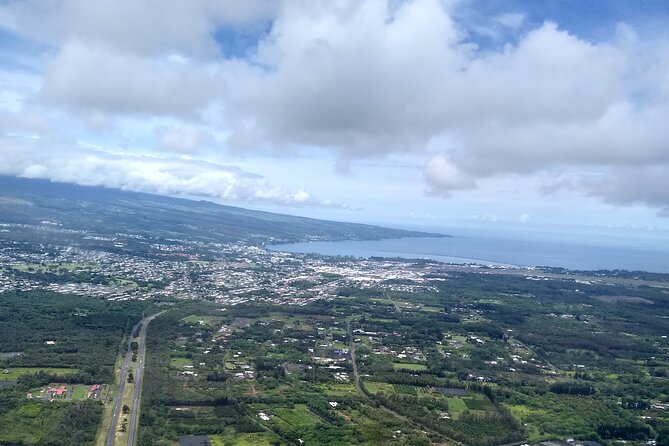
There’s a reason people plan heli time around Hilo. You’re already on the east side of the Big Island, close to Volcanoes National Park, so the flight feels like it’s going straight to the good stuff. Your ride starts at the meeting point at 2220 Kekuanaoa St, Hilo, with an in-air path that’s meant to show you volcano country quickly.
The operation runs like a small crew. You’ll meet the team, get briefed on safety, and then you’re in the helicopter. It’s not a long waiting-game tour, and that matters when you’re paying for something as time-sensitive as weather and visibility.
You can also read our reviews of more tours and experiences in Big Island of Hawaii.

What that 55-minute helicopter flight covers (and why time feels short)
The advertised duration is about 55 minutes, which sounds brief until you’re up there. From the air, volcanoes are huge, lava flows have layers, and the pilot often loops back for the best angles. That looping can eat minutes fast, especially when you’re hovering or making flybys to keep everyone pointed the right way.
You can expect a mix of what Hawaii is famous for in this one flight:
- Volcanoes and views tied to Volcanoes National Park
- Lava flows, including areas that look older and others that look fresh
- Forested stretches and waterfalls you can’t really appreciate from a car window
The practical thing to know is this: the flight is short enough that you’ll feel the “most important” moments whenever conditions allow. If the caldera area is socked in by cloud cover or heavy smoke, the pilot may shift what you get to see.
Hitting the orchids and native forest before the volcano
One of my favorite parts of a route like this is what happens before you even reach the main volcanic views. On this safari, you fly past orchid farms and native forest areas that are strongly associated with the Big Island.
From the air, forests look like a patchwork of greens with edges you can’t see on foot. Orchid farms, when you’re high enough, turn from “a place on the ground” into a pattern you can track as you pass overhead. It’s a reminder that the Big Island is more than lava. It’s climate, elevation, and ecosystems in the same day.
Volcanoes National Park from above: lava, vents, and the real caldera story
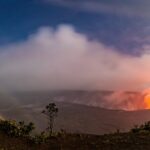
This is the headline, and it’s also the part you should treat like weather-dependent theater. The main intent is to fly over volcanoes in and around Volcanoes National Park, with views of lava flows both old and new.
On clear days, pilots have been able to do the close-looking work: flybys over cone areas, views of vents, and even moments where you can see gasses rising near the caldera. I’ve also seen feedback about spotting features like crater activity, golden Buddha landmarks from the air, and dramatic views of coastlines and past eruption areas when conditions cooperate.
When conditions don’t cooperate, don’t assume you’ll get “nothing.” What often changes is how close you can safely fly to the most active parts, especially inside the caldera. Cloud cover and smoke can force a safer, different routing—even if you’re still getting plenty of volcano scenery and the broader park region.
Pilot narration: why this tour feels different from a simple ride
The best helicopter tours don’t just show you a view. They explain it while you’re looking.
In this case, the pilot is also your guide, and that’s a big deal. Captains like Drew, Andrew, and Jim have shared detailed narration covering island history, flora and fauna, and geology. That means when you see lava patterns, vents, or crater edges, you’re not left guessing what you’re looking at.
You’ll also notice the professionalism in how they keep the flight entertaining and smooth. Several passengers mentioned that the ride feels stable, with pilots answering questions and adjusting turns to give better viewing angles. One person even described a flight path that used looping patterns so both sides could see the highlights.



Seats, weight limits, and visibility: the stuff that can change your comfort
Helicopters are compact. Even if everything goes right, you’re still sitting in a small cabin for about an hour.
Before you book, take the weight limits seriously:
- Total weight per passenger is listed as 249 lbs
- If you’re over 250 lbs, an additional seat is required
- If two people have combined weight of 420 lbs, additional seating rules can apply
- Accurate weights matter. If the weight isn’t accurate and becomes a safety issue, you may be forced to purchase another seat, and there may be no refund.
Also pay attention to seating and visibility. One piece of feedback called out that not every seat gives great window access, and another person said they couldn’t see well until the pilot adjusted. The practical move: when you’re offered seat choices (if available), try to prioritize a window position with a clear line of sight.
Finally, if you’re a first-time helicopter rider, comfort is usually more about expectations than the ride itself. The team sets you up with a safety briefing and aims for a smooth flight, which helps.
Weather and route changes: how the safari handles Plan B
On the Big Island, weather is a character in the story. This safari is explicitly dependent on conditions, so you should book with flexibility in your overall itinerary.
Here’s what you can realistically expect when the volcano area is hard to fly:
- If cloud cover or smoke makes the caldera unsafe, the pilot may shift focus to other park areas or different sides of the island.
- You might get alternate sightseeing like other valleys or coastal areas instead of the exact active crater fly-in.
- If flying isn’t possible at all due to poor weather bands, you’ll be offered a different date or a full refund.
In practice, that means you’re not buying a guaranteed view of one exact feature. You’re buying access to aerial volcano country, and the crew works to keep the experience meaningful when nature changes the rules.
Pricing and value: what $379 buys you (and what to compare it to)
At $379 per person, this isn’t a casual splurge. So how do you decide if it’s worth it?
I think it’s good value when:
- You want the most efficient way to see volcano scenery near Volcanoes National Park without hours on the road.
- You care about narration and history from a pilot who can point out what matters while you’re flying.
- You’re the kind of traveler who remembers “one big wow” more than ten minor stops.
It’s less of a value slam dunk if:
- Your top goal is a very specific crater or active eruption moment, and you’re unwilling to accept that fog and smoke can block the closest views.
- You’re sensitive to seat visibility differences in a small cabin.
Here’s the simplest way to think about it: helicopters compress time. They also compress uncertainty. The uncertainty is weather. The compression is that you can see a lot of Big Island in one short flight, guided by someone who knows what you’re looking at.
Who this helicopter safari suits best
This is a strong fit for:
- First-time helicopter riders who want a confident, guided intro
- People who prefer short, high-impact experiences over long drives and hikes
- Families and couples who want a shared “wow” moment with structured safety and guidance
- Anyone who likes geology and island history and wants it explained in plain language while they’re looking
It can be a tough fit if you:
- Need a lot of window time and are very particular about seating position
- Don’t handle changes well when weather prevents the exact route you planned around
- Are traveling with strict time constraints on the other side of the island, since rescheduling may require travel flexibility
Should you book the Big Island Volcanoes National Park Safari from Hilo?
I’d book this if you want the most direct route from Hilo into volcano country and you’re excited by guided aerial storytelling. The combination of a smooth, professional operation, small group size, and pilot-led narration is exactly the kind of experience that makes the cost feel justified.
I’d hesitate only if your trip is tightly scheduled around one exact caldera moment and you can’t bend at all for weather. In that case, consider whether you can build in a little flexibility or choose a ground-based option that isn’t as dependent on flight visibility.
If you book, do yourself a favor: arrive early, double-check your weight details, and pick a window seat when possible. Then sit back and let the captain do the pointing. The views are the payoff, but the explanation is what makes them stick.
FAQ
How long is the Volcanoes National Park helicopter safari?
It’s listed as about 55 minutes.
Where does the tour start?
Meet at 2220 Kekuanaoa St, Hilo, HI 96720. The activity ends back at the meeting point.
What time should I arrive?
Show time is 40 minutes prior to departure.
Is hotel pickup or drop-off included?
No. Hotel pickup and drop-off are not included.
What’s included in the price?
You get the helicopter flight over Volcanoes National Park, plus all fees and taxes.
Are snacks included?
No. Snacks are not included.
What language is the tour offered in?
The experience is offered in English.
How many people are on the flight?
The tour has a maximum of 6 passengers.
What are the weight requirements?
Total weight per passenger is listed as 249 lbs. If you’re over 250 lbs, an additional seat is required. If the combined weight of two people reaches 420 lbs, additional seating is required. Accurate weights are important for safety, and refunds may not apply if weights are inaccurate due to safety issues.
What happens if weather prevents flying over the volcano area?
This experience requires good weather. If it’s canceled due to poor weather, you’ll be offered a different date or a full refund. If flying conditions make the volcano area unsafe, the route can change.
What’s the cancellation policy?
There is free cancellation. You can cancel up to 24 hours in advance for a full refund. If you cancel less than 24 hours before the start time, the amount paid is not refunded.